
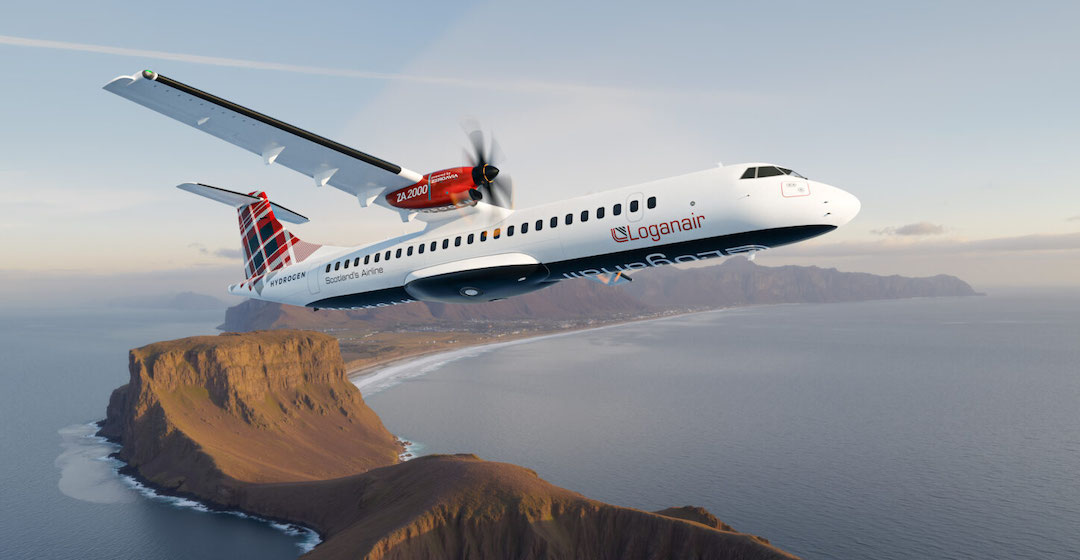
(Hollister, USA / Kemble, England) – British-American developer of hydrogen-electric aircraft Zero Avia Inc., together with Scottish regional airline Loganair, aims to advance the development of hydrogen engines for zero-emission flights. According to an agreement, Zero Avia is seeking certification from the UK Civil Aviation Authority (CAA) for a 600-kilowatt fuel cell propulsion system for aircraft with 10 to 20 seats.
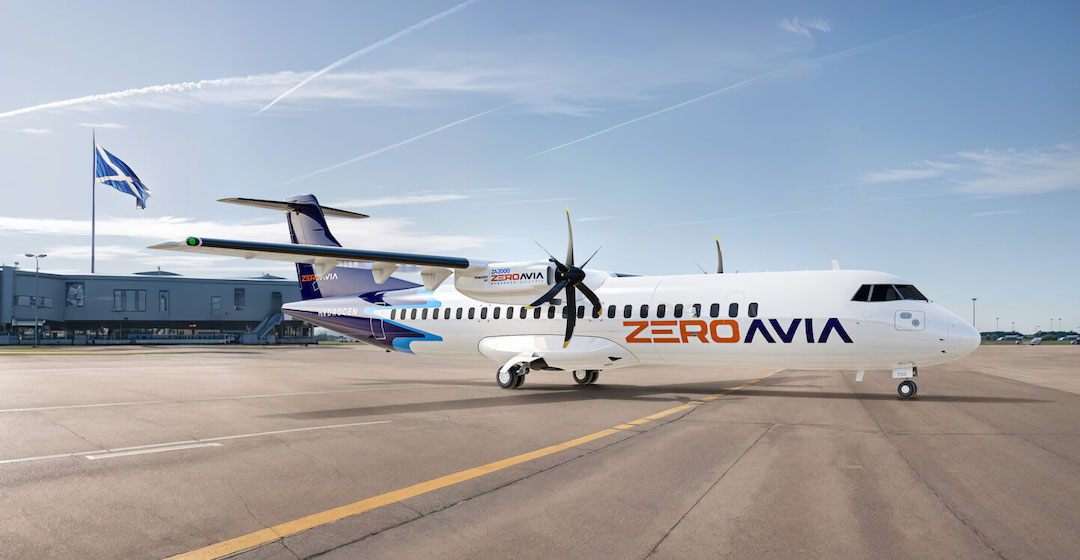
Zero Avia plans to build a "Hydrogen Center of Excellence" near Glasgow Airport to equip hydrogen aircraft. Pictured: The ATR 72, a twin-turbine turboprop regional airliner manufactured by the French-Italian Avions de Transport Régional consortium. © Zero Avia Inc.
The initial plan is for a Cessna Caravan to be introduced, as well as type certificates (STCs) for other aircraft in this category, such as Havilland Canada's DHC-6 Twin Otter, a short-runway model used by Loganair for flights in the Scottish Highlands and Islands.
Zero Avia is simultaneously developing the ZA2000 engine for aircraft with 40 to 80 seats, such as the ATR family of aircraft, of which Loganair currently operates more than 20. As previously reported , there are already several interested parties for this engine, including the Edinburgh-based airline Ecojet and the US airline American Airlines, which has invested in Zero Avia.
These innovative engines promise cost savings. The significantly lower maintenance requirements mean a reduction in downtime for the fleet. Hydrogen as a fuel is also expected to be "significantly more cost-effective than kerosene over time," the manufacturer says.
New development center near Glasgow
Loganair is based at Glasgow Airport, with which Zero Avia already has a partnership to research hydrogen infrastructure at airports. In May, Zero Avia announced the establishment of a Hydrogen Centre of Excellence for the production of fuel cell systems in the Advanced Manufacturing Innovation District Scotland near the airport.
Loganair's route network is "very well-suited for the deployment of our ZA600 and ZA2000 engine technology following certification," says Val Miftakhov, founder and CEO of Zero Avia. According to Luke Farajallah, CEO of Loganair, "they firmly believe that the fleet and route network represent the perfect combination of airline and geographic location for Zero Avia's product range."
For the typical missions of these aircraft, it is necessary to switch to liquid hydrogen storage, which is stored at cryogenic temperatures of approximately minus 253 degrees Celsius and offers a higher energy density per volume than gaseous hydrogen. In addition to fueling larger aircraft platforms, smaller, zero-emission aircraft can also benefit from the use of liquid hydrogen to expand their performance capabilities.
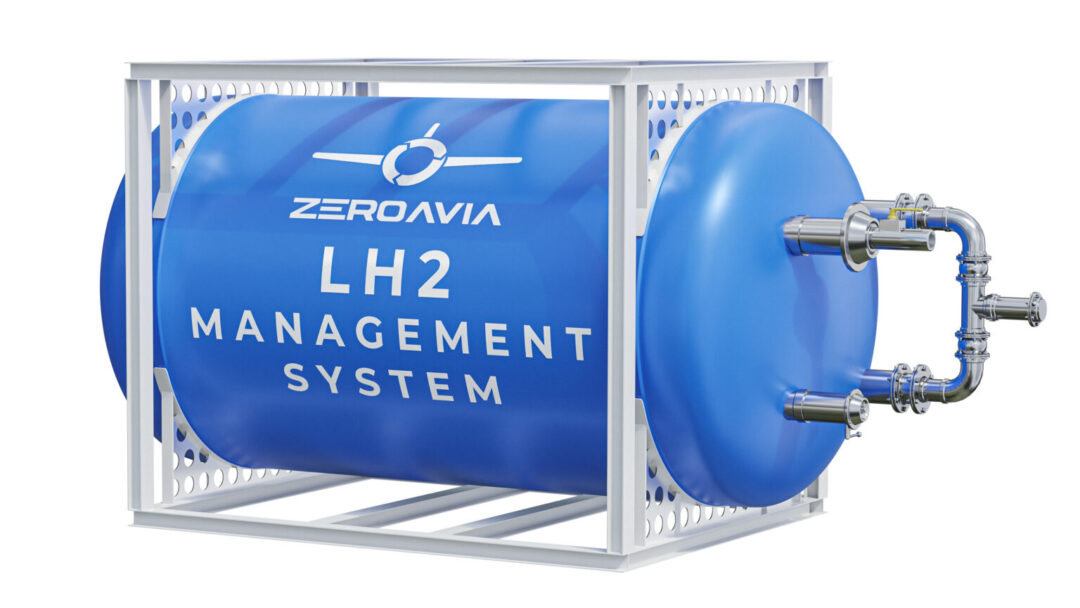
Zero Avia is developing cryogenic tanks for storing liquid hydrogen at approximately minus 253 degrees Celsius. © Zero Avia Inc.
Zero Avia recently received £10,8 million (€12,6 million) in funding from the British government to develop a liquid hydrogen management system (LHMS) called the "Liquid Hydrogen System Integration & Flight Test" (LH-SIFT). The project aims to integrate the lightweight fuel system into a Dornier 228. The development consists of a novel metal tank design, along with systems for filling, storage, and distribution. A flying test bed for liquid hydrogen propulsion is also planned to test cryogenic fuel system components in flight. Consortium partners are Green Resource Engineering and Gas & Liquid Controls.
The new development center in Glasgow is Zero Avia's second facility, following its Propulsion Center of Excellence in Washington State. The company also plans to expand its research activities at Cotswold Airport in Gloucestershire.
Photo above
Zero Avia and Scottish regional airline Loganair are collaborating to develop a hydrogen-powered aircraft. © Zero Avia Inc.



