
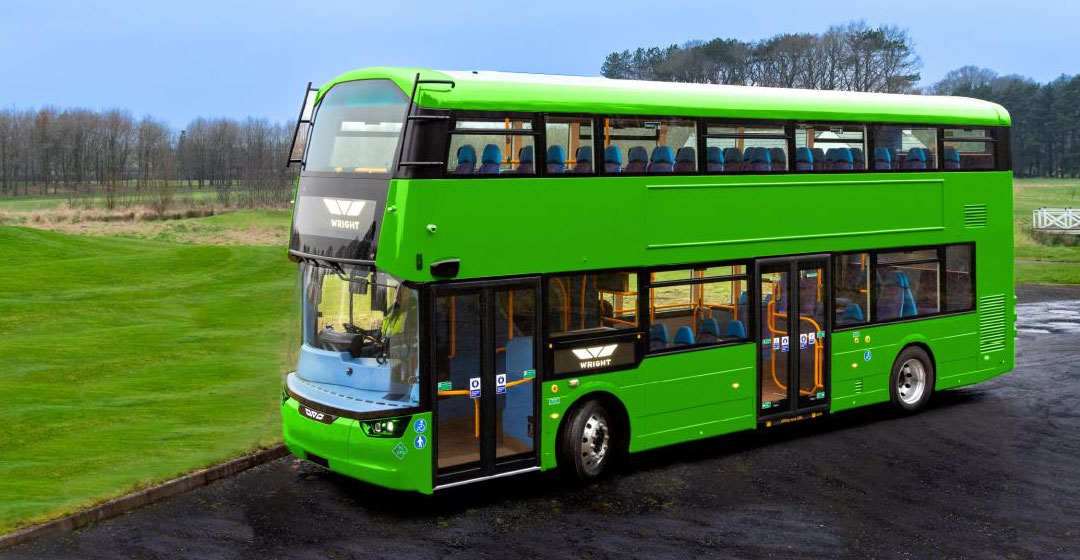
(Ballymena / UK) – Northern Irish vehicle manufacturer Wrightbus has modified its hydrogen-powered double-decker bus. The new “Streetdeck Hydroliner Gen 2.0” is more fuel-efficient, has a greater range, and can carry more passengers than its predecessor – which was the world's first hydrogen double-decker bus when it was launched in 2020.
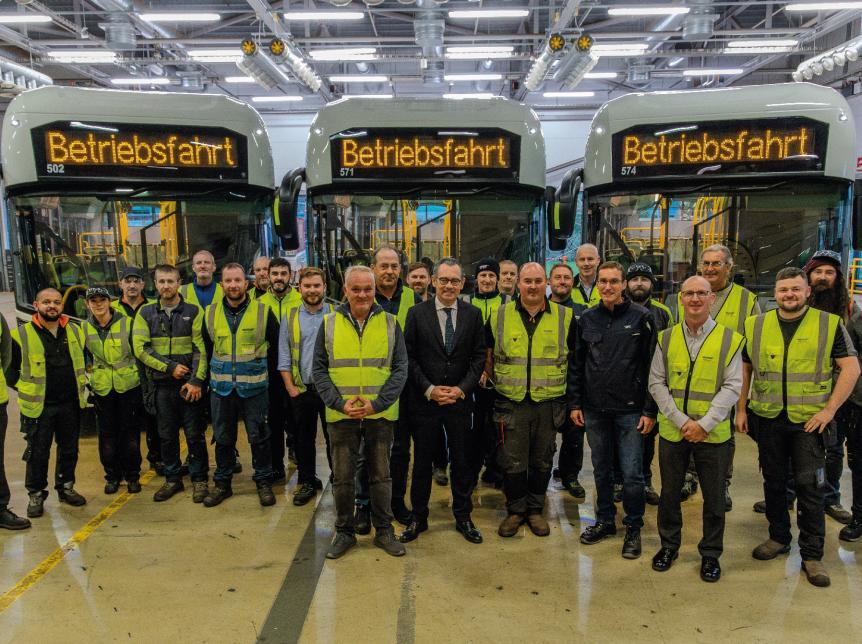
Wrightbus hydrogen buses also operate in Germany. In November 2024, the transport company Regionalverkehr Köln GmbH expanded its fleet by 31 vehicles from Northern Ireland. By the end of 2025, the Cologne-based company wants to put a total of 160 fuel cell buses on the streets; by mid-December there were 130. © Wrightbus
The work, with the help of a consortium of industry and research, took around four years and was co-financed by the British government through the Advanced Propulsion Centre UK (APC). According to the company, the engineers developed the vehicle "from scratch". The bus can be refueled in just eight minutes and, with the fuel cell from Canadian manufacturer Ballard Power Inc., has a range of over 300 miles (483 kilometers), which is comparable to a diesel vehicle. Compared to the previous model, it requires 20 percent less fuel and saves around 15 percent in maintenance costs over the average operating period of 30 years.
There are over 30.000 diesel buses in use on the public transport network in Great Britain and Ireland, says Philippa Oldham of the Advanced Propulsion Centre. Buses around the world have to cope with a variety of constraints, whether in terms of topography or charging requirements. "This means there needs to be a variety of options for this sector and the success of this project shows that fuel cell technology is a great solution."
1.000 new jobs in the supply chain
Just a few days earlier, Wrightbus had announced that it wanted to create up to 1.000 new jobs in the supply chain at its headquarters in Ballymena within the next two years and increase its own workforce to 2.500 employees. "In addition to our EV bus, 95 percent of the buses produced in Ballymena are now emission-free," says CEO Jean-Marc Gales. In 2019, 95 percent of all orders were diesel vehicles. The company expects to increase production over the next 24 months - initially by 200 units to 1.200 this year and then to 2026 units in 1.400.
The company belongs to Bamford Bus Company Holdings Limited owned by Jo Bamford, heir to the British construction and agricultural machinery manufacturer JC Bamford Excavators Ltd. (JCB), who took over the former family business Wrightbus from insolvency in 2019.
Photo above
Completely redesigned: the “Streetdeck Hydroliner” with modified technology and a new front design to better protect other road users in the event of a collision. © Wrightbus



