
(Vienna / Austria) – There is a worldwide hype surrounding the search for natural "white" hydrogen. Studies show that – contrary to previous assumptions – it could indeed exist in considerable quantities. However, it is difficult to predict where and at what depth larger deposits lie.
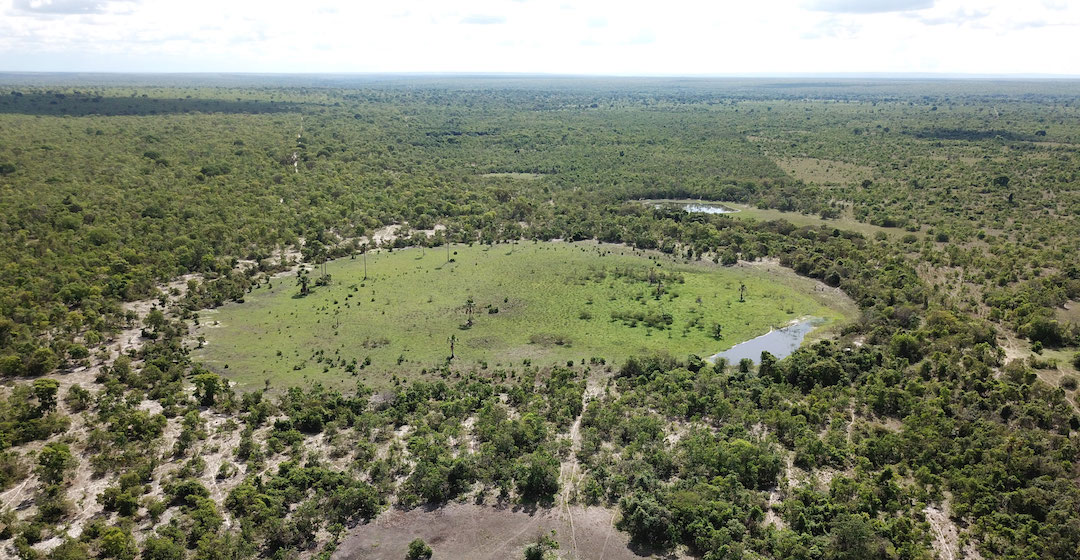
A study by the Institute of Geology at the University of Vienna now provides relevant clues. It suggests that round spots in the landscape could be potential clues. These circular depressions – called "fairy circles" – are formed by the rising of natural hydrogen. "The deeper the hydrogen source underground and the higher its pressure, the larger the fairy circle on the Earth's surface," the authors say.
Fairy circles exist in many parts of the world
The circles are typically hundreds of meters wide and a few meters deep. They can be found in many parts of the world, including Russia, the USA, Brazil, Namibia, and Australia. It has only been clear for about ten years that the damage to vegetation visible above ground indicates underground gas sources. "But before expensive drilling is carried out, we need to understand how fairy circles form, how large the deposits might be, and how deep the drilling needs to go," explains Martin Schöpfer from the Institute of Geology at the University of Vienna.
The study, subsidized by the petrochemical company OMV AG and led by Schöpfer, was able to use geomechanical computer simulations to explain that the subsidence in such circles arises from an "interplay of gas and water flow and the soil in a two-phase process." According to this study, the spaces between loose sediment and solid rock are saturated with groundwater. If hydrogen enters this layer at a point source, it partially displaces the water. Hydrogen and water escape at the surface, and the mixture visibly damages the vegetation. Furthermore, the Earth's surface is slightly raised.
When the hydrogen flow dries up in the second phase, the pressure decreases, and the ground collapses. The computer simulations showed that the diameters and depression depths of the fairy circles correspond "almost perfectly with the natural structures discovered in regions such as Russia, Brazil, and Australia," the researchers say. This is likely directly related to the pressure of the invading gas and the depth of the gas source: the larger the fairy circle, the deeper the hydrogen source. "Fairy circles could serve as natural guides for finding underground hydrogen sources," says Bernhard Grasemann, deputy head of the Institute of Geology.
Profitable alternative to hydrogen production
White hydrogen has the potential to become a "viable and likely significantly more cost-effective alternative to the currently used black, gray, blue, pink, and green hydrogens, all of which have a significant carbon footprint," explains Gabor Tari, Chief Geologist at OMV and co-author of the study, explaining the energy industry's interest in the research. However, Schöpfer says that "numerous further studies on natural fairy circles are still needed before the findings can be applied in practice."
The study “The mechanical genesis of fairy circle depressions” (Schöpfer, MPJ, C. Detournay, G. Tari) is published in Geology, Vol. 53 (September 2025).
Photos
"Fairy circles," like those in Brazil's São Francisco Basin, are vegetation damage that may indicate the presence of natural hydrogen sources, according to a study by the University of Vienna. © University of Vienna / Alain Prinzhofer



