
(Stuttgart, Germany) – The use of hydrogen is creating new jobs and job profiles, particularly in hydrogen production, technical infrastructure, mechanical engineering, and supplier industries. Many of these positions require new qualifications. Therefore, it is crucial to identify early on which skills, training, and professional development are needed in this sector. The Fraunhofer Institute for Industrial Engineering IAO has analyzed these requirements.

The development of the hydrogen market requires close cooperation between industry, universities, and further education providers. Photo: The test stand for hydrogen-electric propulsion systems for aviation, developed in 2021 at the University of Ulm. © University of Ulm / Elvira Eberhardt
The study highlights the striking fact that the hydrogen market, due to its complexity, requires a broad spectrum of expertise, ranging from engineering and legal aspects to project management and interdisciplinary collaboration. Unsurprisingly, specialist knowledge in electrolysis, hydrogen storage and transport, and safety plays a central role. However, organizational and economic competencies also prove essential, particularly for the planning, implementation, and regulation of projects.
Many employees from related industries already possess "relevant personal and social skills such as teamwork, problem-solving abilities, and interdisciplinary collaboration." Therefore, a key finding is that skilled workers could be "quickly qualified for the hydrogen economy through targeted training measures." New skills could be acquired through modular training programs, part-time certificate courses, or simulation-based training.
Challenges for SMEs
However, small and medium-sized enterprises (SMEs) in particular face challenges, as they often lack the financial and human resources for extensive training programs. Therefore, promoting regional competence centers and government-run continuing education programs is "an essential measure to support the transformation." Furthermore, the authors recommend "expanding digital training formats as a key strategy": learning platforms, e-learning modules, and virtual reality simulations could facilitate access to training and enable practical learning.
Companies and educational institutions are called upon to dynamically adapt their training programs to developments in the hydrogen market. This requires close collaboration between industry, universities, and further education providers. The establishment of flexible and modular formats is essential, enabling skilled workers to pursue further education alongside their professional activities. Furthermore, companies should develop targeted internal qualification strategies to prepare existing employees for the technological and safety-related requirements of the hydrogen economy.
Government funding is necessary
Government funding programs are crucial to securing a long-term supply of skilled workers. At the same time, regulatory frameworks must be established that promote investment in training measures and guarantee long-term planning security for companies. Future research projects should therefore also examine which policy instruments are best suited to supporting sustainable skilled worker development in the hydrogen sector.
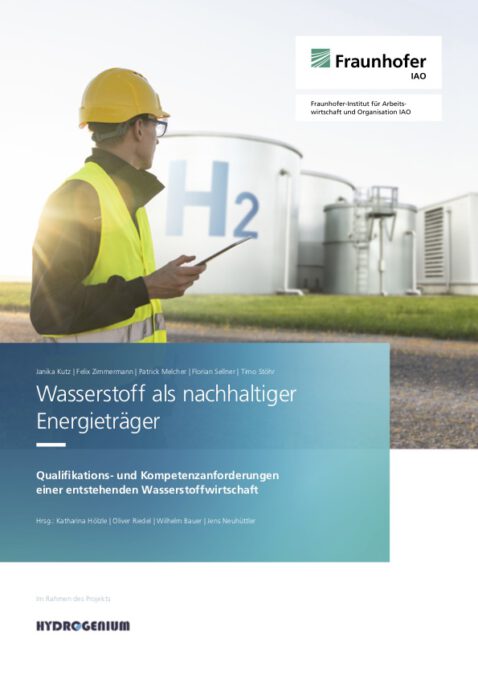
The Fraunhofer Institute for Industrial Engineering IAO analyzes the requirements for workers in the hydrogen economy. © Fraunhofer IAO
The results of this study highlighted that the transformation to a hydrogen economy places considerable demands on the qualification of skilled workers. Therefore, further analysis is needed to determine which specific qualifications are required for different professional fields. "In particular, the differentiation between skilled workers already active in the energy sector and newcomers to the sector needs further investigation." Research projects should also specifically examine "which continuing education formats – such as in-service training, digital learning platforms, or simulation-based training – are most effective" in meeting the qualification needs of the hydrogen economy. One conclusion: "Close collaboration between science, industry, and politics is essential to both respond flexibly to current developments and establish long-term strategies for the training and qualification of skilled workers."
The study "Hydrogen as a Sustainable Energy Carrier – Qualification and Competency Requirements of an Emerging Hydrogen Economy" is part of the "Hydrogenium" research project and is funded by the Ministry of Economic Affairs, Labour and Transport of Baden-Württemberg. It is available free of charge as a PDF (44 pages).
Photos
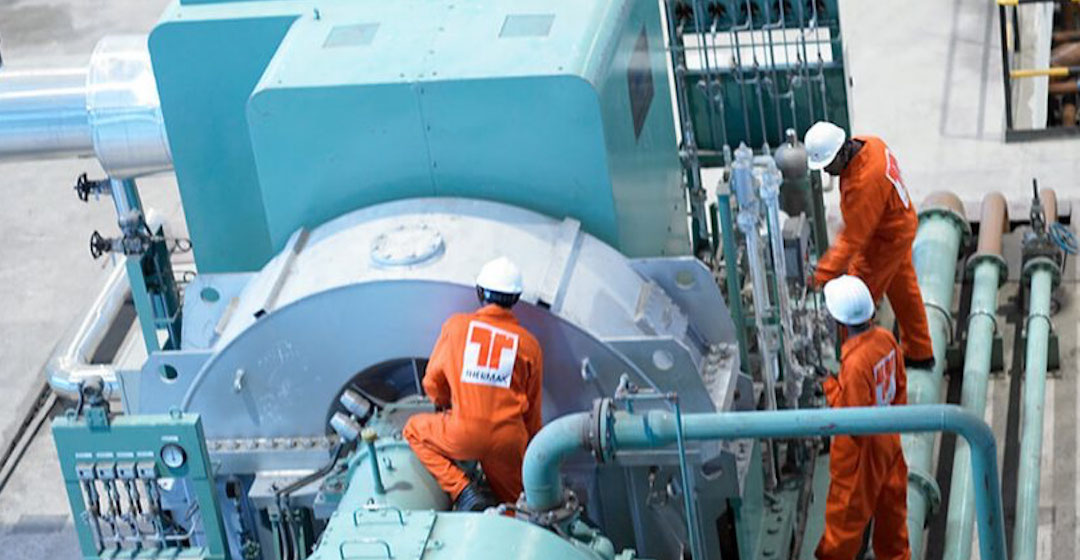
Complex workflows require expertise: Many employees from related industries already possess relevant skills and can be quickly trained for the hydrogen economy. Photo: Thermax engineers performing maintenance work on large-scale technical plants © Thermax Ltd.



