
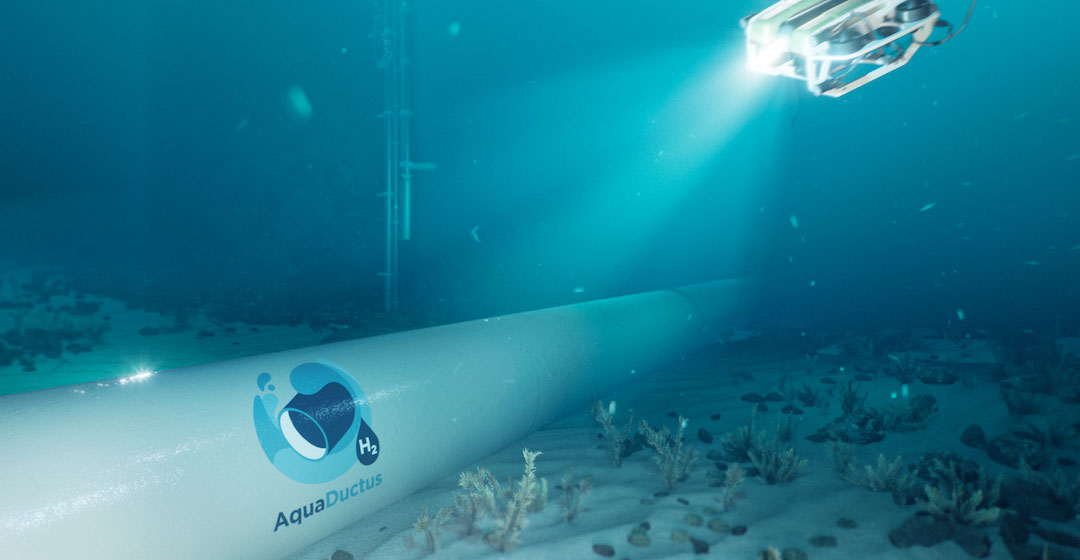
(London/Berlin) – A future German-British hydrogen pipeline through the North Sea has “great potential” to develop the market for the energy carrier in both countries and to promote trade. This could be achieved either through a direct connection between the British and German mainland, through a connection to an offshore hydrogen network, or through connections to the Netherlands and Belgium.
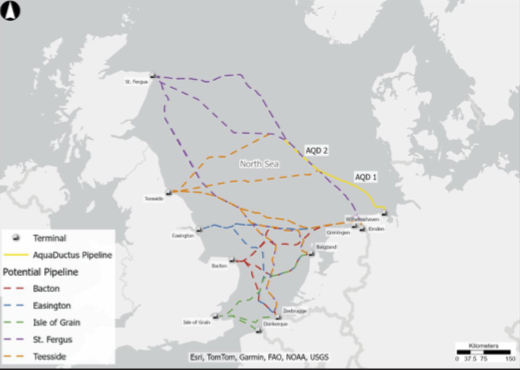
The options examined for the pipeline route: direct connections to Germany, Belgium, and the Netherlands or the use of the planned AquaDuctus hydrogen pipeline (right) © Arup et al. (2025) UK-Germany Joint Feasibility Study on the Trade of Hydrogen. London, UK / Screenshot
These are some of the findings of the "UK-Germany Joint Feasibility Study on the Trade of Hydrogen," commissioned by the German Federal Ministry for Economic Affairs and Energy (BMWK) and the British Department of Energy Security and Net Zero (DESNZ) as part of the German-British Hydrogen Partnership. The analysis by Arup, the German Energy Agency (Dena), and Adelphi outlines the necessary steps for a future pipeline-based hydrogen trade between the United Kingdom and Germany. It examines the political framework, the requirements for future pipeline infrastructure, and the regulatory, technical, and commercial measures for the implementation and operation of a hydrogen pipeline between the two countries.
Onshore networks for domestic markets
To support the development of the respective domestic markets in Great Britain and Germany, several measures are therefore necessary, including the development of onshore networks, the harmonization of technical requirements for trading and the promotion of agreements between producers and consumers.
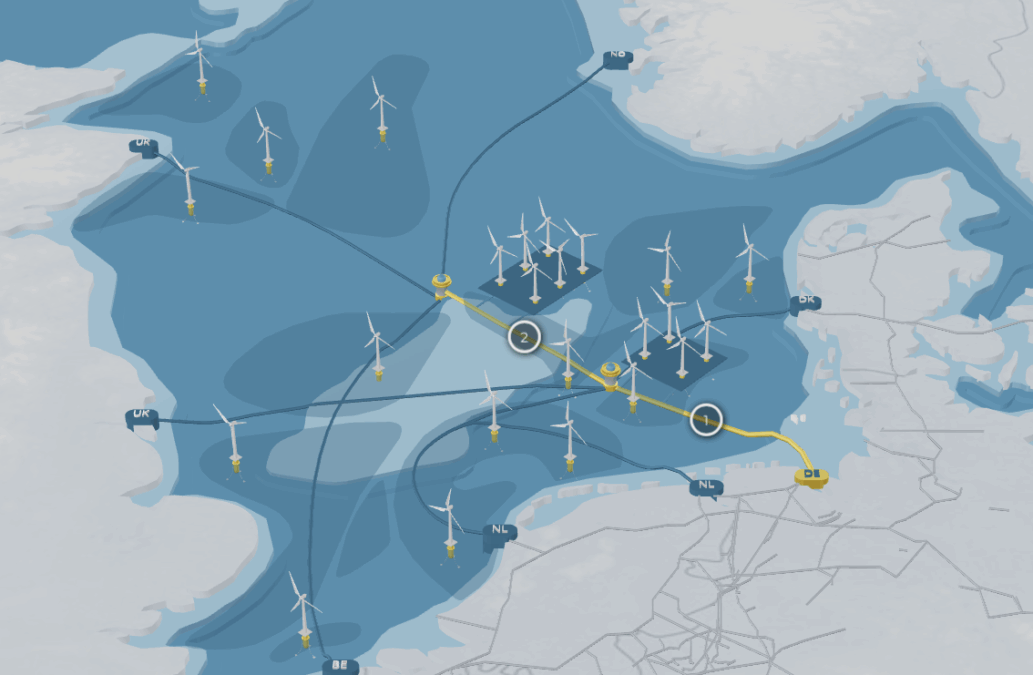
Two construction phases: (1) By approximately 2030, 200 kilometers offshore and 100 kilometers onshore are to be built, with a connecting pipeline to the Netherlands. (2) A further 200 kilometers of a collecting pipeline will extend to the edge of the German Exclusive Economic Zone (EEZ), with connections to other countries and pipelines. © AquaDuctus
The study examines six areas of work: industry engagement, infrastructure assessment, business models, legislation, commercial agreement assessment, roadmap development, and priority areas. The business models, regulations, and commercial agreements considered the entire value chain, while the infrastructure assessment focused exclusively on the assets related to interconnectors. The infrastructure assessment, in turn, considered four routes:
- Offshore connection: Underwater pipeline from the British east coast to a connection point to the AquaDuctus-Offshore pipeline system
- Connection to land: direct underwater pipeline from the British east coast to a landfall point on the German coast
- Connection to the Netherlands: direct underwater pipeline from the British east coast to the Dutch coast
- Onshore connection to Belgium: direct underwater pipeline from the British east coast to a landfall point on the Belgian coast
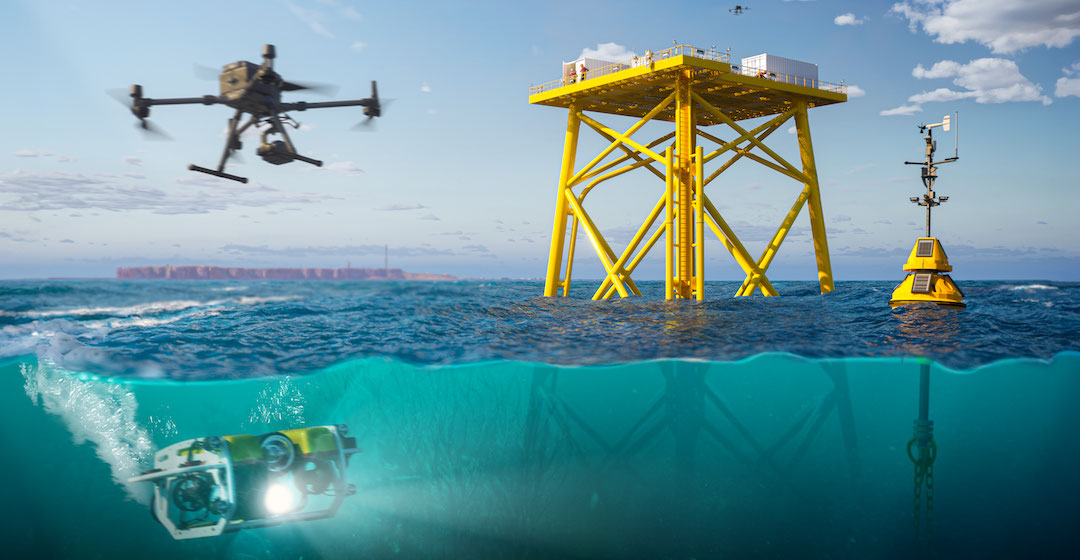
This is how illustrators imagine the AquaCampus project: Researchers are investigating materials and coatings for surface protection in a three-square-kilometer, 45-meter-deep test field off Heligoland. New technologies for use in maritime environments are also being tested in Heligoland's southern harbor. © AquaVentus Förderverein eV
The UK government is currently prioritizing the development of domestically produced, low-carbon hydrogen to meet future demand by establishing funding initiatives to improve hydrogen infrastructure. Key initiatives include the Net Zero Hydrogen Fund (NZHF), particularly the Hydrogen Allocation Rounds (HAR), and the Carbon Capture Utilisation and Storage Cluster Sequencing Process. These initiatives, combined with one of the world's largest offshore wind sectors, have enabled the island nation to secure a competitive advantage in various low-carbon hydrogen production technologies.
Over 250 projects are currently being developed in the UK, representing a potential production capacity of 2030 gigawatts by 25,1. While current regulations limit the eligibility of projects for foreign offtakers, this potential project pipeline offers the opportunity to establish a hydrogen exporter on international markets.
Networks and networks
Two planning examples for structuring a joint project were developed. The "Network to Network" scenario connects multiple hydrogen production projects to an export terminal via an onshore grid in the UK. This approach depends on the onshore grid development schedule.
In the "Project to Network" scenario, production is exclusively for export and places limited demands on the onshore network, thus not being tied to a timeline. However, it may pose profitability issues and limit the opportunities to increase hydrogen trade from the UK in the long term. This approach is less consistent with the UK Hydrogen Strategy, which aims to develop a strategic domestic hydrogen transport network, and is therefore considered less favorable from a UK perspective.
Overall, the market is still in its early stages, and significant stakeholder engagement across the entire hydrogen value chain is necessary in the future, particularly with offtakers, producers, transport, and storage operators. Therefore, the initiation of a joint project connecting the countries is necessary to understand the need for and feasibility of hydrogen trade between the two countries.
Infrastructure assessment
The study concludes that the options for laying pipelines from the United Kingdom to AquaDuctus or to mainland Europe, with onward connections to Germany, are technically feasible. However, further assessment is needed regarding how the domestic networks of both countries will develop over the next decade.
It is unlikely that the existing interconnectors in the North Sea will be available for the conversion to hydrogen use in the short to medium term, as the operators are contractually obligated to supply natural gas. The availability of these pipelines therefore depends on the expiration of existing contracts.
To determine the feasibility of repurposing existing oil and gas pipelines in the UK North Sea and creating a network connecting the UK to mainland Europe, the study found that significant work remains to be done, including assessing the condition, purpose and lifetime of these pipelines and addressing technical challenges such as pressure design, material compatibility and the need for additional infrastructure such as compression stations.
Coordination of interest groups
The conversion process would require coordination among various stakeholders and compliance with environmental regulations. Continuous monitoring and maintenance would be essential, and supply chain disruptions associated with the additional infrastructure requirements could impact the project's schedule and cost.
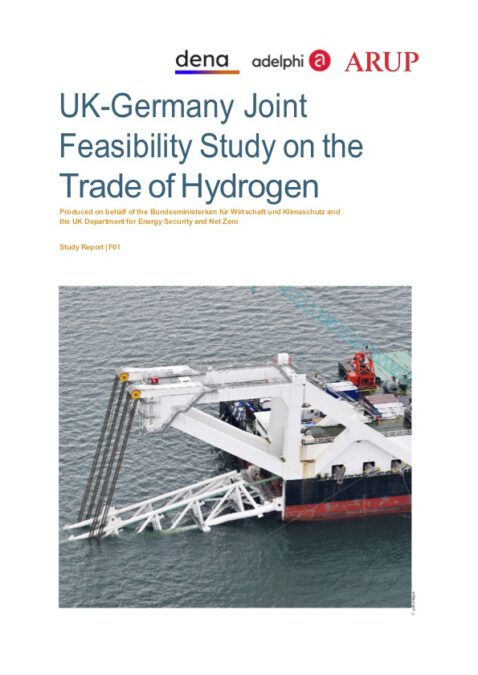
The "UK-Germany Joint Feasibility Study on the Trade of Hydrogen" is a joint study commissioned by the German and British governments. © Arup / Adelphi / Dena
As a prerequisite for supply, obstacles still need to be removed. These go beyond the interconnector itself. The authors recommend, among other things, that countries develop market models to bring together consumers and producers and establish commercially viable offtake agreements. Furthermore, the development of onshore networks is necessary, and the technical prerequisites for hydrogen trading must be created. In a second phase, the development of the legal framework and market integration should continue, but the development of a business model for interconnectors and the adaptation of the entire hydrogen value chain should also be considered.
The study “UK-Germany Joint Feasibility Study on the Trade of Hydrogen” is available free of charge in English (185 pages).
Photo above
The goal of the "AquaDuctus" consortium is to transport green hydrogen generated offshore from wind farms to the mainland and feed it into the hydrogen core network, or the European Hydrogen Backbone. More than 100 international companies and organizations are now involved. The study sees the connection to the AquaDuctus pipeline system as a way to bring hydrogen from the British east coast to Germany. © Gascade



