
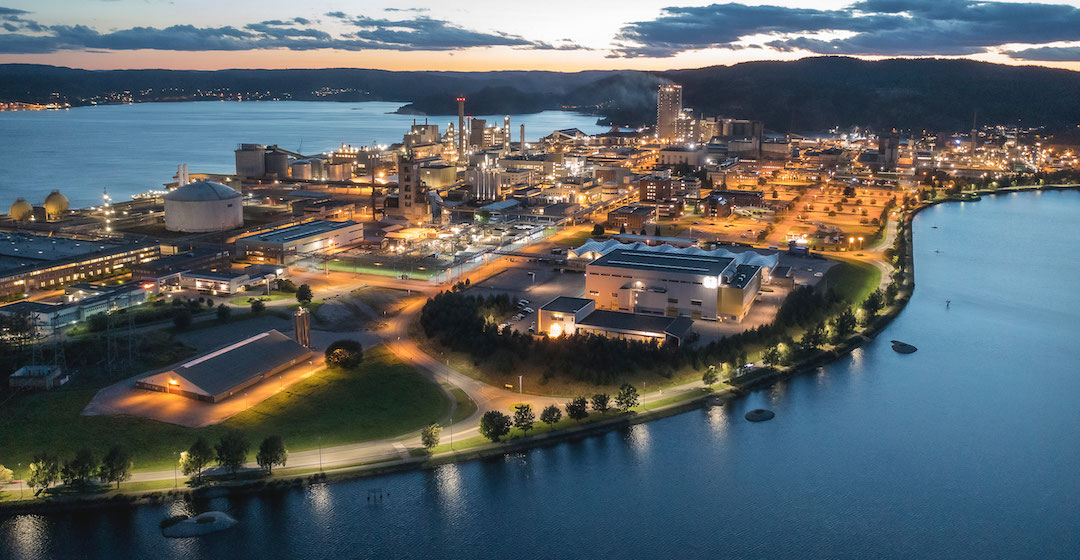
(Berlin / Germany) – The Norwegian government supports the use of hydrogen as an export commodity, for the decarbonization of energy-intensive industries, and for making the energy system more flexible. This creates "an interesting market" for German companies, as there is strong demand for technological solutions for electrolysis, energy management, storage, and maritime applications, according to the target market analysis by the German-Norwegian Chamber of Commerce, published by the Export Initiative Energy of the Federal Ministry for Economic Affairs and Energy (BMWi).
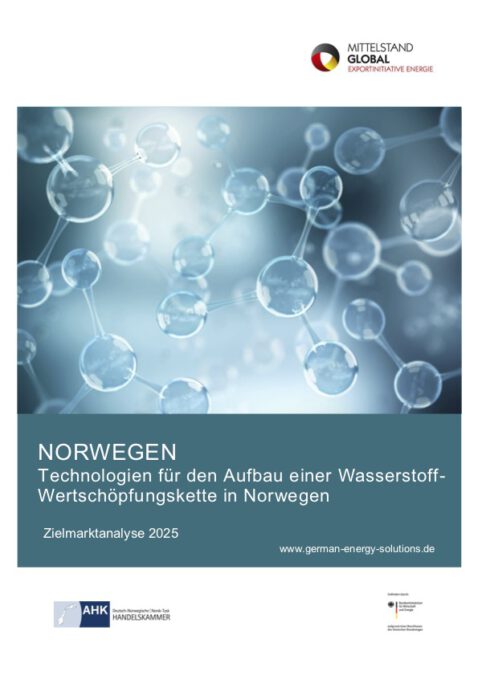
Target market analysis of the German-Norwegian Chamber of Commerce. © BMWE
The potential applications for hydrogen range from industry and construction to shipping, creating numerous business opportunities. Norway has excellent access to electricity from renewable sources, especially hydropower. Furthermore, it possesses long-standing technological expertise in the oil and gas industry, including competence in developing carbon capture and storage technologies. (Editor's note: Northern Lights JV DA , a joint venture of the three oil companies Equinor, Total Energies, and Shell, recently initiated the commercial storage of CO2 under the seabed off the Norwegian west coast. This is part of the Norwegian government's "Longship" decarbonization strategy.)
Politically, the Scandinavian country is striving to play a leading role in the green transition, and ambitious climate targets are a political consensus, the publication states. Numerous funding programs have been launched to implement these goals, including those from the state-run economic development agency Enova, the Norwegian Research Council, and the Green Platform (Grønn Plattform).
Germany is Norway's most important trading partner
The "close economic ties between Germany and Norway" facilitate entry and the formation of partnerships. Germany is one of Norway's most important trading partners. Both countries have adopted numerous joint declarations in recent years to strengthen cooperation on energy issues such as hydrogen production.
The Energy Export Initiative of the Federal Ministry for Economic Affairs and Energy (BMWE) has posted a series of country analyses for hydrogen markets online. These outline the respective targets and highlight opportunities for German industry and trade to gain a foothold there. We present the documents, available free of charge as PDFs, in a loose sequence. The Energy Export Initiative supports providers of climate-friendly energy solutions, especially small and medium-sized enterprises based in Germany. © BMWE / Energy Export Initiative
Challenges include high project costs, market uncertainties, and growing electricity demand, which is straining the energy infrastructure. Hydrogen production is still in its early stages, and many projects are still in the planning phase. Currently, several hydrogen projects have been launched in the country, including five new production plants, such as the 24-megawatt electrolyzer installed last year by fertilizer manufacturer Yara on Herøya.
The target market analysis "Norway: Technologies for Building a Hydrogen Value Chain" is available free of charge as a PDF (36 pages) on the website of German Energy Solutions of the German Federal Ministry for Economic Affairs and Energy (BMWi). It is published by the German-Norwegian Chamber of Commerce in Oslo.
Photos
The fertilizer company Yara International will commission a 24-megawatt green hydrogen production plant at the Herøya Industrial Park in the Norwegian port city of Porsgrunn in 2024. © Herøya Industripark AS / Dag Jenssen



