
(Redding, USA) – The market for hydrogen buses could reach a volume of $18,2 billion by 2032 – almost ten times the size of 2024. This year, the estimated market size is $2,6 billion, which would correspond to a compound annual growth rate (CAGR) of just over 32 percent by 2032. These are the findings of the US market research institute Meticulous Market Research Pvt. Ltd. in its report "Hydrogen Bus Market".
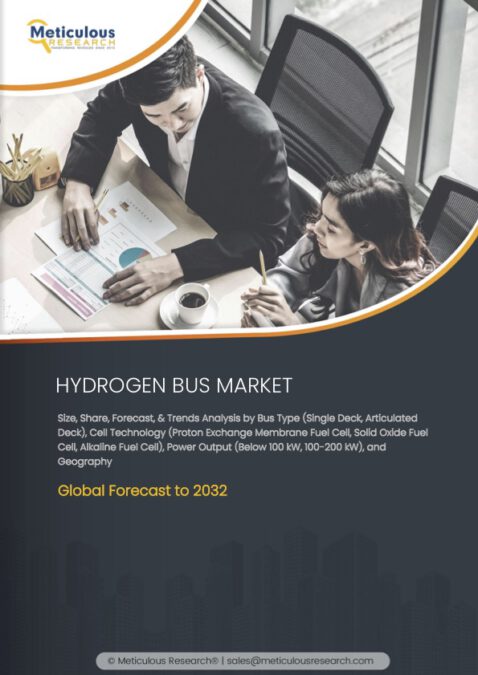
Market study “Hydrogen Bus Market: Size, Share, Forecast and Trends”. © Meticulous Market Research Pvt. Ltd.
According to the study, Europe dominates with a market share of over 38 percent. In the Asia-Pacific region, there is an annual growth rate of over 34 percent due to economic growth in China, South Korea, Japan, and India. North America is also experiencing strong growth, driven by government investments of seven billion dollars in regional clean hydrogen centers. Power outputs below 100 kilowatts are in greatest demand, with a market share of 40 percent. The buses are most frequently used in urban areas and for short transit services. The segment up to 200 kilowatts, in contrast, supports long-distance travel and higher speeds and is expected to record the highest CAGR. Systems above 200 kilowatts are used in intercity transport.
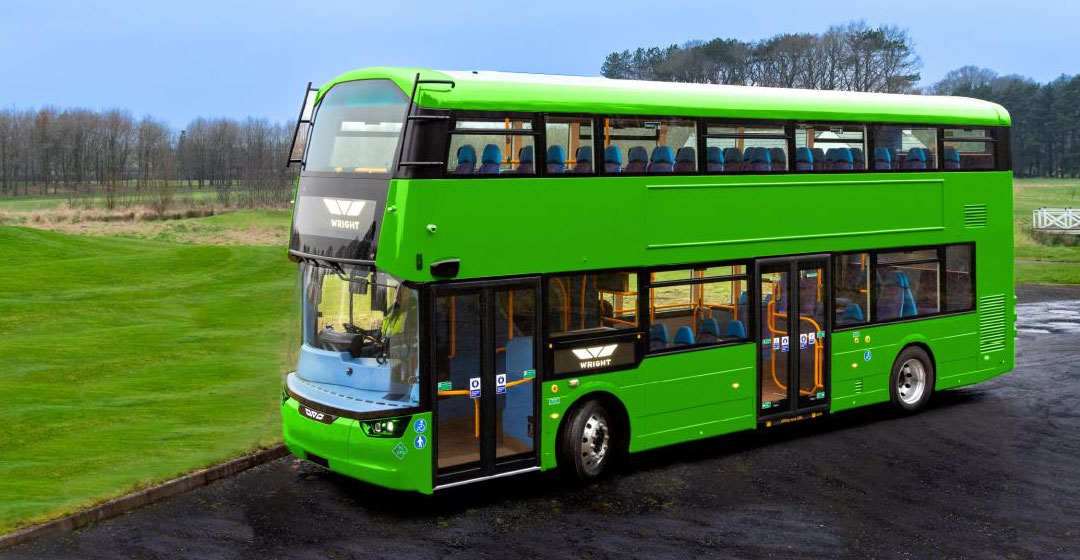
Europe dominates the hydrogen bus market. Double-deckers are currently still a niche product. Photo: the completely redesigned "Streetdeck Hydroliner" with modified technology and a new front design to better protect other road users in the event of a collision. © Wrightbus
Looking at vehicle types, conventional single-decker buses dominated with a market share of over 40 percent, driven by environmental incentives for urban public transport. Articulated buses were expected to record the highest CAGR due to high demand for transport capacity. Double-deckers were expected to gain importance in urban public transport. PEM fuel cells led the market with a 35 percent share. The solid oxide fuel cell segment was expected to achieve the highest CAGR due to continuous performance improvements.
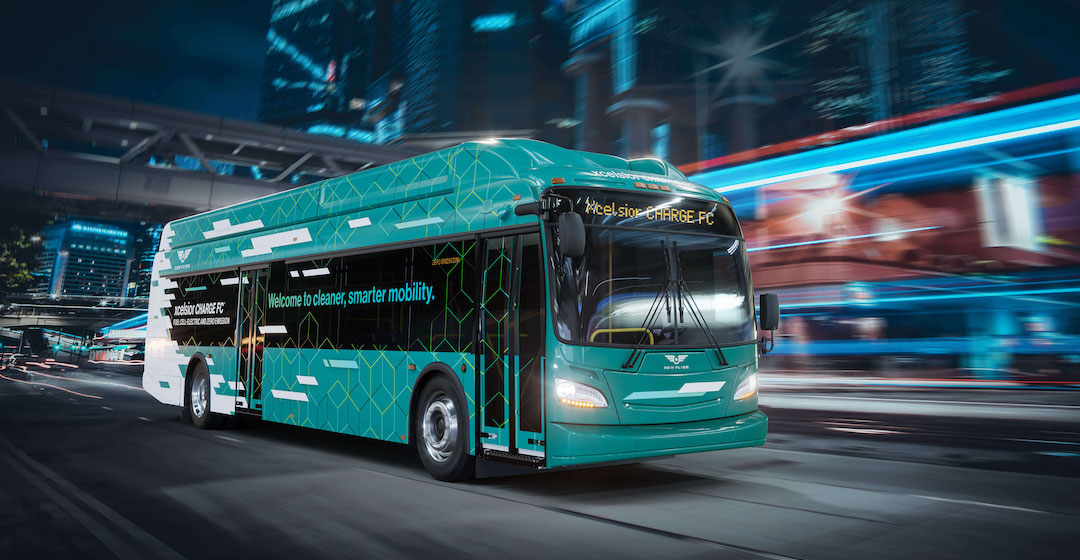
The study predicts strong growth for North America, driven by government investment. In October 2024, the Canadian NFI Group announced it would supply 108 fuel cell buses to SamTrans. © NFI Group Inc
The analysis identifies the market drivers as increasing demand for zero-emission commercial vehicles in response to climate change and air pollution. In addition, government initiatives to modernize public transport fleets with cleaner and more sustainable options under stricter emissions regulations, as well as advances in fuel cell technology with improved performance, efficiency, and cost-effectiveness, are driving this trend. The expansion of hydrogen infrastructure supports commercial deployment and economic viability. Furthermore, the introduction of low-emission zones encourages the acquisition of zero-emission vehicles in urban areas.
Market barrier tank infrastructure
The analyst team at Meticulous Research sees challenges such as high initial investments compared to conventional diesel and electric buses. Added to this is the technological complexity of fuel cell technology, which requires specialized maintenance and expertise. Furthermore, significant investments in the still limited hydrogen refueling infrastructure are necessary.
The hydrogen bus and technology providers examined include Hyundai Motor Group (South Korea), Ballard Power Systems Inc. (Canada), Toyota Motor Corp. (Japan), Wrightbus (UK), Solaris Bus & Coach sp. Zoo (Poland), NFI Group Inc. (Canada), Tata Motors Ltd. (India), Alexander Dennis Ltd. (UK), Daimler Truck AG (Germany), Van Hool (Belgium), BYD Motors LLC (USA), and Karsan Otomotiv San. ve Tic. AS (Turkey).
The report “Hydrogen Bus Market: Size, Share, Forecast and Trends. Analysis by Bus Type, Cell Technology, Power Output and Geography – Global Forecast to 2032” has 250 pages and data as of February 2025. A free short version is available on the Meticulous Market Research website . The complete analysis is available for a fee.
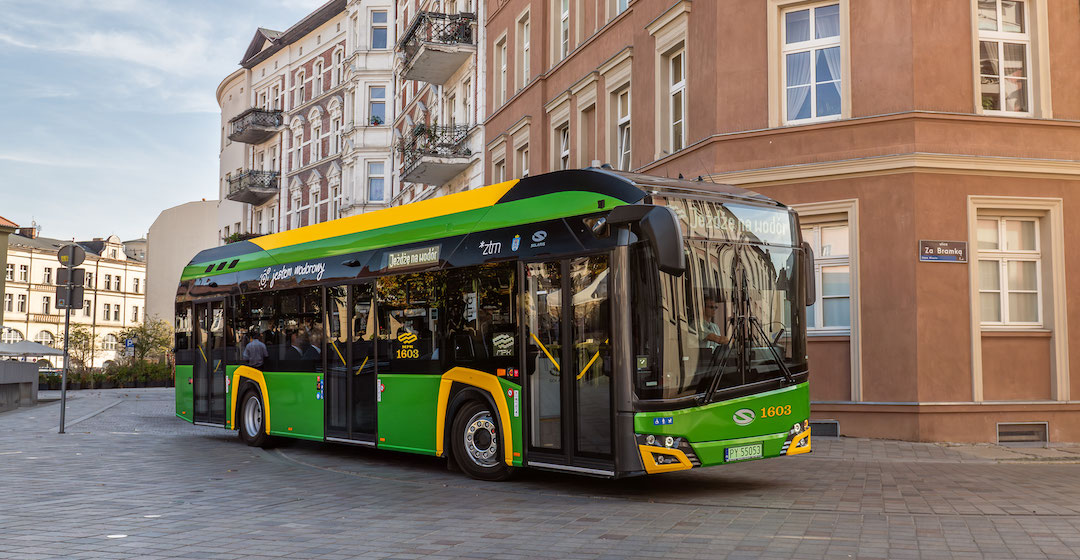
Photo above
Conventional single-decker buses dominate the fuel cell bus market, accounting for over 40 percent of the market. Photo: "Solaris Urbino 12" hydrogen bus for Poznań, Poland. The transport company MPK ordered five of these buses in February and plans to order four more as an option. © Solaris Bus & Coach



