
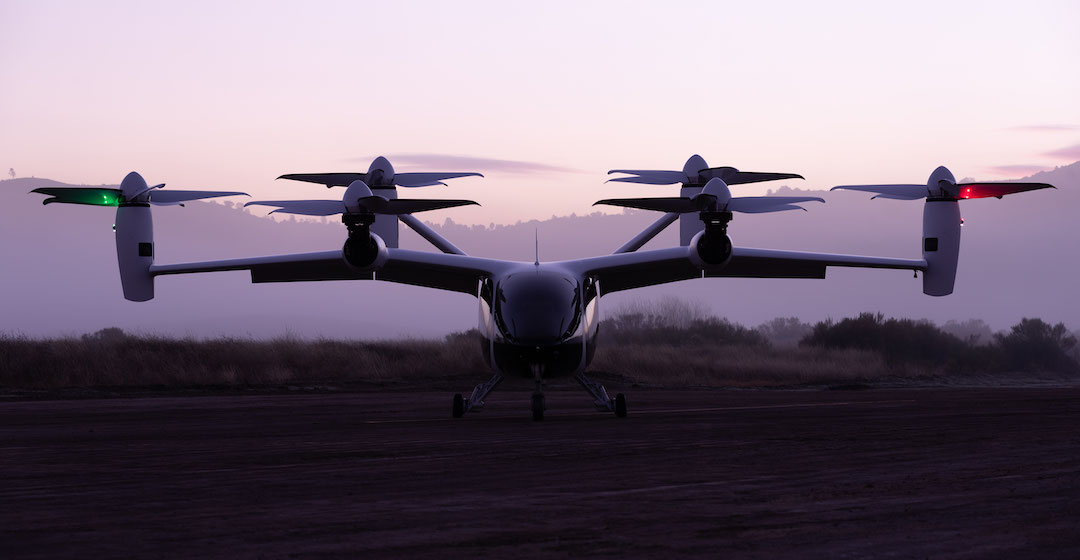
(Marina, USA) – Joby Aviation, Inc. has completed a 523-mile (842-kilometer) test flight over Marina, California, with a prototype fuel cell aircraft. The six-engine aircraft is a vertical takeoff and landing (VTOL) aircraft, meaning it requires neither a runway nor a runway. Its development was carried out jointly with the US Air Force as part of the "Agility Prime" program and is the result of several years of collaboration with Joby subsidiary H2Fly GmbH in Stuttgart, Germany.
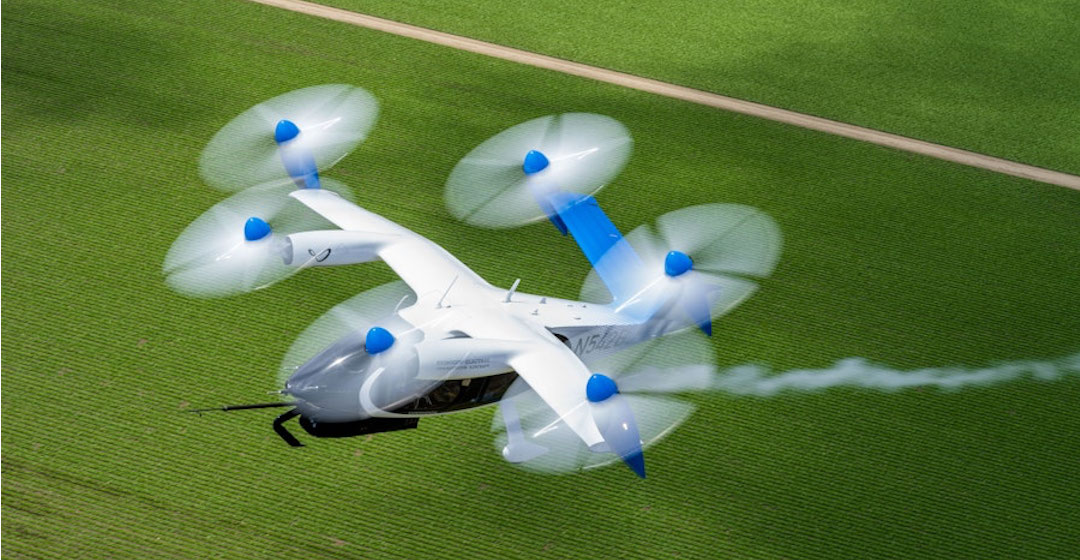
In June 2024, Joby's hydrogen-electric vertical take-off aircraft completed a 523-mile flight. © Joby Aviation
The test flight was carried out with a converted battery-powered aircraft from Joby. The prototype has a self-developed tank that can hold up to 40 kilograms of liquid hydrogen, as well as a small number of batteries. The hydrogen is fed into a fuel cell system developed by H2Fly. The electricity generated drives the six electric motors, while the batteries provide additional energy, especially during takeoff and landing.
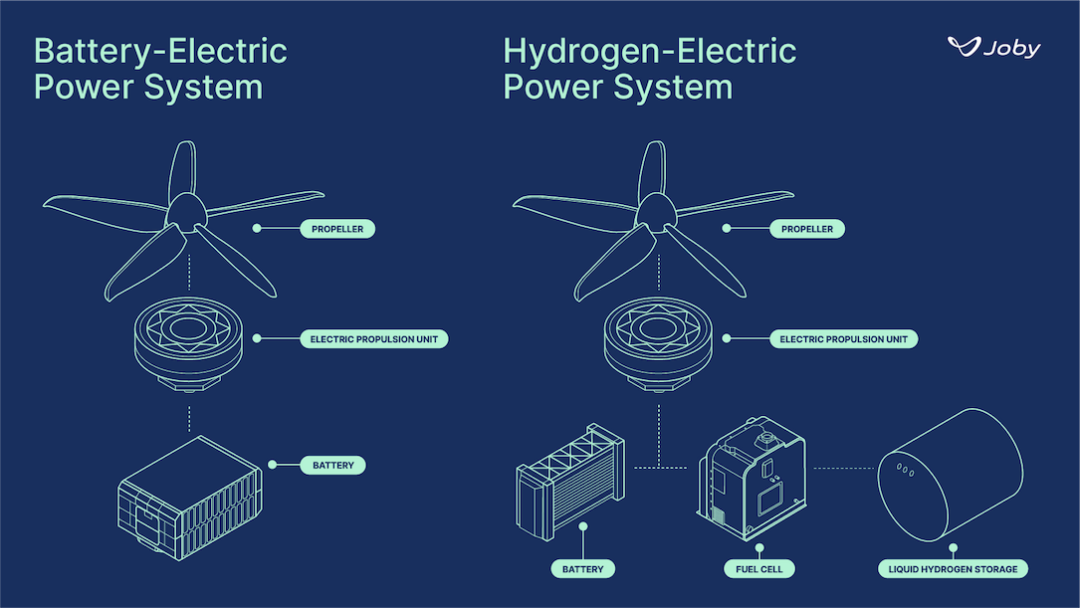
The demonstration aircraft has the same overall architecture as Joby's battery-electric core. © Joby Aviation
The demonstration aircraft has the same overall architecture as Joby's battery-electric core. "The majority of the design, testing and certification work can be transferred to the commercialization of hydrogen-electric flight," says Joby CEO and founder Joe Ben Bevirt. "We expect that we will also be able to use the same landing sites, the same operations team and the software that will support the commercial operation of our battery-electric aircraft."
According to reports, the H2Fly team used a similar technology in September 2023 when it completed the world's first pilot flight of a conventional liquid hydrogen electric aircraft using its fuel cell technology ( we reported ).
Joby takes over Xwing
Just a few weeks ago, Joby acquired California-based Xwing Inc., a company founded in 2016 that develops technologies for autonomous aviation and has been testing them in aircraft since 2020. With 250 fully autonomous flights and more than 500 autonomous landings to date, Xwing is the first company to receive certification for large unmanned aircraft systems (UAS) from the Federal Aviation Administration (FAA) in April 2023, according to Joby, and the first company to receive military flight approval from the Air Force in 2024.
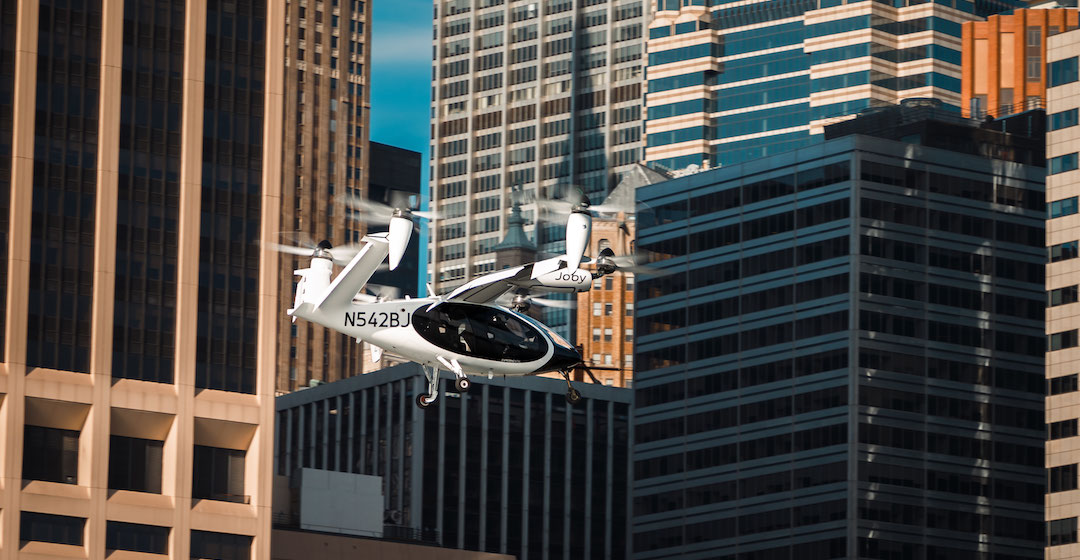
Joby in New York: The company hopes to achieve commercial success with the aircraft as an air taxi for business people. © Joby Aviation
Xwing's autonomous flights were conducted using a single-engine turboprop Cessna 208B Grand Caravan. In early 2024, the aircraft took part in the Air Force's Agile Flag 24-1 Joint Force exercise, flying around 2.800 miles and landing at eight public and military airports to demonstrate the ability to integrate autonomous aircraft into the national airspace system. "The aircraft we are certifying will have a fully qualified pilot on board," says Joe Ben Bevirt.
For the Air Force, the "double use" project is certainly also interesting for military reasons. Agility Prime has been very supportive of the development and testing of hydrogen-powered aircraft "as they align with the program's goals of advancing transformative vertical lift technologies and meeting the Department of Defense's broader operational goals," says Jacob Wilson.
The head of AFWERX Agility Prime emphasizes the “substitution and diversification of energy and the reduction of energy requirements.” However, the operational military benefit of such aircraft is also obvious.
Photo above
The six-engine vertical take-off aircraft (pictured is the battery-electric version) does not require any expanded airports. © Joby Aviation



