
(Zeewolde / Netherlands) – The operators of the Dutch onshore wind farm Zeewolde and Elestor BV plan to jointly develop a hydrogen-iron flow battery. This long-term storage system using chemical compounds (“hybrid redox flow battery”) will be installed in several phases, is intended to help reduce grid overload, and will be able to gradually store and release wind power for 10 to 40 hours by 2031 with a power output of 20 megawatts (MW) and a capacity of 200 to 800 megawatt hours (MWh).
Unlike conventional batteries, the "flow battery" separates current generation and energy storage, storing the electroactive materials in external tanks. The capacity depends on the size of these tanks. The battery uses hydrogen gas at the anode and a dissolved iron salt electrode at the cathode. The stored current is released through a reversible electrochemical reaction with iron and iron ions.
Study: Energy efficiency at over 80 percent
As part of a study, researchers tested a prototype for industrial use. According to the researchers, the experiments were conducted at elevated temperatures and constant current densities to reflect actual industrial operation. The results showed that the battery maintained stable efficiency over tens of thousands of charge-discharge cycles. Energy efficiency was over 80 percent.
The investment for the technology would be around $17 (€15) per kilowatt-hour (kWh). Storage costs over the entire life cycle would be around $0,02 (€0,02) per kWh. Elestor estimates that hydrogen iron flow batteries could operate for up to 25 years in grid applications. This would significantly improve economics and reduce costs.
Storing wind power during peak production times and releasing it when demand is high would reduce peak loads on the electricity grid and make better use of existing grid capacity. Restrictions such as temporary reductions or shutdowns of the plants would be limited.
200 owners from the region
Next year, Elestor will install its final pre-commercial unit to demonstrate the technology's operation and market readiness under real-world conditions. This will be followed by scaling up to a commercial battery system.
The Zeewolde wind farm is locally owned by more than 200 farmers, residents, and business owners from the surrounding area. With the installation of the storage system, it will operate under the name "Energy Hub Zeewolde".
Photo above
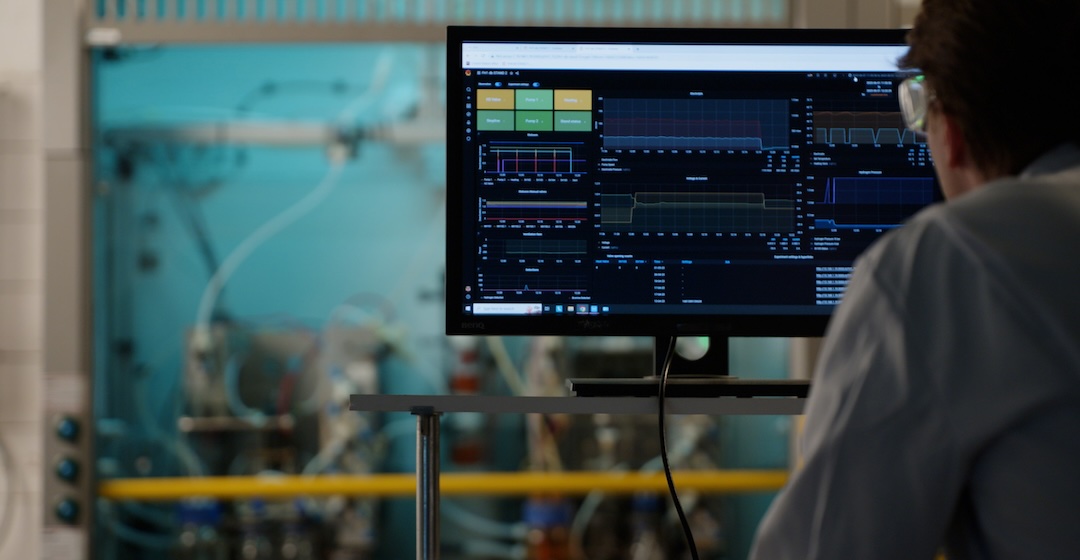
Elestor and the operators of the Zeewolde onshore wind farm plan to jointly develop a hydrogen-iron flow battery to optimize electricity yield. © Elestor BV / Screenshot



