

USA: EPA funds diesel vehicle replacement with €735 million +++ Germany: Thyssenkrupp Nucera and Hydrom plan to develop hydrogen projects in Oman +++ Germany: New H2-ready gas pipeline in Baden-Württemberg operational +++ Denmark: HØST PtX Esbjerg receives environmental permits +++ Finland: Vireon Hydrogen receives funding for the construction of a 5 MW electrolysis plant +++ UK: SSE and Siemens jointly develop hydrogen turbine +++ Canada: Stadler orders eight fuel cell drives from Ballard Power for the US market +++ Germany: Basic materials industry should import green intermediates instead of hydrogen +++ Norway: Teco 2030 ASA files for insolvency +++ Canada: CPKC orders 98 fuel cell engines from Ballard Power for the Canadian market +++ Germany: Generation capacity of hydrogen projects in Germany increases +++ Belgium: Oman and Belgium agree on hydrogen cooperation
A selection of PtX topics summarized at the end of the week
+ + + + +
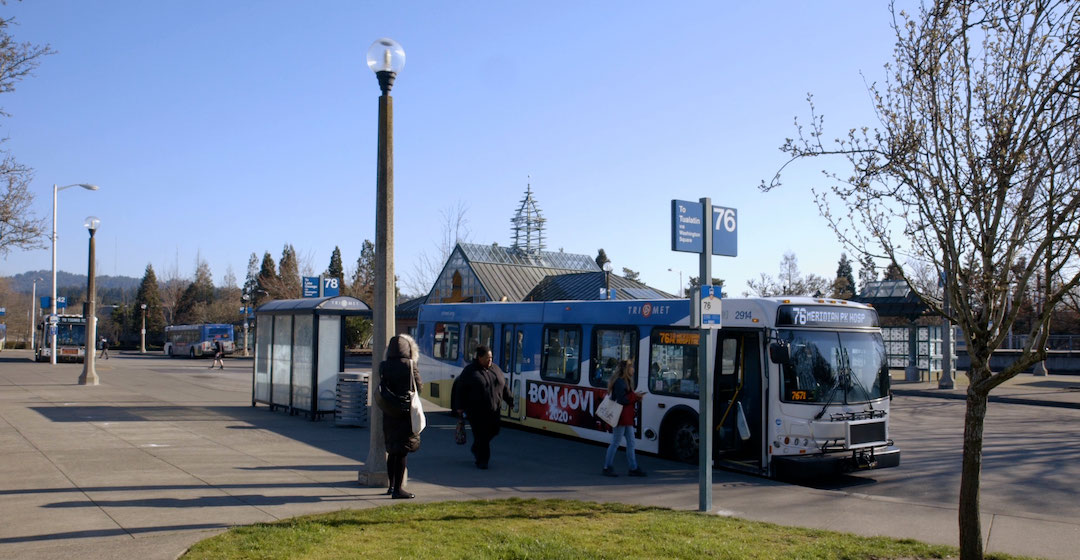
In July, the US Department of Transportation provided funding for the purchase of new fuel cell buses to replace older diesel vehicles. The bus operator TriMet 39, Oregon, was also among the recipients at the time. © TriMet
(USA) The US Environmental Protection Agency (EPA) is providing more than $735 million (€700 million) in funding to 70 applicants from 27 states for the purchase of zero-emission vehicles. The funding aims to replace existing heavy-duty vehicles with internal combustion engines and simultaneously support the development of clean vehicle infrastructure, including training programs. The grants will be used for both battery-electric and hydrogen-powered vehicles. Approximately 70 percent of the funds will be used to purchase clean school buses.
+ + + + +
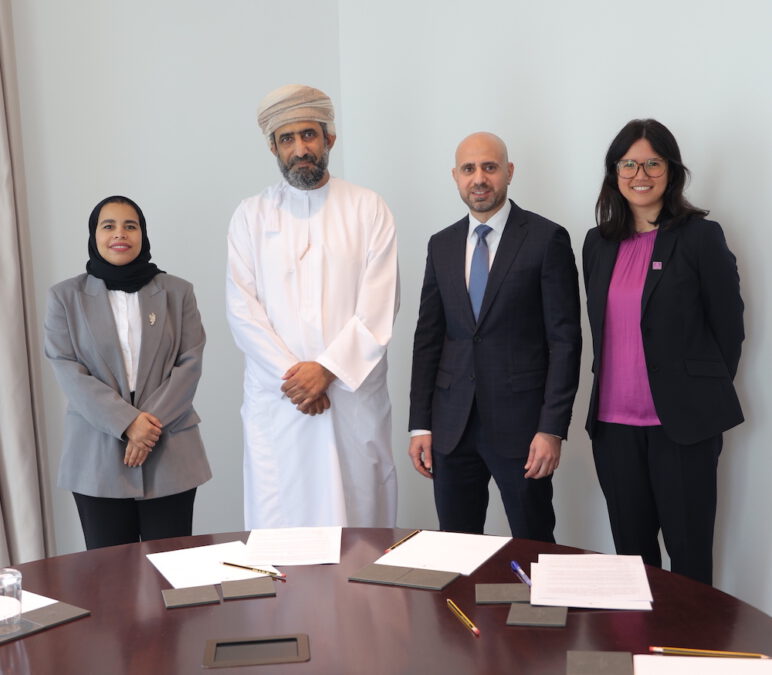
Thyssenkrupp Nucera and Hydrom have signed a letter of intent to develop hydrogen projects in Oman (from left): Rumaitha Al Busaidi (Business and ICV Development Manager, Hydrom), Abdulaziz Said Al Shidhani (Managing Director, Hydrom), Ashraf Abu Alhaija (CEO Thyssenkrupp Nucera Saudi Arabia), Erika Niino-Esser (Senior Business Developer, Thyssenkrupp Nucera) © Hydrom
(Germany) Hydrogen Oman (Hydrom), the national coordinator for Oman's green hydrogen strategy, and Dortmund-based Thyssenkrupp Nucera AG aim to advance the development of the green hydrogen market in the Sultanate. Hydrom has allocated over 2.300 square kilometers of land for large-scale green hydrogen production. The company is building strategic partnerships, supporting comprehensive market analyses, and coordinating all activities, including a master plan for the sector. Hydrom is also driving the streamlining of the legal framework and infrastructure planning. Oman aims to diversify its economy by 2040 and prioritize the development of renewable energies and green technologies. The letter of intent was signed during Hydrom's first gH2 Investor Day in Muscat, Oman. Specific projects were not mentioned. (Editor's note: See also the report below, "Oman and Belgium agree on hydrogen cooperation")
+ + + + +
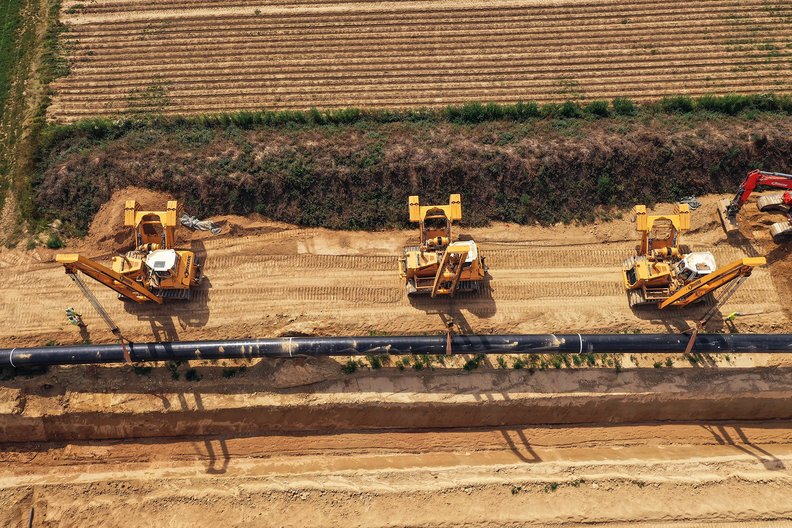
Terranets has completed the first construction phase of the 250-kilometer-long South German Natural Gas Pipeline (SEL) for the hydrogen core network “H2 ready.” © Terranets BW GmbH
(Germany) The long-distance gas pipeline operator Terranets BW GmbH has commissioned the first 24-kilometer section of the South German Natural Gas Pipeline (SEL) from Heilbronn to the Ludwigsburg district and integrated it into the existing transmission network. " In the first phase, the SEL will enable the phase-out of coal-fired power generation by supplying modern gas-fired power plants," says Katrin Flinspach, Managing Director of Terranets BW. "In the second phase, starting in the early 2030s, the pipeline will supply key consumption areas in Baden-Württemberg with hydrogen as part of the core hydrogen network." The entire 250-kilometer SEL, running from the Hessian state border to Bavaria, will be installed in several construction phases. Terranets BW is planning all conversion and expansion measures to be "H2-ready," meaning designed for the transport of hydrogen. The SEL is part of the core hydrogen network.
+ + + + +
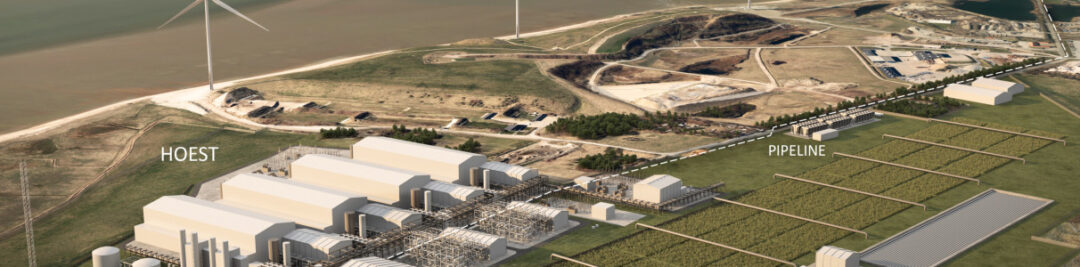
HØST PtX Esbjerg receives environmental permits for the future electrolysis plant. © HØST PtX Esbjerg
(Denmark) The Danish Environmental Protection Agency has granted the HØST PtX Esbjerg project what it calls "the most important environmental impact assessments" (EIA). This allows the project to "continue developing the installation of up to one gigawatt of electrolyzer capacity in Esbjerg to produce sustainable green fuels," says project manager David Dupont-Mouritzen. HØST is now entering its next phase. "One of the most important milestones for the development of PtX projects in Denmark is the establishment of a domestic hydrogen infrastructure that enables the export of green hydrogen to the European market, especially to Germany." Construction of the plant can begin after the final investment decision (FID). The HØST PtX Esbjerg project is part of the CIP Energy Transition Fund I. It will be powered entirely by renewable energy and will be able to produce 140.000 tons of green hydrogen annually for use in the chemical, steel, and refining industries.
+ + + + +
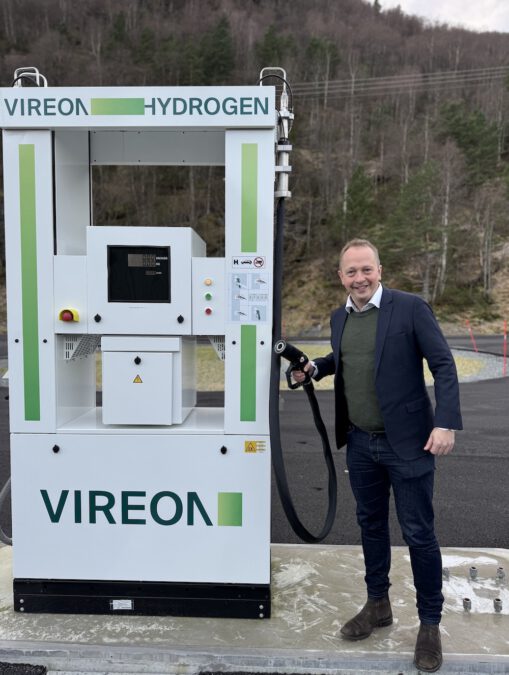
Per Øyvind Voie, Managing Director of Vireon. © Norwegian Hydrogen AS
(Finland) Vireon Hydrogen Oy has received a grant of €3,8 million from the state-owned business development agency Business Finland for the construction of a five-megawatt electrolysis plant in Jyväskylä. Vireon is already working on the Jyväskylä Hydrogen Hub. The first phase involves building a hydrogen refueling station for heavy-duty vehicles. The first users have already been secured, including five hydrogen-powered buses for local public transport. The station is scheduled to be operational by 2025. In the second phase, the hub will be expanded to include local hydrogen production. The electrolyzer will be built on the same site as the refueling station and is expected to produce approximately 700 tons of green hydrogen annually. Vireon Hydrogen Oy is the Finnish subsidiary of Vireon AS in Norway, an operator of hydrogen refueling stations for heavy-duty vehicles in the Nordic countries and a subsidiary of Norwegian Hydrogen AS, founded in 2023.
+ + + + +
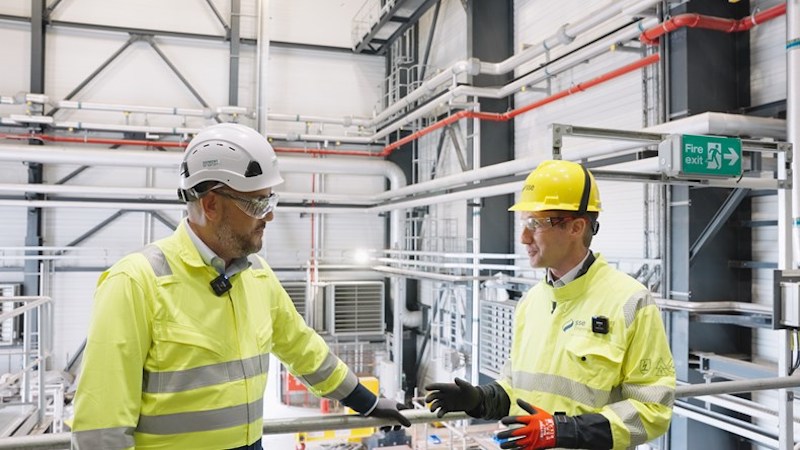
Darren Davidson, Vice President of Siemens Energy UK&I (left) and Finlay McCutcheon, Managing Director of SSE Thermal: “Hydrogen-powered power plants will be an essential element of the energy mix.” © SSE Thermal
(Great Britain) SSE Thermal and Siemens Energy plan to jointly develop a gas turbine that can run on 100 percent hydrogen. The project, dubbed "Mission H2 Power," is intended to support the decarbonization of SSE's Keadby 2 power station in North Lincolnshire. As part of this multi-million-pound co-investment, Siemens Energy will develop a new combustion system for its existing SGT5-9000HL gas turbine at the site, capable of operating flexibly with any natural gas/hydrogen mixture. To this end, Siemens Energy is constructing additional facilities at its Clean Energy Centre in Berlin to test the technology for large gas turbines. SSE Thermal is a thermal power generation subsidiary of the utility and telecommunications company SSE Plc, headquartered in England and Australia.
+ + + + +

Stadler supplies passenger trains to Caltrans with fuel cell drives from Ballard Power. © Stadler AG
(Canada) The US subsidiary of Swiss rail manufacturer Stadler Rail AG has commissioned fuel cell drive manufacturer Ballard Power Systems to supply "FCmove HD+" fuel cell motors with a combined output of eight megawatts. These are intended for Stadler's "Flirt H2" line of zero-emission passenger trains for the customer California Department of Transportation (Caltrans). The Flirt H2 was the first hydrogen-powered passenger train in the US to be approved by the Federal Railroad Administration (FRA). The order supports the acquisition of ten of these trains by Caltrans; there is an option for an additional 19 trains. The train can replace diesel trains on non-electrified or partially electrified lines and avoids investments in costly overhead lines. As previously reported, Stadler's North American division will be spun off from the Swiss business operations as an independent subsidiary in January.
+ + + + +
Report: “Import intermediate products instead of green hydrogen.” © Copernicus Project Ariadne
(Germany) Wanting to completely replace today's import of fossil fuels with green energy sources is not realistic - not only because green hydrogen and renewable electricity are in short supply in Germany, but also because they are much more difficult to transport than coal, oil or natural gas. "For fundamental physical and economic reasons, it is unrealistic to carry out all energy-intensive production steps for green raw materials in Germany in the future," explains Philipp Verpoort from the Potsdam Institute for Climate Impact Research. A subsidized 'business as usual' threatens to "end in a dead end." This is the conclusion reached by scientists in a report recently published by the Copernicus Ariadne project, which is funded by the Federal Ministry of Research. The authors propose instead to "shift the current import of fossil energy and raw materials to the import of green intermediate products and to concentrate more on the high added value in industrial processing." For example, the steel industry could import green pig iron in the future instead of iron ore as it does today and process it into steel in Germany. Then only the most energy-intensive step would be relocated abroad. Jobs in the steel industry and the downstream steel-intensive companies could be kept in Germany. The same applies to the chemical industry, which could import intermediate products such as green ammonia or green methanol in the future. Authors from the Potsdam Institute for Climate Impact Research, the Fraunhofer Institute for Systems and Innovation Research and Guidehouse are involved in the report. "Transformation of energy-intensive industry. Competitiveness through structural adjustment and green imports" is available free of charge as PDF (84 pages).
(Anm.d.Red.: The US Institute of Energy Economic and Financial Analysis recommends Australia due to the conditions there with plenty of wind and sun in a recently presented “Briefing Notes“To take the opposite approach: not to export the hydrogen produced there, but to use it domestically to produce green intermediate products for export.)
+ + + + +

Teco Innovation Center in Narvik: The parent company Teco 2030 ASA files for bankruptcy. © Teco 2030 ASA
(Norway) The board of directors of Norwegian fuel cell stack manufacturer Teco 2030 ASA decided late in the evening of December 10 to file for bankruptcy. "The board's decision is unanimous and is based on the fact that there is no longer a realistic possibility of raising sufficient capital to continue operations," said CEO Tore Enger and CFO Pål Christian Johnsen. As previously reported, an insolvency petition was filed against the subsidiary Teco 2030 Innovation Center AS at the beginning of December. The Innovation Center has a net claim of approximately 22 million kroner (1,8 million euros) against the company. Furthermore, a guarantee of 10 million kroner was provided to the Innovation Center's former landlord.
+ + + + +

Canadian Pacific wants to convert its locomotive fleet to fuel cell propulsion. © CPKC
(Canada) Ballard Power Systems Inc. is supplying 98 fuel cell engines to the rail company Canadian Pacific Kansas City (CPKC). The engines have a rated output of 200 kilowatts each, totaling approximately 20 megawatts. Delivery is scheduled for 2025. The engines will be used in the North American freight market. The two companies have been collaborating since 2021, with Ballard having already delivered systems with a combined output of ten megawatts for CPKC locomotives to convert diesel locomotives. A prototype, designated "1001," entered service in October 2022. In June 2023, CPKC and the US transportation company CSX Corp. agreed to a joint venture for the construction and provision of conversion kits for diesel locomotives to run on hydrogen. CPKC currently operates three hydrogen locomotives in freight service. As previously reported, two hydrogen production and refueling facilities in Calgary and Edmonton were commissioned in November.
+ + + + +
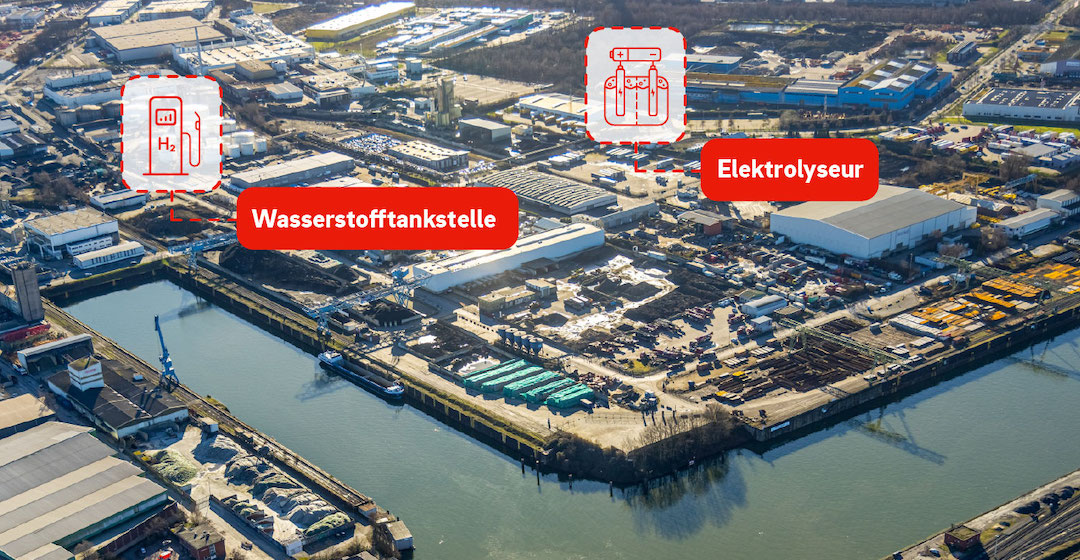
Eon project in Essen city harbor: electrolysis plant and a public hydrogen filling station. © Eon Hydrogen GmbH
(Germany) The production capacity of hydrogen projects under construction or with a confirmed investment decision has increased from 10,1 gigawatts in February 2024 to 11,3 gigawatts at the end of November. Current electrolysis capacity has grown by 68 percent since February to 111 megawatts of electrical power. This increase is primarily attributable to three major commissioning projects. The trend is expected to be larger: "So far, only electrolyzers with a capacity of up to 20 megawatts are in operation, but much larger projects have already received a final investment decision or are under construction," according to an "H2 balance sheet" published by the energy company Eon, based on data from the Energy Economics Institute at the University of Cologne (EWI). For the first time, the EWI has examined hydrogen import capacity. This is projected to potentially exceed 60 gigawatts by 2032, taking into account planned and existing pipelines. At 50 percent capacity, up to 2.700 terawatt-hours of hydrogen could be imported and made available for transit annually. In the long term, up to 100 terawatt-hours could be added via shipping if LNG terminals are repurposed. The import share of the projected demand of 95 to 130 terawatt-hours is estimated at 50 to 70 percent by 2030. "This would make the German government's target achievable," according to Eon. In the mobility sector, hydrogen-powered fuel cell passenger cars have fallen behind pure electric vehicles. In heavy-duty transport, however, both drive systems are represented, depending on the application. There has been significant growth in hydrogen trucks and tractors.
+ + + + +
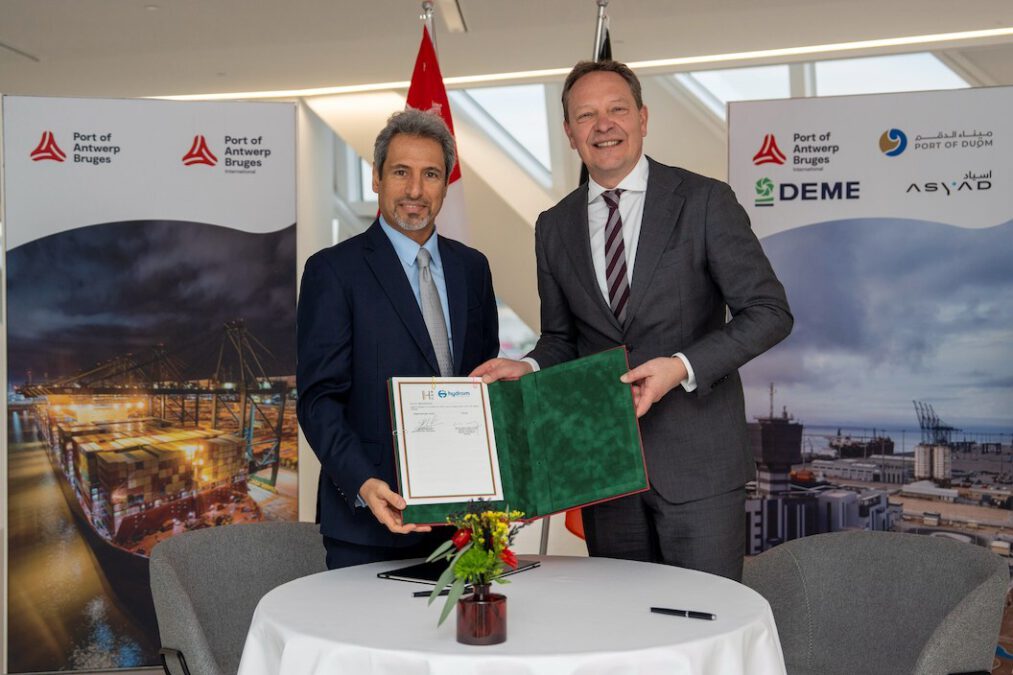
Hydrogen Oman and the Belgian Hydrogen Council have agreed to cooperate. It has not been disclosed exactly how this will work. © Hydrom Oman
(Belgium) The Sultanate of Oman and Belgium have agreed on "enhanced cooperation across the entire hydrogen value chain." A corresponding declaration of intent was signed by Hydrogen Oman (Hydrom) and the Belgian Hydrogen Council (BHC) during the state visit of Sultan Haitham bin Tarik. The agreement underlines "joint efforts to align policies, promote knowledge exchange and technological progress, and explore opportunities in hydrogen production, infrastructure, transport, and utilization," it states, as is typical for such agreements, in general and vague terms. (Editor's note: see above ticker on Thyssenkrupp Nucera)
+ + + + +
Photos
iStock / © Danil Melekhin



