

Germany: Operators of the hydrogen core network can now submit applications digitally +++ USA: Plug delivers 218 tons of liquid hydrogen to NASA +++ UK: BP cancels hydrogen project in Teesside due to lack of political support +++ Germany: BMW begins converting its logistics fleet to hydrogen propulsion in Regensburg +++ Germany: Ludwigshafen to get hydrogen filling station
A selection of PtX topics summarized at the end of the week
+ + + + +
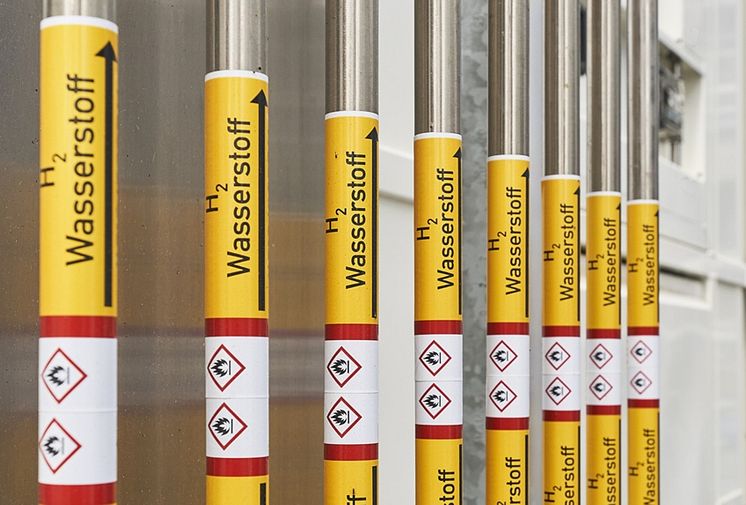
Gas transmission system operators can now submit and process applications for the hydrogen core network digitally via a platform. © German Association for Gas and Hydrogen Industry / Swen Gottschall
(Germany) The Hanseatic City of Hamburg is providing a nationwide, end-to-end digital application and approval platform with AI support for the approval of hydrogen core network pipelines. This will "significantly accelerate the entire process chain across the board." The platform is based on a portal for citizen participation and information (DiPlanung), which is already used in six German states for municipal land-use planning and spatial development. The project was initiated by the Federal Ministry for Economic Affairs and Energy, which is funding it from the Climate and Transformation Fund. The digital platform is now activated for the planning approval process for the expansion of the hydrogen core network by long-distance gas pipeline operators.
+ + + + +
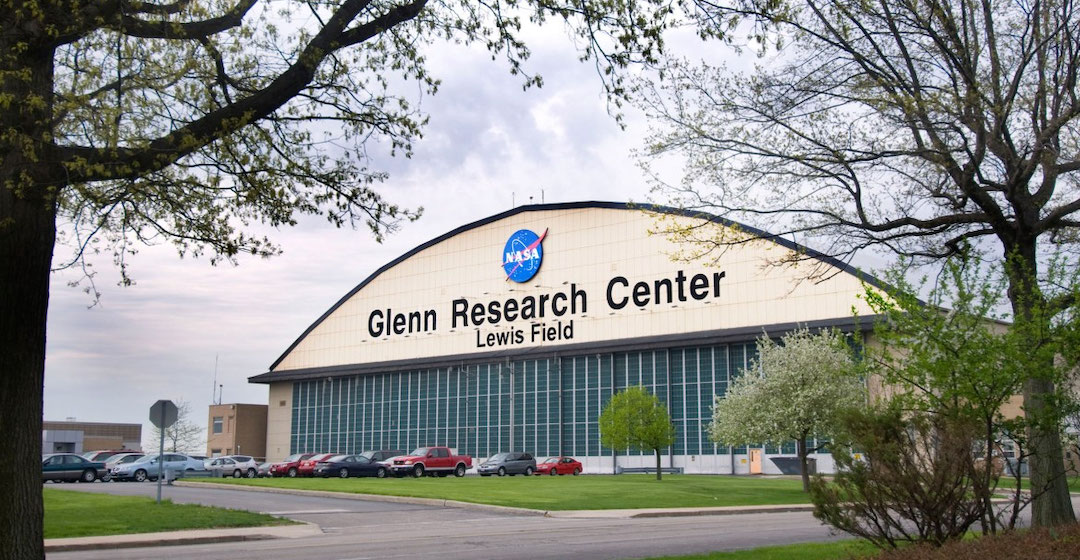
Hangar at the Glenn Research Center in Cleveland, Ohio. © NASA
(USA) Plug Power Inc. has signed a contract with NASA to deliver up to 218 tons of liquid hydrogen to the Glenn Research Center in Cleveland and the Neil A. Armstrong Test Facility in Sandusky, Ohio. The contract is reportedly worth $2,8 million. Plug will deliver the liquid hydrogen using its own dedicated cryogenic transport fleet and will utilize the growing network of hydrogen production facilities in the USA. NASA consumes more than 17 million tons of liquid hydrogen annually.
+ + + + +
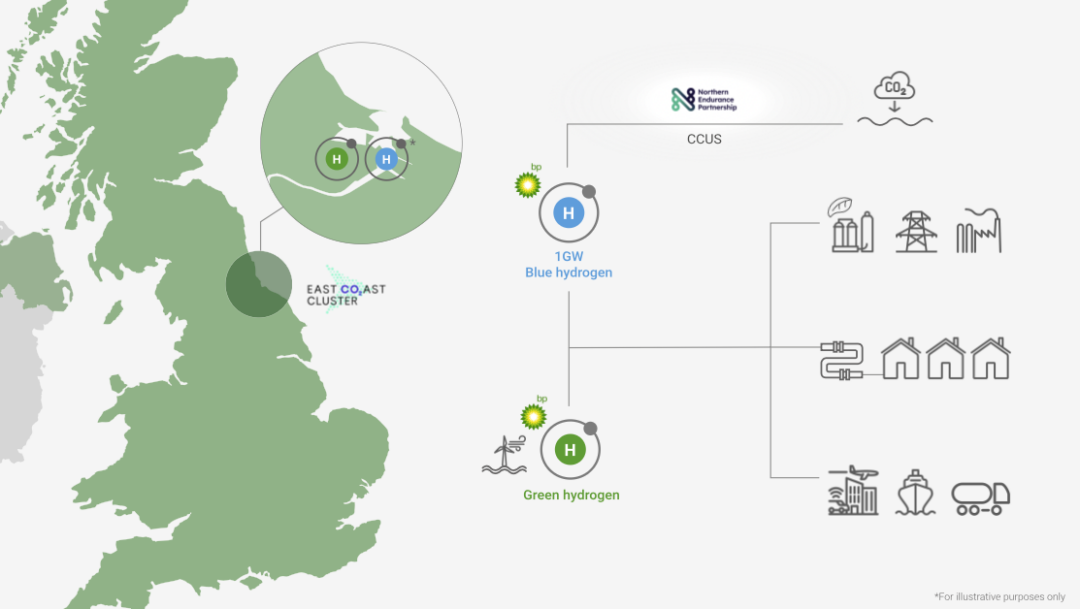
BP had big plans: Teesside project outline. © BP plc
(Great Britain) The oil company BP Plc. has abandoned plans to build a hydrogen plant called "H2Teesside" in the Teesside metropolitan area of northern England. This was reported by several media outlets. The reason appears to be a lack of local political support for the project. BP announced the project in 2021 and subsequently initiated the application process for a development permit as a "nationally significant infrastructure project." The plan was for an electrolysis plant with a final capacity of several hundred megawatts. However, landowner South Tees Group (STG) applied for a permit to build a data center on the site this summer, which was granted in August by Redcar and Cleveland Borough Council to Teesworks Ltd, part of STG ( as we reported ). BP has now withdrawn its plans just before a final decision by the Department for Energy Security and Net Zero (DESNZ), which had been specifically consulted, regarding the use of the land. BP would have been interested in a compromise to allow both projects to coexist. Teesworks is operated as a joint venture between the publicly owned and funded South Tees Development Corporation, which is managed by the Tees Valley Combined Authority (TVCA), and two businessmen from Teesside. The men initially owned 50 percent of Teesworks and increased this to 90 percent, while the remaining ten percent remained publicly owned.
+ + + + +
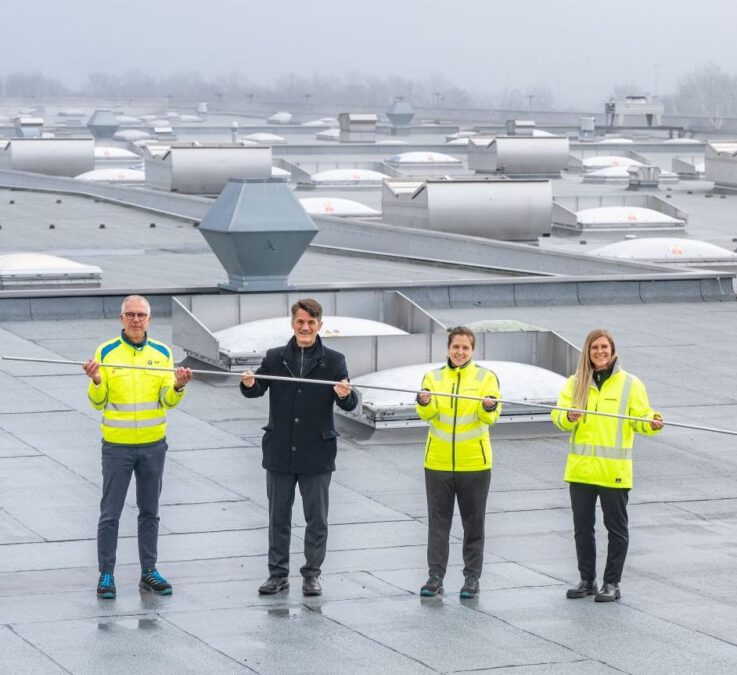
On the roof of a factory building, representatives of the plant and the city of Regensburg symbolically laid the first stainless steel pipeline for the future hydrogen network. © BMW Group
(Germany) The car manufacturer BMW has begun converting its logistics fleet to hydrogen propulsion at its Regensburg plant. Starting in 2026, all tugger trains and forklifts used for transport and logistics tasks in the press shop, body shop, and vehicle assembly will be converted. Trial operations will begin in the first half of the year. In the second half of the year, approximately 85 of the 230 vehicles will initially enter series production. The gradual conversion from electric to hydrogen propulsion is scheduled for completion by 2031. The plant will be equipped with a six-kilometer-long hydrogen pipeline network and six decentralized indoor refueling stations. Hydrogen will be supplied by trailer to a central outdoor unit with a small buffer storage tank. Currently, the Regensburg plant's logistics fleet is entirely battery-powered. The batteries used in the industrial trucks must be changed twice per shift. The battery swap is performed manually using a crane and takes about 2 minutes. "By using hydrogen, we are making our intralogistics highly flexible and scalable," says project manager Katharina Radtke. "Refueling is possible in a very short time and takes place at decentralized locations along the logistics routes." In addition, the elimination of battery changes after the conversion allows the fleet of industrial trucks to be reduced and a factory area of approximately 800 square meters, which is currently occupied by battery charging stations, to be used for other purposes.
+ + + + +
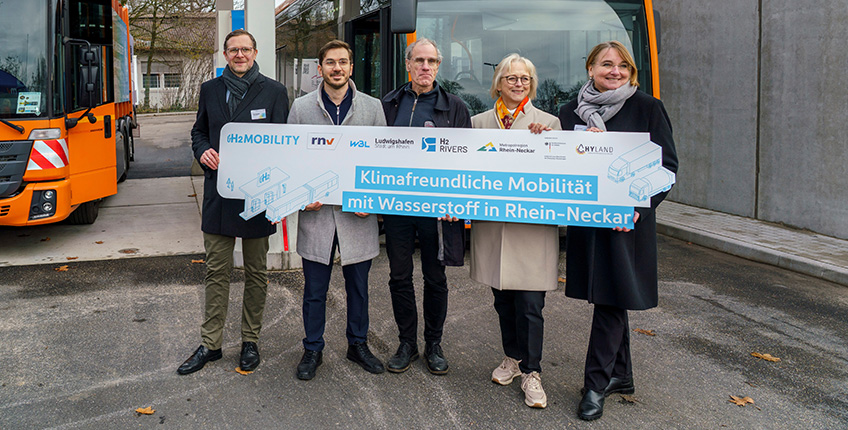
Martin Jüngel (Managing Director and CFO of H2 Mobility), Yunus Keskin (Project Manager for Alternative Drives at Mannheim Transport Authority), Alexander Thewalt (Head of Construction and Environment, Ludwigshafen), Doris Wittneben (Head of Future Fields and Innovations), Dagmar Fehler (Managing Director and Spokesperson of the federally owned Now GmbH). © H2 Mobility Deutschland GmbH & Co. KG / Nikola Neven Haubner
(Germany) A new hydrogen refueling station for eight fuel cell range-extender buses has opened in Ludwigshafen. The public station, with pressure levels of 350 and 700 bar, can also be used for other vehicle types. The new station is part of the "H2Rivers" project and is being funded by the German Federal Ministry of Transport with €1,18 million. The Ludwigshafen station is the third hydrogen refueling station in the region operated by H2 Mobility Deutschland GmbH & Co. KG. Hydrogen refueling stations were already opened last year in Heidelberg-Wieblingen at the new municipal depot for alternative drive systems and at the depot in Mannheim.
+ + + + +
Photos
iStock / © Danil Melekhin



