

Germany: Researchers increase the efficiency of AEM electrolyzer and replace iridium +++ Switzerland: EH Group launches modular 250 kW fuel cell system +++ Japan: Consortium plans to investigate the development of an H2 infrastructure at three Japanese airports +++ India: BASF and AM Green are considering purchasing 100.000 tons of green ammonia per year +++ Sweden: Greeniron signs H2 supply contract with Norwegian Hydrogen +++ Denmark: Hydrogen Pro receives EU funding for large-scale electrode production +++ Spain: Matteco raises €15 million to expand electrode production +++ Germany: EU funds Thyssenkrupp Nucera with €36 million +++ USA: Hyzon sells twelve FC refuse trucks in North America +++ USA: Cadiz and RIC Energy are building an industrial-scale green hydrogen production plant +++ France: Lhyfe lays the foundation stone for its largest green hydrogen production facility +++ UAE: Costs of electricity from renewables are falling rapidly (study) +++ Your advertisement on the PtX portal
A selection of PtX topics summarized at the end of the week
+ + + + +
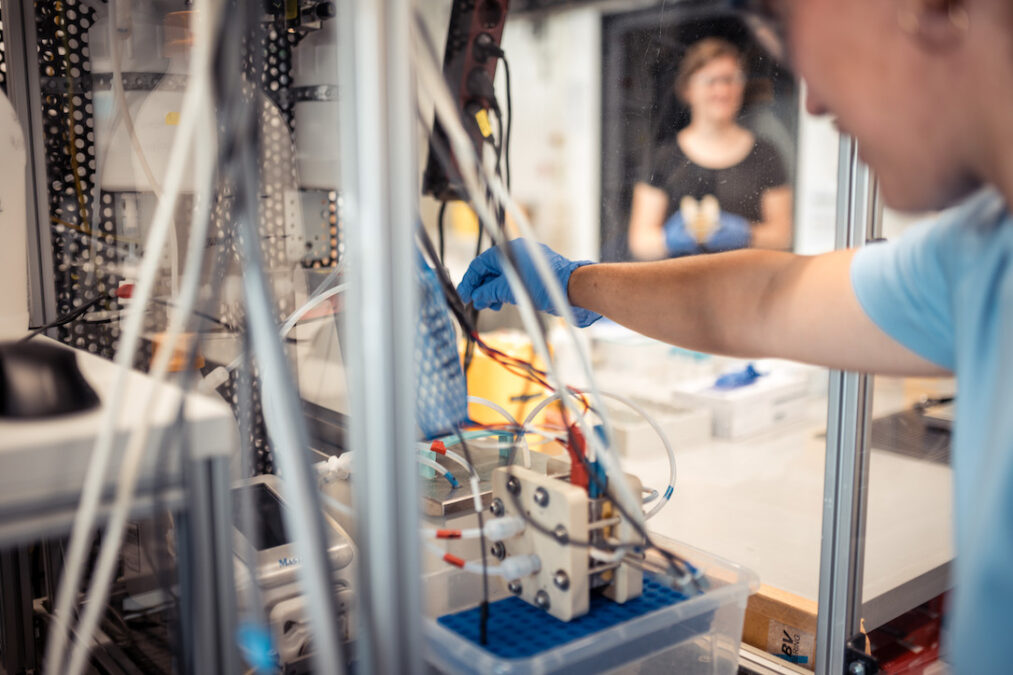
A team of researchers developed a membrane electrode unit coated with a nickel-based anode catalyst that is almost as powerful as a conventional PEM cell with an iridium catalyst. © Hahn-Schickard / IMTEK University of Freiburg / Flo Force Photography
(Germany) Researchers have developed an alkaline membrane electrolyzer (AEM) that, according to them, approaches the performance of PEM electrolyzers. Instead of expensive iridium, they used cost-effective nickel double hydroxide compounds with iron, cobalt, or manganese and developed a method to directly coat an alkaline ion-exchange membrane with these compounds, according to the team of scientists from the Technical University of Berlin, the Helmholtz-Zentrum Berlin (HZB), Siemens Energy, and the Institute for Microsystems Engineering (IMTEK, University of Freiburg). During electrolysis in the cell, they were able to conduct measurements during operation at the Berlin X-ray source BESSY II. A theoretical team from Singapore and the USA helped to interpret the experimental data. “This allowed us to elucidate the relevant catalytic-chemical processes at the catalyst-coated membrane, in particular the phase transition from a catalytically inactive alpha phase to the highly active gamma phase and the role played by the various O ligands and Ni4+ centers in the catalysis,” explains Peter Strasser from TU Berlin. “It is this gamma phase that makes our catalyst competitive with current state-of-the-art iridium catalysts.” The newly developed coating process for the membrane electrode promises “very good scalability.” A first fully functional small cell has been tested at IMTEK. The authors of the study, published in the journal "Nature Catalysis", stated that the work laid the basis "for industrial evaluation and demonstrates that an AEM water electrolyzer can also be highly efficient": "High-performance anion-exchange membrane water electrolyzers using NiX (X = Fe,Co,Mn) catalyst-coated membranes with redox-active Ni–O ligands" ( DOI: 10.1038/s41929-024-01238-w ).
+ + + + +
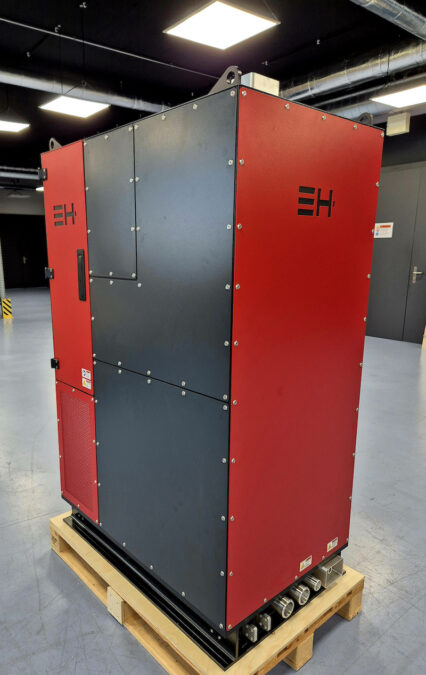
EH-TRACE M-250kW. © EH Group
(Switzerland) EH Group Engineering AG is launching its "EH-TRACE M-250kW" fuel cell system. It is a fully integrated power module including a heat exchanger and DC/DC converter. Thanks to its modular design, it can be configured for a power output of up to three megawatts in a standard 40-foot container. According to the company, the system was developed for "stationary high-performance applications" such as data centers, transport and logistics centers, microgrids, and emergency power supplies, but is also suitable for applications such as ships. It meets the performance requirements and safety standards of the maritime sector and has received preliminary approval from the certification body DNV.
+ + + + +
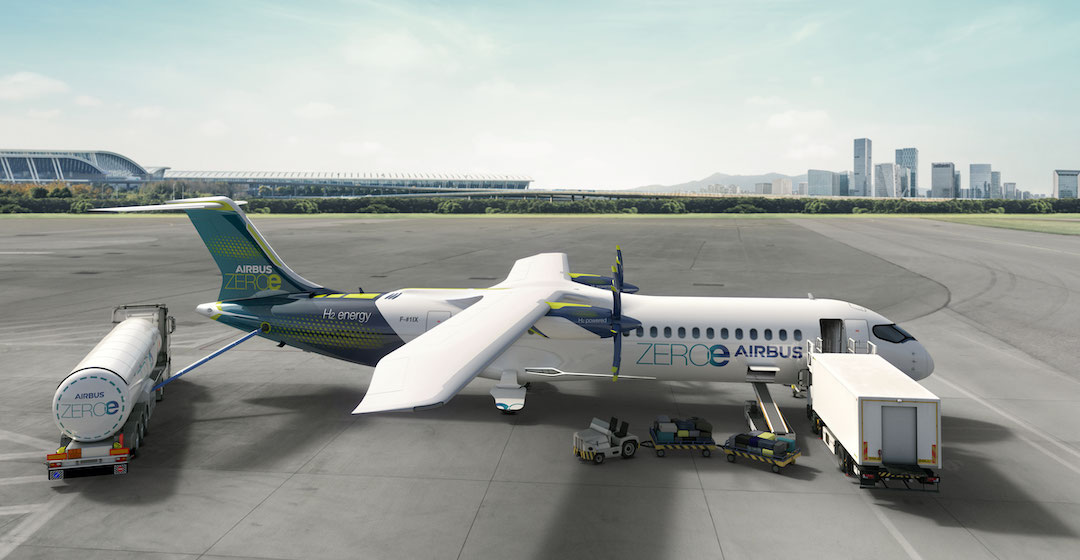
Graphic illustration: Airbus, Kawasaki and Kansai Airports want to jointly investigate the possibilities of building a hydrogen infrastructure at three airports in Japan. © Airbus
(Japan) Airbus, Kansai Airports, and Kawasaki Heavy Industries plan to jointly investigate the feasibility of hydrogen infrastructure at three airports: Kansai International Airport, Osaka International Airport, and Kobe Airport. The study will take into account the specific characteristics of both aircraft and airports. The goal is to develop a roadmap that will inform policy recommendations for potential demonstration projects. Airbus and Kansai Airports have been working on developing airport infrastructure since 2022, which has already led to the use of hydrogen in fuel cell buses and forklifts. The three airports have their own unique geographical and traffic characteristics, allowing Airbus to explore various hydrogen supply options on-site. The aerospace company is researching the development of hydrogen-powered commercial aircraft as part of its "ZEROe" program and aims to introduce them by 2035. This project is part of the "Airport for the Future" initiative, which promotes research into infrastructure requirements and low-carbon airport operations across the entire value chain. Agreements with partners and airports in 14 countries have been announced so far. Airbus and Toshiba recently reached an agreement to develop hydrogen-cooled superconducting aircraft engines ( as we reported ).
+ + + + +
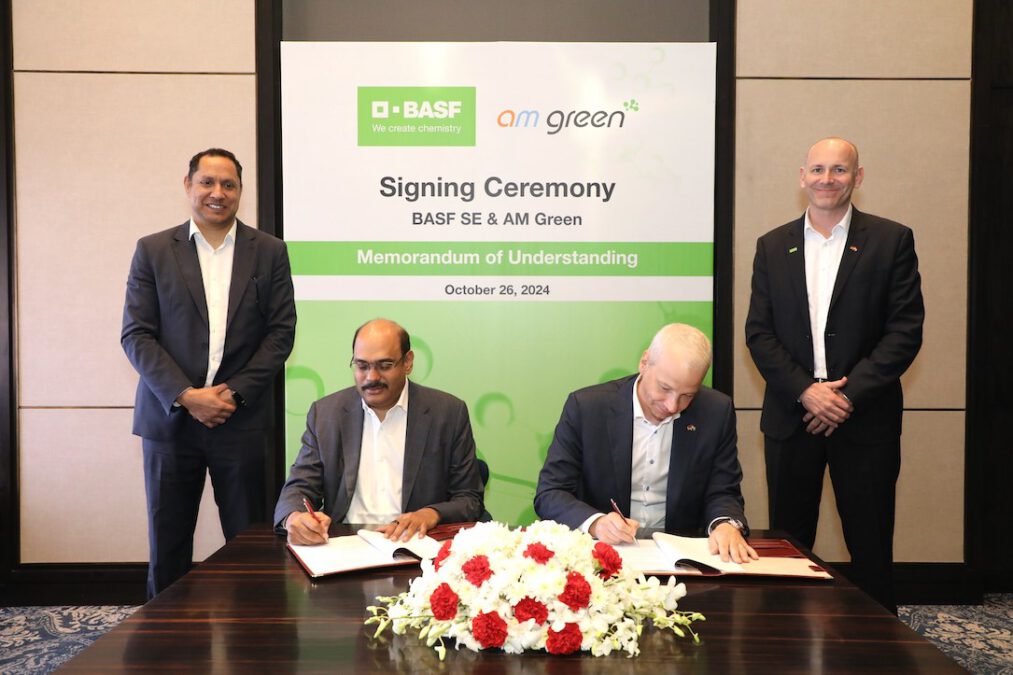
Agreement signed (from left): Gautam Reddy K (CEO, AM Green Ammonia), Mahesh Kolli (Group President, AM Green), Markus Kamieth (Board Member BASF SE), Alexander Gerding (Managing Director BASF India). © BASF
(India) Chemical giant BASF and AM Green BV have signed a memorandum of understanding to develop business opportunities for chemicals produced exclusively with renewable energy. The collaboration also includes a non-binding letter of intent to purchase 100.000 tons of green ammonia per year, produced at AM Green's facilities at various locations in India. Some AM Green plants have already been pre-certified under the voluntary CertifHy certification scheme for compliance with EU standards for renewable non-biological fuels (RFNBO). Pre-certification for AM Green's other facilities is currently underway ( as previously reported ). The partnership between AM Green and BASF aims to serve several downstream chemical industries and related consumer sectors by providing key green molecules for the production of chemicals, materials, and products in the markets served by BASF. AM Green, founded by the founders of the Hyderabad-based Greenko Group, aims to build a green ammonia capacity of five million tons by 2030. This would correspond to approximately one million tons of green hydrogen per year.
+ + + + +
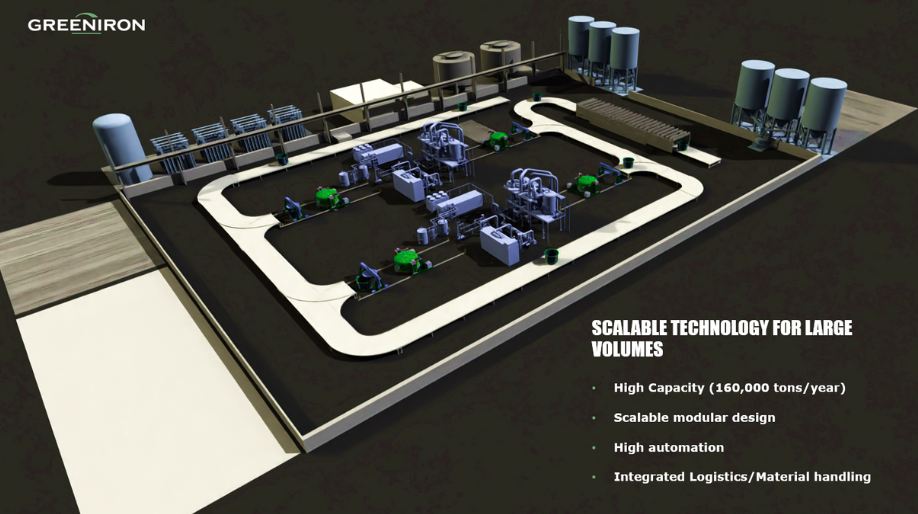 (Sweden) The Swedish company Greeniron H2 AB is about to start operations at its green metals production plant in Sandviken. The green hydrogen used as a reducing agent will be supplied by the manufacturer Norwegian Hydrogen AS, whose first production plant was recently opened in Hellesylt, Norway. Deliveries to Sandviken will begin "shortly," the companies said. "As Greeniron ramps up production during 2025, the contracted hydrogen volumes will quickly increase to a level" that will require "additional hydrogen production capacity to be brought into operation," said Simen Skaare Eriksen, CCO of Norwegian Hydrogen. Greeniron H2 AB has developed a process for reducing metal oxides from ores, residues and waste to metals, which are then further processed.
+ + + + +
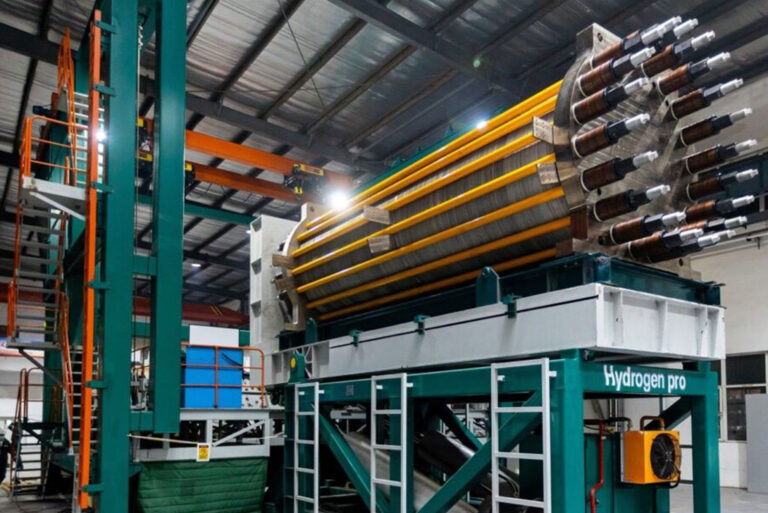
Hydrogen Pro receives funding of 16,5 million euros for the large-scale production of electrodes for electrolyzers. © Hydrogen Pro ASA
(Denmark) Hydrogen Pro ApS, the Danish subsidiary of Hydrogen Pro ASA, has received a grant of €16,5 million from the EU Innovation Fund for the large-scale production of its electrode technology for alkaline high-pressure electrolyzers. A production line is currently being installed at the research and development center in Denmark and is scheduled to be operational by the first quarter of 2025 with an annual capacity of 350 megawatts. The large-scale factory, dubbed "H2 Giga," will leverage the experience gained from the initial production line and is designed for an additional capacity of 500 megawatts, which can also be significantly expanded to meet future customer demand. The grant is a key component of the financing for the "H2 Giga" project and complements the 35 million Danish kroner (€4,7 million) awarded by the Danish Export and Investment Fund in May 2024. Together, these grants account for more than 50 percent of the total investment for the project.
+ + + + +
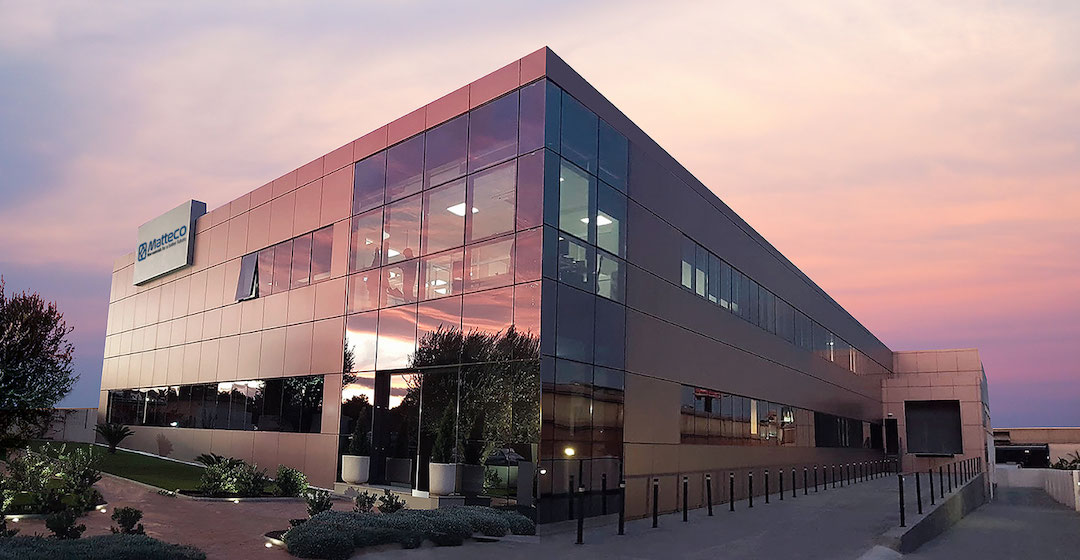
Matteco wants to increase its production capacity for electrodes to one gigawatt. © Matteco Team SL
(Spain) Matteco Team SL has raised €15 million in a funding round for its catalyst and electrode factory in Paterna (Valencia). The University of Valencia spin-off, founded in 2023, plans to produce the equivalent of one gigawatt of electrodes per year at the site. This will increase capacity to meet the growing demand from manufacturers of alkaline and AEM electrolyzers worldwide. Matteco has customers in Europe, North America, and Asia. The number of employees will also increase from the current 30 to 100 by 2025. According to the company, investors include a group of national and international family offices, as well as Grupo ASV (Spain), Napali (Chile), and the venture capital firm and co-founder Zubi Labs (Spain).
+ + + + +
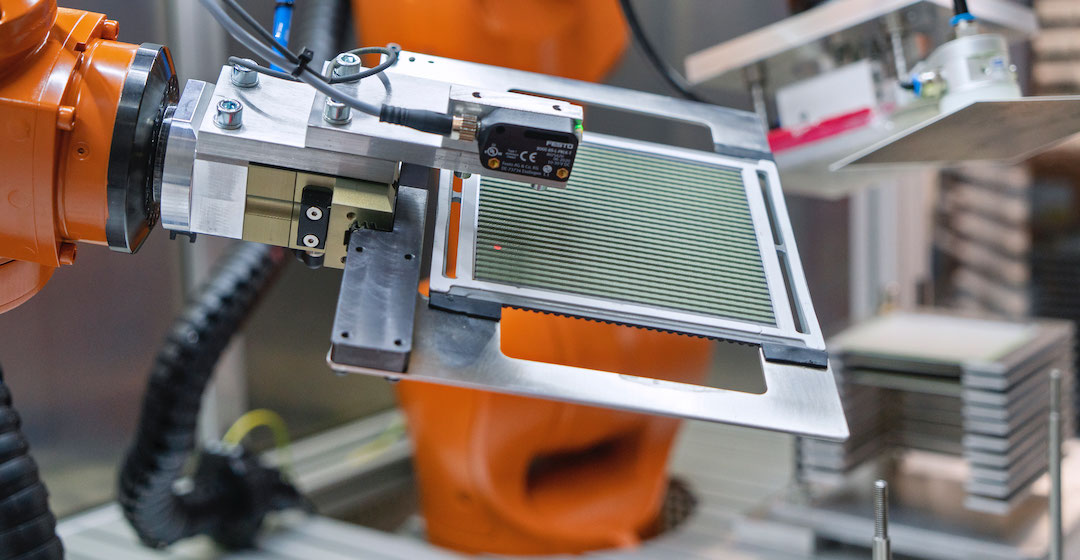
Fully automatic assembly of individual components into high-temperature electrolyzers and high-temperature fuel cells. © Fraunhofer IKTS
(Germany) Thyssenkrupp Nucera has received €36 million in EU funding to build a 300-megawatt production plant using the high-temperature electrolysis technology SOEC (Solid Oxide Electrolyzer Cell). SOEC technology offers very high energy efficiency. This could particularly benefit industries that generate waste heat, such as the steel industry. Utilizing this waste heat significantly reduces electricity consumption. Thyssenkrupp Nucera and the Fraunhofer Institute for Ceramic Technologies and Systems IKTS have been working since March to bring high-temperature electrolysis to market readiness. Fraunhofer IKTS developed the fundamental principles for SOEC technology. Before the large-scale plant is commissioned, a pilot plant with an installed capacity of eight megawatts is scheduled to go into operation in the first half of 2025. The electrolysis stacks, the core component of the high-temperature electrolysis plant, will initially be manufactured in small quantities in Arnstadt, Thuringia.
+ + + + +
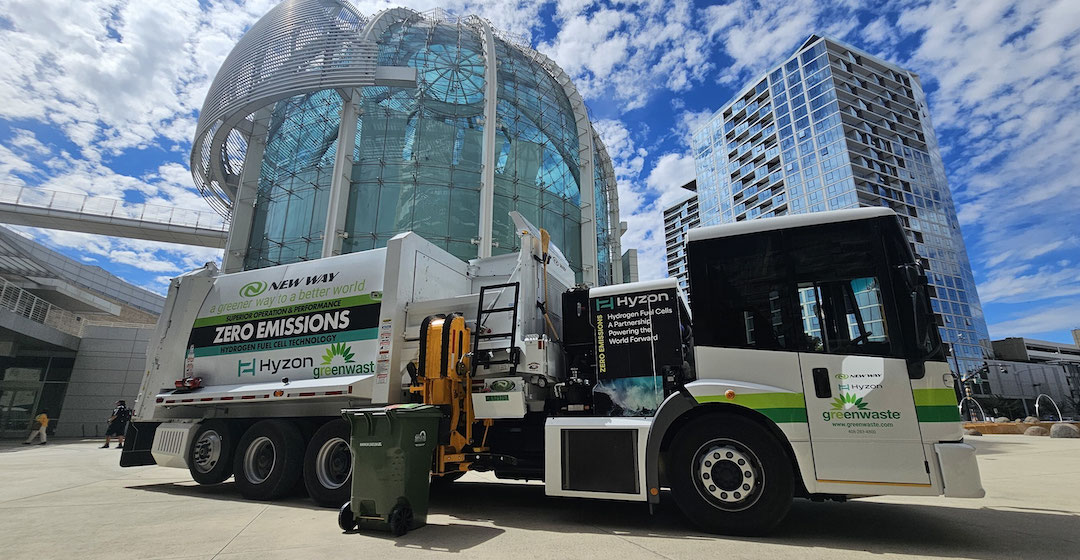
Hyzon has signed a contract with Green Waste to supply twelve waste collectors. © Hyzon Motor Inc.
(USA) US fuel cell system manufacturer Hyzon Motors Inc. has signed a contract with recycling company Green Waste for the delivery of twelve fuel cell-powered refuse collection vehicles (FCEVs). The truck, developed in collaboration with waste body manufacturer New Way Trucks, was tested in California just a few months ago (as previously reported). Hyzon's Chief Executive Officer, Parker Meeks, stated that "it is clear that demand is growing for hydrogen-powered refuse collection vehicles powered by Hyzon's high-performance fuel cells." According to Hyzon, the FCEVs are the first hydrogen-powered refuse trucks offered for trial and purchase in North America. Green Waste is the first company in North America to commercially deploy these vehicles. The purchase agreement was finalized after Green Waste tested the Hyzon FCEV on several routes in the Bay Area, evaluating load capacity and range. Deliveries are scheduled to begin in the fourth quarter of 2025.
+ + + + +
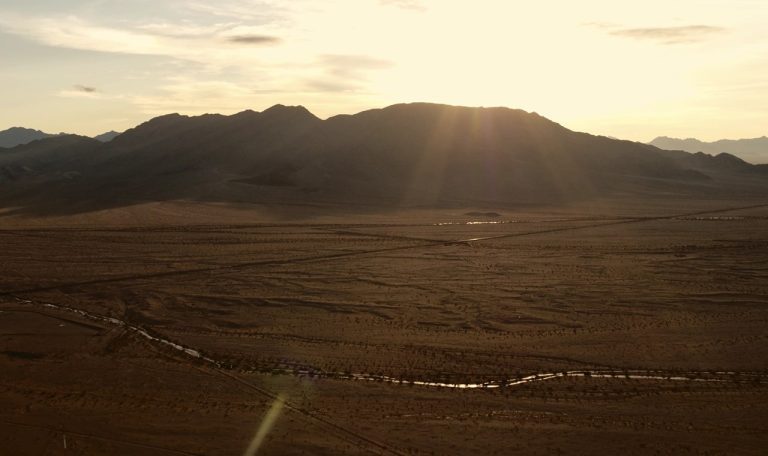
On the Cadiz Ranch site in California's Mojave Desert, around 12.000 square meters (3.000 acres) are available for the installation of open-space PV systems. The yield is used to produce green hydrogen. © Ric Energy
(USA) California water utility Cadiz Inc. and PV project developer Ric Energy plan to build a large, solar-powered hydrogen production plant at the Cadiz Ranch in the Mojave Desert. The planned capacity is 50 tons per day. While the installed electrolyzer capacity is not specified, it is expected to exceed 120 megawatts. Several locations throughout the state were previously evaluated. Cadiz will provide Ric Energy with land and water for the production of industrial-scale green hydrogen. The plan envisions a self-sufficient, integrated, off-grid facility. Plans also include energy storage and a hydrogen compression and liquefaction plant for transport by rail or road. The location is also ideally suited for potential future hydrogen pipelines serving the Los Angeles area. The hydrogen can also be blended with natural gas on-site, which can then be transported via the plant and the nearby gas pipeline network. California is one of seven recipients of the US government's Regional Clean Hydrogen Hubs ( H2Hubs ) award. The Alliance for Renewable Clean Hydrogen Energy Systems LLC (ARCHES) aims to produce hydrogen there exclusively from renewable energy sources and biomass. The funding amounts to $1,2 billion. The network comprises approximately 200 companies and institutions.
+ + + + +
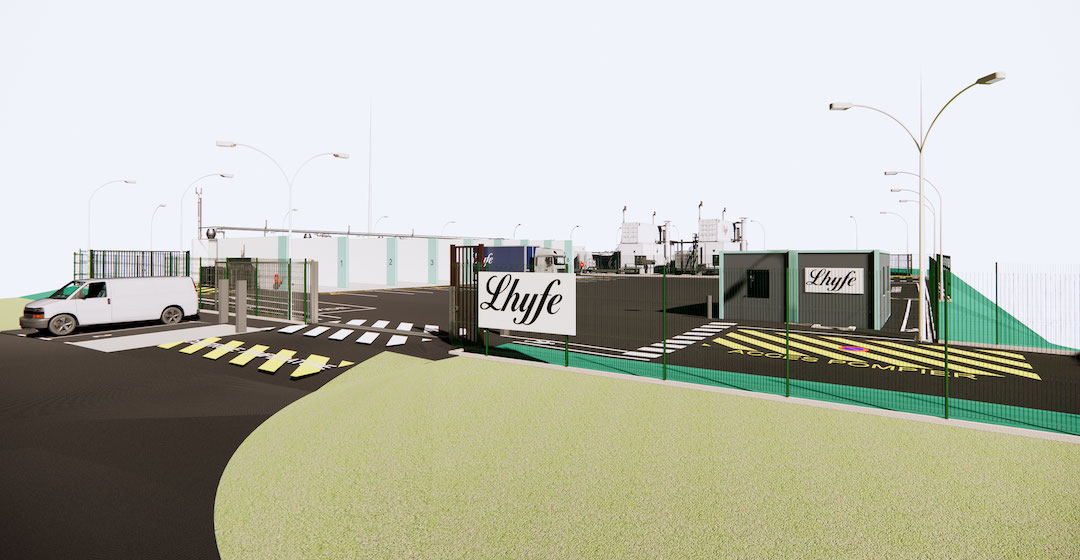
Rendering of Lhyfe's future Le Cheylas site in the SLS Actiparc industrial park (Isère). © Lhyfe
(France) Lhyfe has laid the foundation stone for a green hydrogen production facility in the Auvergne-Rhône-Alpes region. Located on a 7.000-square-meter site in the former Le Cheylas steelworks landfill, the facility will have a 10-megawatt electrolysis capacity and will produce up to four tons of hydrogen per day. The hydrogen will be used to supply filling stations operated by Hympulsion and will also replace the gray hydrogen currently used by local industry. The original plan called for a 5-megawatt facility with a daily output of two tons. The plant is scheduled to begin operations in early 2026. This doubling of capacity will make it Lhyfe's largest site in France, after Bessières and Buléon, each with a 5-megawatt capacity. As France's largest industrial region in terms of employment, Auvergne-Rhône-Alpes is at the forefront of hydrogen adoption for mobility and industry in Europe. The first projects started in 2017, including the Zero Emission Valley (ZEV) project, supported by the region and implemented by Hympulsion, and Imaghyne (Investment to Maximise the Ambition for Green Hydrogen in Europe) in 2024. Lhyfe has signed a ten-year contract with Hympulsion to supply hydrogen refueling stations with a volume of 600 tons per year (approximately 1,6 tons per day). Six stations have already been inaugurated, and seven more are currently under construction. The Lhyfe Le Cheylas site is receiving a combined total of approximately €6,25 million in funding from the European Regional Programme and the Clean Hydrogen Partnership.
+ + + + +
IRENA published the study “Renewable Power Costs in 2023”. © IRENA
(United Arab Emirates) The cost of electricity from renewable energy sources has fallen rapidly since 2010, while the cost of fossil fuels continues to rise. 81 percent of the 473 gigawatts of new renewable energy power capacity added in 2023 had lower levelized cost of electricity (LCOE) than its fossil fuel-based counterparts. Moreover, fossil fuel prices were approaching historically high levels. This is according to the report "Renewable Power Generation Costs in 2023," recently published by the International Renewable Energy Agency (IRENA). The report states that solar power became 90 percent cheaper on average globally between 2010 and 2023. In 2023 alone, the price reduction was 12 percent. The cost of electricity from onshore wind and concentrated solar power (CSP) fell by 70 percent over the same period (2023: onshore wind minus 3 percent, CSP minus 4 percent). Costs for offshore wind energy fell by 63 percent (2023: seven percent). “Renewable energy prices can no longer be used as an excuse,” says IRENA Director-General Francesco La Camera. “The low cost of renewables is a crucial incentive to significantly increase ambitions and triple renewable electricity generation capacity by 2030, as set at COP28.” This would require an average of 1.044 gigawatts of new capacity to be added globally each year until 2030. Photovoltaics and onshore wind power could account for the largest share. Policy measures, regulations, market structures, support instruments, and risk mitigation and financing mechanisms must be “rapidly aligned” accordingly. “Renewable Power Costs in 2023” is available as a PDF (211 pages) and as a summary (12 pages).
+ + + + +
Your ADVERTISING on the PtX portal
Photos
iStock / © Danil Melekhin



