

Finland: Neste abandons investment in a 120 MW electrolyzer at the Porvoo refinery +++ USA: San Mateo County Transit orders 108 fuel cell buses from NFI +++ Germany: Thyssenkrupp to supply VW with CO2-reduced steel +++ Norway: Nel ASA receives €135 million for further development of electrolyzers +++ Sweden: John Laing and Aquatech finance and build water treatment plant for Stegra steelworks +++ Australia: Groundbreaking ceremony for Australian hydrogen project with 10 MW capacity +++ Germany: Statkraft expects EU funding for electrolyzer and heat pump in Emden +++ Germany: Study on hydrogen storage +++ Germany: Saarstahl awards contracts for DRI plant and electric arc furnaces +++ Sweden: Statkraft applies for permit for 2,1 GW offshore wind power +++ Your ADVERTISEMENT on the PtX portal
A selection of PtX topics summarized at the end of the week
+ + + + +

Neste abandons the construction of a planned 120-megawatt electrolyzer at its Porvoo refinery, Finland © Neste
(Finland) The Finnish chemical company Neste Corporation has decided against investing in a 120-megawatt electrolyzer project to produce renewable hydrogen at its Porvoo refinery. The company cites "difficult market conditions" and its "financial performance" as the reasons for the decision, stating that it requires a "critical evaluation of all new investments." The "strict restrictions on the use of renewable hydrogen in the refinery's processes" prevent the "full economic utilization of an electrolyzer" of this size. However, the company is exploring "alternative ways to secure renewable hydrogen in Porvoo." The goal remains "to utilize renewable hydrogen and thereby contribute to fulfilling the Finnish Renewable Fuels of Non-Biological Origin (RFNBO) supply commitment."
+ + + + +

NFI is to deliver 108 fuel cell buses to SamTrans. © NFI Group Inc
(USA) US bus manufacturer New Flyer of America Inc., a subsidiary of NFI Group Inc., will deliver 108 Xcelsior Charge FC fuel cell buses to San Mateo County Transit (SamTrans), California. This is the largest single order for fuel cell buses in the company's history. SamTrans provides transit services in San Mateo County and is expanding its reach to San Francisco and Palo Alto. The investment is made possible through combined funding from the Federal Transit Administration (FTA), the California Hybrid and Zero-Emission Truck and Bus Voucher Incentive Project (HVIP), and unspecified local funding. The hydrogen buses will replace SamTrans' diesel buses. "Our partnership with SamTrans spans nearly 35 years," said Chris Stoddart, President, North American Bus and Coach, NFI. "During that time, New Flyer has delivered more than 175 buses, 27 of which were zero-emission."
+ + + + +

Thyssenkrupp Steel and Volkswagen have signed a MoU for the supply of CO2-reduced steel (from left): Matthias Eden (VW Head of Group and Brand Procurement Metal Raw Materials and Exhaust Systems), Michael Bäcker, Head of Group Procurement Metal), Dennis Grimm (Thyssenkrupp Steel CEO), Simon Stephan (Sales Automotive, Senior Vice President). © Thyssenkrupp Steel
(Germany) Thyssenkrupp Steel Europe AG and the Volkswagen Group have reached an agreement for the supply of CO2-reduced steel from the future direct reduction plant. The plant, scheduled to begin operation in 2027, will be powered by hydrogen and green electricity. Initially, it will be ramped up using natural gas as the reducing agent and will be gradually converted to hydrogen. Thyssenkrupp calls the resulting product "bluemint steel." Steel accounts for 15 to 20 percent of the emissions from an electric vehicle. The CO2-reduced steel will support the automaker in its efforts to decarbonize the Group. Deliveries are slated to begin in 2028 and will then be expanded step by step.
+ + + + +
(Norway) Nel Hydrogen Electrolyser AS, a subsidiary of Nel ASA, has received €135 million in EU funding to industrialize its electrolyzers based on alkaline pressure technology. This technology is currently in the prototype stage. Further development will take place on Herøya, Norway. The initial expansion is planned for an annual capacity of one to two gigawatts. Nel intends to increase this to four gigawatts. However, the final investment decision to begin capacity expansion depends on successful tests in the prototype and pilot phases, as well as market acceptance of the new technology.
+ + + + +
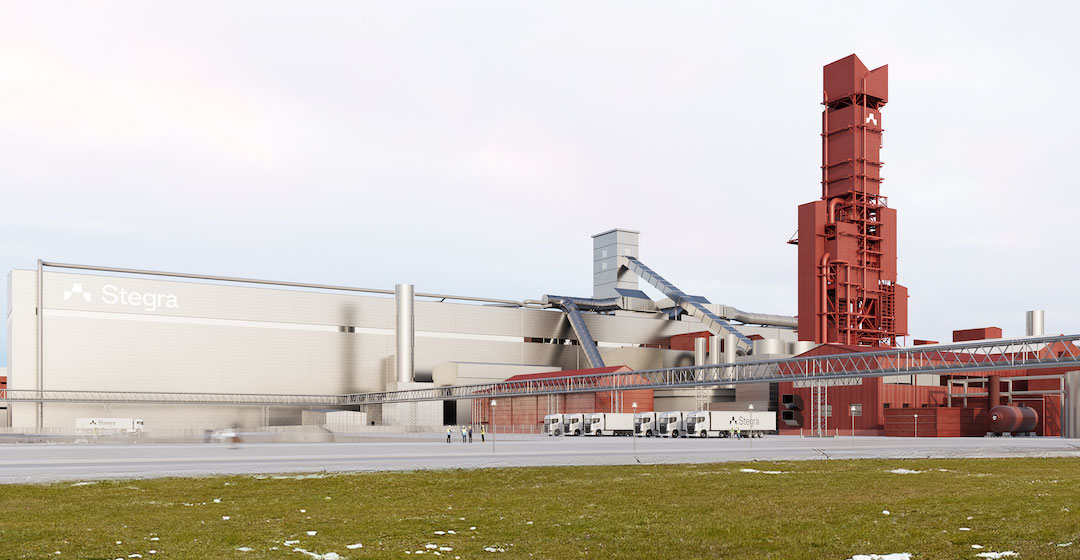
Production of green steel is scheduled to start in Boden in 2026. © Stegra
(Sweden) British investor John Laing Group plc and US process technology provider Aquatech will build, finance, and operate a water treatment plant for Stegra (formerly H2 Green Steel AB) in Boden, Sweden. The companies have signed a 25-year service agreement. The plant is described as "a crucial part of the infrastructure" for the operation of the green steel plant currently under construction there. It will supply demineralized water for the electrolyzers used to produce green hydrogen, purified water for cooling the system, and treat wastewater from the steel plant, returning 99,9 percent of the process water to the system. Stegra's Boden plant is scheduled to begin operations in 2026.
+ + + + +

AGIG plans to install a ten-megawatt electrolyzer in Wodonga (Photo: Rendering of the AGIG hydrogen park in Gladstone, Queensland, where construction began in October 2023). © AGIG
(Australia) Energy provider Australian Gas Infrastructure Group (AGIG) has begun construction of the "Hydrogen Park Murray Valley." This includes a 10-megawatt electrolyzer from Longi Hydrogen, which is expected to produce around 500 tons of renewable hydrogen per year. Up to ten percent of the output will be fed into the local gas network, supplying commercial and industrial consumers as well as approximately 40.000 homes and businesses in Albury-Wodonga, located on the banks of the Murray River. The two towns, Albury (New South Wales) and Wodonga (Victoria), are separated only by the river and lie in two different states. AGIG is investigating the feasibility of using recycled water from the North-East Water wastewater treatment plant for hydrogen production. The investment costs are estimated at 65 million Australian dollars (40 million euros). Unspecified funding is being provided by the Australian Renewable Energy Agency, the Victorian government, and the Clean Energy Finance Corporation. Two similar projects are underway in South Australia and Gladstone, Queensland. AGIG owns, operates, and invests in infrastructure that supplies more than two million households and businesses with gas. The company operates more than 35.000 kilometers of distribution networks, 4.300 kilometers of transmission pipelines, and storage facilities.
+ + + + +
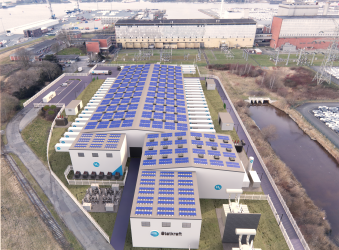
Visualization of the Statkraft site in Emden. The company wants to produce green hydrogen there. © Statkraft
(Germany) Energy supplier Statkraft expects its plans to develop a 200-megawatt electrolysis plant and a 50-megawatt heat pump system in Emden, Lower Saxony, to receive EU funding. According to the company, negotiations are currently underway for a grant of up to €107 million for the project. This would enable the annual production of up to 20.000 tons of renewable hydrogen and up to 50.000 megawatt hours of green heat. The hydrogen would be transported to customers nationwide via the hydrogen core network. The waste heat from the electrolysis process would be fed into the local district heating network. Statkraft has already signed several letters of intent with potential customers for green hydrogen and green district heating in Emden. Furthermore, an investment decision is expected later this year for the construction of a ten-megawatt electrolyzer to produce green hydrogen for filling stations in the region.
+ + + + +

The study “Construction and financing of hydrogen storage facilities in Germany” was prepared by Dena, Fraunhofer ISI and Guidehouse on behalf of the BMWK. © Dena
(Germany) Due to the long implementation times, the construction of extensive hydrogen storage capacities (e.g., in caverns) should be initiated as soon as possible in the coming years. This also requires political support. Final investment decisions cannot currently be made without government assistance during the ramp-up phase. For financing, the compensation of demand risks for storage operators is crucial. "If sufficiently secure revenues to cover costs and the mitigation of relevant risks cannot be guaranteed, investments in the necessary expansion of storage capacity are likely to be significantly insufficient," states the analysis "Development and Financing of Hydrogen Storage in Germany." In addition to financial aspects such as financing models and funding mechanisms, the analysis also examines technical and economic aspects of storage expansion. The study was prepared by a consortium led by the German Energy Agency (Dena), the Fraunhofer ISI Institute, and the consulting firm Guidehouse, commissioned by the Federal Ministry for Economic Affairs and Energy (BMWK). "Development and Financing of Hydrogen Storage in Germany" is available free of charge as a PDF (124 pages).
+ + + + +

SHS wants to offer green steel in the future and is converting the production process to direct reduction. The picture shows a continuous casting plant in the Völklingen steelworks, Saarland. © Saarstahl AG
(Germany) The Stahl-Holding-Saar Group (SHS) recently awarded contracts for a direct reduction plant (DRI) and two electric arc furnaces (EAF). The DRI will supply the Dillingen and Völklingen production sites with iron pellets. The Dillingen plant can operate with varying mixtures of natural gas and hydrogen. According to the company, Primetals Technologies, Midrex Technologies Inc., and the DSD Steel Group were awarded the contracts. In the EAFs, CO2-reduced steel will be produced from the iron pellets manufactured in the DRI plant by adding scrap metal. Primetals Technologies, the DSD Steel Group, and the SMS Group were awarded the contract for their installation. The plants are "the core components of the decarbonization project" and have a production capacity of 3,5 million tons of crude steel per year. This will allow the SHS Group to convert 70 percent of its capacity to CO2-reduced production. Commissioning is scheduled for 2028/29. The total investment for the "Power4Steel" conversion to green steel production using green electricity and hydrogen amounts to approximately €4,6 billion. Of this, €2,6 billion will be subsidized by the federal and state governments. In April, SHS signed a 15-year contract with EnBW AG for the purchase of green electricity from wind farms in the range of 200 gigawatt-hours per year.
+ + + + +
(Sweden) The Norwegian state-owned energy company Statkraft AS has submitted an application to the Ministry of Climate and Economy for approval of a 2,1-gigawatt offshore wind farm. "Baltic Offshore Delta North," with a planned 105 turbines, is located in the Swedish exclusive economic zone in the Baltic Sea, approximately 100 kilometers east of Stockholm and 55 kilometers east of the island of Sandhamn. Depending on the final landfall and grid connection location, the wind farm could be connected to hydrogen or e-fuel technologies, which would ensure grid stability.
+ + + + +
Your ADVERTISING on the PtX portal
Photos
iStock / © Danil Melekhin



