

Brazil: Vale and Green Energy Park plan to build a hydrogen hub +++ Germany: ISE study on H2 potential in Colombia +++ Ireland: Microsoft plans to operate data center with green hydrogen +++ USA: Department of Energy funds electrolyzer research with eight million dollars +++ Germany: Offshore hydrogen production could save Germany 4,3 billion euros per year +++ Germany: ABO Energy receives BImSchG approval for green hydrogen project +++ Germany: Lecture series on hydrogen in Magdeburg +++ Spain: Plug Power and Carreras Grupo plan to convert forklifts to fuel cells +++ DISCOUNT offer: Your advertisement on the PtX portal
A selection of PtX topics summarized at the end of the week
+ + + + +
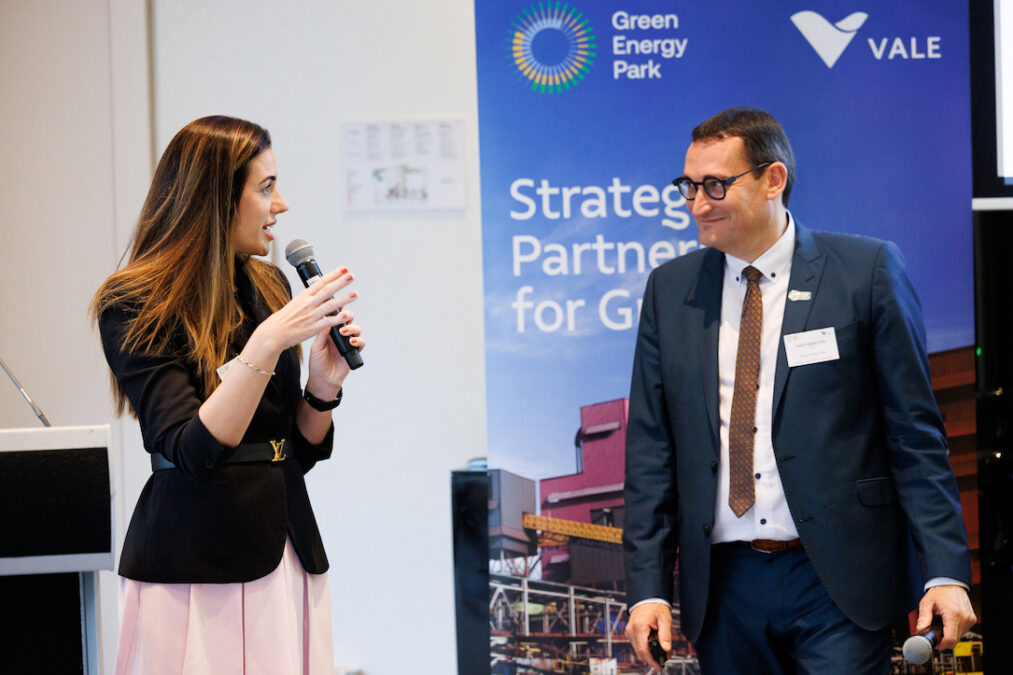
Ludmila Nascimento, Director of Energy and Decarbonization at Vale and Bart Biebuyck, CEO at GEP. © Green Energy Park Global BV
(Brazil) Green Energy Park Global BV (GEP) and the Brazilian mining company Vale plan to jointly develop solutions for decarbonizing the steel sector. According to the companies, they will initially conduct feasibility studies for the construction of a green hydrogen production plant to supply an industrial complex for the manufacture of low-carbon steel products. Vale intends to produce iron ore agglomerates (pellets or briquettes) as low-carbon steel precursors using renewable hydrogen as a reducing agent. In the process known as "direct reduction" (DRI), CO2-intensive coke is replaced by natural gas or hydrogen to extract iron. The process transforms ore into "sponge iron" in pellet form. The pellets are pressed into hot briquetted iron (HBI) and then further processed into crude steel in an electric arc furnace. "We are leveraging Brazil's competitive advantages, such as high-quality iron ore and abundant renewable energy resources," says Ludmila Nascimento, Director of Energy and Decarbonization at Vale. “In this way, we are developing the supply of green hydrogen that will make it possible to supply European steel producers with green HBI.” Vale had already signed a letter of intent with the port of Açu in September 2023 ( as reported ) to explore the export of HBI.
+ + + + +
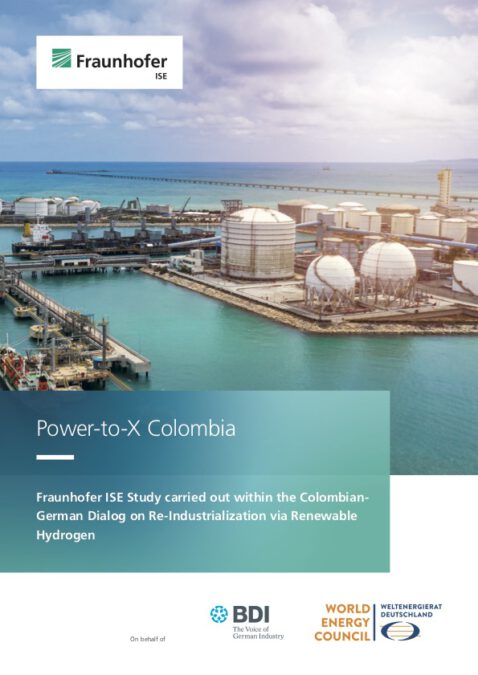
The study “Power-to-X Colombia” identifies potential locations for large-scale Power-to-X production. © Fraunhofer ISE
(Germany) “Colombia offers outstanding potential” for Germany to meet its hydrogen needs. Three regions (Cartagena/Barranquilla, La Guajira, and Valle del Cauca) are considered particularly suitable. Conversely, the Colombian government has expressed strong interest in supporting industrial partnerships with Germany on energy transition technologies. These are the findings of the study “Power-to-X Colombia,” conducted by the Fraunhofer Institute for Solar Energy Systems ISE on behalf of the Federation of German Industries (BDI) and the World Energy Council (WEC). The study examined both the production and distribution costs of hydrogen. Areas suitable for large wind and solar farms were compared with locations for potential hydrogen and PtX hubs that possess CO2 sources, water resources, and the necessary infrastructure (electricity grids, roads, and ports). Overall, larger Power-to-X hubs could be realized in the medium to long term and operated entirely with renewable electricity, particularly with the consistent expansion of offshore wind potential. In addition to purely techno-economic criteria, socio-economic factors were also considered, such as the involvement of the local population and the protection of existing protected areas. The study's findings will contribute to the Colombian-German hydrogen dialogue and the assessment of the export potential of the Colombian hydrogen industry. The study, " Power-to-X Colombia, " is available free of charge as a PDF (61 pages).
+ + + + +
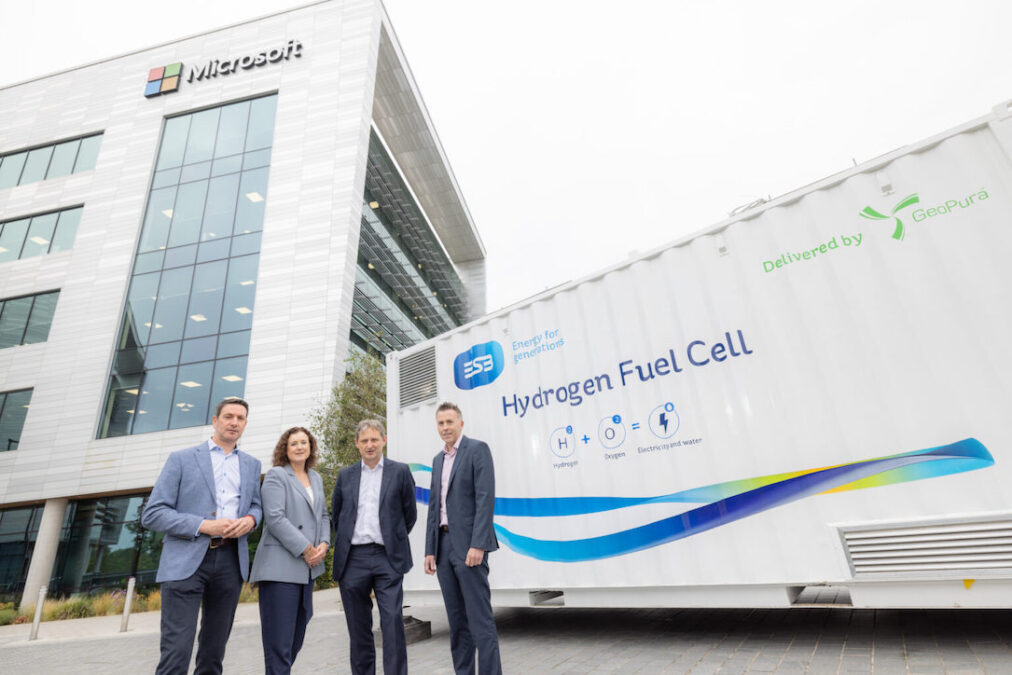
ESB is to equip the Microsoft campus in Dublin to use electricity from green hydrogen. © Microsoft
(Ireland) Tech giant Microsoft plans to power the control and administration building of its Dublin data center with green hydrogen, with the help of the majority state-owned electricity provider, the Electricity Supply Board (ESB). The company stated that this would be the first time fuel cells are used to power one of its data centers in Europe. No concrete technical details were provided. The system is believed to have a capacity of 250 kilowatts and is apparently designed to provide uninterrupted power to the Microsoft campus in Dublin for eight weeks. The project is part of a series of initiatives planned by ESB for 2024 and 2025. "This pilot project is another important step on our journey towards carbon-free power for our buildings and campuses worldwide," said Lavinia Morris, General Manager of Microsoft's EMEA Data Centre Operations. In 2022, Microsoft announced contracts for the development of more than 900 megawatts of onshore wind and solar projects in Ireland alone.
+ + + + +
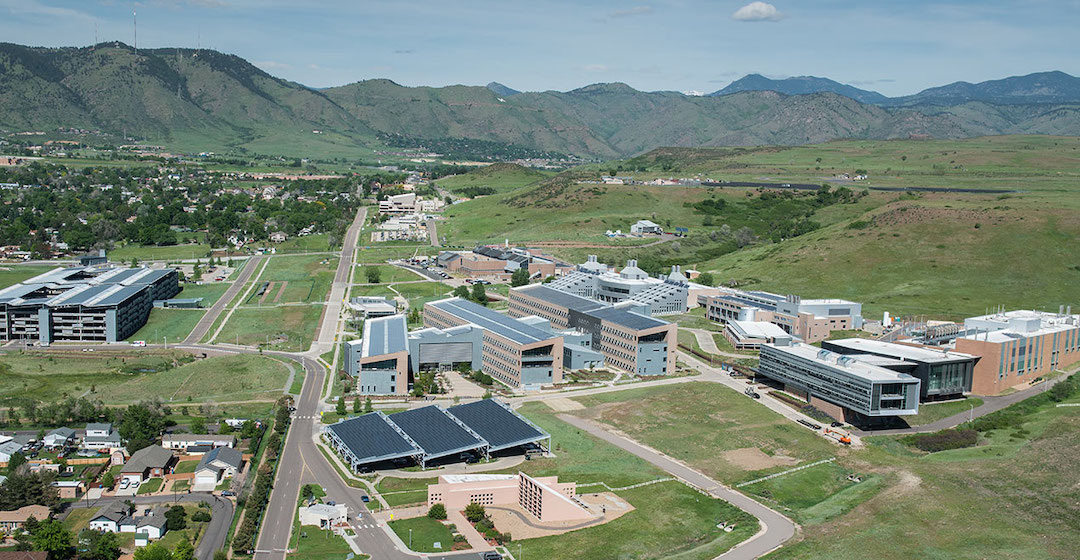
NREL campus in Golden, Colorado: The National Renewable Energy Laboratory is part of the Roll-to-Roll (R2R) consortium. The researchers at the fuel cell department (National Fuel Cell Technology Evaluation Center, NFCTEC) in the Energy Systems Integration Facility (ESIF, front, 3rd building from right) of the NREL analyze and evaluate the technology on behalf of third parties, among other things. © NREL
(USA) The US Department of Energy (DOE) is supporting seven research projects that will advance "efficient, scalable, high-throughput, and high-quality processes for the production of fuel cell and electrolyzer materials within the Roll-to-Roll (R2R) consortium." The total funding amounts to just over eight million dollars (7,2 million euros). The funds will go to partners collaborating with at least two national laboratories: Nel Hydrogen (1,5 million dollars), Solvay Specialty Polymers (1,5 million dollars), Power to Hydrogen (1,0 million dollars), FOM Technologies (755.000 dollars), Ionomr Innovations (1,0 million dollars), Pajarito Powder (1,0 million dollars), and Kraton Corporation (1,3 million dollars). The projects will run for approximately two years, with the industrial partners contributing at least 50 percent of the costs. The R2R consortium of national laboratories focuses on developing efficient processes to reduce the cost of manufacturing electrolyzers and fuel cells. Participating institutions include the National Renewable Energy Laboratory, the Argonne National Laboratory, the Oak Ridge National Laboratory, the Sandia National Laboratories, and the Lawrence Berkeley National Laboratory.
+ + + + +
Excerpt from the title page “German Offshore Energy Islands in the European Energy System”. © Fraunhofer IEE
(Germany) A study by the Fraunhofer Institute for Energy Economics and Energy System Technology IEE concludes that Germany could achieve annual savings of up to €4,3 billion by developing offshore hydrogen production on two energy islands. These energy islands would have limited grid connections and are located approximately 150 kilometers off the coast in the German exclusive economic zone of the North Sea. The savings would primarily result from lower grid expansion costs, particularly for cables running from the coast to central Germany, as well as from the higher utilization of high-voltage direct current (HVDC) cables. Furthermore, the authors state that offshore hydrogen production is more efficient than onshore production. The reason: hydrogen production in close proximity to the renewable energy source reduces energy losses and investments in long-distance electricity transmission. The study, commissioned by Copenhagen Energy Islands ApS, examines the expansion of Germany's 70-gigawatt target for offshore wind farms and investigates the economic impact of offshore hydrogen production on two energy islands, each with ten gigawatts of installed wind power capacity, in comparison to a scenario where all electricity from offshore wind farms is transported to land. The study, " German Offshore Energy Islands in the European Energy System, " is available as a PDF (32 pages).
+ + + + +
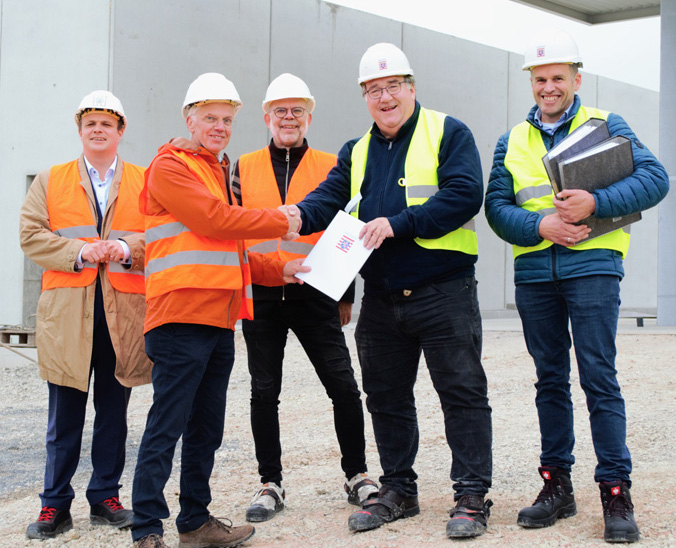
District President Mark Weinmeister hands over the approval notice to Abo Energy CEO Jochen Ahn. In the background: Mayor Benjamin Tschesnok (left), Thomas Nietsch from ABO Energy (middle) and process manager Christian Rippl from the Kassel District Council (right). © Abo Energy
(Germany) Wiesbaden-based ABO Energy GmbH & Co. KGaA has received approval from the Kassel Regional Council under the Federal Immission Control Act (BImSchG) for the company's first hydrogen project. A pilot project is currently under construction in Hünfeld-Michelsrombach near Fulda in Hesse, comprising a wind turbine, electrolyzer, and hydrogen refueling station. Wind power will be fed directly to the electrolyzer via a line. In addition, a ten-megawatt photovoltaic system will be installed nearby, and green electricity will be drawn from the grid. Construction, which was authorized for early commencement, began in May 2024. The plan is to complete the assembly work and commissioning of the plant technology in the first quarter of 2025. The refueling station is scheduled to open in April 2025. The project is being funded with a total of twelve million euros by the Federal Ministry for Digital and Economic Affairs (BMDV) as part of the National Innovation Program for Hydrogen and Fuel Cell Technology (NIP), and is also receiving funding from the NextGenerationEU program.
+ + + + +

There are 28 public lectures on the topic of hydrogen at the OVGU until January 13th. © Otto-von-Guericke-University Magdeburg
(Germany) In the winter semester of 2024/25, Otto von Guericke University Magdeburg will launch an interdisciplinary public lecture series on the topic of " Hydrogen as an Energy Carrier ." This continuing education series is initiated by the H2HUB project in Saxony-Anhalt. The series kicks off on October 15, 2024, with a lecture by Michael Scheffler from the university's Institute for Materials and Joining Technology entitled: "One gas fits all: Only H2 in the future?!" Thirteen further lectures will follow weekly until January 28, 2025. These lectures will cover topics such as hydrogen policy in Germany, the safety of processes and facilities involved in hydrogen production, materials for hydrogen storage, and hydrogen as a fuel. Participation is free of charge.
+ + + + +
(Spain) The American company Plug Power Inc. and the Carreras Grupo Logístico plan to jointly build the first hydrogen-powered logistics center in Masquefa, Barcelona. Initially, the existing lead-acid battery-powered forklifts will be replaced with fuel cell-powered vehicles. While conventional batteries require several hours to recharge, fuel cells can be refueled within minutes. This will increase productivity, minimize equipment downtime, and require less maintenance. The insights gained from the project will be used to expand hydrogen technology to other locations in Spain and integrate it into the core logistics business of the Carreras Group, which operates 46 warehouses. This will also include a one-megawatt electrolyzer and a hydrogen refueling station.
+ + + + +
DISCOUNT promotion: Your ADVERTISING on the PtX portal
Photos
iStock / © Danil Melekhin



