

Spain: Repsol to build 100 MW renewable hydrogen plant in Cartagena +++ Sweden: Powercell to supply fuel cell systems for freighters +++ Germany: Multifuel burner for the heat treatment of metals +++ Austria: Construction begins on 140 MW electrolyzer for OMV +++ Germany: Gascade announces planned Hyrow hydrogen pipeline in Mecklenburg-Western Pomerania
A selection of PtX topics summarized at the end of the week
+ + + + +

Repsol is building a 100 MW electrolyzer at its refinery in Cartagena, Spain. © Repsol SA
(Spain) The oil and gas company Repsol SA is building a 100-megawatt electrolyzer at its industrial complex in Cartagena, eastern Spain. The plant, a joint venture with Enagás Renovable, a subsidiary of the Spanish gas transmission system operator Enagás SA, is expected to produce up to 15.000 tons of renewable hydrogen per year, which Repsol plans to use in its refinery there. Potentially, the hydrogen could also be fed into the natural gas network and Spain's hydrogen backbone in the future. The project is receiving €155 million in EU funding as an IPCEI (Important Project of European Cooperation) grant. The company estimates the total investment at more than €300 million. Around 900 direct and indirect jobs will be created. The plant is scheduled to go into operation in 2029. Repsol currently produces around 360.000 tons of hydrogen per year, which corresponds to 60 percent of national production. The company also consumes four percent of the hydrogen used in Europe. He is thus the "largest producer and consumer of hydrogen on the Iberian Peninsula".
+ + + + +
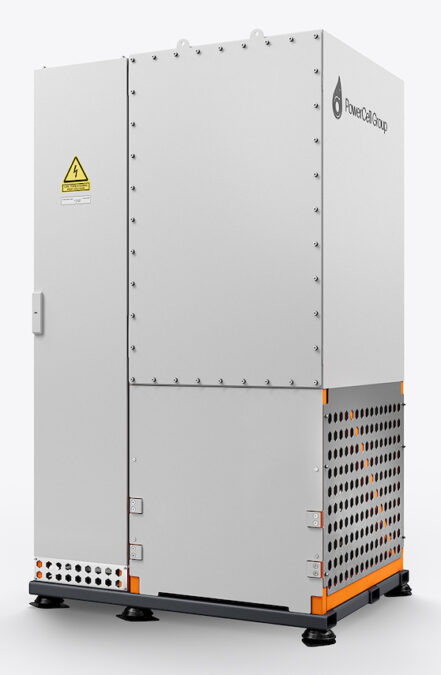
The Powercell Group will supply the 225-kilowatt "Marine System 225" fuel cell system for two bulk carriers. © Powercell Sweden AB
(Sweden) The Powercell Group has been awarded the contract to supply the fuel cell systems for two hydrogen-powered bulk carriers being built by the Norwegian company GMI Rederi AS. The contract, worth just over 40 million Swedish kronor (3,6 million euros), comprises 14 Marine System 225 units, each with a power output of three megawatts, as well as technical services. GMI Rederi is developing the vessels, while the engineering, integration, and certification process for the hydrogen system will be handled by eCap Marine GmbH, a German ship outfitter specializing in environmentally friendly propulsion solutions. The project is supported by the Norwegian government's Enova Fund and the NOx Fund. Deliveries are scheduled for 2026/2027. With a length of 85 meters and a deadweight tonnage of 4.000 tons, the ships will be "the world's first hydrogen-powered bulk carriers" when they are launched in early 2027.
+ + + + +

The multifuel burner is supplied with hydrogen. The heat generated during combustion is transferred indirectly to the circuit board via the jet pipe. The hot steam produced by the oxidation of hydrogen with oxygen can be used as exhaust gas to release hydrogen from a hydrogen derivative. © Forschungszentrum Jülich / Schwartz Group
(Germany) The Schwartz Group plans to install a metal heat treatment plant at its headquarters in Simmerath (North Rhine-Westphalia) by the end of the year. The plant's multifuel burners can be operated with hydrogen, natural gas, propane, or fuel gas mixtures. Subsequently, by the end of 2026, the company aims to demonstrate that the flexible use of hydrogen-containing fuel gases is possible without any loss of quality. The research project stems from the fact that metals undergo heat treatment to change their shape or hardness. The necessary high-temperature industrial processes often generate large quantities of climate-damaging CO2, according to the Jülich Research Centre (FZ Jülich). The goal of the "HyHeat" project, a collaboration between the Helmholtz Cluster for Sustainable and Infrastructure-Compatible Hydrogen Economy (HC-H2) and the Jülich Research Centre with partners from the Rhenish mining region, is to accelerate the market entry of hydrogen-based, climate-friendly technologies. “Besides electrically heated heat treatment, systems using fuel gases continue to be in high demand,” says Frank Wilden, Technical Director of Schwartz GmbH. “With a system like the one we are demonstrating at HyHeat, customers will later have the option of varying the fuel gas composition during operation without modifying the heating system.” The system automatically detects the supplied fuel gas and seamlessly adapts to the combustion controls. The German Federal Ministry for Research, Technology and Space (BMFTR) is funding the project with €1,71 million out of a total budget of €2,44 million.
+ + + + +

Groundbreaking ceremony in Bruck an der Leitha for a 140-megawatt electrolyzer. © OMV AG
(Austria) Construction has begun in Bruck an der Leitha on what is reportedly "Austria's largest hydrogen plant and one of the largest in Europe." The electrolyzer will be powered by electricity generated from wind, solar, and hydropower and will have a capacity of 140 megawatts, with a projected output of 23.000 tons. Commissioning is scheduled for the end of 2027. Siemens Energy Austria and the construction company Strabag AG are responsible for the project, commissioned by the Austrian petrochemical company OMV AG. The output is intended to contribute to the decarbonization of industrial processes at the OMV refinery in Schwechat. A hydrogen pipeline approximately 22 kilometers long will connect the electrolyzer to the refinery. The investment volume of 700 million euros will be supported by the European Hydrogen Bank, with the amount of funding not being disclosed. A funding agreement is currently being finalized in cooperation with Austria Wirtschaftsservice GmbH, which will act as the national clearinghouse. The contract is expected to be signed by the end of 2025.
+ + + + +

Gascade plans three information events in northeastern Germany on the "Hyrow" hydrogen pipeline. © Gascade Gastransport GmbH / onmaps.de / GeoBasis-DE/BKG/ZSHH 2024
(Germany) Gascade Gastransport GmbH, a long-distance gas network operator, is planning a new hydrogen pipeline in Mecklenburg-Western Pomerania that will connect the Rostock port area with the Wrangelsburg region. The pipeline, named "Hyrow," is part of the German core hydrogen network and is scheduled for completion by 2028. It is being implemented by Gascade as part of the "Flow – making hydrogen happen" infrastructure program. Preparatory geotechnical investigations will begin shortly to determine soil conditions and current groundwater levels along the planned route. Three information events will be held in early November in the districts of Rostock, Vorpommern-Rügen, and Vorpommern-Greifswald, which the pipeline will cross. Dates: Blankenhagen, Uns Dörphus, Schulweg 6 (Tuesday, November 4, 2025), Süderholz, Vereinshaus Zum Torfstecher, Rakower Schulstraße 6 (Wednesday, November 5, 2025) and Groß Kiesow, Hauptstraße 1B (Thursday, November 6, 2025), each from 6:00 p.m. to 9:00 p.m. Registration is not required.
+ + + + +
Photo above
iStock / © Danil Melekhin



