

Germany: Hearing on the law for accelerated hydrogen ramp-up on September 25 +++ USA: Infinity investigates development of space-worthy electrolyzer systems +++ Sweden: "H2 Green Steel" becomes "Stegra" +++ Germany: 87 million euros for hydrogen center in Chemnitz +++ Switzerland: New Stadler train with hydrogen and battery drive +++ Norway: GreenH supplies hydrogen to Torghatten ferries +++ Finland: Consortium builds hydrogen production in Helsinki +++ Germany: Enginius launches 16-ton truck +++ France: Iveco delivers twelve fuel cell buses to Cannes +++ Great Britain: Electricity for Teesside from RWE offshore wind farm Sofia +++ Netherlands: RWE builds ultra-fast battery storage to stabilize the power grid +++ France: Haffner Energy plans to spin off SAF businesses +++ USA: Plug Power evaluates 25 MW electrolyzers for methanol project +++ DISCOUNT promotion: Your advertisement on the PtX portal
A selection of PtX topics summarized at the end of the week
+ + + + +
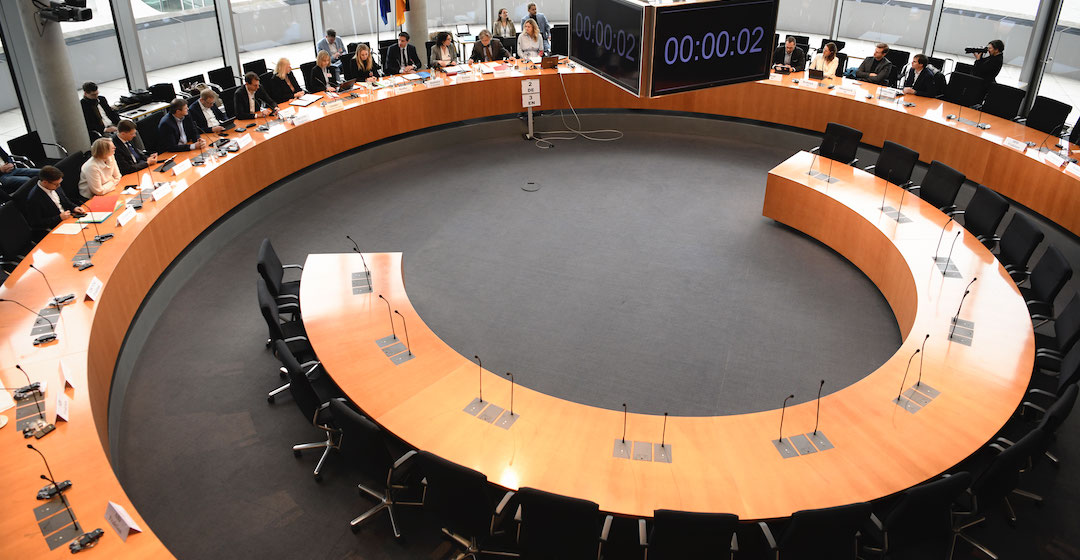
The Committee on Climate Protection and Energy wants to hear experts on the law for accelerated hydrogen ramp-up. © German Bundestag / Stella von Saldern
(Germany) The draft law submitted by the Federal Government, entitled "Act to Accelerate the Availability of Hydrogen and to Amend Other Legal Frameworks for the Hydrogen Ramp-Up" ( 20/11899 ), will be publicly debated in a hearing. The Committee on Climate Action and Energy in the Bundestag has invited a number of experts to participate on Wednesday, September 25, 2024, from 11:00 a.m. to 1:00 p.m. The aim of the draft law is to facilitate further planning, approval, and tendering procedures for the production, storage, and import of hydrogen. Those interested can follow the hearing on the Bundestag's website .
+ + + + +

Infinity will conduct a study on fuel cell systems in space. © Infinity Fuel Cell and Hydrogen, Inc.
(USA) Infinity Fuel Cell and Hydrogen, Inc. is to design a space-qualified "combined fuel cell-electrolyzer system." The studies are being funded by an unnamed "commercial space company" and build upon ongoing work with NASA and other partners to develop electrochemical hydrogen-oxygen systems for applications such as vehicle propulsion, crew life support, and lunar bases. The fuel cell subsystem is based on Infinity's Advanced Passive Water Removal (APWR) system, which is being developed and tested for NASA's Glenn Research Center. Founded in 2002, Infinity Fuel Cell and Hydrogen develops air-independent electrochemical systems, including fuel cell systems, for space and underwater applications.
+ + + + +
“H2 Green Steel” is renamed “Stegra”. © Stegra
(Sweden) The future steel producer H2 Green Steel AB is changing its name to "Stegra." The Swedish word means something like "take off" or "raise." The company's goal remains the decarbonization of industrial sectors that are difficult to convert to environmentally friendly production methods. To this end, it plans to use green hydrogen, green iron, and green steel. H2 Green Steel was founded in 2020 and has since secured €6,5 billion in funding. The world's first large-scale, environmentally friendly steel plant is currently under construction in Boden. Production is scheduled to begin in 2026.
+ + + + +
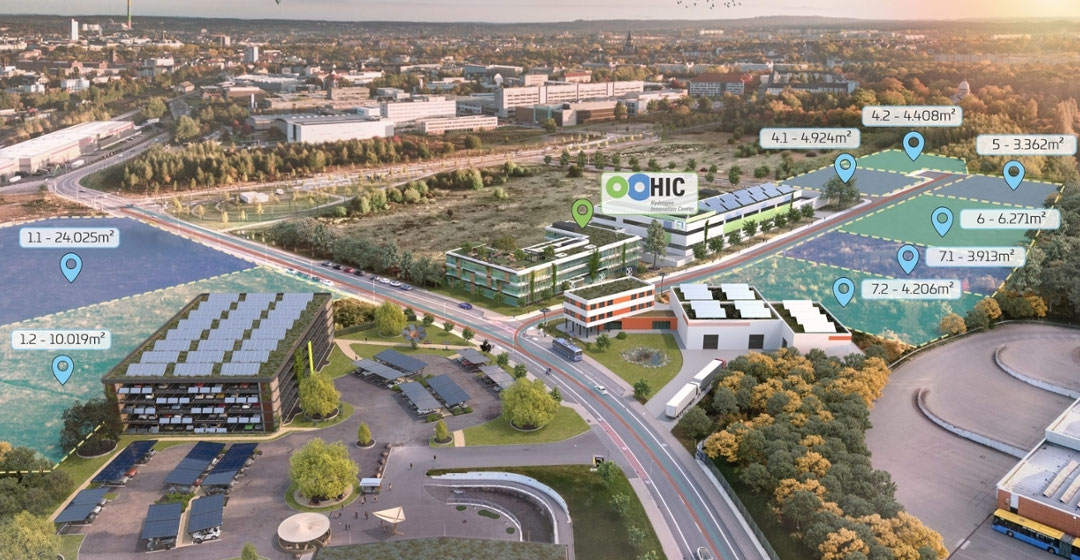
Visualization of the Hydrogen Innovation Center in the future hydrogen campus in Chemnitz. © HZwo e. V.
(Germany) The federal government is providing €72 million for the development of the Hydrogen Innovation Center (HIC) at the Chemnitz Technology Park. The Free State of Saxony is co-financing the development phase until 2028 with approximately €15 million. The HIC will be the future Chemnitz location of the national Innovation and Technology Center for Hydrogen (ITZ). It was developed by the national hydrogen technology cluster HZwo eV, a network of around 150 companies and research institutions across Germany, spanning the entire hydrogen value chain. The HIC will be established through HIC gGmbH, a non-profit limited liability company founded by HZwo in June 2024. Development, testing, and evaluation opportunities will be created, particularly for small and medium-sized enterprises (SMEs) and the automotive supply industry. As part of the ITZ, the Hydrogen Innovation Center will also focus on the development of hydrogen-based drive systems for the automotive industry, the logistics sector, and public transport.
+ + + + +
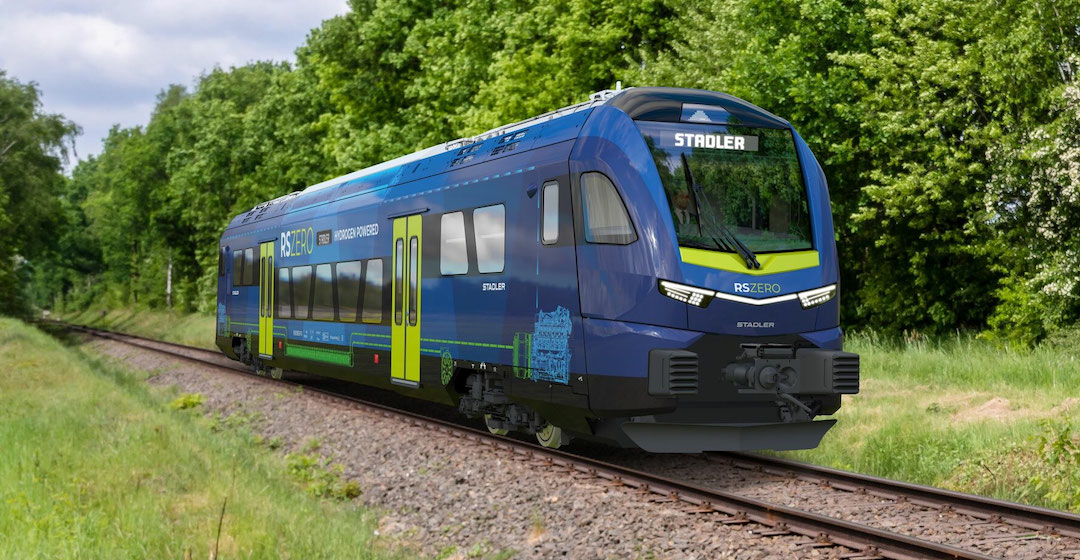
Rendering of the new RS Zero model, which will be available with battery and/or hydrogen drive. © Stadler Rail AG
(Switzerland) Stadler Rail AG from Bussnang has unveiled the prototype of the "RS Zero" as the successor to its "Regio-Shuttle RS1" model. Two drive technologies are now available: hydrogen and battery. Both would enable CO2-emission-free operation on branch lines in the future. Currently, around 500 RS1 diesel vehicles are still in operation in Germany and the Czech Republic. In Germany, 38 percent of railway lines are not electrified, while across Europe the figure is 43 percent. The RS Zero can be adapted to the specific conditions of the rail network. It will be offered as a single-car and double-car train and will have a capacity of 70 to 150 passengers.
+ + + + +
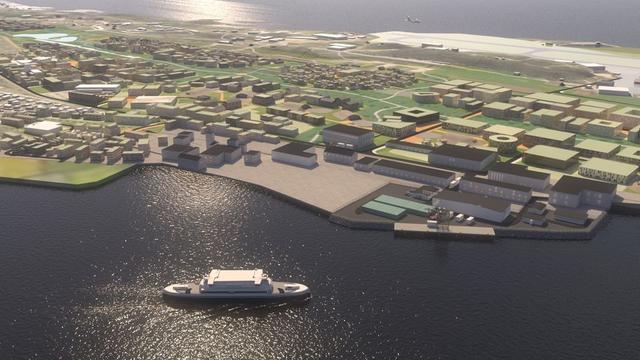
Illustration of the planned GreenH plant in Langstranda in Bodø. An airport could also be built there as a “test laboratory” for green aviation fuel. © Torghatten AS
(Norway) Torghatten Nord and the green hydrogen producer GreenH have signed a contract for the supply of green hydrogen for the ferries in the Lofoten Islands, with a term extending to 2040. GreenH plans to build a hydrogen production facility in Langstranda, Bodø. The plant will have a capacity of six to ten tons per day. Infrastructure for the sale and distribution of oxygen, as well as heat exchange for the district heating network, will also be constructed. The investment costs are estimated at around one billion kroner (80 million euros), creating 10 to 30 direct and indirect jobs. The ferries are scheduled to operate on hydrogen from October 2025. Calculations by the Norwegian Transport Agency (Statens Vegvesen) show that the collective impact of the hydrogen ferries will lead to an annual reduction of 26.500 tons of CO2, comparable to the emissions of approximately 13.000 diesel vehicles.
+ + + + +
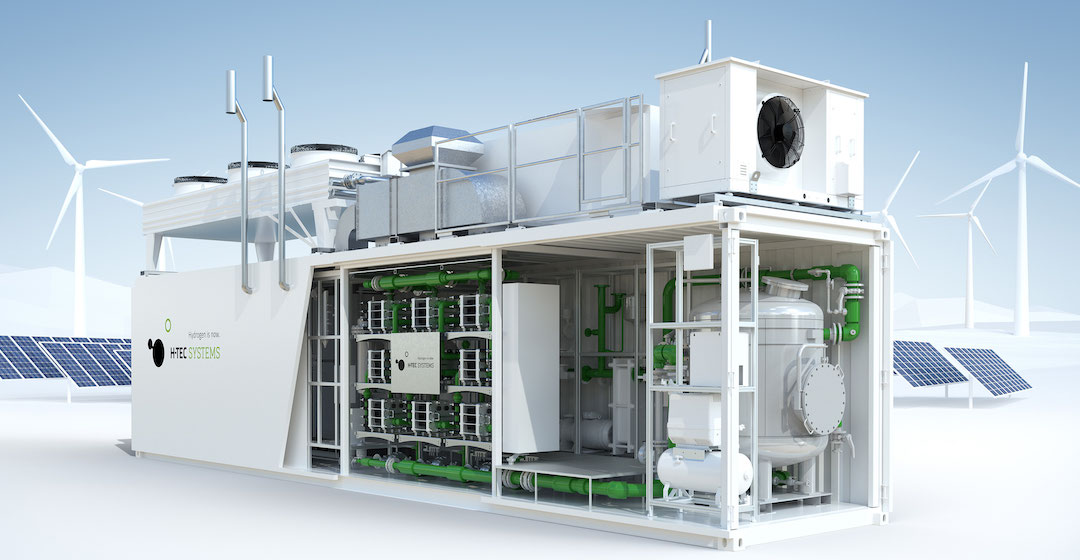
H-Tec Systems is supplying three PEM electrolyzers for a 3-megawatt hydrogen production plant for the Finnish energy company Helen Oy. © H-Tec Systems
(Finland) Energy company Helen Oy, together with MAN Energy Solutions and H-Tec Systems, is building a three-megawatt green hydrogen production plant. The site is located near Helsinki's district heating network and the port of Vuosaari. MAN Energy Solutions will act as the general contractor (Engineering, Procurement and Construction, EPC) for the hydrogen portion of the plant, including the supply, installation, and commissioning of hydrogen-related components. The remaining work will be carried out in cooperation with Helen and Helen's engineering partners. MAN subsidiary H-Tec Systems (renamed "Quest One" on September 30, 2024) will supply three ME450EC PEM electrolyzers. These will produce 1.350 kilograms of green hydrogen per day. The electricity will come from Helen's portfolio of renewable energy sources. The company plans to deliver the hydrogen via pipeline to a nearby hydrogen refueling station and distribute it via containers to industrial customers or other refueling stations. The project serves the four sectors of electricity, heat, transport, and hydrogen. The waste heat generated during the production process is used in Helen's district heating network.
+ + + + +
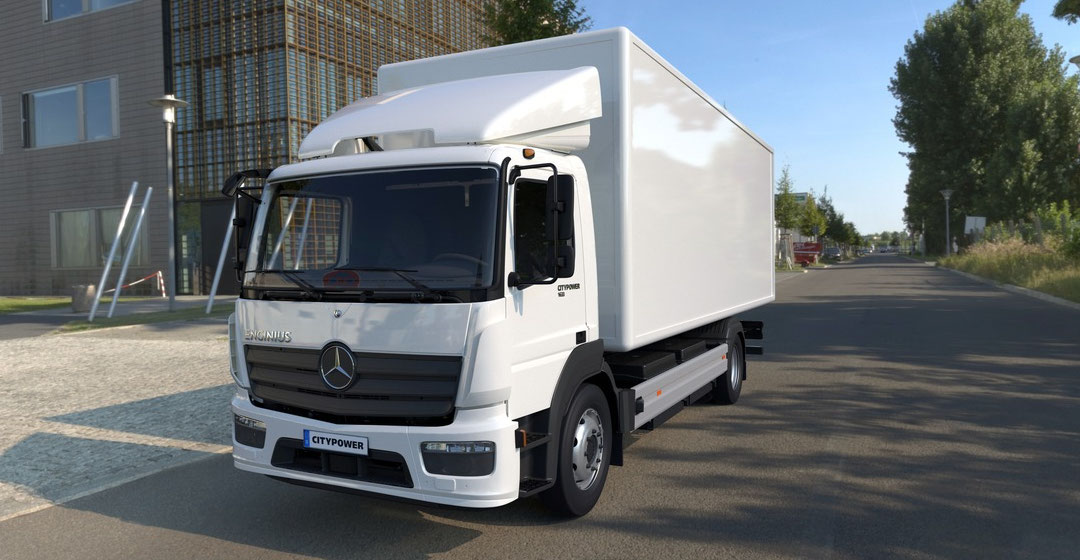
The new Enginius Citypower is available as a BEV or FCEV. © Enginius
(Germany) Truck manufacturer Enginius is launching a new truck called "Citypower." It will be offered with either a battery electric vehicle (BEV) or fuel cell electric vehicle (FCEV) drive. The base vehicle is the "Classic Space" cab of the Daimler Atego truck model. The permissible gross vehicle weight is 16 tons (payload eight tons), the BEV has a range of 300 kilometers, and the battery capacity is 280 kilowatt-hours. The hydrogen variant has a range of 600 kilometers with a 32-kilogram tank of hydrogen. The payload is 9,4 tons. Both variants deliver 248 kilowatts (337 hp); during acceleration, they produce 368 kilowatts. Enginius is a subsidiary of the FAUN Group and thus belongs to Kirchhoff Ecotec. FAUN equips trucks with bodies, particularly for waste collectors and sweepers.
+ + + + +
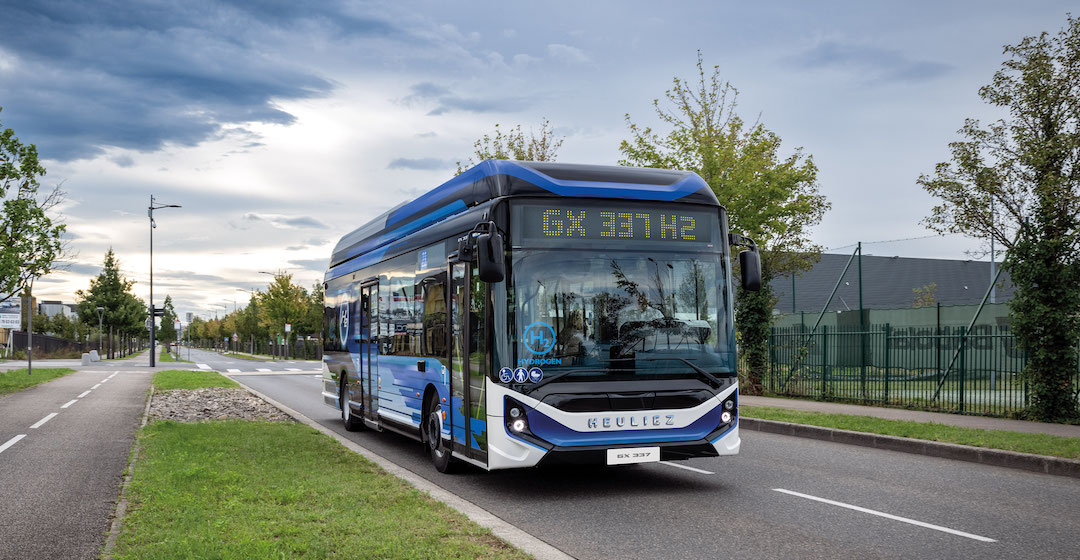
Iveco Bus is supplying twelve fuel cell vehicles to the city of Cannes Lérins. © Iveco Bus
(France) Italian vehicle manufacturer Iveco is delivering twelve GX 337 H2 Linium fuel cell buses to the Cannes Lérins intermunicipal association. These vehicles will expand the battery-electric GX ELEC fleet already operating on the Palm bus route. Delivery will begin in the second half of 2025. Cannes Lérins has operated a fully decarbonized fleet of 107 vehicles powered by electricity and biofuels since June 2023. From 2025, clean hydrogen will be produced locally and distributed in the Provence-Alpes-Côte d'Azur region. Once completed, 41 buses will be fueled with clean hydrogen. The GX 337 H2 Linium features a 100-kilowatt fuel cell and hydrogen tanks. The battery has a capacity of 69 kilowatt-hours and provides a range of 450 kilometers. The passenger capacity is 110 people.
+ + + + +
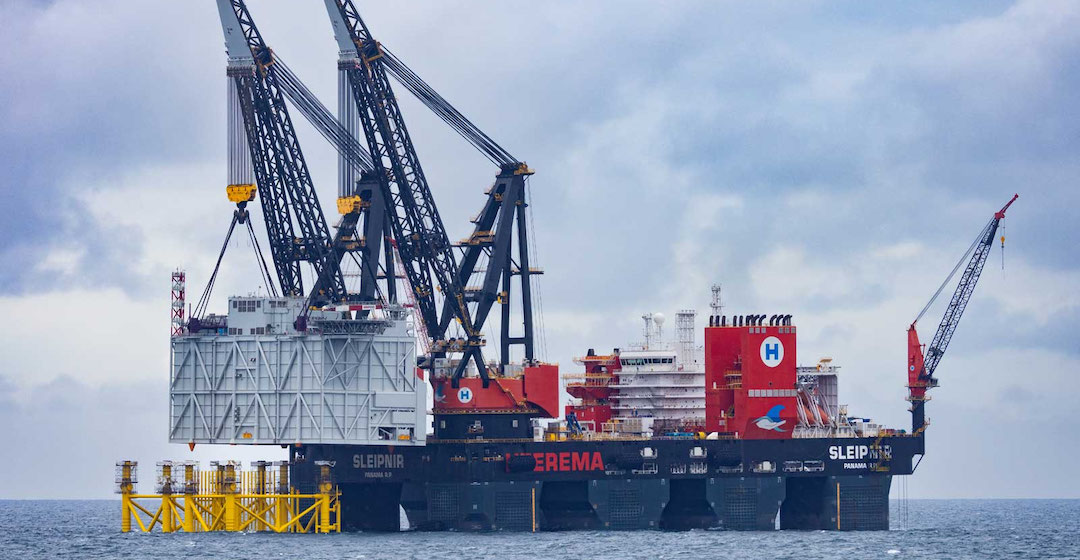
RWE has installed a high-voltage direct current transmission line for the first time in its offshore wind farm "Sofia". Once the offshore plants are operational, the output will be transmitted to Redcar in the surfactant region, where several companies are planning green hydrogen projects. © RWE
(Great Britain) The energy company RWE recently installed a substation at the "Sofia" offshore wind farm; according to the company, this is the first time high-voltage direct current (HVDC) technology has been used at sea, converting the alternating current from the wind turbines into direct current. The wind farm on the Dogger Bank, about 200 kilometers off the northeast coast of Great Britain, is a joint project of RWE, GE Vernova, and Seatrium with an installed capacity of 1,4 gigawatts. It is scheduled to go into operation in 2026. The generated electricity could theoretically power 1,2 million homes. HVDC enables the highly efficient transmission of the electricity generated in the wind farm and minimizes losses. The electricity is transported via submarine cables to Redcar in Teesside, 220 kilometers away. A number of hydrogen projects are planned for the industrial site of Teesside. EDF Renewables UK and Hynamics, a hydrogen-focused subsidiary of the EDF Group, plan to establish a green hydrogen production center near the former Redcar steelworks . Energy giant BP plc also intends to develop the region into a hydrogen transport hub . Just at the beginning of August 2024, BP announced that it was in the final stages of negotiations with the British government and had secured a multi-million-pound planning and engineering contract for H2Teesside.
+ + + + +
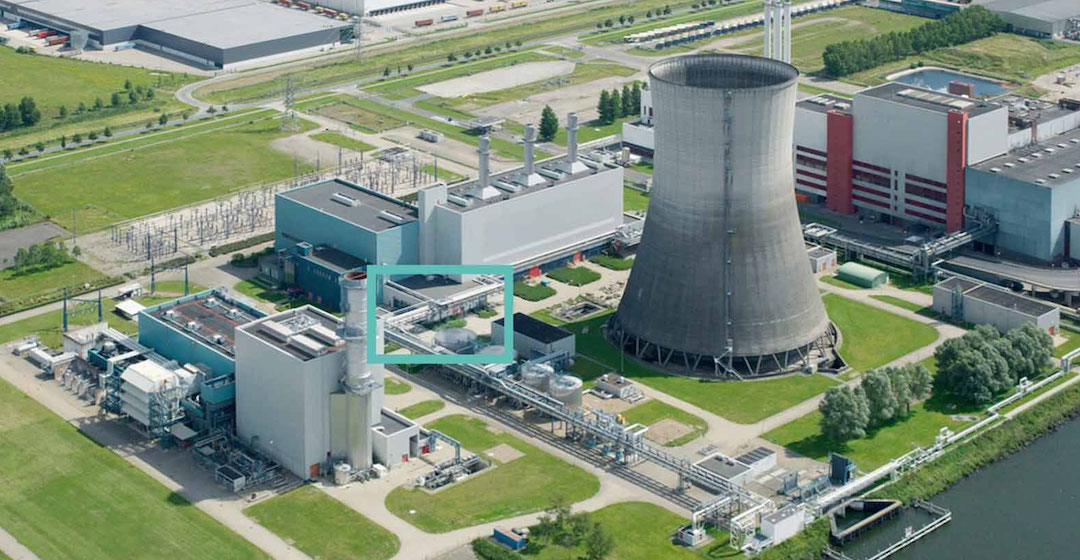
RWE is building ultra-fast battery storage for instantaneous reserves from renewable energies, among other things to supply electrolyzers. © RWE
(Netherlands) RWE Generation SE has begun construction of an ultra-fast battery energy storage system (BESS) at its Moerdijk power plant in the Netherlands. The battery storage system can provide or absorb electricity within milliseconds to stabilize the grid (instantaneous reserve). It has an installed capacity of 7,5 megawatts and a storage capacity of 11 megawatt-hours. The Moerdijk project is part of the system integration of "Oranje Wind," the joint offshore wind project of RWE and Total Energies off the Dutch coast. Oranje Wind aims to open up new avenues for integrating volatile electricity generation from renewable sources into the Dutch energy system. This includes electrolyzers, charging stations, and battery storage, the company announced. In Moerdijk, RWE is installing lithium iron phosphate (LFP) batteries housed in three shipping containers. The storage system will be connected to the high-voltage grid. Using highly responsive control technology and grid-forming inverters, it can provide reserve power at lightning speed. Following commissioning at the end of 2024, the plant will undergo a two-year pilot phase.
+ + + + +
(France) French project developer Haffner Energy has announced a spin-off company for its sustainable aviation fuel (eSAF) business. "SAF Zero" aims to utilize Haffner's technology for converting organic waste and biomass into synthesis gas for SAF production. The new company will acquire a license for this purpose, creating a new revenue stream for Haffner through royalties. Furthermore, Haffner Energy will be able to focus its resources on the markets for renewable hydrogen, gas (syngas), and methanol.
+ + + + +
(USA) Plug Power Inc. has signed a contract with Dourogás and CapWatt to evaluate the installation of its 25-megawatt proton exchange membrane (PEM) electrolyzers. The evaluation for the "H2Driven" project is intended to provide customers with technical information and support to guide their projects through the permitting, financing, and plant development phases, minimizing risks and enabling them to make informed investment decisions (FIDs). H2Driven will eventually produce 80.000 tons of green methanol annually by combining synthesis gas from biomass gasification with green hydrogen produced using solar power. The project is expected to be operational by the end of 2026.
+ + + + +
DISCOUNT promotion: Your ADVERTISING on the PtX portal
Photos
iStock / © Danil Melekhin



