

Germany: Now GmbH reorients itself due to funding cuts + + + Germany: Federal Network Agency calls for comments on electricity, gas and H2 scenarios + + + Norway: Swiss Life wants to buy all Everfuel shares + + + USA: Launch of hydrogen hub ARCHES in California + + + Germany: Jülich Research Center develops map of hydrogen potential in Africa + + + Australia: Province puts 500.000 tonne H2 project on hold + + + Norway: Samskip ship to be converted to fuel cell propulsion + + + Germany: RWTH completes “Drive” pilot phase + + + Spain: Government supports Hygreen Energy and Coxabengoa in H2 development + + + Great Britain: Drift Energy wants to produce green hydrogen at sea + + + USA: Government supports research to improve H2 power plant turbines + + + Canada: Robinson Helicopter develops hydrogen-powered medical helicopters + + + Sweden: Liquid Wind to build eMethanol plant for Uniper + + + USA: Nuvera and Viritech plan fuel cell drive for road vehicles + + +DISCOUNT promotion: Your ADVERTISING on the PtX portal
A selection of PtX topics summarized at the end of the week
+ + + + +

The federally owned Now GmbH wants to continue working on hydrogen issues despite budget cuts. © Now GmbH
(Germany) The National Organisation for Hydrogen and Fuel Cell Technology (Now GmbH), a company owned by the Federal Ministries of Transport and Economic Affairs, has announced restructuring. This is due to the necessary reductions in funding following the Federal Constitutional Court's ruling of November 2023 on the Second Supplementary Budget Act 2021 ( 2 BvF 1/22 ). This ruling has had a significant impact on Now GmbH's responsibilities. The available budget funds must be used as efficiently as possible. The goal is now to establish itself as a lean, specialized organization for charging and refueling infrastructure with a focus on electromobility. Issues related to other energy carriers (especially hydrogen and e-fuels) will continue to be addressed to maintain strategic connectivity. The tasks of the federally owned Now GmbH include developing, monitoring, and evaluating funding programs related to climate-neutral mobility and energy supply. By resolution of the Supervisory Board dated August 30, 2024, Kurt-Christoph von Knobelsdorff was dismissed as Managing Director. Dagmar Fehler, previously Head of Battery-Electric Mobility & Charging Infrastructure and Head of the National Control Center for Charging Infrastructure, will assume the role of Managing Director on an interim basis and initiate the realignment.
+ + + + +
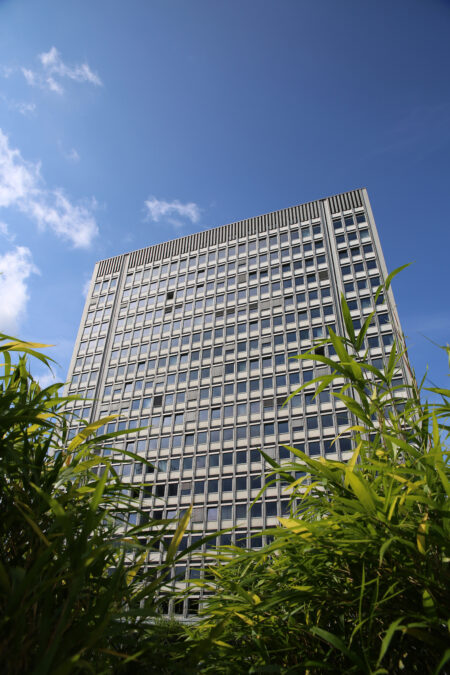
The Federal Network Agency is calling for comments on electricity, gas and H2 scenarios (Image: Headquarters in Bonn). © Federal Network Agency
(Germany) The Federal Network Agency (BNetzA) is simultaneously consulting on the draft scenario frameworks for electricity and gas/hydrogen. This is "a first" and allows for a "joint consideration of possible developments." The scenario frameworks form the basis for the network development plan for 2025-2037/2045. The simultaneous consultation makes it possible to better coordinate cross-cutting issues between sectors. This will allow "network planning processes to be more closely integrated," says BNetzA President Klaus Müller. Both scenario frameworks look at a climate-neutral energy system in Germany. The transmission system operators are currently proposing six different scenarios, while the long-distance pipeline operators are proposing a total of four. The BNetzA is hosting online events on September 13 and 16, 2024. The documents and further information are available on the website . Statements from civil society, associations, companies and authorities on electricity and gas/hydrogen can be submitted until September 30, 2024, preferably via the online forms.
+ + + + +

Swiss Life AM wants to take over Everfuel AS. © Everfuel AS
(Norway) Faro BidCo ApS, an indirect subsidiary of infrastructure investment funds managed or advised by Swiss Life Asset Management AG (Swiss Life AM), intends to acquire all shares of the Danish company Everfuel A/S. The offer is 13 Norwegian kroner (1,10 euros) per share, valuing the company's total issued share capital at approximately 1,12 billion kroner, based on more than 86,2 million issued and outstanding shares. Barring unforeseen circumstances or an extension of the offer period, the transaction is expected to close in the fourth quarter of 2024. Everfuel is listed on Euronext Growth in Oslo.
+ + + + +

The ARCHES-focused projects will support three key sectors: medium and heavy-duty vehicles, as well as ports and power plants, which are difficult to decarbonize using other existing technologies. Center: Governor Gavin Newsom, California. © ARCHES
(USA) In California, the Alliance for Renewable Clean Hydrogen Energy Systems (ARCHES), in the presence of representatives from politics and business, launched the development and expansion of a clean energy infrastructure. ARCHES aims to produce hydrogen exclusively from renewable energy sources and biomass. In October, the project received $1,2 billion in funding from the US government. At the time, it was stated that the goal was to provide a "blueprint for the decarbonization of public transportation, heavy-duty transport, and port operations." The project is expected to create 220.000 direct jobs – 130.000 in construction and 90.000 long-term jobs. The network comprises approximately 200 companies and institutions. In the coming months, ARCHES will announce selected projects spanning the entire state, encompassing the hydrogen lifecycle from production to end-use. “Thanks to the Biden-Harris administration, our nation’s first hydrogen center is rapidly becoming a reality,” said Governor Gavin Newsom at the ARCHES kick-off event.
+ + + + +

The interactive “H2Atlas Africa” shows potential for green hydrogen. © FZ Jülich / Screenshot
(Germany) The Jülich Research Centre has completed a “Hydrogen Atlas” for Africa. This atlas shows that Africa has enormous potential “to meet its own energy needs with renewable sources and, moreover, to establish itself as a leading exporter of green hydrogen.” According to the atlas, the greatest potential per unit area exists in the Sahara and the Nama-Karoo region in southern Africa. However, regions with smaller potential areas also possess “very significant qualifications for the production of green energy and green hydrogen.” The map serves as a tool for stakeholders, scientists, and policymakers “to determine which locations could be relevant for the development of corresponding infrastructure.” The goal of the “H2Atlas Africa” project is to support the sustainable and economic development of the African continent through a hydrogen economy. This will enable Africa to strengthen its position as an exporter of green hydrogen on international energy markets. Local energy needs are prioritized, and sustainable water supply is considered from the outset in green hydrogen projects. The project was developed in cooperation with partners in West, Southern, and East Africa. The interactive map is available on the website.
+ + + + +

Province Resources has put its green hydrogen project at Carnarvon in the Gascoyne region (Western Australia) on hold for the time being due to a lack of government support. © Province Resources Ltd. / Screenshot
(Australia) Province Resources Ltd. is temporarily abandoning its HyEnergy green hydrogen project in the Gascoyne region of Western Australia. The company cited the "excessively long period of time required by the government to assess suitable ownership" as the reason. According to a project description, the plan was to build a 500.000-ton annual green hydrogen production facility, along with solar and wind power plants and infrastructure to supply the electrolyzers, on the west coast near Carnarvon. The delays significantly reduced investor interest and ultimately led many to postpone their green energy development plans. Stakeholders, including traditional ownership groups, local businesses, and local governments and administrations, had overwhelmingly supported the project. "We will strive to keep the HyEnergy project in a state of readiness," said David Frances, CEO and Managing Director of Province. The company added that if "government support is secured and the green hydrogen market recovers," they might be able to proceed. Over the past three years, Province had completed all necessary work processes, including site selection, environmental, urban planning, and rezoning studies, as well as studies on port development, renewable energy power generation, and green hydrogen production. Lease agreements had also been reached with livestock farmers. Province "maintained constant contact with all relevant departments and ministries during this time, expecting the government to grant timely and appropriate land ownership for the project." "It is disappointing that the government was the only party involved that did not support the project." This stands "in direct contradiction" to its public statements to the contrary.
+ + + + +

The logistics company Samskip is having its freighter “Kvitnos” converted to fuel cell propulsion. © Samskip Group
(Norway) The Icelandic logistics group Samskip will convert its freighter "Kvitnos" to fuel cell propulsion. Built in 2015, the vessel operates a fixed weekly route from Rotterdam along the Norwegian west coast to Hammerfest. The conversion from liquefied natural gas (LNG) to fuel cells from Teco 2030 and hydrogen storage from Umoe Advanced Composites will be carried out by the Norwegian "HyEkoTank" consortium and is scheduled for completion in 2025. As a container ship operator, Samskip faces increasingly stringent requirements to reduce greenhouse gas emissions due to regulations such as FuelEU Maritime and the EU Emissions Trading System (EU ETS). Furthermore, container ships will be required to operate emission-free in major EU ports from 2030 onwards, as well as on certain routes in Norwegian fjords. Almost all of the 2.000 to 3.000 new ships built annually are equipped with conventional fossil fuel propulsion systems, and the average lifespan of these ships is 25 to 30 years, says HyEkoTank project coordinator Leif-Gunnar Hanssen. "To achieve the greenhouse gas reduction targets for the maritime sector, retrofitting the existing fleet with zero-emission technologies is essential." HyEkoTank is funded by the European Union. Project partners, led by Teco 2030, include BLOM Maritime, Teco Solutions, Shell International Trading and Shipping Company, Shell International Exploration and Production, Samskip, Nav-Tech, Umoe Advanced Composites, FKAB Marine Design, Tarbit Shipping, and project coordinator UiT Arctic University of Norway.
+ + + + +

The “Drive” project partners have completed the first phase of testing logistics software for trucks with alternative drives. © PEM RWTH Aachen / Patrizia Cacciotti
(Germany) The Chair of Production Engineering of E-Mobility Components (PEM) at RWTH Aachen University has completed the pilot phase of the "Drive" research project. In a two-month field trial, researchers and industry partners tested software designed to enable reliable route planning for trucks with alternative drive systems, providing information on current ranges and available charging points. Since the range of today's electric and fuel cell trucks is between 200 and 500 kilometers, real-time information on charging and refueling infrastructure along routes is essential, says PEM Director Achim Kampker – "especially as the network of hydrogen and liquefied natural gas filling stations across Germany is still very limited, and access to electric charging stations is often difficult to plan." Until now, the lack of transparency regarding the availability of charging and refueling options in the transport sector has led to concerns about detours and long waiting times. Digital solutions that ensure efficiency and planning reliability could increase the acceptance of alternative drive concepts among logistics companies and freight forwarders. Following the demonstration of the functionality of the route planning system developed by the Aachen-based start-up and project initiator Mansio GmbH, the focus is now on standardization processes. "Drive" (Data-based route planning in road freight transport with various energy supply technologies) is funded by the Federal Ministry of Education and Research and will run until the end of 2024. Project partners include PEM, the Research Institute for Rationalization at RWTH Aachen University, Park Your Truck GmbH, Zekju GmbH, Mansio GmbH, Hammer Road Cargo, and Maintrans Internationale Spedition.
+ + + + +

Benny Wang, CEO Hygreen Energy Benny (left) and Enrique Riquelme, Presidente Ejecutivo de Coxabengoa, sign a cooperation agreement in Beijing. © Hygreen Energy
(Spain) Chinese electrolyzer manufacturer Hygreen Energy and energy supplier Coxabengoa have agreed to a collaboration with the Andalusian provincial government. The signing took place in Beijing in the presence of political and business representatives. The agreement envisions initiatives for the joint expansion of hydrogen production in Europe, including the development of a European industrial platform where the two companies will advance hydrogen technologies and local production, as well as supply hydrogen production systems from Andalusia to Spain.
+ + + + +

Rendering of Drift high-tech sailing ships designed to produce green hydrogen at sea. © Drift Energy Ltd
(Great Britain) Drift Energy Ltd., which plans to produce green hydrogen at sea using high-tech sailing vessels, has announced the completion of a seed funding round. The startup has secured £4,65 million (€5,5 million) in initial capital provided by Octopus Ventures with support from the Blue Action Accelerator. The funds will be used for the company's shipbuilding program. The plan is to build a fleet of high-performance sailing vessels that will produce green hydrogen at sea using wind power. According to the company, Drift has developed a "ship routing algorithm" that will allow the yacht to find and maintain optimal weather conditions and return to port precisely when its hydrogen tank is full. The first keel laying is planned for 2025.
+ + + + +

The US Department of Energy is funding research projects for hydrogen turbines. © DOE
(USA) The U.S. Department of Energy's Office of Fossil Energy and Carbon Management (FECM) is investing $8,8 million (€7,9 million) in improving the performance of hydrogen turbines. According to the Department, the funds will go to eleven university research and development projects . These projects aim to develop materials and components that can better withstand the extreme environmental conditions generated during hydrogen combustion, enabling the use of up to 100 percent clean hydrogen in gas turbines for power generation. Six of the funded projects are conducting fundamental materials research, four are gathering insights into the risks associated with material fatigue and thermal/mechanical stresses, and one project is addressing the fundamentals of turbine design and construction.
+ + + + +

Mikael Cardinal, Vice President of United Therapeutics (left), and David Smith, CEO of Robinson Helicopter. © Robinson Helicopter Company
(Canada) Unither Bioelectronics Inc. (UB), a subsidiary of United Therapeutics Corp., and the Robinson Helicopter Company have entered into a cooperation agreement to accelerate the development of hydrogen-powered helicopters. These will be based on the commercially available R44 and R66 models to increase the likelihood of regulatory approval. The aircraft are intended for use in transporting organ donations.
+ + + + +

Agree on the development of eMethanol production (from left): Jan Taschenberger (COO New Green Power and Gas, Uniper), Bert-Ove Johansson (Chief Project Officer, Liquid Wind), Johan Svenningsson (Country Chairman Uniper Sweden), Broghan Helgeson (Innovation Manager, Uniper), Claes Fredriksson (CEO & Founder, Liquid Wind), Emma Rönnmark (Chief Corporate Officer, Liquid Wind). © Liquid Wind AB
(Sweden) Energy company Uniper SE has selected Liquid Wind AB to develop the "NorthStarH2" project in the municipality of Östersund. The plant will produce the synthetic fuel eMethanol from biogenic carbon dioxide and renewable electricity. The two companies announced a strategic partnership in July ( as previously reported ). Uniper plans to build a cumulative eMethanol production capacity of 100.000 tons for the shipping and chemical industries. Liquid Wind, headquartered in Gothenburg, Sweden, has a project pipeline of more than ten plants in the Nordic countries, for which final investment decisions are expected by 2027. The company has a presence in Denmark, Finland, and the United Kingdom. Its investors include Alfa Laval, Carbon Clean, Elyse Energy, HyCap, Siemens Energy, Topsoe, and Uniper.
+ + + + +

Viritech has integrated Nuvera's E-60 engine into a fuel cell-powered race car. Now the companies are exploring the development of H2 road vehicles. © Nuvera Fuel Cells, LLC
(USA) Nuvera Fuel Cells, LLC, a US developer of high-performance fuel cell products, and Viritech Ltd., a British developer of hydrogen propulsion systems for the automotive, aerospace, and marine industries, plan to bring Viritech's VPT60N powertrain to commercial vehicles. Nuvera will provide its E-series fuel cell engines for integration testing into Viritech's powertrain product line. Viritech is exploring the development of an integrated, high-power-density fuel cell system based on Nuvera's stack technology. Viritech has already integrated Nuvera's E-60 engine into a fuel cell-powered race car. The vehicle is operational and has been successfully tested. Nuvera is owned by Hyster-Yale Materials Handling, Inc., and primarily designs, manufactures, and sells forklift trucks and spare parts, marketed worldwide mainly under the Hyster and Yale brand names. Viritech is based in Horiba Mira, the British research and development center for the automotive industry.
+ + + + +
DISCOUNT promotion: Your ADVERTISEMENT on the PtX portal
Photos
iStock / © Danil Melekhin



