

Germany: Hamburg electricity grid and Hamburg gas grid merge +++ Australia: Lion, DGA, and Samsung plan hydrogen projects in Brisbane +++ Norway: Hystar develops gigawatt electrolyzer factory for Thyssenkrupp +++ Denmark: Ørsted shuts down its last fossil fuel power plant +++ Germany: Fraunhofer and Korean Institutes cooperate +++ Austria: European Hydrogen Valley for industrial applications +++ Germany: Dresden University launches hydrogen master's program +++ Australia: Sirius and Marathon Group plan to develop zero-emission airports in the USA +++ Germany: Scientists research carbon materials for photocatalysis +++ Germany: Methanol as a hydrogen storage medium +++ DISCOUNT offer: Your advertisement on the PtX portal
A selection of PtX topics summarized at the end of the week
+ + + + +
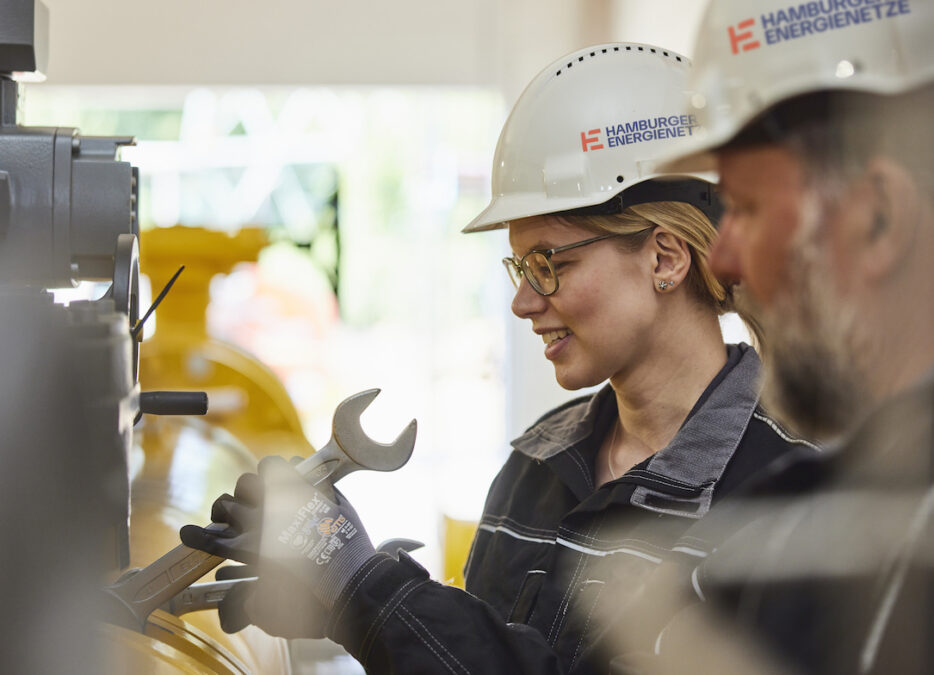
Stromnetz Hamburg and Gasnetz Hamburg merge to form Hamburger Energienetze GmbH. © Hamburger Energienetze GmbH
(Germany) The two utilities Stromnetz Hamburg GmbH and Gasnetz Hamburg GmbH will merge on September 2nd to form the new Hamburger Energienetz GmbH. The company will then employ around 2.300 people, with its main locations in Bramfeld and Tiefstack. The management will be in the hands of the current managers Michael Dammann and Gabriele Eggers (gas network) and Karin Pfäffle and Andreas Cerbe (electricity network). "The focus of the business is the expansion and conversion of Hamburg's infrastructure for electricity and gas and the development of the Hamburg hydrogen industry network HH-WIN," it says in a statement. By remunicipalizing the companies, the city will be able to "react better to market developments," says Jens Kerstan, Senator for the Environment, Climate, Energy and Agriculture. Hamburger Energienetze GmbH operates the electricity and gas network in the Hanseatic city. As part of the IPCEI-funded project HH-WIN, (as reported)
Then, under new management, a 60-kilometer-long hydrogen pipeline network will be built in the port, which will primarily supply industrial customers with green energy.
+ + + + +
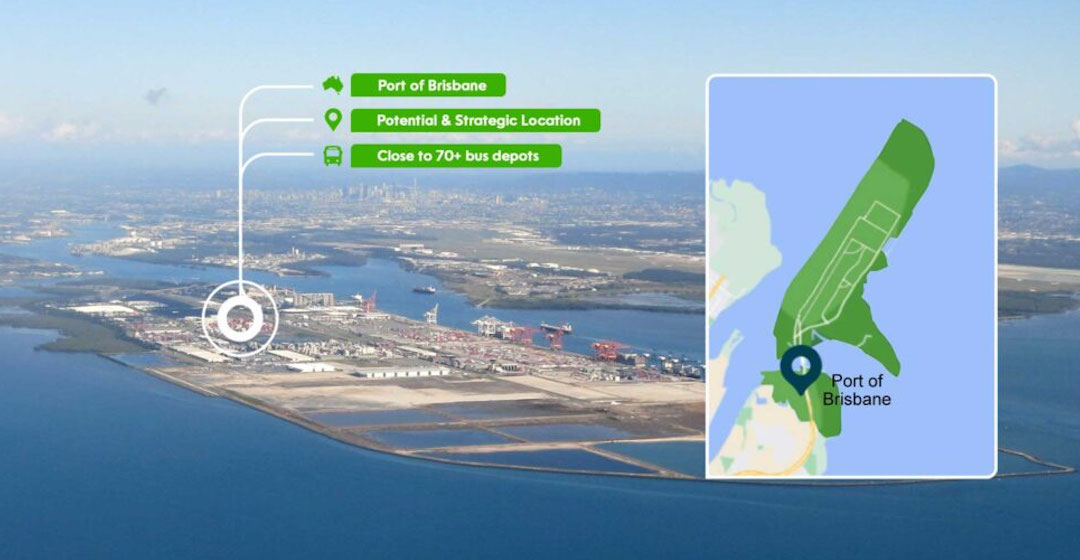
Lion plans to produce green hydrogen in the Port of Brisbane. © Lion Energy Ltd.
(Australia) Lion Energy Ltd., DGA Energy Solutions Australia Pty Ltd, and Samsung C&T Corp. plan to jointly develop a green hydrogen hub in the Port of Brisbane, Queensland. According to the agreement, DGA and Samsung C&T will initially pay Lion a total of 3,7 million Australian dollars (2,25 million euros) for preparatory construction costs. In return, DGA and Samsung will each receive a 25 percent stake in the project. Once the parties agree to commence construction, DGA and Samsung will contribute a further 6,3 million dollars. The total capital required to complete the project is covered by these agreements. DGA was established in Australia in 2023 as a wholly-owned subsidiary of Mitsubishi Corp. (MC) and is responsible for the investment and development of renewable energy and green hydrogen projects for the MC Power Solutions Group in Oceania. Lion Energy had already entered into long-term lease agreements with the Port of Brisbane Pty Ltd. in early 2023. “The location in the port is ideal due to its proximity to most of Brisbane’s more than 70 bus depots and the significant heavy goods traffic,” said Lions board member Tom Soulsby last March. “Our plant will initially produce around 420 kilograms of green hydrogen per day, but can quickly double production,” he added. Furthermore, an agreement had been reached to collaborate on the port operator’s investments in solar energy.
+ + + + +
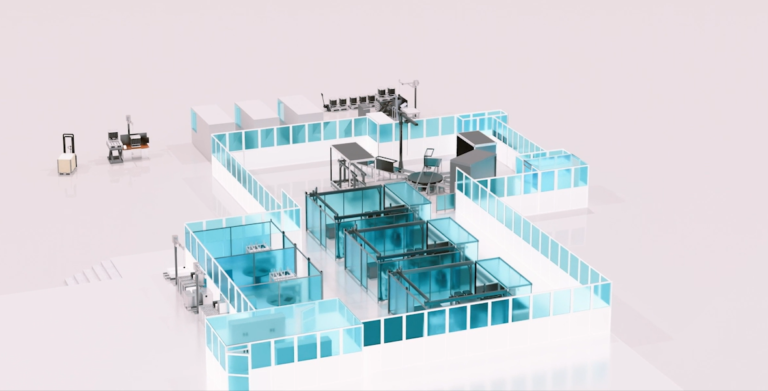
Hystar is to develop a gigawatt-scale electrolyzer factory for Thyssenkrupp. © Hystar AS
(Norway) Hystar AS has announced that Thyssenkrupp Automation Engineering has commissioned it to provide the front-end engineering design (FEED) for the electrolyzer production line of a gigawatt-scale factory in Høvik, Norway. This includes detailed planning and construction. The new production line will increase capacity from the current 100 megawatts. The required total area of only 2.500 square meters for stack assembly, quality control, and testing is "unique" for a gigawatt-scale electrolyzer factory.
+ + + + +
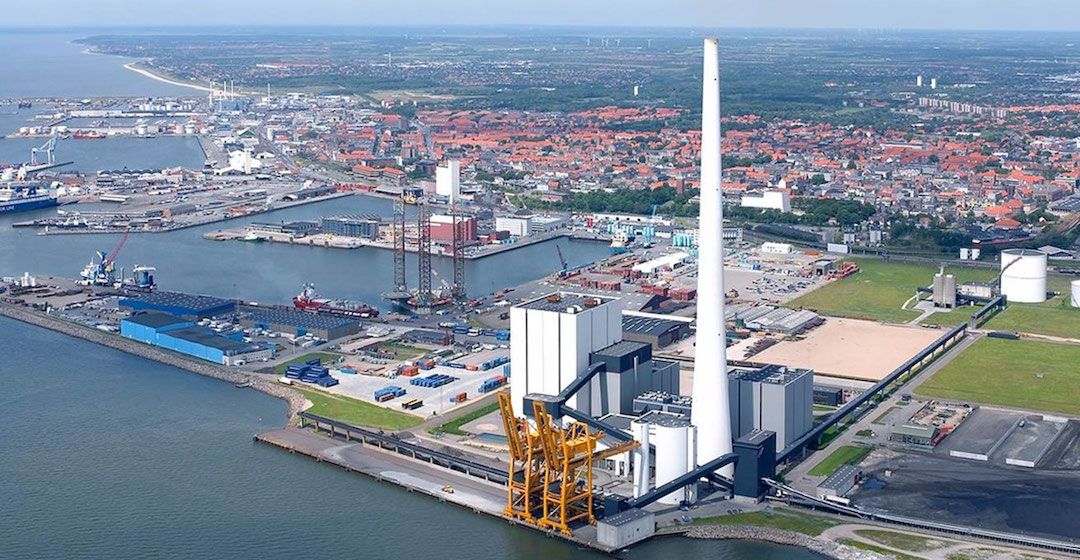
Esbjerg: Ørsted closes its last fossil fuel power plant. © Ørsted A/S
(Denmark) Energy supplier Ørsted will shut down its Esbjerg power plant in western Denmark on August 31. It is the company's last coal-fired power plant. This means that Ørsted's entire energy production will be "essentially free of fossil fuels." The Esbjerg power plant has made a very important contribution to the Danish energy system for many years, says Ole Thomsen, Senior Vice President and Head of Bioenergy at Ørsted. Annual coal consumption amounted to 500.000 tons, which corresponds to approximately 1,2 million tons of carbon dioxide emissions – or the annual emissions of 600.000 cars powered by fossil fuels. "The shutdown is the final major step on Ørsted's path to achieving 99 percent green energy production by 2025." In the future, electricity generation in Esbjerg will be covered by other power plants as well as wind and solar farms.
+ + + + +
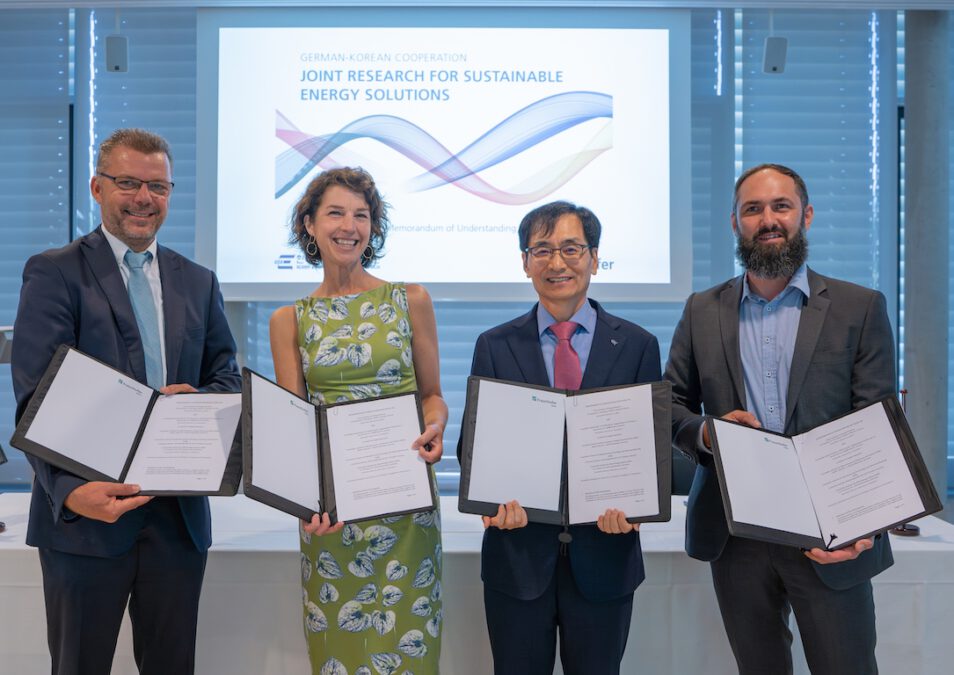
Want to conduct research together in the future (from left): Thomas Weißgärber (Fraunhofer IFAM), Erica Lilleodden (Fraunhofer IMWS), Chang-Keun Yi (KIER) and Michael Seirig (Fraunhofer IWES). © Fraunhofer IMWS
(Germany) Three Fraunhofer Institutes and the Korean Institute of Energy Research (KIER) plan to intensify their collaboration on hydrogen, photovoltaics, and wind energy. The Fraunhofer Institute for Microstructure of Materials and Systems IMWS, the Fraunhofer Institute for Manufacturing Technology and Advanced Materials IFAM, and the Fraunhofer Institute for Wind Energy Systems IWES are participating. According to a press release, the collaboration aims to "support the faster establishment of a hydrogen economy and sustainable energy supply in South Korea and Germany." The goal is to develop cutting-edge technology solutions for modern photovoltaic and wind energy systems, as well as hydrogen production and utilization. A particular focus will be on materials development, the integration of new solutions into energy systems, and the suitability of these approaches for industrial application. KIER will contribute its expertise in materials design and systems engineering, while Fraunhofer IMWS will contribute its experience in solar technologies and materials diagnostics for hydrogen applications. Fraunhofer IFAM provides support, including know-how in the field of alkaline electrolysis, while Fraunhofer IWES contributes expertise in the use of wind energy for the production of green hydrogen.
+ + + + +
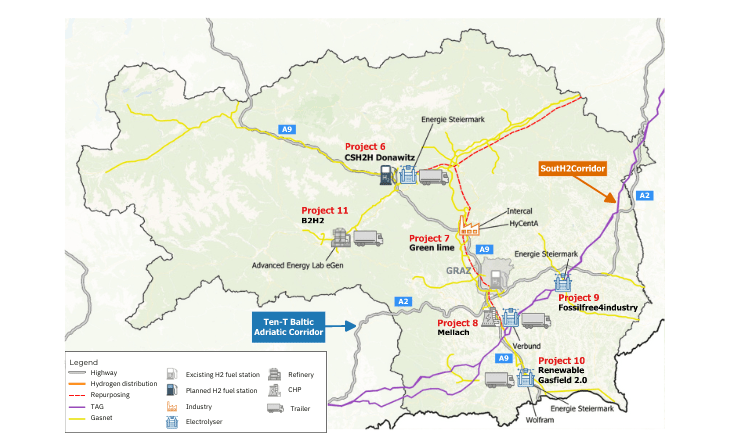
48 partners from industry and science are involved in 17 projects in the Hydrogen Valley. © Green Tech Valley
(Austria) The first hydrogen valley in Europe, focusing on industrial applications , is being developed in the Austrian federal states of Styria, Upper Austria, and Carinthia. The joint project won a competitive EU tender. Between 2025 and 2030, 17 hydrogen projects (six each in Styria and Upper Austria, and five in Carinthia) will be implemented along the entire value chain, with a total investment volume of €578 million. Initial EU funding amounts to €20 million. New facilities are planned that will produce more than 10.000 tons of hydrogen per year in the three federal states. The hydrogen valley, being implemented under the leadership of the research institute WIVA P&G, involves 48 companies and research institutions. These partners are focusing on applications in industry (56 percent), energy (23 percent), and mobility (21 percent). The timeline envisages concrete planning from the beginning of 2025 to the end of 2026, followed by the construction of the facilities, which will then be operational by the end of 2028. The facilities will be further optimized until 2030.
+ + + + +
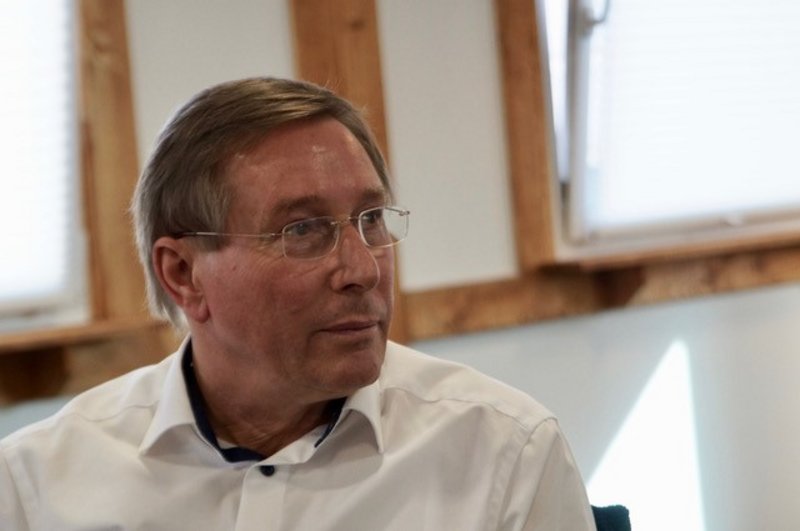
Wolfgang Lippmann will be the new Scientific Director of the Master's program "Hydrogen Technology and Economics" at the DIU. © Dresden International University
(Germany) Dresden International University (DIU) will launch its first Master's program in Hydrogen Technology and Economics in October. The program aims to train specialists "for the challenges of the energy transition" and to successfully apply hydrogen technology in practice. It is designed for those wishing to deepen their knowledge and offers a blend of foundational knowledge, the latest research findings, and practical experience. Professor Dr.-Ing. habil. Wolfgang Lippmann has been appointed Academic Director. According to the university, he has been working with hydrogen technologies and their role in the energy transition for over 30 years. His focus is on safety strategies and innovative developments for electrolyzers. "The energy transition cannot succeed without green hydrogen," says Lippmann. "Therefore, comprehensive knowledge and a high level of expertise are crucial."
+ + + + +

Sirius Aviation AG and the Marathon Group are working together to develop emission-free airports. © Sirius Aviation AG
(Australia) The Swiss company Sirius Aviation AG and Marathon Group Australia plan to jointly develop zero-emission infrastructure for airports. The focus will be on hydrogen storage and refueling systems, as well as transportable hydrogen liquefaction and refueling units. Training programs will also be offered to build expertise in hydrogen technologies and promote innovation in aviation. Ultimately, Sirius's vertical takeoff and landing (VTOL) aircraft, currently under development, will be integrated into the project. Marathon Group Australia was founded almost 40 years ago in the Gippsland region of Victoria and has since grown into a global consortium specializing in hydrogen, waste management, transportation, renewable energy, large-scale battery storage, solar farms, and infrastructure transformation. The company also owns land for the development of offshore wind farms and airports.
+ + + + +
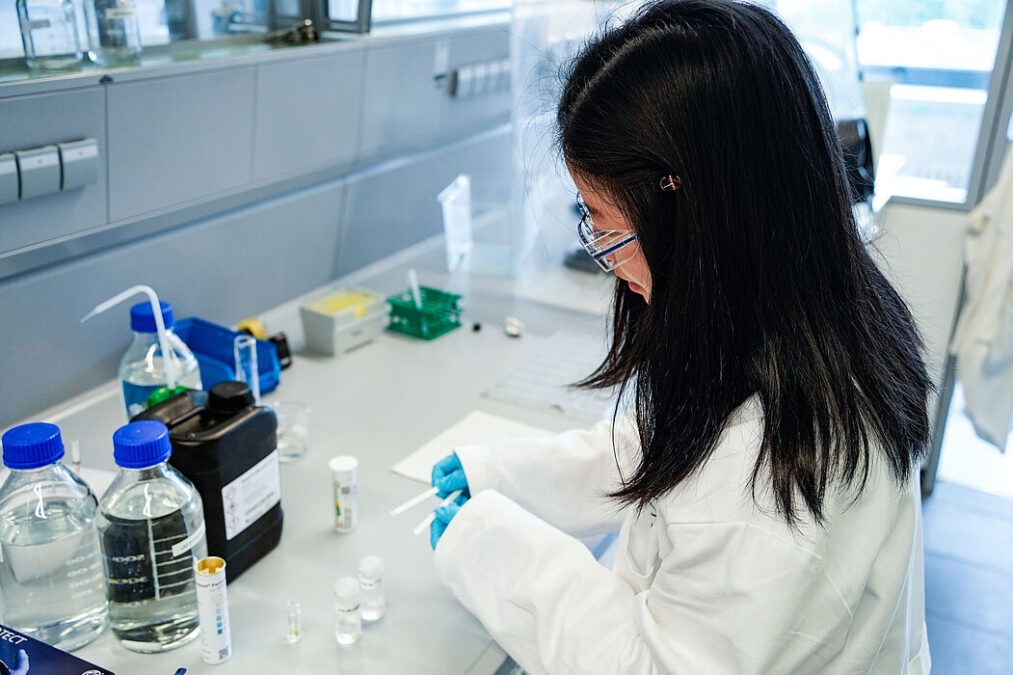
Ying Pan in the laboratory at the University of Paderborn. © University of Paderborn / Johanna Pietsch
(Germany) Scientists at the University of Paderborn are investigating how hydrogen can be produced using solar energy and specific carbon materials in a new research project. The project, entitled "Carbon Composites as Direct Z-Scheme Photocatalysts for Overall Water Splitting" (C2-Sport), is being funded with approximately €20.000. "By using sunlight to split water into hydrogen and oxygen, we are taking a big step closer to the ideal of a profitable and environmentally friendly energy source," says Maria Nieves López Salas, who is implementing the project together with Ying Pan at the Department of Chemistry. The concept is inspired by photosynthesis. It combines the strengths of two semiconductor types, leading to "unprecedented water splitting efficiency." "Semiconductor-based photocatalytic water splitting" using solar energy has "proven to be a promising solution for addressing energy and environmental problems," says López Salas. According to her, carbon-containing semiconductors could be "an interesting option" for photocatalyst systems. These offer technical advantages, are cheaper, reliable, and abundant on Earth. Visiting scientists from universities in Australia and China are involved in the "C2-Sport" project.
+ + + + +
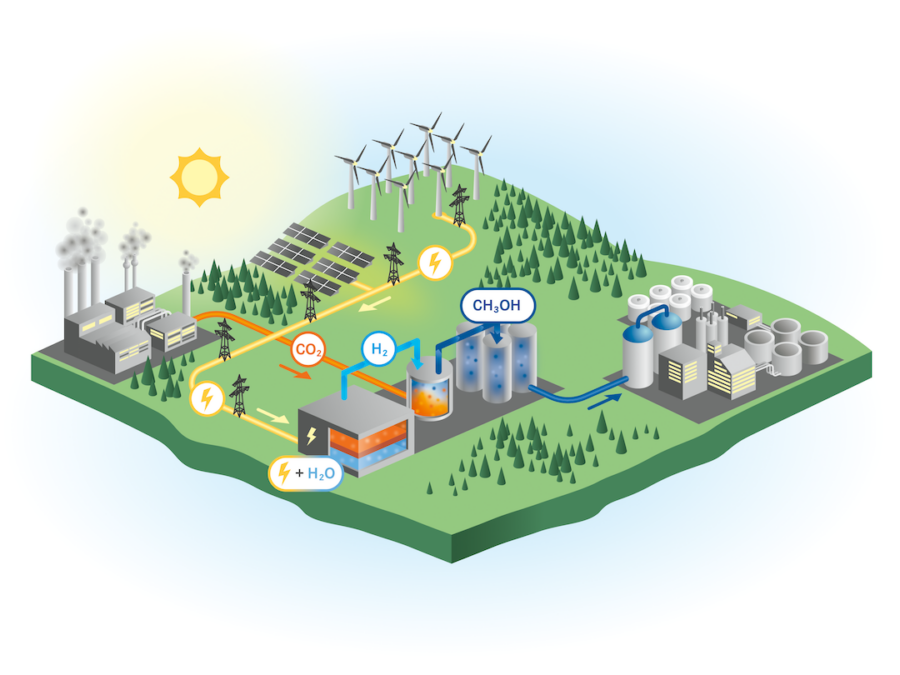
Hydrogen from renewable sources (H2) meets carbon dioxide (CO2) in the methanol reactor. The result is methanol (CH3OH), which can be used as an energy storage medium. © HZDR / Blaurock Markenkommunikation
(Germany) The fluctuating availability of sun and wind poses major challenges for a future energy system based on renewable sources. Under ideal weather conditions, sometimes more electricity is generated than the grid can absorb. To avoid having to throttle the plants, "smart storage solutions" are needed, says Stefan Fogel from the HZDR Institute of Fluid Dynamics in Dresden: "One of these could be power-to-methanol." This process converts surplus electricity from solar or wind farms first into hydrogen and then, together with CO2 emissions from industrial processes, into methanol. Compared to hydrogen, methanol has a much higher energy density per unit volume and, as a liquid, is also much easier to transport and store. In his doctoral dissertation, the chemical engineer focused on electrolysis systems that produce pure hydrogen at operating temperatures exceeding 600 degrees Celsius. This hydrogen is then used directly in the synthesis stage without any further separation. Fogel conducted extensive simulations for his doctoral thesis. In conclusion: Instead of designing electrolyzers for continuous operation as has been the practice, the system could also be operated dynamically. Connected decentrally to a wind farm or photovoltaic system, the systems would only operate during periods of energy surplus. This would make it possible "in the future to couple a power-to-methanol plant with a photovoltaic or wind power plant, operate it at partial load, and still achieve competitive production costs." However, the cost of methanol is "currently not competitive" because fossil raw materials, thanks to the infrastructure built up over decades, "are still incomparably cheap." Should the market for power-to-methanol grow in the coming years, economies of scale would reduce costs. "By 2050, we could have reached the point with the power-to-methanol process where we are on par with fossil fuels," says Fogel. Dr. Stefan Fogel has now received the 2024 Franz Stolze Prize from TU Dresden for his dissertation.
+ + + + +
DISCOUNT promotion: Your ADVERTISING on the PtX portal
Photos
iStock / © Danil Melekhin



