

Australia: $15 million for H2 training center +++ UK: Truck manufacturers make combustion engines "H2-ready" +++ UK: HVS cooperates with Hybot Technology to develop fuel cell trucks +++ USA: Hyzon and New Way Trucks want to develop H2 refuse trucks +++ China: Hydrexia on its way to the hydrogen market in South America +++ Egypt: Plans for hydrogen-powered office tower finalized +++ USA: Hexagon Purus supplies Gillig hydrogen systems for fuel cell buses +++ France: Belfort receives eight hydrogen buses from Solaris +++ DISCOUNT promotion: Your advertisement on the PtX portal
A selection of PtX topics summarized at the end of the week
+ + + + +
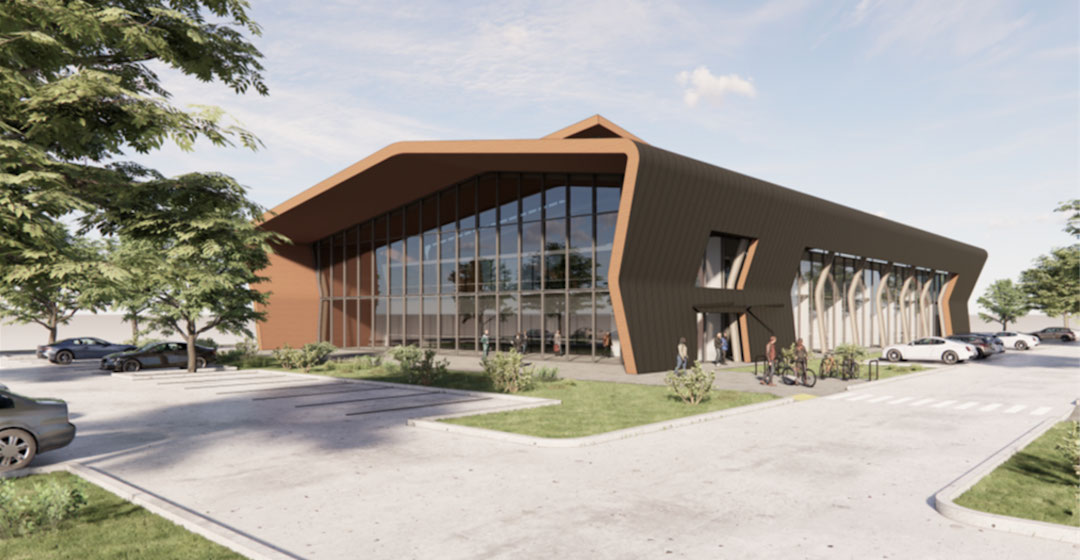
The PICAC campus in Townsville will train skilled workers for the hydrogen industry in the future. © Queensland Gov
(Australia) The Queensland state government is funding a skills and training center in Townsville to qualify local workers for the green hydrogen industry. The Plumbing Industry Climate Action Centre (PICAC), supported with 15 million Australian dollars (9,08 million euros), aims to help address the skilled labor shortage in the trade. The new center joins a network of six other sites across Australia's east coast, announced Ministers Scott Stewart (Resource) and Lance McCallum (Employment, Training and Skills) in a joint statement. PICAC will equip local workers with the skills needed for "thousands of new jobs" being created under Queensland's Energy and Employment Plan and Clean Energy Workforce Roadmap. It will also provide training on new technologies and applications, such as the safe handling of hydrogen and other renewable gases. “Townsville’s green hydrogen industry is one of the biggest job, climate and economic opportunities,” says Les Walker, the regional MP for hydrogen from the Mundingburra area.
+ + + + +
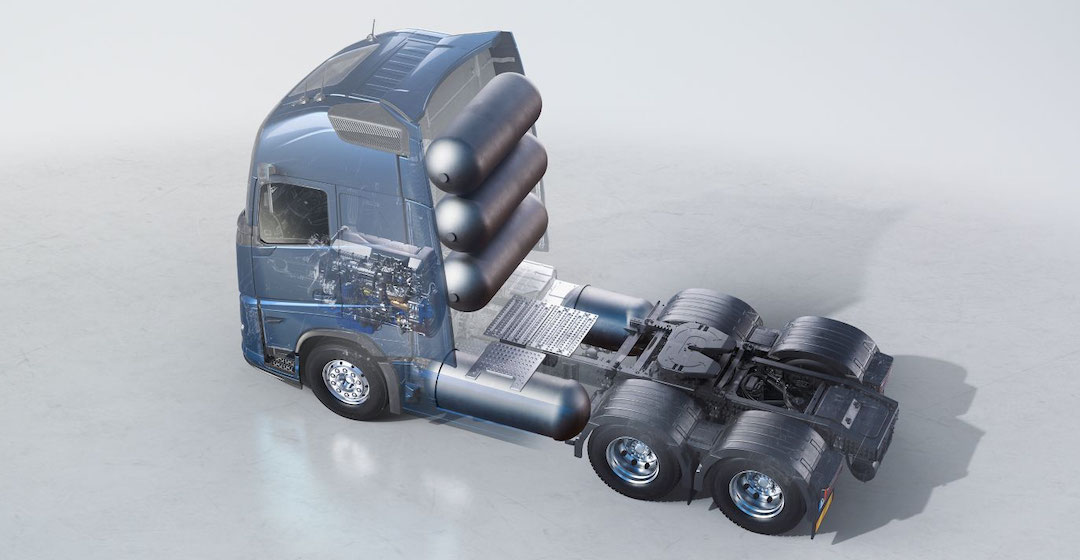
The Swedish truck manufacturer Volvo Truck plans to launch a vehicle with a combustion engine for hydrogen. © Volvo AB
(UK, Media): Some of the world's largest truck manufacturers, including Volvo and MAN, are reworking combustion engines to run on low-emission hydrogen instead of polluting diesel, according to a report by the Reuters news agency . Electric batteries are too heavy for long-haul freight transport and take a long time to charge. While fuel cells reduce weight and increase range, switching to this technology is expensive because companies would have to develop new truck systems. Therefore, manufacturers and their suppliers have shifted their immediate focus to developing hydrogen combustion engines, which represent a faster and cheaper solution and can leverage existing production lines that have been a major economic driver for countries like Germany for years, the article reports, citing executives from major truck brands. "Everyone is working on it," said Reiner Roessner, vice president of sales for the engine division of MAN Truck & Bus SE, part of Volkswagen. "As soon as hydrogen is available, demand for hydrogen combustion will increase." In an initial pilot project, MAN will deliver around 200 trucks with hydrogen-powered engines to European customers next year for testing in their fleets – “an important step on the road to mass production.” The Swedish truck manufacturer Volvo AB also plans to launch models with hydrogen combustion engines in the second half of this decade ( as previously reported ) and intends to begin customer trials in 2026. According to Reuters, by far the biggest problem for hydrogen combustion engines and fuel cells is the currently limited availability of green hydrogen.
+ + + + +
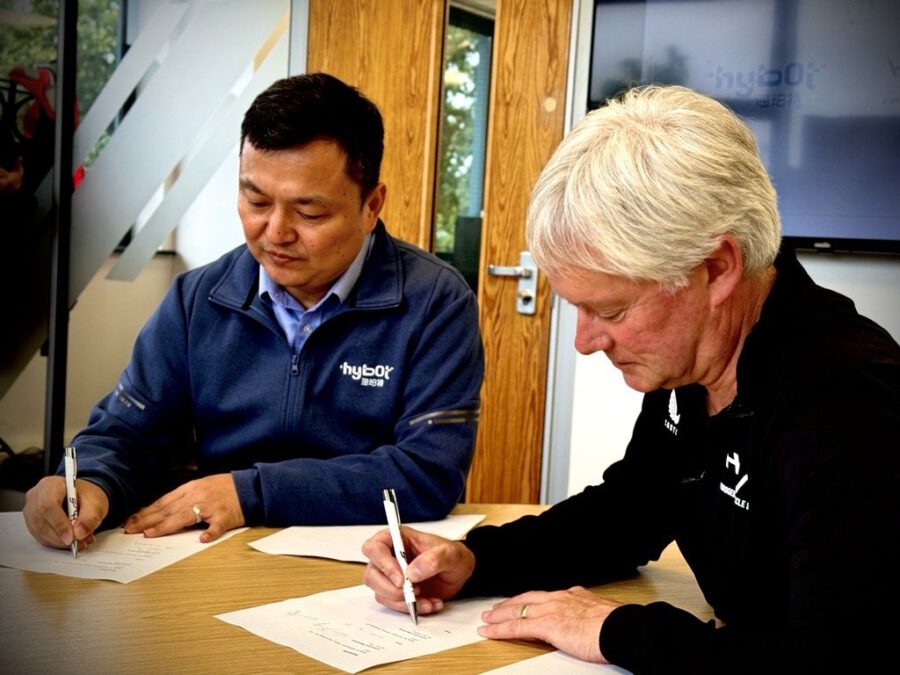
Sun Ying (left), CEO of Hybot, and HVS Managing Director Ian Palmer sign the agreement. © HVS
(Great Britain) British truck manufacturer Hydrogen Vehicle Systems Ltd. (HVS) has entered into a strategic partnership with China's Guangzhou Hybot Technology Co. to accelerate the market launch of fuel cell trucks. The cooperation focuses on collaboration in the areas of products, technology, and services. Hybot will provide the technology for vehicle development, while HVS will be responsible for sales and customer service in the EU and UK markets. The agreement also potentially allows for the import of HVS products into China and cooperation in developing other international markets.
+ + + + +
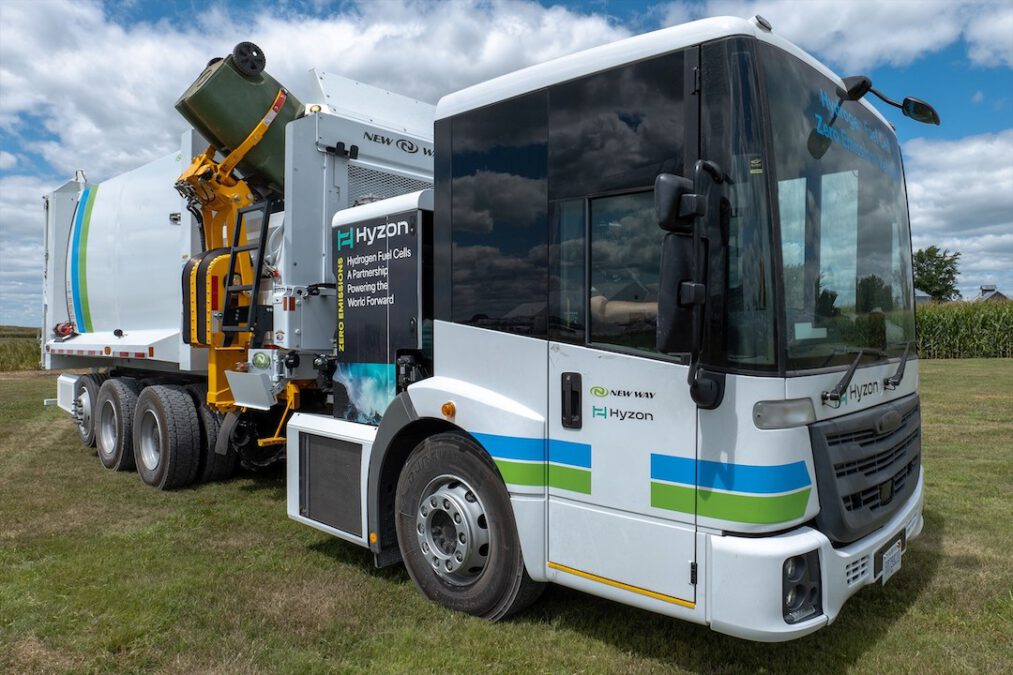
Hyzon and New Way's hydrogen-powered fuel cell garbage truck is now being tested by customers in North America. © Hyzon Motor Inc.
(USA) New Way Trucks, a manufacturer of refuse truck bodies, and Hyzon Motor Inc., a producer of fuel cell systems, are now launching trial operations in North America for the fuel cell-powered refuse collection vehicle (FCEV) unveiled at Waste Expo in Las Vegas in May. According to the companies, it will be tested on routes in the San Francisco Bay Area. Further customer presentations are planned by the end of the year. The truck will also be deployed in the greater Los Angeles area, followed by Northern California, and then Western Canada by early 2025. The side loader is lighter and offers a higher payload compared to battery-electric vehicles, and similar range and performance to the diesel and natural gas vehicles in customers' fleets, says Eric Evans, Chief Product Officer at New Way. In October 2023, Hyzon delivered its first fuel cell refuse collection vehicle, developed in partnership with Australian waste collection equipment manufacturer Superior Pak, to the Australian recycling company Remondis for testing. In November, it was reported that Hyzon had reached an agreement with the New Zealand-based TR Group for 20 test vehicles retrofitted with fuel cells. In April 2024, the company unveiled a 200-kilowatt powertrain for semi-trucks in Melbourne. However, in July, Hyzon announced it would cease operations in Europe and Australia because government support had diminished compared to "North American efforts to accelerate the adoption of fuel cell technology."
+ + + + +
(China) Hydrexia LLC, a subsidiary of the Chinese Hydrexia Holding Ltd, and GH2 Global plan to jointly develop hydrogen markets in Brazil and South America. Hydrexia will provide its technologies for hydrogen applications, which GH2 will integrate into refueling stations, storage facilities, and infrastructure. Hydrexia had already entered into similar collaborations in the first half of 2024 for market entries in Malaysia, India, and Australia.
+ + + + +

Rendering of the planned “Forbes International Tower” commercial building in Cairo. © Forbes International Tower
(Egypt, Media) A Saudi real estate company plans to break ground early next year in Egypt's new capital for a 50-story, $1 billion office tower powered by clean hydrogen. According to a report by the Reuters news agency , Magnom Properties, a subsidiary of the Saudi industrial conglomerate Rawabi Holding, aims to attract international clients to the planned city of "New Cairo," which is being built from scratch in the desert east of Cairo to house over six million people. Government ministries are already moving in, but so far there are few residents. Magnom will soon begin detailed planning for the "Forbes International Tower" and aims to complete the building by 2030, the article states, citing Karim Dayhoum, the company's Executive Director of Projects. The agreement between Magnom Properties and Forbes to develop the office tower was reached (as previously reported) at the World Economic Forum in Davos in January 2023.
+ + + + +
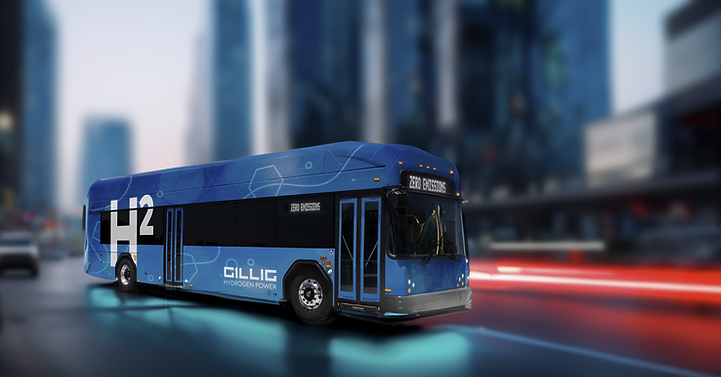
Graphic representation of the hydrogen bus planned by Gillig. © Gillig Corp
(USA) Hexagon Purus ASA has signed a multi-year contract with US bus manufacturer Gillig Corp. for hydrogen storage systems for fuel cell-powered city buses. Deliveries will be made from the Hexagon Purus plant in Westminster, Maryland. "There is strong commercial momentum in the transit bus segment, driven by the demand for zero-emission public transportation solutions," says Michael Kleschinski, Executive Vice President of Hexagon Purus. Gillig announced several months ago that it would also offer a fuel cell vehicle, developed jointly with BAE Systems and Ballard Power Systems. The new bus will offer "exceptional range, fast refueling capabilities, and reliable performance across diverse climates and terrains." Series production is scheduled to begin in 2026, it was announced in May (as previously reported).
+ + + + +
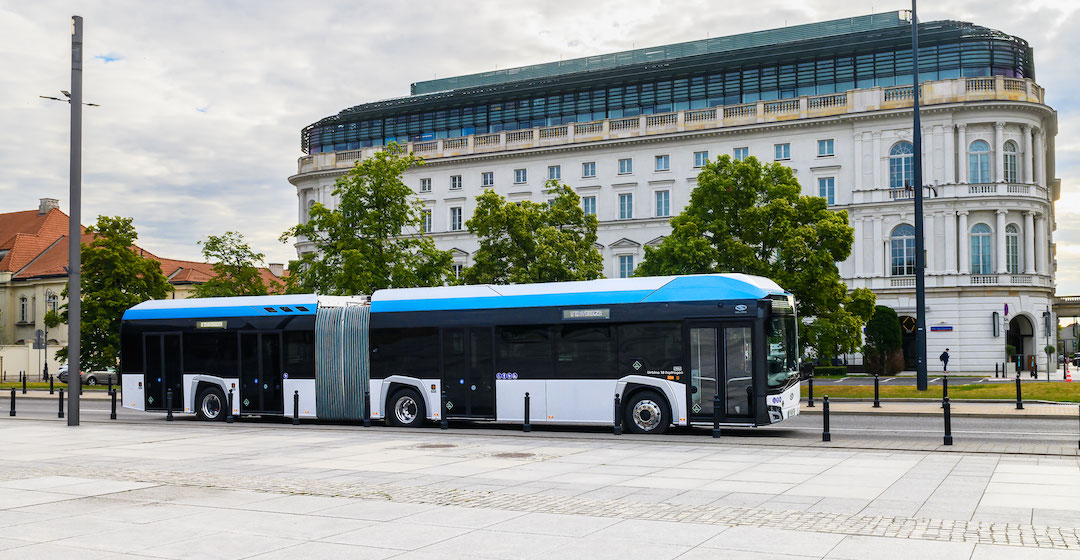
Belfort orders eight hydrogen articulated buses of the type “Urbino 18” from Solaris. © Solaris
(France) Polish bus manufacturer Solaris will deliver eight Urbino 18 hydrogen-powered articulated buses to the city of Belfort. The 18-meter-long vehicles are scheduled for delivery to the regional public transport authority SMTC in the second half of 2025. The operator of the new buses will be the Régie des Transports du Territoire de Belfort (RTTB), responsible for mobility, including bus services, in Belfort. The buses are equipped with a 100-kilowatt fuel cell and a composite tank capable of storing more than 50 kilograms of hydrogen at a pressure of 350 bar. Batteries will assist the 240-kilowatt electric motor during peak demand. Following orders for four vehicles for Artois Mobilités and 22 buses for Île-de-France Mobilités, this is Solaris' third order for hydrogen buses on the French market in recent months.
+ + + + +
DISCOUNT promotion: Your ADVERTISING on the PtX portal
Photos
iStock / © Danil Melekhin



