

Germany: Salzgitter AG sources green electricity from RWE for steel production +++ Great Britain: Green Marine receives type approval for the retrofitting of a service vessel +++ Great Britain: Ceres grants Denso a license for SOEC production +++ Tunisia: HDF Energy and the Ministry of Energy are developing a green hydrogen project +++ Great Britain: Langley Holdings acquires GKN Hydrogen +++ Austria: TU Vienna is researching energy management for H2 vehicles +++ Germany: Trelleborg cooperates with Airbus +++ Luxembourg: ArcelorMittal produces steel for hydrogen pipelines +++ USA: OCI Global sells ammonia project to Woodside Energy +++ DISCOUNT promotion: Your advertisement on the PtX portal
A selection of PtX topics summarized at the end of the week
+ + + + +
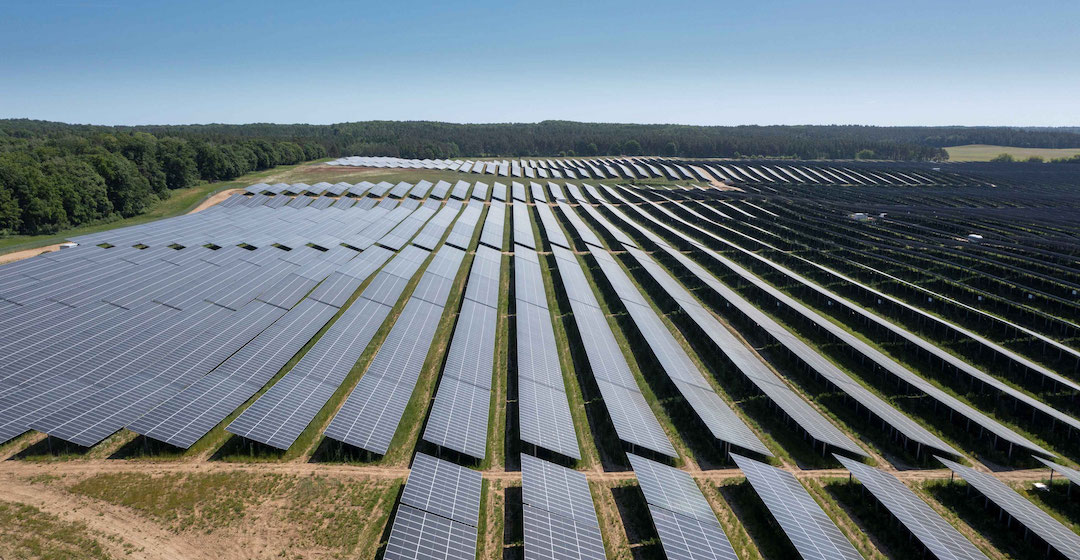
RWE supplies the electricity directly marketed by Mainova from the Boitzenburger Land solar park in Brandenburg to Salzgitter AG. © JP Joule GmbH
(Germany) The steel group Salzgitter AG has signed a seven-year contract with RWE Supply & Trading for the supply of green electricity. The Power Purchase Agreement (PPA), for up to 64 gigawatt-hours annually, begins in 2027. The electricity will come from a 180-megawatt solar park in Brandenburg. The photovoltaic plant is owned by Solarenergie Boitzenburger Land GmbH, the GP Joule Group, and Mainova AG, which markets the electricity. The group's subsidiary, Salzgitter Flachstahl GmbH, will convert its steel production to electricity- and hydrogen-based processes starting in 2026. The goal is almost completely CO2-free production by 2033. This will involve replacing the blast furnace route with production processes using direct reduction and electric arc furnaces. "By 2025, half of our electricity needs should come from non-fossil sources, and by 2030 we aim to source 100 percent green electricity," says Marco Hauer, Head of Energy Procurement.
+ + + + +
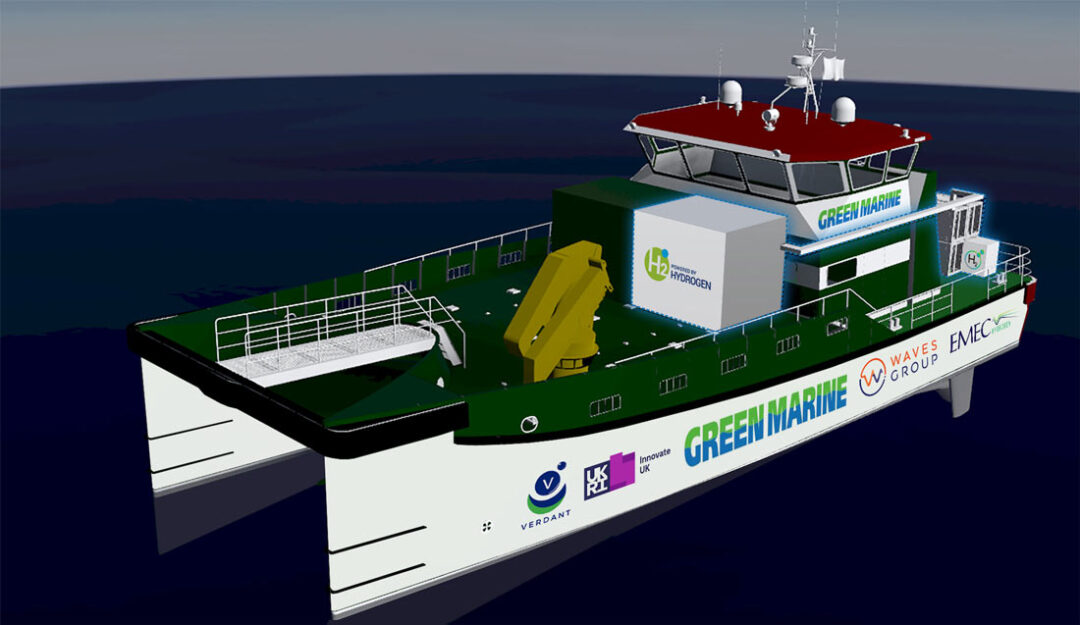
Green Marine UK plans to convert crew transfer vessels to fuel cell propulsion. © Energys Australia Pty Ltd
(Great Britain) The classification society RINA has granted Green Marine UK Approval in Principle (AiP) for its fuel cell retrofit kit for crew transfer vessels (CTVs). These vessels are used for service and crew transport. The current "Verdant" project aims to significantly reduce emissions during the maintenance of offshore wind farms. The completion of the preliminary design and feasibility study has, according to the company, "confirmed the feasibility of the concept and paved the way for the subsequent design and construction phases." The Australian company Energys Australia Pty Ltd was responsible for the entire hydrogen system, including the specification, configuration, and construction of hydrogen tanks, piping, and the fuel cell system. Energys states that it offers a comprehensive range of fuel cell products for the marine industry, from small 90-kilowatt generators to multi-megawatt systems. The products are designed for various applications, including sports boats, small ferries, workboats and shore power supply.
+ + + + +
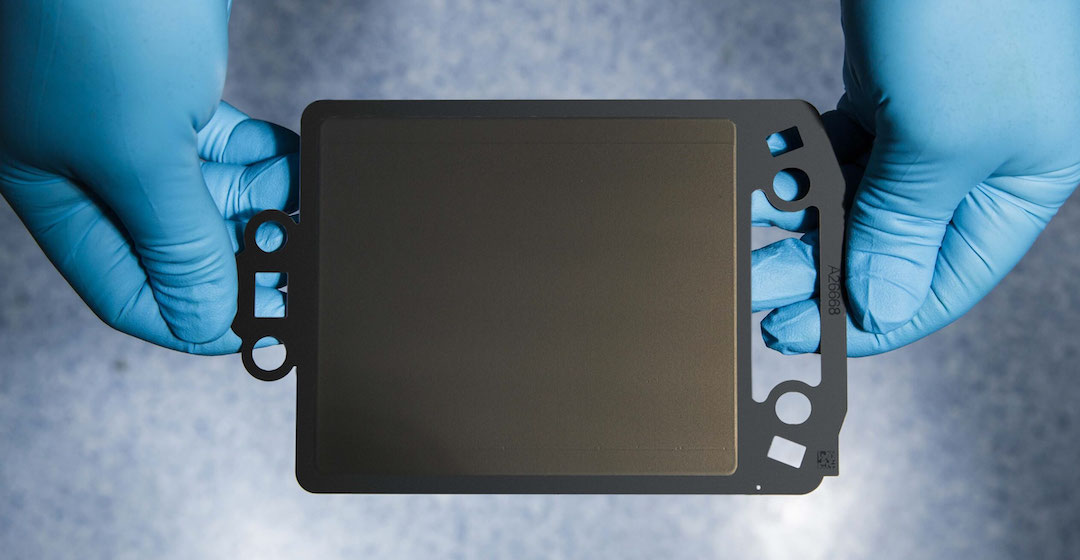
Ceres grants Denso license for SOEC production. © Ceres Power Holdings plc
(Great Britain) Ceres Power Holdings plc has signed a long-term licensing agreement with Japan's Denso Corporation for the production of solid oxide electrolyzer cells (SOECs). According to the company, the agreement provides for revenue through license fees, technical services, and hardware, as well as license payments to Ceres for future commercial production and sales to end customers by Denso. This partnership enables Denso to "manufacture current and future generations of Ceres' stack technology under license," with the aim of establishing a hydrogen supply chain. Denso, headquartered in Kariya, Japan, employs more than 160.000 people worldwide in 35 countries and regions. Japan plans to invest 15 trillion yen (90 billion euros) in hydrogen over the next 15 years, particularly in hard-to-reach sectors such as steel, ammonia, and synthetic fuel production, for which Ceres' solid oxide technology is especially well-suited and offers significant competitive advantages.
+ + + + +
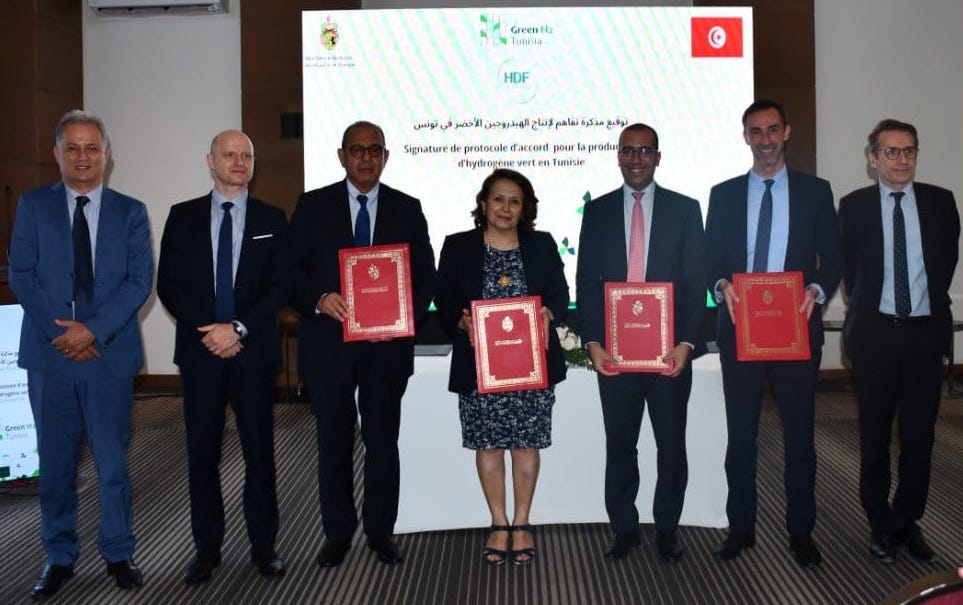
Signing of the letter of intent with HDF in the presence of representatives from politics and business. Center: Fatma Thabet Chiboub, Minister of Industry, Mining and Energy of the Republic of Tunisia. © HDF Energy
(Tunisia) Hydrogène de France (HDF Energy), a developer of large-scale hydrogen infrastructure, plans to launch a major green hydrogen production project in Tunisia. A corresponding agreement has now been signed with the Tunisian Ministry of Industry, Mines and Energy. The initial investment is estimated at around three billion euros. The project will include the installation of one gigawatt of wind power and 500 megawatts of photovoltaic power plants. The resulting energy will power electrolyzers with a capacity of 800 megawatts, producing up to 65.000 tons of hydrogen per year. The green hydrogen is primarily intended for export to Europe via the "SoutH2" corridor of European gas network operators. Local investors and communities, as well as the Tunisian economic and industrial sectors, will also be involved. The signing is part of a series of agreements signed with HDF Energy and five other foreign companies. With these agreements, Tunisia aims to implement its national strategy for green hydrogen and its derivatives. According to the plan, capacities for 8,3 million tons of green hydrogen are to be built by 2050, of which 2,3 million tons are intended for the local market. Total investments are estimated at around 120 billion euros.
+ + + + +
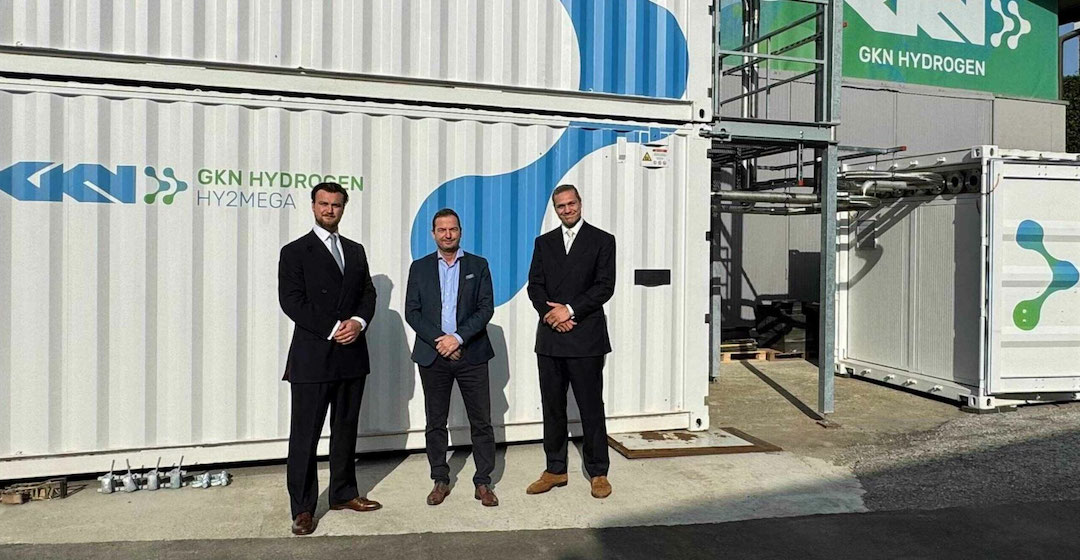
Langley Holdings' chief executive officers Bernard Langley and William Langley (left and right) together with Guido Degen, CEO of GKN Hydrogen, at the company's headquarters in Falzes, Italy. © Langley Holdings
(Great Britain) Langley Holdings has acquired GKN Hydrogen from the Dowlais Group. GKN Hydrogen, headquartered in Pfalzen (northern Italy), specializes in hydrogen storage. The company, with branches in Germany (Bonn) and the USA (Carlsbad), formerly part of GKN Powder Metallurgy, a division of the Dowlais Group plc, has developed metal hydride compounds that store hydrogen in solid form at 16 times the density of compressed hydrogen gas. When needed, the hydrogen is converted back into gas by heating the hydride to 60 degrees Celsius. The company states that it has tested the system in over 7.000 charge/discharge cycles with an efficiency of 99 percent. GKN Hydrogen will become part of Langley's Power Solutions Division. Langley Holdings plc is a privately owned British engineering and industrial manufacturing group. The group operates in Germany, Italy, France, the United Kingdom and Norway and has 18 production facilities in Europe, Great Britain and the USA.
+ + + + +
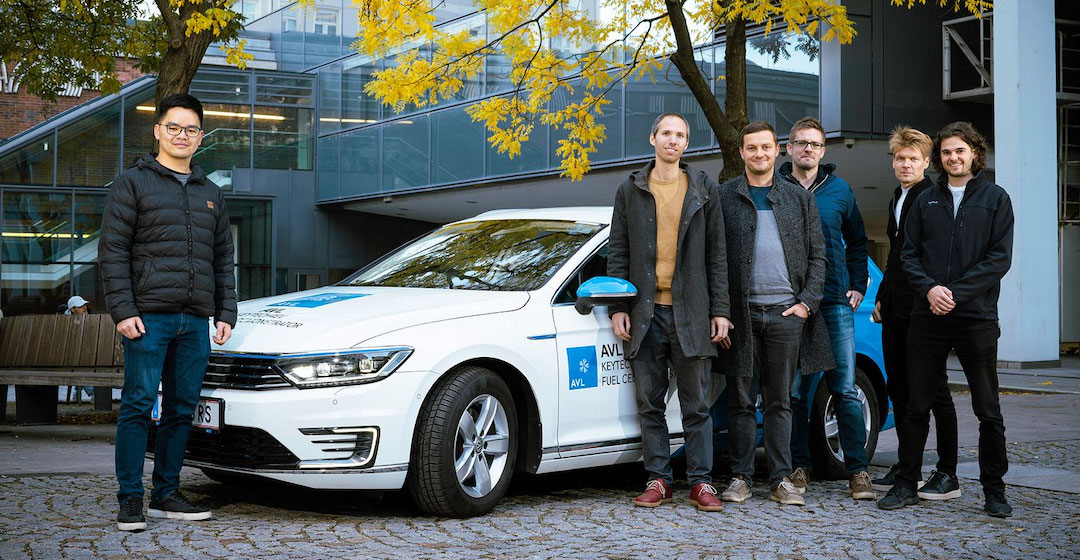
The team from the Institute of Mechanics and Mechatronics with project partners from AVL and fuel cell vehicle. © TUW
(Austria) Scientists at the Institute of Mechanics and Mechatronics at TU Wien are researching "predictive energy management strategies" for fuel cell vehicles. Predictive analytics evaluates data to identify patterns and derive and predict trends for future behavior. According to the researchers in Vienna, they utilize readily available, static route information such as speed limits and elevation profiles to optimize energy management. For example, during a mountainous drive, the battery is charged to support the fuel cell during the ascent, thus enabling more efficient operation. During the subsequent descent, the now-discharged battery is then recharged through recuperation, further increasing efficiency. In addition to fuel savings, the predictive concepts also allow for an extended lifespan of the fuel cell by avoiding damaging operating conditions. Within the "FC-IMPACT" project, the team, led by Christoph Hametner, is working closely with the Graz-based technology company AVL, which has built a fuel cell demonstration vehicle based on a VW Passat. The collaboration allows the energy management strategies, which have already been tested in simulations, to be validated with the actual vehicle. S. Kofler, ZP Du, S. Jakubek and C. Hametner, “Predictive Energy Management Strategy for Fuel Cell Vehicles Combining Long-Term and Short-Term Forecasts” , in IEEE Transactions on Vehicular Technology.
+ + + + +
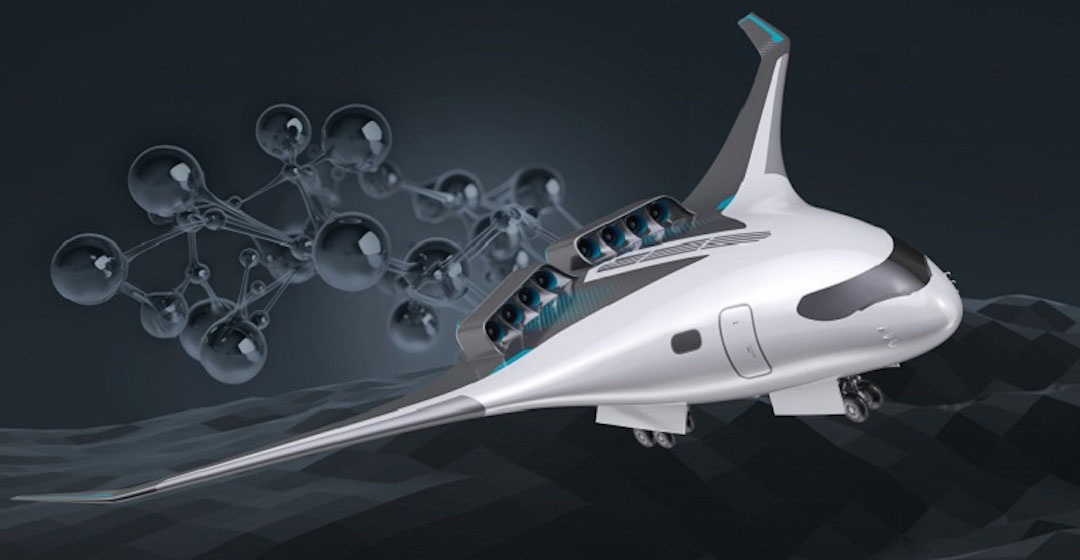
Trelleborg is developing seals for Airbus for the concept aircraft called ZEROe. © Trelleborg Sealing Solutions Germany GmbH
(Germany) Trelleborg Sealing Solutions Germany GmbH is cooperating with Airbus in the field of hydrogen seals. The French aerospace group plans to deliver a hydrogen-powered commercial aircraft by 2035. Trelleborg is developing the seals for the propulsion systems of the "ZEROe" concept aircraft, which will enable Airbus to explore a variety of configurations and hydrogen technologies. A cryogenic high-pressure test rig was developed at Trelleborg Sealing Solutions' Bridgwater plant in the UK to develop the necessary technology. Initial tests of the seals, called "Wills Rings," showed "that they offer almost 100 percent gas sealing under cryogenic conditions," says Peter Bashford, Product Manager at Bridgwater.
+ + + + +
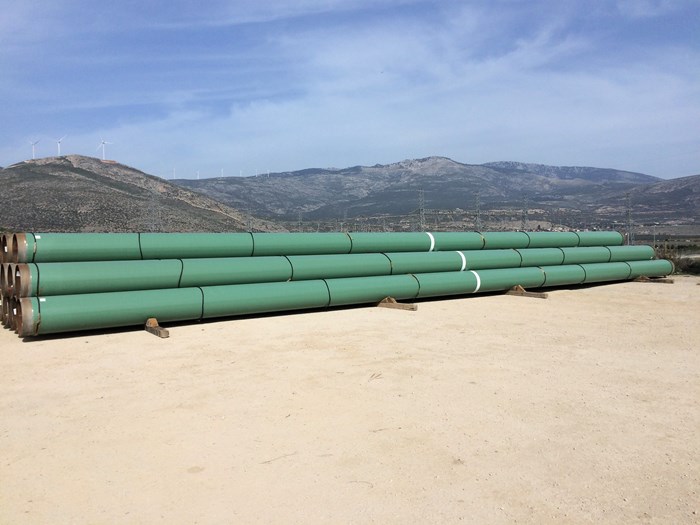
Arcelormittal launches “HyMatch” steel for the construction of hydrogen-compatible pipelines. © Arcelormittal
(Luxembourg) Steelmaker ArcelorMittal has announced the introduction of a new steel for the construction of hydrogen pipelines. The transport of hydrogen presents "particular challenges." ArcelorMittal has now developed a product family called "HyMatch," characterized by a "homogeneous structure and high purity." This reduces "hydrogen embrittlement"—a physical property of metal alloys that come into contact with hydrogen and increases the risk of leaks. As part of ArcelorMittal Global R&D, research programs for the use of steel in hydrogen infrastructure are being conducted at several production sites, including those in France (Fos-sur-Mer), Germany (Bremen), and in R&D laboratories such as the one in Belgium (Ghent). Production in Fos and Bremen offers proximity to pipe manufacturers in the Mediterranean and North Sea regions.
+ + + + +
(USA) OCI Global is selling 100 percent of its stake in the 1,1 million tonne clean ammonia project currently under construction in Beaumont, Texas, to Woodside Energy Group Ltd. The purchase price is $2,35 billion (€2,1 billion). OCI will retain responsibility for the project until it is fully operational. The sale also includes infrastructure and utilities required for a second production line. The transaction is expected to close later this year. OCI Clean Ammonia is a hydrogen-based ammonia plant whose greenfield planning began in late 2021. Construction started in December 2022. The plant is expected to produce its first blue ammonia in 2025. The project is a collaboration between OCI and Linde, combining the industrial gas supplier's low-carbon hydrogen production and carbon capture technology with OCI's ammonia production, storage, and transportation infrastructure. Furthermore, Linde has signed a contract with ExxonMobil for the infrastructure for CO2 transport and CO2 sequestration. According to the company, OCI's production capacities span four continents and comprise approximately 17,2 million tons of hydrogen-based products per year, including nitrogen fertilizers, methanol, biofuels, and melamine. OCI employs more than 4.000 people and is headquartered in the Netherlands. Woodside is a global energy company and is involved in, among other things, the liquefied natural gas (LNG) industry in Australia.
+ + + + +
DISCOUNT promotion: Your ADVERTISING on the PtX portal
Photos
iStock / © Danil Melekhin



