

Germany: Enertrag buys hall for 130 MW hydrogen production in Prenzlau +++ UK: Ineos invests £30 million in hydrogen utilization at its Hull site +++ Germany: Tyczka begins construction of a hydrogen filling station in Schweinfurt +++ China: Harbor tugboat refuels with ammonia from Envision's new factory for the first time +++ Germany: Electrolyzers are being installed at Brainergy Park Jülich +++ Canada: First Hydrogen expands SMR research +++ South Korea: Doosan Fuel Cell starts series production of SOFC fuel cell systems +++ Austria: Converting the gas network to hydrogen requires €3,5 billion +++ Germany: BDEW discussion paper on hydrogen import infrastructure +++ Canada: Next Hydrogen Solutions commissions H2 filling station
A selection of PtX topics summarized at the end of the week
+ + + + +
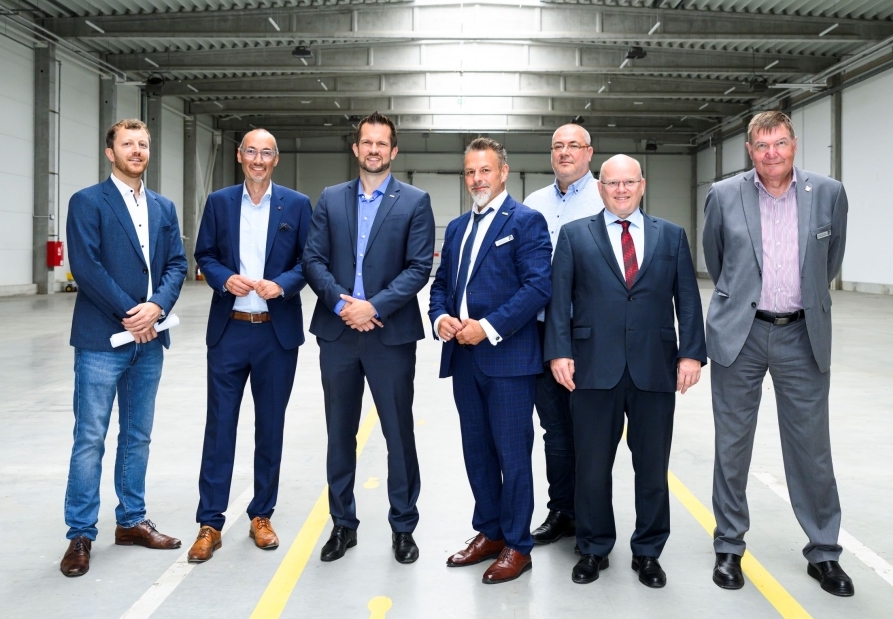
Enertrag acquires a 130-megawatt hydrogen production facility in Prenzlau. © Enertrag AG / Tom Schweers
(Germany) Enertrag AG has signed the purchase agreement for a future hydrogen production site in Prenzlau. The plant will have a connected load of 130 megawatts. Water requirements will be met from existing quotas and will not affect the general drinking water supply. The facility is part of the European Hy2Infra funding program and is expected to produce up to 12.500 tons of green hydrogen annually, which will be fed into the future German core hydrogen network via a flow pipeline. Several trailer filling stations will also be built to ensure flexible supply. The new production site will be integrated into an existing industrial building. The waste heat generated could be used by the Prenzlau municipal utility for the city's district heating network. According to the company, the planned investment amounts to approximately €300 million. The project is expected to create 25 new jobs. Currently in the technical planning phase, the project will then submit the permit applications.
+ + + + +
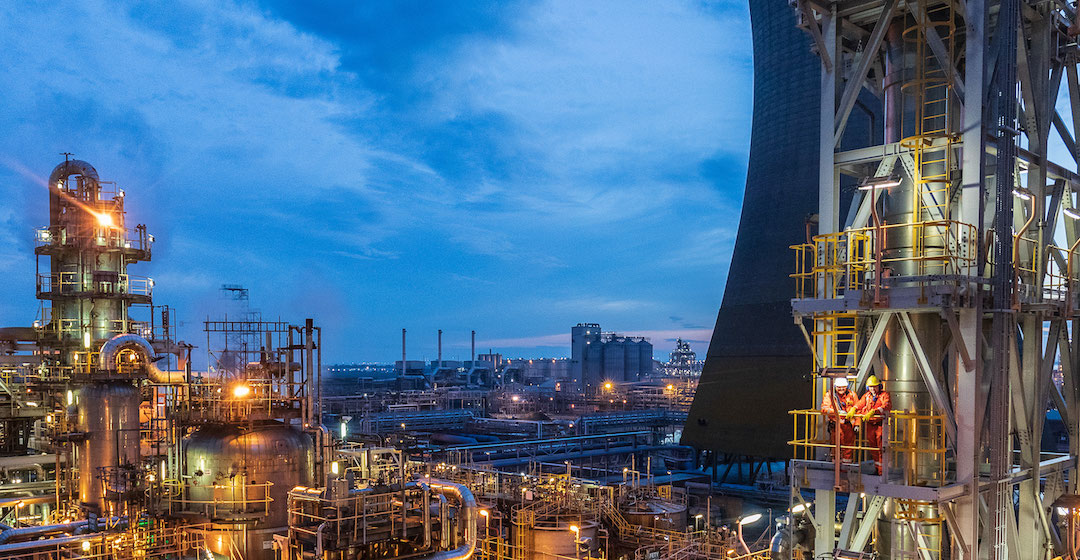
At the Ineos Acetyls factory in Hull, UK, hydrogen will be burned instead of natural gas, reducing CO2 emissions. © Ineos
(Great Britain) Petrochemical company Ineos Holdings Ltd. has announced that it has invested £30 million in its Hull production site, converting the plant to burn hydrogen instead of natural gas. The energy carrier is produced as a byproduct of existing manufacturing processes. The investment is part of Ineos' strategy to decarbonize its operations in Great Britain and Europe. The conversion has reduced CO2 emissions by 75 percent, says David Brooks, CEO of Ineos Acetyls, the Hull-based subsidiary that produces acetic acid, acetic anhydride, and ethyl acetate on an industrial scale.
+ + + + +
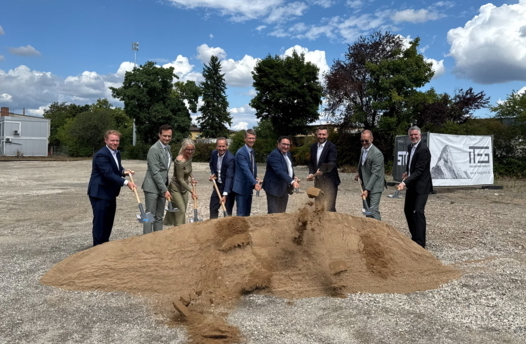
Groundbreaking ceremony for the filling station in Schweinfurt (from left): Stefan Weiß (Tyczka Hydrogen), Florian Töpper (District Administrator of the Schweinfurt District), Caroline Trips (President of the Chamber of Industry and Commerce WÜ-Schweinfurt), Frank Götzelmann (CEO of the Tyczka Group), Sebastian Remelé (Mayor of Schweinfurt), Tobias Gotthardt (State Secretary of the Bavarian Ministry of Economic Affairs), Thomas Zorn, Christoph Stiller, and Jürgen Schmidt (all Tyczka Hydrogen). © Tyczka GmbH
(Germany) Tyczka GmbH, a supplier of industrial gases, has begun construction of a hydrogen refueling station at the port of Schweinfurt (Bavaria). The station will be able to supply up to 1.000 kilograms of green hydrogen per day at 350 or 700 bar, around the clock. In addition to trucks, buses and refuse collection vehicles are also targeted as potential customers. The Bavarian Ministry of Economic Affairs (StMWi) is funding the project with two million euros. Initially, the sustainable hydrogen will be delivered by trailer and will later be produced at an electrolysis plant being built at the same location by the company's subsidiary, Tyczka Hydrogen, as part of a comprehensive hydrogen hub. Planning for the five-megawatt plant, which is also being funded by the StMWi with five million euros, is progressing rapidly. Production will also supply the region with green hydrogen; commissioning is scheduled to begin at the end of 2026. As part of the overall project encompassing the filling station, the planned production plant, and the associated trailer fleet, Tyczka Hydrogen will invest more than €20 million in Schweinfurt. This will be Tyczka Hydrogen's third station, in addition to another company-owned filling station in the Augsburg freight center and a stake in a filling station in Hofolding, south of Munich, through Hy2B Wasserstoff GmbH.
+ + + + +
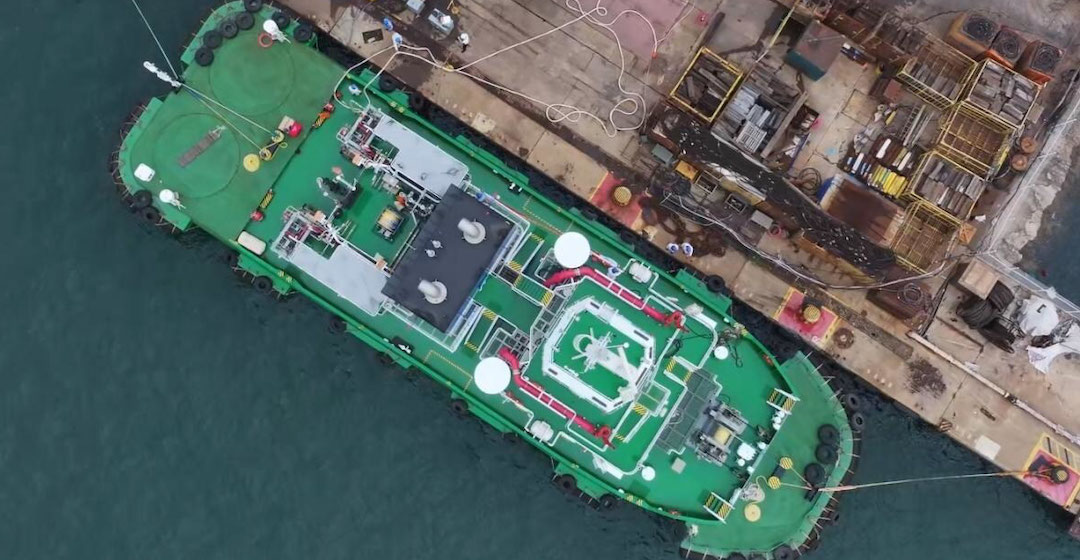
Envision Energy supplies the world's first green ammonia bunkering station in the Port of Dalian. The energy carrier was used to fuel a harbor tug. © Envision Energy
(China) The Chinese Envision Energy Group has delivered its first batch of green ammonia from its newly commissioned plant in Chifeng. Customer China Shipping & Sinopec Suppliers Co., Limited used the ammonia to refuel a 5.500 hp vessel belonging to the port operator at the COSCO Shipping Heavy Industry terminal in Dalian. The tugboat is equipped with an ammonia dual-fuel engine and a special fuel supply system, achieving an ammonia substitution rate of up to 91 percent. It has been classified as an "Ammonia Fuel Tug" by the China Classification Society. This completes the entire value chain, from the production of green ammonia through transport and refueling to the operation of ammonia-powered vessels. The Chifeng Green Hydrogen-Ammonia project is the world's largest and most cost-effective facility of its kind to date. It is powered entirely by integrated wind, solar, and energy storage technologies. The green ammonia produced has been certified by Bureau Veritas, as previously reported. This strengthens the Port of Dalian's status as a green energy hub in Northeast Asia and closes "an important gap in the supply chain for green ammonia fuel for international merchant ships."
+ + + + +
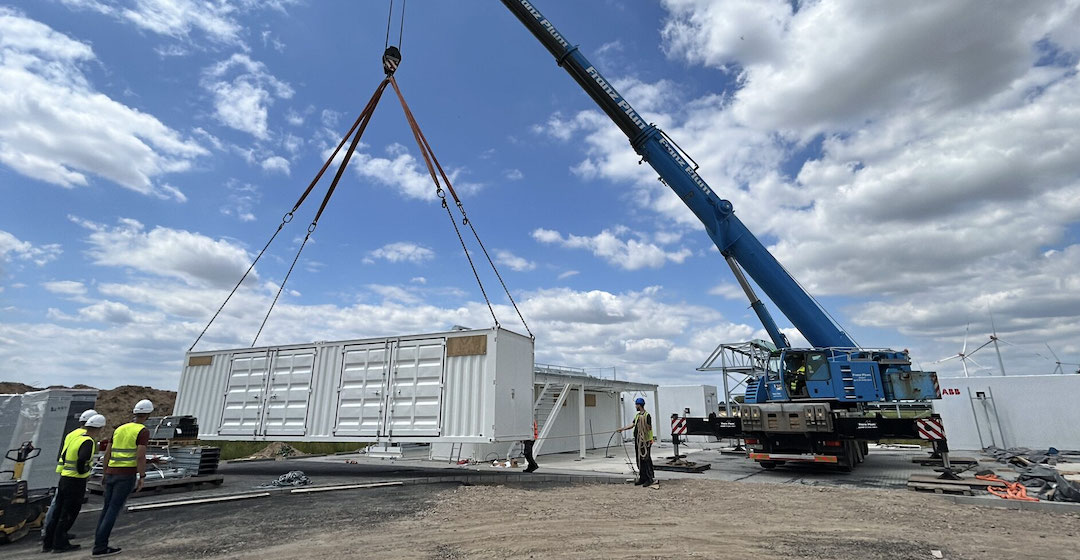
Neumann & Esser is supplying two electrolyzers for Brainergy Park Jülich. © Neumann & Esser GmbH
(Germany) The two electrolyzers have arrived at Brainergy Park Jülich. Once completed, the entire production facility will include, in addition to the production plant itself, facilities for compression and storage, as well as a filling station and an operations building. It is being built and operated by HyDN GmbH , a company in which Messer Industriegase and the Düren district each hold a 50 percent stake, according to their own statements. The electrolyzers, with a capacity of ten megawatts, were supplied by Neumann & Esser GmbH & Co. KG from Aachen. Together with Messer SE & Co. KGaA, the company is responsible for the realization of the entire project. Commissioning, with an annual capacity of 1.000 tons, is planned for "no later than the beginning of 2026." At that time, the plant will, among other things, refuel the 20 fuel cell buses currently operating in the Düren district. The construction is being funded by the Federal Ministry of Transport and Digital Infrastructure with approximately €14,7 million. Total investments amount to €35 million (as of July 2024).
+ + + + +
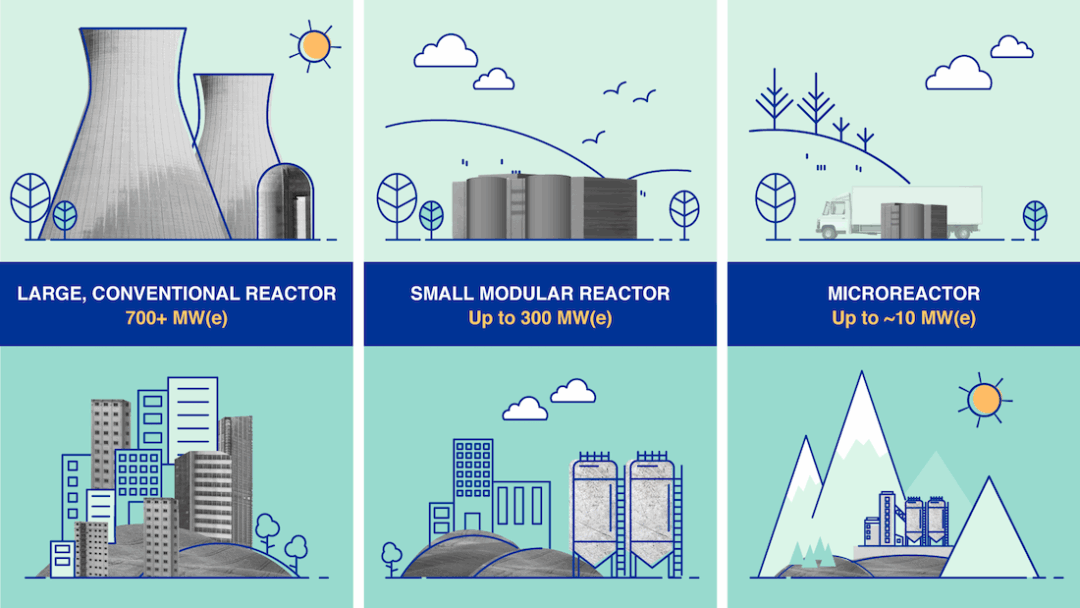
SMRs have a capacity of up to 300 megawatts. They can be prefabricated and transported to the installation site. © International Atomic Energy Agency IAEA / A. Vargas
(Canada) First Hydrogen Corp., through its subsidiary First Nuclear Corp., established in March, is expanding its collaboration with the University of Alberta's Renewable Thermal Laboratory, which began in June, to further develop small modular nuclear reactors (SMRs). The focus is on fuel reactor materials, reactor design, and optimization, taking into account the growth of data centers with artificial intelligence (AI). As previously reported, the company sees SMR technology as a "stable, cost-effective, and efficient method for producing green hydrogen." First Hydrogen is currently evaluating potential sites in Canada and Europe. SMRs can be industrially manufactured and then transported to their destination for installation, even in remote locations. According to the Canadian government, there are currently five conventional nuclear power plants in three provinces with 22 reactors. These produced 15 percent of Canada's electricity (as of January 2025). According to reports, significant Canadian SMR projects included Ontario Power Generation's (OPG) Darlington SMR initiative to build four reactors, New Brunswick's focus on fourth-generation SMRs, including the development of ARC Clean Energy in Point Lepreau, and research into SMRs for grid-scale power generation in Saskatchewan. The development of SMR concepts began in the 1950s for military purposes. According to an expert opinion from the Federal Office for the Safety of Nuclear Waste Management, no SMR-specific national or international safety standards currently exist.
+ + + + +
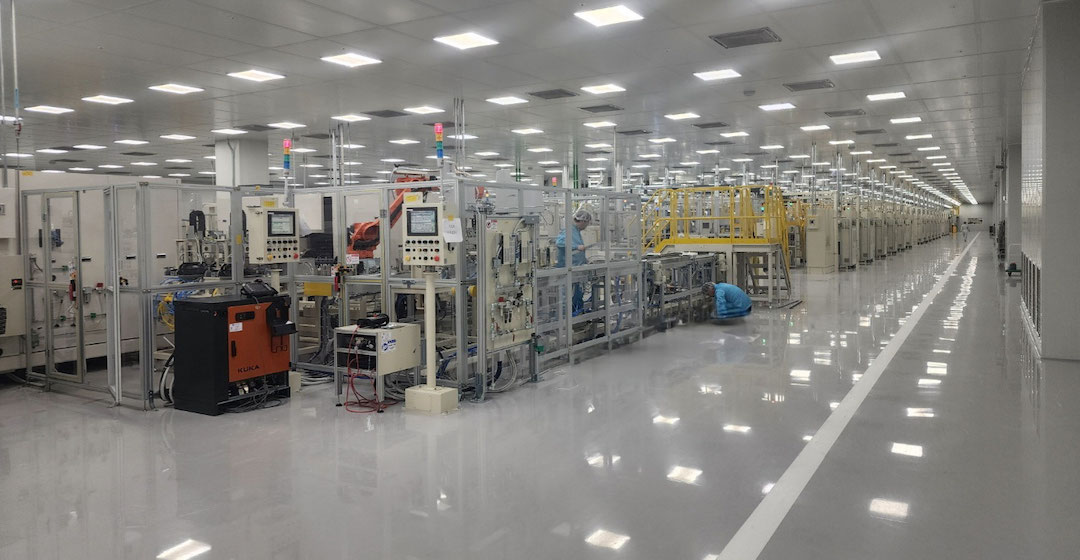
Doosan Fuel Cell commissions its new SOFC fuel cell factory in Gunsan, South Korea. © Doosan Fuel Cell Co. Ltd
(South Korea) Doosan Fuel Cell Co. Ltd. has begun mass production of solid oxide fuel cell (SOFC) systems. The factory in Gunsan, Jeollabuk-do Province, currently has an annual capacity of 50 megawatts. The fuel cells, stacks, and drive systems produced there will initially be marketed to customers in South Korea. The technology is based on the solid oxide technology of the British company Ceres Power Holdings plc (CWR). Doosan is "the first strategic licensing partner" of Ceres to enter industrial production with this technology. According to the company, Doosan Fuel Cell aims to launch the first fuel cells before the end of 2025. The focus is on stationary, decentralized energy systems, particularly for applications with high and growing energy demands such as data centers, but also for stabilizing power grids and microgrids based on renewable energies through peak power generation, as well as power supply systems for buildings and auxiliary power solutions for shipping.
+ + + + +
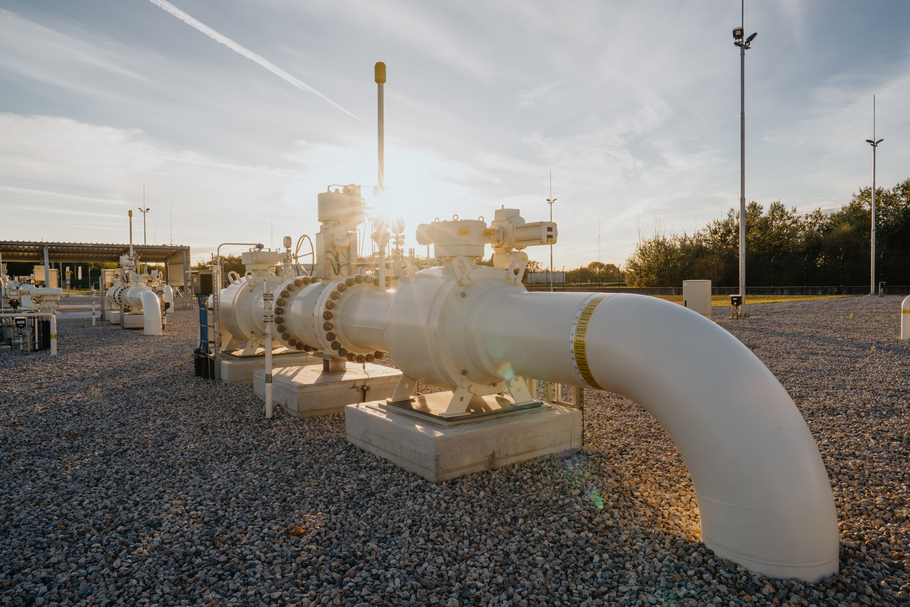
Natural gas flows from Northern and Western Europe, among other countries, to the Baumgarten gas import and distribution station in Lower Austria via the West Austria Gas Pipeline (WAG). The Austrian Gas and Water Association (ÖVGW) is calling for rapid political decisions to make Austria's gas industry future-proof for hydrogen. © Gas Connect Austria GmbH
(Austria) To make Austria's gas networks fit for hydrogen supply, investments totaling €3,5 billion are needed, according to Michael Harasek from the Institute of Process Engineering at TU Vienna, as quoted by the Austrian Association for Gas and Water (ÖVGW). This amount will be required for the comprehensive conversion of the pipeline network. The existing gas network is valued at approximately €15 billion and could be used for transporting clean hydrogen in the future. "It is crucial that we now secure the political will to implement energy legislation such as the Gas Industry Act (GWG) so that we can begin the construction and conversion of the infrastructure quickly," says ÖVGW President Stefan Wagenhofer. "At stake are, on the one hand, Austria's role as a hub in international natural gas competition, and on the other hand, Austria's industrial competitiveness." Without hydrogen, there can be no decarbonized industry. A political investment decision for the H2 starter network would assure system participants "that the hydrogen economy will have an infrastructure base in Austria in the next decade." In addition to subsidies, state guarantees are needed to ensure that the development of the hydrogen start-up network can be financed in a market-compatible way without burdening the state budget. According to Harasek, Austria needs "domestic production on the one hand and a combination of pipeline systems and storage facilities on the other, so that we can also absorb hydrogen capacity from abroad." Large-scale investment projects in Tunisia, Morocco, and Ukraine are in the planning stages. Import corridors are to be established for these projects. "For the necessary planning certainty in the industry and to create an investment-friendly framework, it is essential that the Gas Industry Act be passed by the National Council as soon as possible," says ÖVGW President Wagenhofer.
+ + + + +
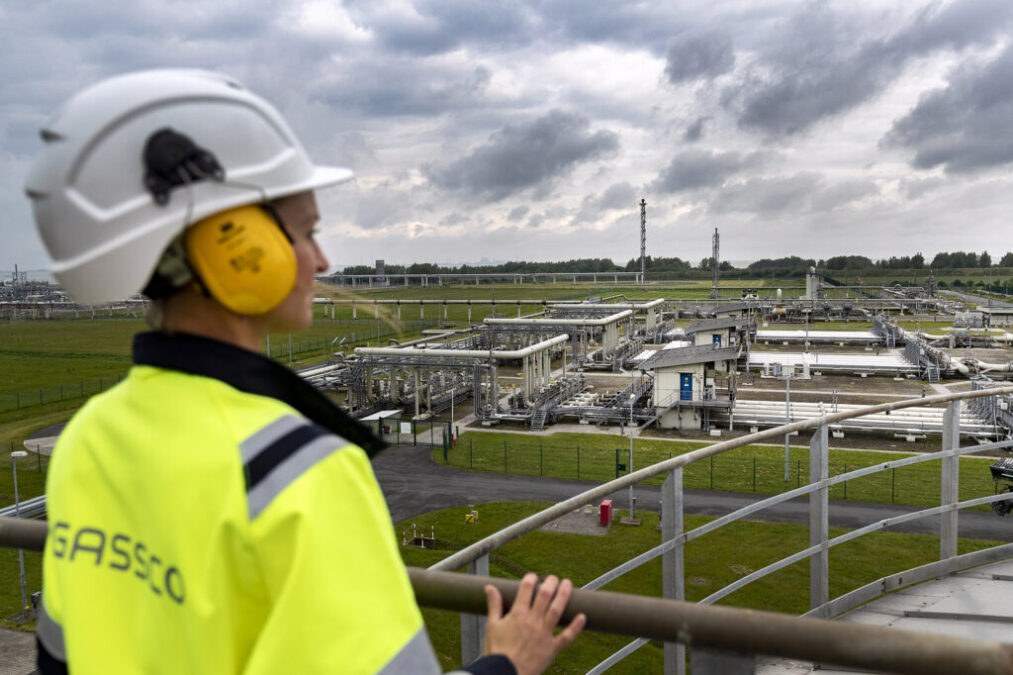
Gassco’s “Norsea Gas Terminal” in Emden. © Gassco AS
(Germany) In the future, German LNG terminals are to be used for renewable and low-carbon hydrogen. In a discussion paper, the German Association of Energy and Water Industries (BDEW) outlines its vision for an import infrastructure for hydrogen and its derivatives. The focus is on the measures necessary by 2030. According to the paper, a "Master Plan for Hydrogen Import Terminals" should be developed. This plan should consider floating and land-based terminal options, including investment requirements, allocation of responsibilities, and political coordination. Furthermore, existing funding instruments must be expanded, and funding frameworks for first users and (co-)investors must be established. Legal and regulatory uncertainties along the hydrogen value chain, and thus for hydrogen customers, must also be identified, and open questions regarding grid connection, transport, and liability issues within the core hydrogen network must be clarified. According to the BDEW, the recommendations will be further refined over the summer by a working group. The paper (11 pages) is available on the website.
+ + + + +
(Canada) Next Hydrogen Solutions Inc. has commissioned what it claims is "the largest clean hydrogen production and refueling station in Ontario." Its daily capacity is 650 kilograms and will primarily serve fuel cell-powered forklifts at a distribution center. Next Hydrogen will initially oversee the system until the refueling station is officially transferred to the customer. The demonstration of the electrolyzer in a market application paves the way for large-scale, cost-effective production of green hydrogen, says Raveel Afzaal, President and CEO of Next Hydrogen.
+ + + + +
Photos
iStock / © Danil Melekhin



