

Netherlands: Total Energies invests in RWE's Oranje Wind wind farm +++ Great Britain: Zero Avia receives £10,5 million in funding +++ Germany (Discussion Paper): Methanol is a key component for the decarbonization of the chemical industry and transport +++ France: Avolon supports Airbus research for hydrogen-powered commercial aircraft +++ Germany: Mainz buys five used fuel cell buses from Wiesbaden +++ Great Britain: BP makes investment decision for Aberdeen Hydrogen Hub +++ Germany: LEAG receives €45 million for energy storage in Jänschwalde +++ Germany: Hydrogen and methane from process water +++ DISCOUNT Promotion: Your ADVERTISEMENT on the PtX Portal
A selection of PtX topics summarized at the end of the week
+ + + + +
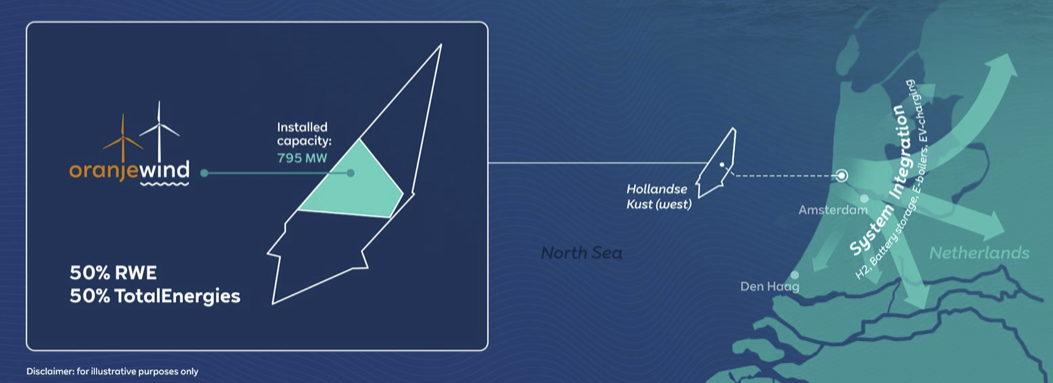
Construction of the “Oranje Wind” wind farm is scheduled to begin in 2026, with full commissioning expected in early 2028. © RWE
(Netherlands) The French energy company Total Energies SE is acquiring a 50 percent stake in RWE's "Oranje Wind" offshore wind farm, currently under development in the North Sea with a capacity of 795 megawatts. According to the company, the aim is to use the electricity generated by this project to power 350 megawatts of electrolyzers. These will produce approximately 40.000 tons of green hydrogen annually for the decarbonization of Total Energies' refineries in Northern Europe, thus avoiding around 400.000 tons of CO2 per year, the company stated. "Oranje Wind" is located about 53 kilometers off the Dutch coast and was won by RWE in 2022 as part of the Hollandse Kust West VII tender. RWE subsequently committed to developing electrolyzers, to which Total Energies will now also contribute. Construction of the wind farm is scheduled to begin in 2026, with full commissioning expected by early 2028.
+ + + + +
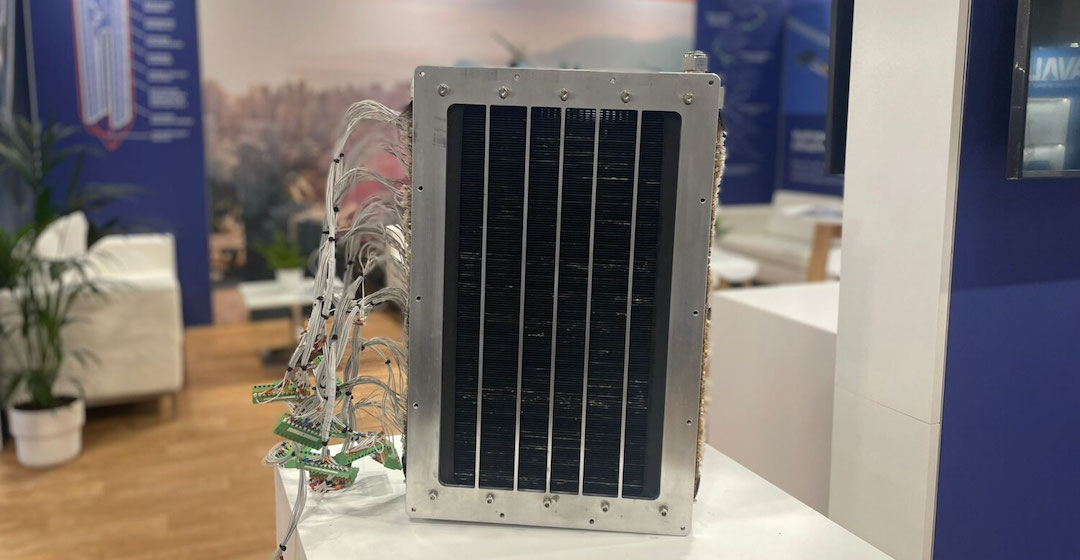
Zero Avia receives funding from the British government to further develop its high-temperature fuel cells for aircraft engines. © Zero Avia Inc.
(Great Britain) Zero Avia Inc., a developer of fuel cell-powered aircraft, has received £10,5 million (€12,5 million) in funding from the UK's government-funded Aerospace Technology Institute (ATI). Under the Advanced Fuel Cell for Aviation Decarbonisation (AFCAD) project, Zero Avia will use the funds to advance high-temperature PEM technology towards commercialization, in collaboration with the University of Kent, Coventry University, and the University of Sheffield Advanced Manufacturing Research Centre. The research will focus on the development of components and complete HTPEM stacks. Zero Avia stated that it had demonstrated in the HyFlyer II project "that the technology is ready for the use of fuel cells in large commercial aircraft." Zero Avia sees HTPEM fuel cells as "the key to developing zero-emission propulsion systems" for aircraft with more than 20 seats. The technology is also an “integral component” of the company’s ZA2000 2-5,4 MW engine for aircraft with 40-80 seats.
+ + + + +
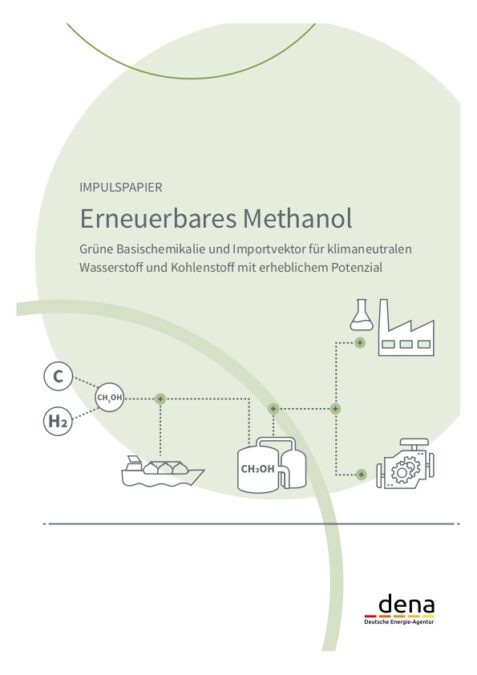
Dena study: Methanol is an important building block for defossilization of the chemical industry and transport. © Dena
(Germany) “Due to its chemical and physical properties, methanol is an advantageous hydrogen derivative and can become an important building block for the decarbonization of the chemical industry and transportation.” This is the conclusion of a position paper by the German Energy Agency (Dena). The paper examines the energy carrier and raw material, currently produced largely from fossil fuels, with regard to its potential for the energy transition. Compared to pure hydrogen and other derivatives, methanol can be transported and stored easily and safely without further compression or liquefaction. Therefore, the production of renewable methanol must be “scaled up rapidly, both globally and in Germany.” If current production routes are converted to renewable methanol, forecasts predict a nationwide demand of up to 23,7 million tons by 2045 in Germany, which would correspond to approximately 150 terawatt-hours of hydrogen per year. Currently, the chemical industry in Germany consumes around 1,1 million tons of methanol, which is largely produced from fossil fuels. The discussion paper “Renewable Methanol – Green basic chemical and import vector for climate-neutral hydrogen and carbon with considerable potential” is available free of charge as a PDF (25 pages).
+ + + + +
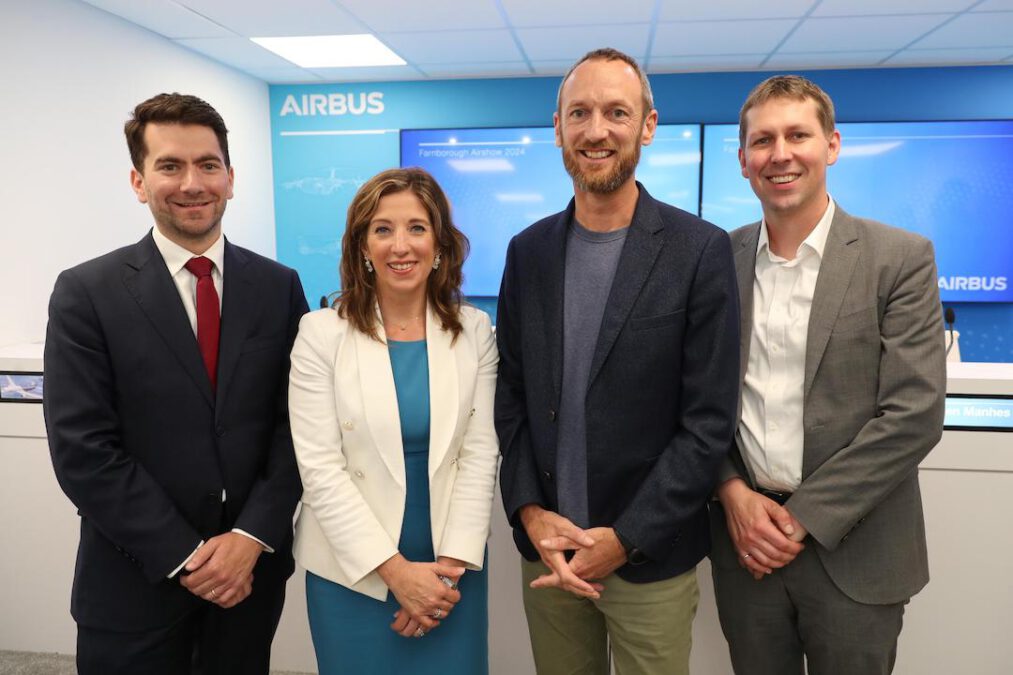
Project financier and leasing company Avolon is joining Airbus' ZEROe project. © Avolon
(France) British aviation financier Avolon Aero Ltd. is supporting the ZEROe project of French aerospace company Airbus. The company intends to investigate how hydrogen-powered aircraft can be financed and marketed in the future, and how they can be promoted through leasing business models. Airbus announced its ZEROe target for hydrogen-powered aircraft in 2020, which focuses on developing the technology for hydrogen flight. According to the announcement, the company aims to launch the first hydrogen-powered commercial aircraft by 2035. Avolon states that it works with 142 airlines in 63 countries and owns, manages, and operates a fleet of 1.029 aircraft (as of June 30, 2024). The company aims for 75 percent of its leasing fleet to consist of lower-emission aircraft by the end of 2025.
+ + + + +
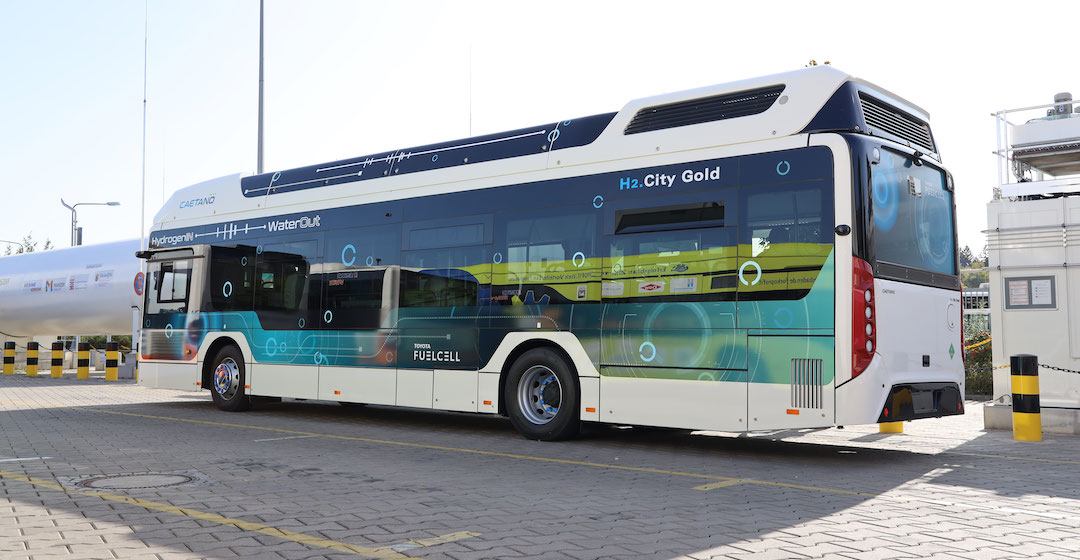
First purchased and already sold again: fuel cell bus from Caetano. © ESWE Verkehr
(Germany) Mainz's public transport company, Mainzer Stadtwerke AG, has expanded its fleet with five used fuel cell buses. The vehicles, manufactured by the Portuguese company Caetano BUS SA, were sold last year by Wiesbaden's public transport company, ESWE, reportedly "due to space constraints at the bus depot." Mainz already owns a bus of the same type and has gained experience with the vehicle and its technology. The purchase was made possible by a subsidy of two million euros from the city of Mainz. The hydrogen refueling station will also be relocated from Wiesbaden to the neighboring city by the end of the year. ESWE launched a tender for ten fuel cell buses in June 2020. At the time, the acquisition was considered "an important component in the implementation of Wiesbaden's clean air plan." The vehicles received 1,95 million euros in EU funding. A further 1,68 million euros in funding was provided by the Federal Ministry of Transport's National Innovation Program for Hydrogen and Fuel Cell Technology (NIP). According to ESWE, the company decided in December 2022 to forgo hydrogen technology "during a realignment of its fleet strategy." "We see every day that two drive technologies are already very demanding for Wiesbaden's workshop infrastructure," said Jan Görnemann, Managing Director of ESWE Verkehr, at the time. Instead, the purchase of an additional 36 diesel buses was planned.
+ + + + +
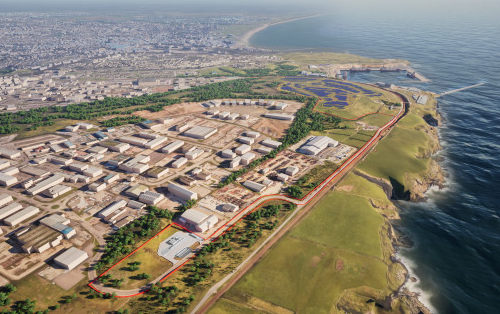
Visualization of the planned hydrogen hub in Aberdeen. © BP
(UK) BP Aberdeen Hydrogen Energy Limited – a joint venture established in March 2022 between the oil company BP and Aberdeen City Council – is investing in the Aberdeen Hydrogen Hub project. The decision now given the green light for a facility to produce, store, and distribute hydrogen on Hareness Road in Aberdeen. The electrolyzer will use solar power generated on a former landfill site. Construction is expected to begin before the end of 2024. Once operational in 2026, the hub will have the potential to supply up to 300 tonnes of green hydrogen per year in its initial phase, enough to refuel 25 buses and a similar number of other fleet vehicles daily. The project is part of Aberdeen City Council's "H2 Aberdeen" initiative. In addition to the 25 buses, the council also plans to convert 60 municipal vehicles and refuse collection vehicles to hydrogen.
+ + + + +
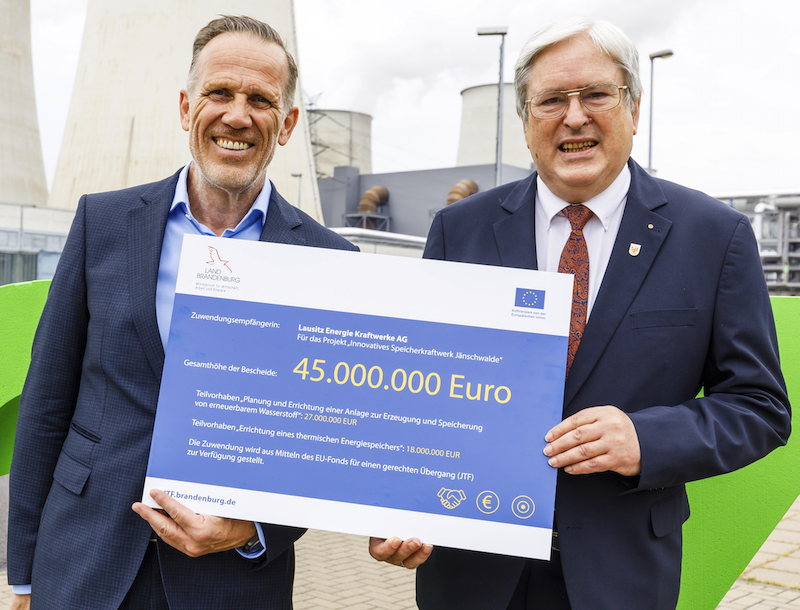
Brandenburg's Minister for Economic Affairs, Labour and Energy Jörg Steinbach (right) hands over a grant of 45 million euros to LEAG CEO Thorsten Kramer © LEAG
(Germany) Lausitz Energie Verwaltungs GmbH (LEAG) plans to produce and store green hydrogen and build a thermal energy storage facility for district heating in Jänschwalde, Brandenburg. The company, which operates lignite open-cast mines and power plants, among other things, will receive a total of €45 million in funding from the European Union for this project. This will provide "a significant financial boost" to two modules of the planned "Innovative Storage Power Plant" (ISKW) at the site, says LEAG CEO Thorsten Kramer. The hydrogen production plant will have an installed capacity of 40 megawatts, and the storage facility will have a capacity of twelve tons (1.000 megawatt-hours). This will allow surplus electricity from intermittent sources such as solar and wind power to be stored and used regardless of the time of day or weather. The Jänschwalde ISKW is part of LEAG's plans for a gigawatt-scale power plant. The concept includes the development of renewable energy capacity with a capacity of seven gigawatts by 2030, and 14 gigawatts by 2040.
+ + + + +
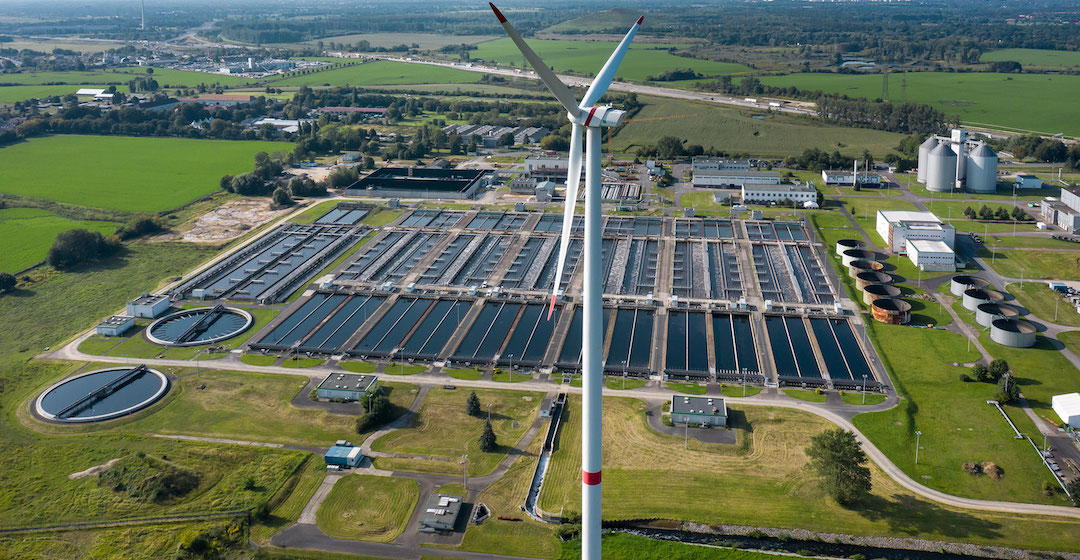
At the Berlin Schönerlinde sewage treatment plant, wastewater and sludge are to be used with the help of green electricity to produce methane and oxygen. The latter can then be used to purify the wastewater. © Berliner Wasserbetriebe
(Germany) At the Schönerlinde wastewater treatment plant in Berlin, a consortium of scientists and industry partners will investigate whether and how hydrogen can be produced and converted into methane. The project, called "E-MetO" ("Electrolysis using process water as an interface to biological methanization and ozonation"), involves the Technical University of Berlin, the Aachen-based engineering firm Tuttahs und Meyer, the Research Institute for Water Management and Climate Future at RWTH Aachen University (FiW), the electrolysis plant expert Aspens GmbH from Hanover, and the Berlin Waterworks. The main focus is on "using treated wastewater in water electrolysis" and the subsequent storage of the hydrogen in the form of methane. This will be achieved through the biological methanization of the hydrogen using CO2 from the digester gas. Furthermore, the storage and use of the byproduct oxygen in ozonation, a process step in wastewater treatment for targeted disinfection, will be examined. The goal is to feed biomethane or hydrogen into the public gas network. The Federal Ministry for Economic Affairs and Energy is funding the project with 3,2 million euros.
+ + + + +
DISCOUNT promotion: Your ADVERTISING on the PtX portal
Photo above
iStock / © Danil Melekhin



