

Germany: Continued research needed on green steel even after ArcelorMittal's withdrawal +++ France: Airbus and MTU are collaborating on fuel cell propulsion for aviation +++ Germany: Enertrag buys land in Pasewalk for hydrogen power plant +++ Germany: Saxony-Anhalt promotes green hydrogen economy with 87 million euros +++ Poland: Enertrag joins the ZUT consortium to build a hydrogen center +++ Germany: World's first floating test platform for power-to-X production +++ Japan: Honda changes its plans for fuel cell factory +++ Great Britain: Uniper commissions ITM Power to design 120 MW Humber project +++ Finland: TES and CPC Finland plan 500 MW hydrogen production +++ Germany: Toyota launches logistics operations with fuel cell trucks +++ Australia: CSIRO develops new process for H2 production from concentrated sunlight +++ South Korea: Hyundai wants to bring fuel cells for cruise ships to the European market
A selection of PtX topics summarized at the end of the week
+ + + + +
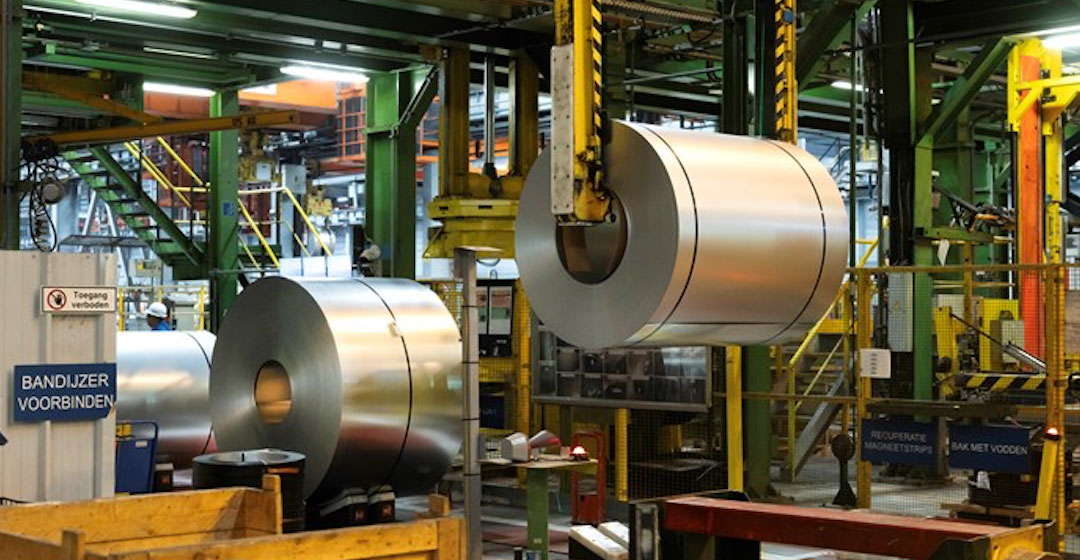
Steel manufacturer Arcelor Mittal recently put its plans to produce green steel for Bremen and Brandenburg on hold. © Arcelor Mittal SA
(Germany) Following ArcelorMittal's decision to halt its green steel plans in Bremen and Brandenburg ( as previously reported ), the University of Bremen and the HyBit research team are warning of "far-reaching structural and economic consequences." The decision comes at a time when "industrial policy decisions for the future must be made, with long-term consequences for Bremen as an industrial location," says Torben Stührmann, head of the Resilient Energy Systems department at the university. "If decarbonization measures are not implemented, the plant faces closure by 2045 at the latest." With rising prices in the EU Emissions Trading System, "production will become increasingly expensive without a green transformation." The expiration of the EU Emissions Trading System certificates could mean "the economic end for the site" as early as 2040. Green steel production from 2040 onward requires investment now, as well as the development of a reliable hydrogen infrastructure. It would be "short-sighted to reject the promised billions in funding from the federal government and the state of Bremen simply because the use of hydrogen is not expected for several years." The transformation of the steel industry is a key challenge for climate policy, both locally and globally. The HyBit project, coordinated by the University of Bremen and with a budget of 30 million euros, is researching climate-neutral production in the steel industry. The goal of the consortium, comprising 19 partners, is to analyze the optimal conditions for such a transformation and translate them into concrete recommendations for action. "We still need strong cooperation between science, industry, and politics to complete the industrial transformation towards sustainability," says University Rector Jutta Günther.
+ + + + +
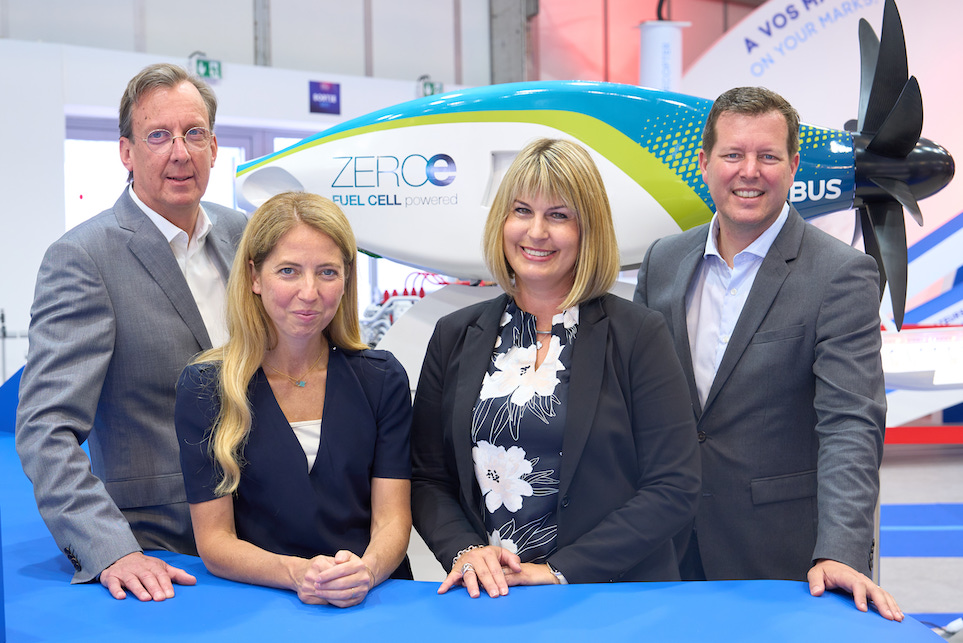
Signatories to the MoU (from left): Stefan Weber (Head of Development and Technology at MTU), Marie-Eve Rigollet (SVP Propulsion System Procurement at Airbus), MTU Chief Strategy Officer Claudia Gaab, and Bruno Fichefeux (Head of Future Programs at Airbus). © MTU
(France) Aerospace group Airbus and engine manufacturer MTU Aero Engines AG have signed a Memorandum of Understanding (MoU) to jointly advance fuel cell propulsion for aviation. The agreement includes a three-stage roadmap. First, technological building blocks will be further developed through joint research projects, followed by aligning the R&D roadmaps of both partners. Only in the third stage will the development of a fuel cell engine be addressed. "The partnership with Airbus opens up the opportunity to jointly tackle both aspects of technology maturity and platform integration," says Stefan Weber, SVP Engineering and Technology at MTU Aero Engines.
+ + + + +
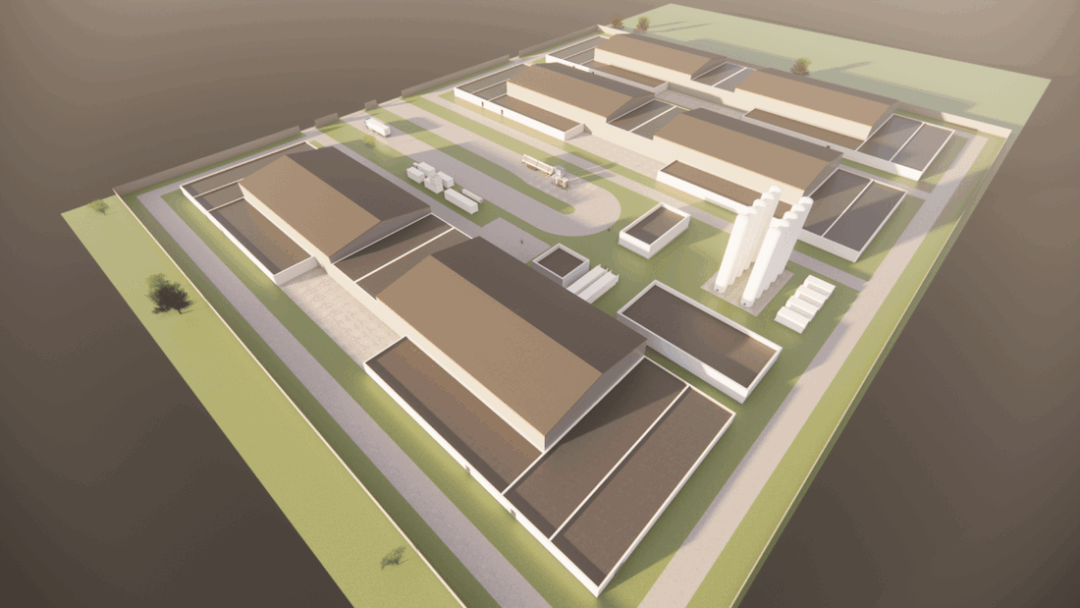
Graphic representation of the planned hydrogen power plant on the Pasewalk site. © Enertrag SE
(Germany) Enertrag SE, a subsidiary of the energy group Uckerwerk Energietechnik GmbH, has purchased a roughly 6,5-hectare plot of land in the Berlin-Szczecin industrial park in Pasewalk. One of the first large-scale hydrogen power plants in Mecklenburg-Western Pomerania will be built on the site. The project is part of the European IPCEI (Important Projects of Common European Interest) funding program and will be connected to the future German core hydrogen network. The first phase of development will have an electrolysis capacity of 60 megawatts – sufficient for the production of approximately 6.000 tons of green hydrogen annually. The plant is expandable to 180 megawatts. Engineering work for the technical design is expected to be commissioned this year, and initial environmental protection measures, including the construction of a reptile protection fence, are scheduled to begin on the site in August. The permit application is expected to be submitted in the first half of 2026. Construction is slated to begin in 2027, with commissioning planned for 2029.
+ + + + +
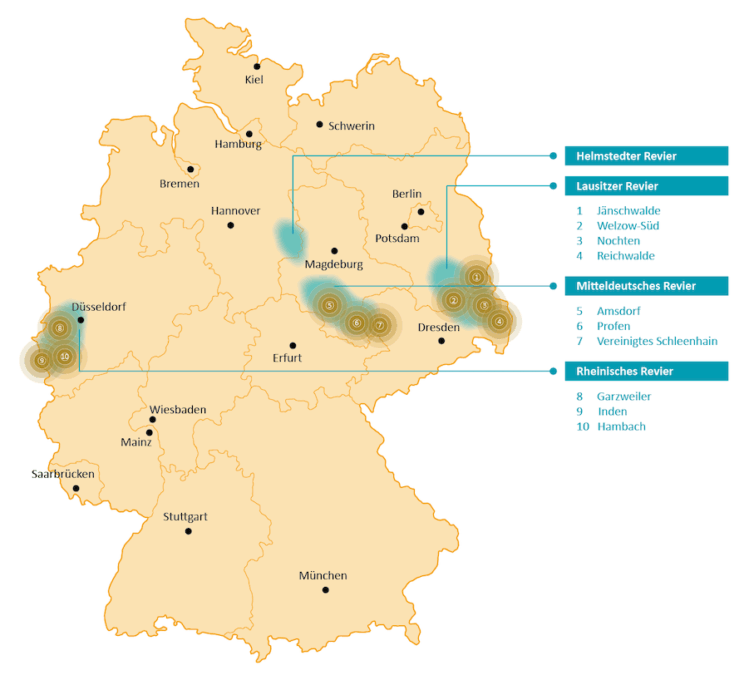
Saxony-Anhalt promotes green hydrogen in the Central German mining region. © State Chancellery of Saxony-Anhalt / German Lignite Industry Association (DEBRIV)
(Germany) The Ministry of Energy of Saxony-Anhalt is launching two funding programs for green hydrogen in the Central German lignite mining region. These programs are primarily intended to address the increased costs of constructing electrolyzers. Both programs are aimed at companies headquartered or operating in the structural transformation region of Saxony-Anhalt. The "Green Hydrogen. Electrolyzers" funding program has a budget of €58 million. It supports the construction and connection of electrolyzers and hydrogen storage facilities at power plant sites and former lignite open-cast mines. Previously, the construction of an electrolyzer could be subsidized with a maximum of €650.000 per megawatt of capacity; this amount has now been increased to €2 million. The "Saxony-Anhalt Future Energies/Green Hydrogen" funding program focuses on measures for coupling the energy sectors. €29 million will be provided to support facilities for the production, storage, transport, and distribution of green hydrogen. The construction of new hydrogen pipelines and the repurposing of existing natural gas pipelines are also eligible for funding. Here, the upper limit has been raised from €450.000 per megawatt of capacity to €2 million. Applications for funding ( electrolyzers ; green hydrogen ) can be submitted to the Investment Bank of Saxony-Anhalt until August 7, 2025.
+ + + + +
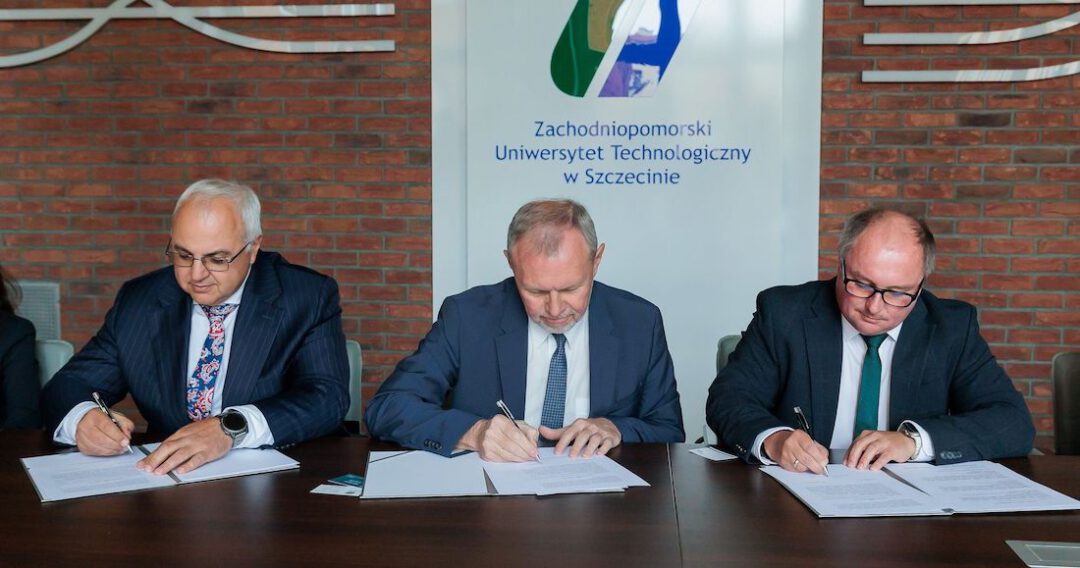
Enertrag, Locus-Tech, and ZUT plan to jointly build an electrolysis plant in Lipniku. © ZUT / Jerzy Muszyński
(Poland) The German energy supplier Enertrag SE is participating in the ZUT and LOCUS-TECH consortium to build a hydrogen technology center in Lipniku, west of Stargard. The consortium, founded in December 2024, includes the Szczecin University of Technology (ZUT) and the logistics company Locus-Tech Sp. z o.o. The aim is to build a 20-megawatt hydrogen production plant, which could be expanded to 100 megawatts in the future. The hydrogen produced is intended for use in public transportation, local district heating systems, and the industrial sector.
+ + + + +
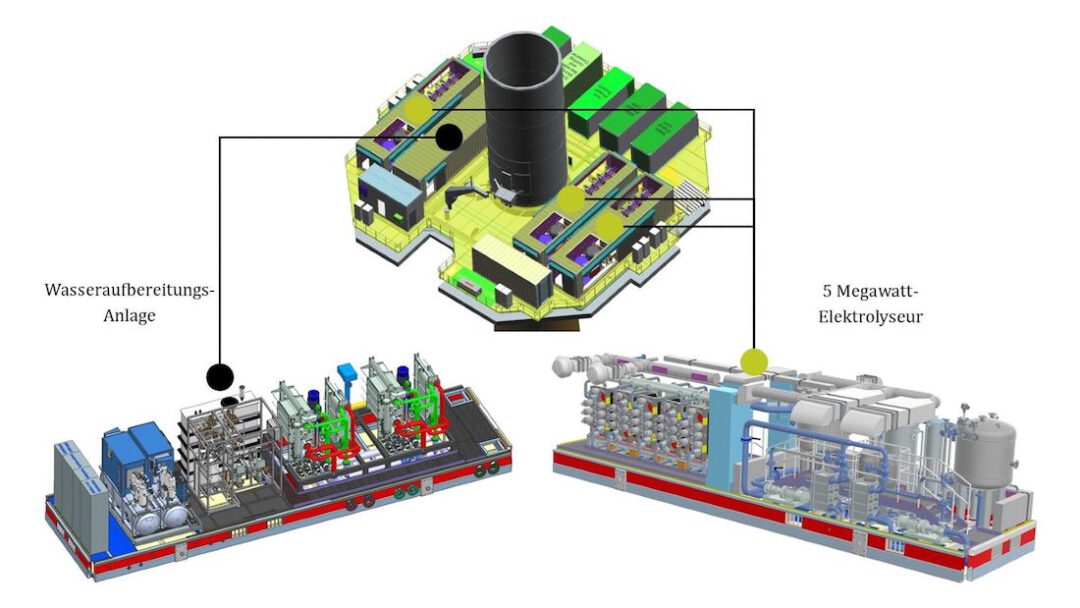
The H2Mare flagship project focuses on green hydrogen produced from wind power and derived products at sea. © H2Mare flagship project
(Germany) After more than four years of project work, the "H2Mare" hydrogen flagship project, funded by the Federal Ministry of Education and Research, will present what it claims is the "world's first floating test platform" for the off-grid production of power-to-X products at sea on Tuesday (July 8, 2025) in Bremerhaven. The platform will initially be tested in the port during the summer of 2025 and subsequently on the open sea off Heligoland to enable the direct use of offshore-produced green hydrogen in the future. H2Mare is also researching the direct production of other power-to-X products at sea, such as methanol, LNG, and ammonia. The project consortium includes the Institute for Micro Process Engineering at the Karlsruhe Institute of Technology and the PtX Wind Coordinator, the German Aerospace Center (DLR), the Technical University of Berlin, and the University of Stuttgart.
+ + + + +
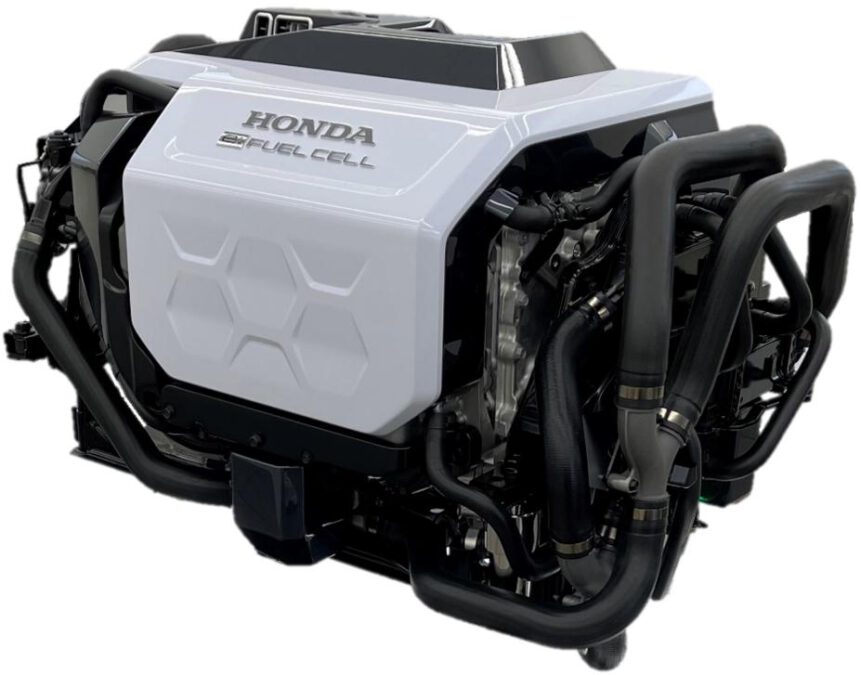
The production start of Honda's fuel cell module has been postponed. The system generates electricity using hydrogen and can also serve as an emergency power generator. © Honda Motor Co. Inc.
(Japan) Honda Motor Co., Ltd. has changed its plans for the production of fuel cell modules. As previously reported, the company originally intended to open the factory by March 31, 2028 (the end of the Japanese fiscal year) with a capacity of 30.000 units. Now, despite government funding from the Ministry of Economy, Trade and Industry (METI), production will not begin before the end of fiscal year 2028, with a capacity of 20.000 units. Honda cites "changes in the global hydrogen market" as the reason – the company does not elaborate on this. The site is part of the land and buildings of the Powertrain Unit Factory in Moka City, Tochigi Prefecture, which ceased production of automotive powertrain components in October 2024.
+ + + + +
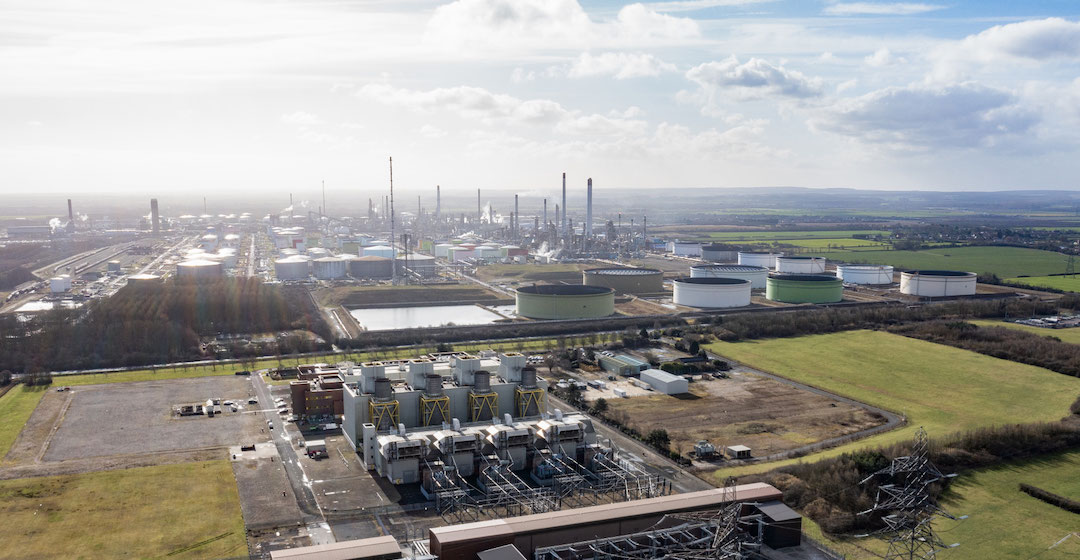
Uniper's Killingholme power plant, where hydrogen will also be produced to supply the Humber region. © Uniper SE
(Great Britain) ITM Power plc has signed a contract with Uniper SE for the front-end engineering design (FEED) for the 120-megawatt electrolysis plant at the H2Hub in the Humber region. Uniper had already announced in May that ITM Power would install the electrolyzers. According to the announcement, ITM will supply six 20-megawatt "Poseidon" modules. In April, following a second call for proposals for hydrogen projects (HAR2, Second Hydrogen Allocation Round), the UK government shortlisted 27 applicants who plan to use hydrogen to decarbonize their manufacturing and industrial processes. These include projects in the Tees and Humber regions ( as previously reported ). The project is still subject to the final investment decision (FID) and could be commissioned in 2029.
+ + + + +
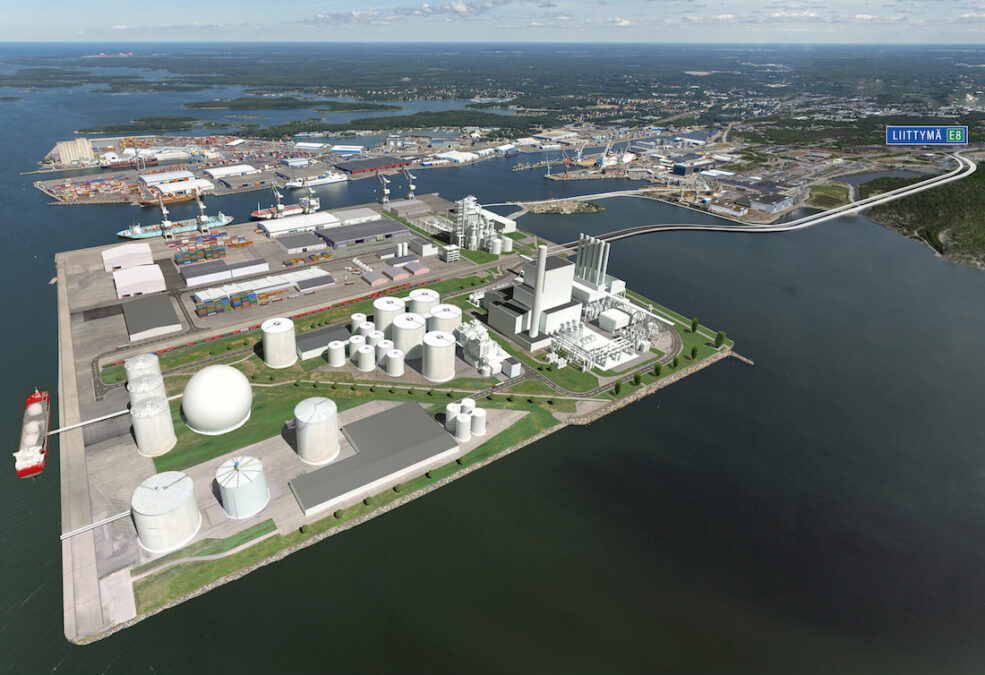
TES and CPC Finland plan to build an electrolyzer capacity of up to 500 megawatts in the Port of Rauma. © Port of Rauma
(Finland) Tree Energy Solutions (TES) and CPC Finland Oy, a subsidiary of CPC Germania GmbH & Co. KG, have established the joint venture Luoto Energia Oy to build an electrolyzer capacity of up to 500 megawatts. According to the company, the capacity will be approximately 60.000 tons of green hydrogen annually, which will then be used to produce 125.000 tons of synthetic methane (eNG). The plant will be located on a 20-hectare site in the new expansion area of the Port of Rauma near Iso Järviluoto, one of the country's largest ports. More than 1.000 jobs are expected to be created during the construction phase. Once operational, approximately 40 permanent jobs will be created in the plant's operation and maintenance. CPC Finland has already initiated the first permitting processes. The joint venture will further advance the technical planning and permitting process, aiming to enter the pre-FEED phase in 2026 and make the final investment decision (FID) by 2028. The green hydrogen produced could utilize Gasgrid Finland's Nordic Hydrogen Route, while the eNG produced can be liquefied and subsequently shipped. Both products are intended for the European and international markets to meet the growing demand for renewable gases. TES is already developing a green energy import terminal in Wilhelmshaven, Germany.
+ + + + +
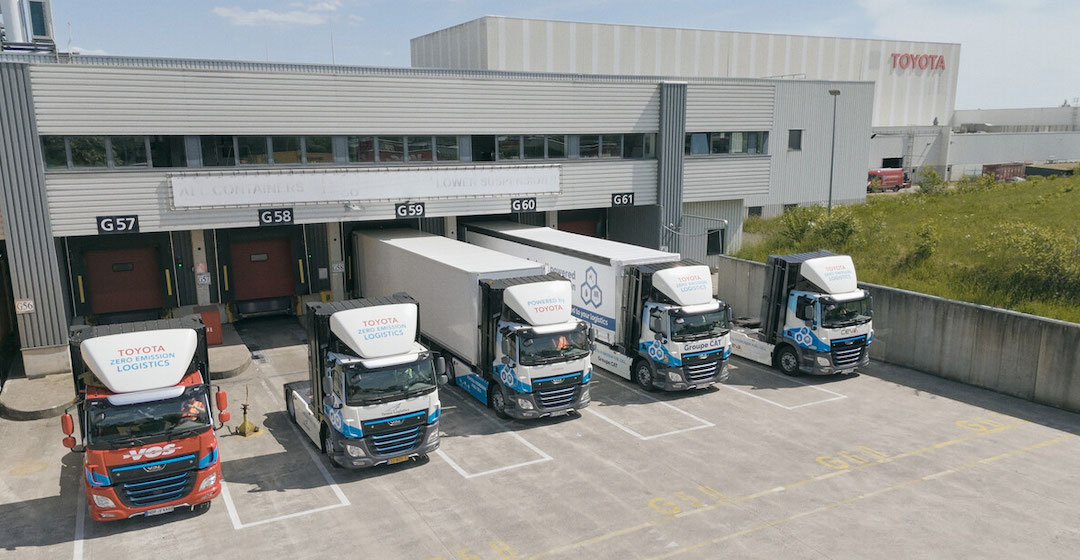
Toyota is deploying fuel cell trucks for its logistics partners: The vibration-free electric drive ensures greater driving comfort and lower noise pollution in the communities they pass through. © Toyota Motor Europe
(Germany) Toyota Motor Europe and the VDL Group have jointly integrated Toyota's fuel cell technology into heavy-duty trucks. Following the completion of initial test drives, four more trucks are now being deployed in daily logistics operations on routes between Belgium (Diest), France (Lille), Germany (Cologne), and the Netherlands (Rotterdam and Weesp). The vehicles are operating within the European network of logistics partners Vos Transport Group, CEVA, Groupe CAT, and Yusen. The trucks offer comparable performance to diesel vehicles. A single tank of fuel allows for a range of up to 400 kilometers under real-world conditions. The focus will now be on gathering experience to further optimize both the vehicles and operational processes.
+ + + + +
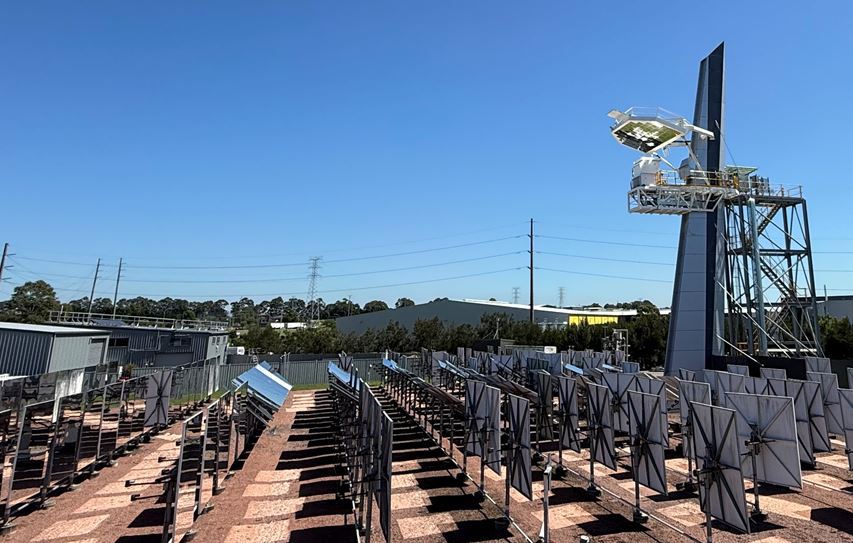
Heliostats at CSIRO's Newcastle Energy Centre reflect sunlight onto a tower that focuses the concentrated solar energy onto a hydrogen production platform below. © CSIRO
(Australia) The Commonwealth Scientific and Industrial Research Organisation (CSIRO), a government research agency, has announced the development of a new method for producing green hydrogen using concentrated solar energy. While conventional systems focus sunlight onto the top of a tower to heat a thermal oil, the "beam-down" system directs sunlight downwards onto a platform. There, the concentrated heat drives a chemical reaction that splits water into hydrogen and oxygen. The key to this process lies in cerium oxide (an oxide of the rare-earth metal cerium), consisting of cerium and oxygen (CeO2), which is commonly used in various polishing applications, such as in the glass industry. When CeO2 is heated by solar energy, doped cerium oxide releases oxygen atoms. Upon contact with steam, it absorbs oxygen from water, leaving behind hydrogen gas that can be captured and stored. The doped cerium oxide can then be reused. The doped cerium oxide particles were developed by researchers at Niigata University in Japan. According to Professor Tatsuya Kodama, these materials perform “excellently” as catalysts: “We can produce more than three times as much hydrogen as is normally achieved with standard materials in a similar reaction.” The efficiency of the beam-down technology (from solar radiation to hydrogen yield) has a potential of over 20 percent. Other similar systems currently being researched typically operate at around 15 percent. “We are not yet at an industrial level, but we have demonstrated strong reactivity under relatively moderate conditions, and with further refinements, it could compete with electrolysis in terms of both performance and cost,” says CSIRO research director Jin-Soo Kim. The Australian Renewable Energy Agency (ARENA) is supporting the research with undisclosed funding.
+ + + + +
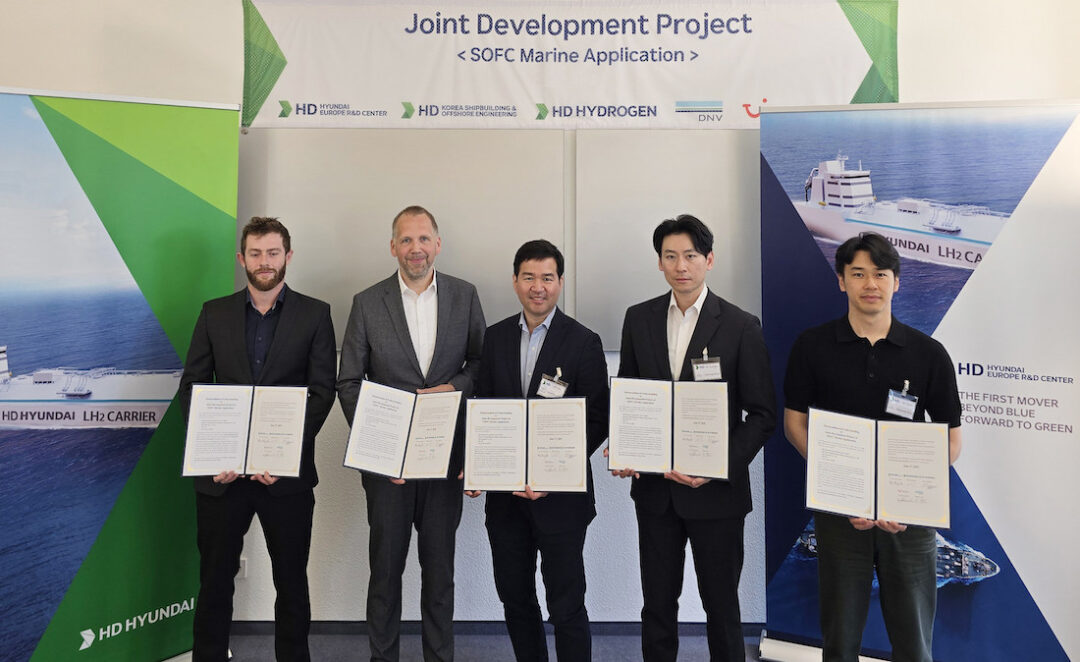
HD Hyundai signed an agreement with DNV and TUI at the HD Europe Research & Development Center in Düsseldorf to develop SOFC systems for cruise ships. © HD Hyundai
(South Korea) HD Hyundai announced the development of fuel cell technology for cruise ships. Subsidiaries HD Korea Shipbuilding & Offshore Engineering, HD Europe Research & Development Center, and HD Hydrogen signed a Joint Development Project (JDP) agreement with the Norwegian classification society DNV and the cruise line TUI Cruises. The project aims to investigate the application of SOFCs (Solid Oxide Fuel Cells), a highly efficient fuel cell that generates electricity using hydrogen or ammonia. Compared to engine-based generators, SOFC systems produce very little noise and vibration, making them particularly suitable for cruise ships, which require large amounts of electricity. HD Hyundai plans to secure its global competitiveness by developing SOFC technology for cruise ships, focusing on the European market, where environmental regulations are stringent and demand for such vessels is high. Initially, safety standards for SOFC systems on cruise ships will be established over an eight-month period, ending in February of next year, and SOFC systems will be analyzed under various operating conditions. Furthermore, HD Hyundai will develop technologies for recovering and reusing waste heat generated by SOFC systems operating at high temperatures of 600 to 1.000 degrees Celsius. The company also plans to explore solutions for partially reducing carbon emissions from SOFC systems through the use of carbon capture and storage (CCS) technologies. DNV will verify regulatory compliance. TUI Cruises will provide cruise ship-specific data.
+ + + + +
Photo above
iStock / © Danil Melekhin



