

Finland: P2X sources green hydrogen from Fortum's Kalla test center +++ Sweden: Stegra installs four electrolyzers in Boden +++ Sweden: Power Cell receives type approval for fuel cell system "Marine System 225" +++ Germany: Leag halts plans for hydrogen power plant +++ Indonesia: Hydrexia cooperates with PT Samator
A selection of PtX topics summarized at the end of the week
+ + + + +

Construction site of the Kalla test center in May 2025. © Fortum Oy
(Finland) P2X Solutions Oy will source green hydrogen from the 2-megawatt production plant of the power plant group Fortum Oy. The plant, called the "Kalla Test Center," located in Loviisa, Finland, is expected to begin commercial operation in the first half of 2026; this was originally planned for the end of 2025. The pilot plant will utilize alkaline and PEM electrolysis technologies over a period of approximately two years and compare their properties and performance. The project is valued at €17 million and covers both the construction and operational phases. Fortum Power and Heat Oy owns the plant. Fortum Waste Solutions Oy is responsible for the earthworks. Euromekanik AB is acting as the plant integrator and is installing the equipment supplied by Stargate OÜ (alkaline electrolyzer) and Hystar A/S (PEM). At full capacity, the Kalla plant consumes electricity with an installed capacity of about 1,75 megawatts and produces about 32,5 kilograms of hydrogen per hour, according to Fortum.
+ + + + +

Stegra now plans to install an electrolyzer weekly in Boden. © Stegra AB
(Sweden) Stegra AB has announced progress in the installation of four electrolysis plants at its new steel mill. All four are nearing completion. The goal is to "install one electrolyzer per week," says Piyush Mishra, who is overseeing the construction and installation of the plants. The 20-megawatt alkaline electrolyzers from Thyssenkrupp Nucera are each 40 meters long and nine meters high. They are expected to produce more than 100.000 tons of green hydrogen annually for the direct reduction (DRI) plant. There, the hydrogen reacts with the oxygen in the iron ore, effectively filtering out the iron, which is then used to produce green steel. After evaluating several technology options, Stegra opted for alkaline water electrolysis (AWE). This technology is robust, mature, and capable of delivering over 700 megawatts, says Hedvig Paradis, Global Head of Hydrogen Technology. Additional buildings for the substation, purifiers, and compressors will be added in the coming months. The first compressor is expected in July. The first steel production lines are scheduled to go into operation in 2026 using recycled steel scrap as raw material; shortly thereafter, iron and steel production based on green hydrogen will begin, and full production capacity will be reached in 2027. The company aims for stable operation of its green hydrogen, green iron, and green steel plants by 2028.
+ + + + +
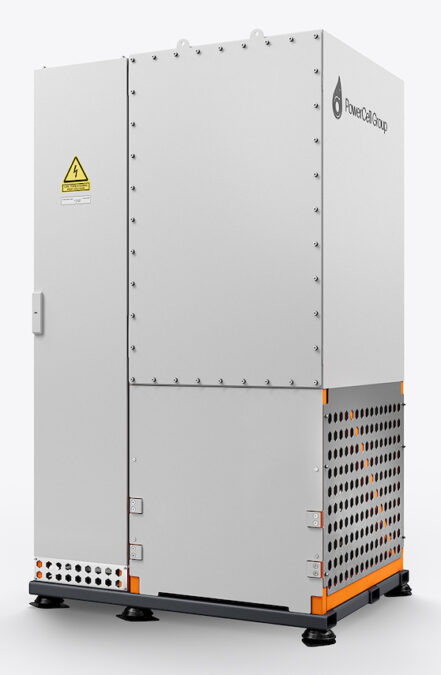
Power Cell's "Marine System 225," with an output of 225 kilowatts, recently received type approval from Lloyd's Register. © Power Cell AB
(Sweden) Power Cell AB has received type approval from Lloyd's Register for its "Marine System 225." The certification confirms compliance with the classification society's safety, design, and performance standards. The system is part of Power Cell's scalable portfolio of fuel cell-based energy solutions for maritime environments. It delivers 225 kilowatts of power and, according to the company, can be integrated into both retrofitted and newly built vessels. "Type approval is a key factor in supporting and simplifying the design, construction, and deployment of vessels," says Lisa Kylhammar, SVP Engineering, Power Cell Group. This paves the way for commercial projects and pilot integrations on ferries, workboats, patrol boats, and offshore supply vessels.
+ + + + +

Traffic light ban leaves regulatory gap: LEAG halts construction of hydrogen power plant. © Lausitz Energie Bergbau AG (LEAG) / AFRY Deutschland GmbH
(Germany) The Leag Group is halting plans to build a hydrogen power plant in Boxberg, MDR Sachsen reports , citing the company. The "Hydrogen Unit and Battery" (H2UB) project was intended to produce green hydrogen, store it, and convert it back into electricity, thus making it available around the clock as needed. "Whether H2-ready backup power plants or H2UBs – Leag plans and develops power plants of the future," was the company's once bold self-promotion for this EU-funded project. As previously reported , the plan called for several expansion phases with an initial electrical connection capacity of around 110 megawatts (later 500 megawatts) and a production capacity of approximately two tons of hydrogen per hour, which would have filled the 60-ton hydrogen storage facility in about 30 hours. The project was to utilize peak renewable energy generation over several working days, surpluses on weekends, or periods of good wind to produce green hydrogen. The battery was intended to reach a capacity of 1.250 megawatt-hours by 2030. Construction was supposed to begin this year, with commissioning planned for 2029. However, the political and economic conditions for such a project have not developed as anticipated in recent months, a spokesperson for Leag explained to MDR. Therefore, the plans for hydrogen production are being put on hold for the time being. "Among other things, the demise of the coalition government has delayed the federal Power Plant Safety Act, a crucial regulatory requirement, indefinitely." The draft legislation had provided for subsidies for hydrogen power plants but was ultimately not passed.
+ + + + +
(Indonesia) Hydrexia Singapore Pte Ltd., a subsidiary of China's Hydrexia Holding Ltd., and Indonesian industrial gas supplier PT Samator have entered into an agreement to develop the hydrogen market. Hydrexia will offer its technologies, including mobile hydrogen refueling stations. PT Samator will introduce these to the local market through its customers and utilize the equipment to meet demand in sectors such as transportation and storage. As previously reported, Hydrexia has been forging similar partnerships worldwide for several months, particularly in Asia.
+ + + + +
Photos
iStock / © Danil Melekhin



