

France: Lhyfe supplies hydrogen to Géométhane +++ Germany: Nordex develops prototype of a 500 kW electrolyzer +++ Norway: Consortium to convert LNG ship to fuel cells +++ Germany: Voith and Weifu establish hydrogen joint venture +++ Switzerland: Xcient fuel cell trucks cover 10 million kilometers +++ Germany: Aerzen to supply HH2E units for H2 production in Lubmin +++ Denmark: Everfuel submits proposal for H2 production project +++ Germany: Gummersbach orders H2 buses from Solaris +++ Germany: Fraunhofer LBF aims to increase the lifespan of PEM fuel cells +++ DISCOUNT promotion: Your advertisement on the PtX portal
A selection of PtX topics summarized at the end of the week
+ + + + +
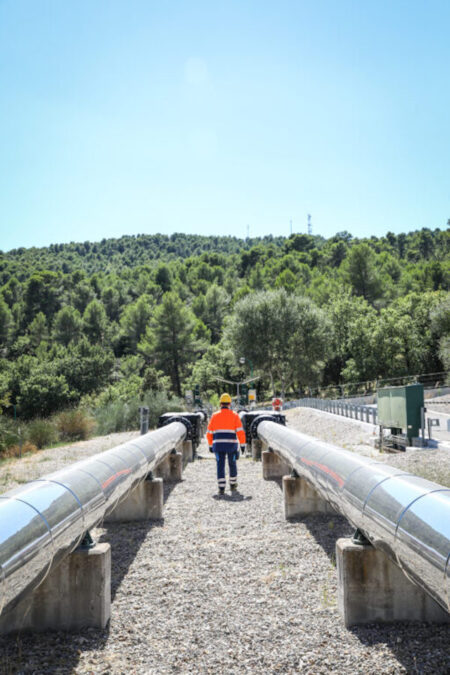
Géométhane is testing the transfer of hydrogen into former natural gas caverns in Manosque. © Géométhane
(France) French hydrogen producer Lhyfe has delivered 350 kilograms of green hydrogen to Géométhane (Engie Group) for a storage test. The energy carrier was injected into salt caves in Manosque, in southern France. This is "an important test for the next phase of a major project" led by the DLV Agglo (Durance-Luberon-Verdon Agglomération) inter-municipal association and Géométhane, which aims to "accelerate the decarbonization of the Marseille-Fos-sur-Mer industrial area, particularly with green hydrogen." With this test, Géométhane, which currently stores natural gas in salt caves, is investigating the behavior of hydrogen. The hydrogen will remain in the former natural gas storage facility for several weeks, after which it will be extracted and analyzed.
+ + + + +
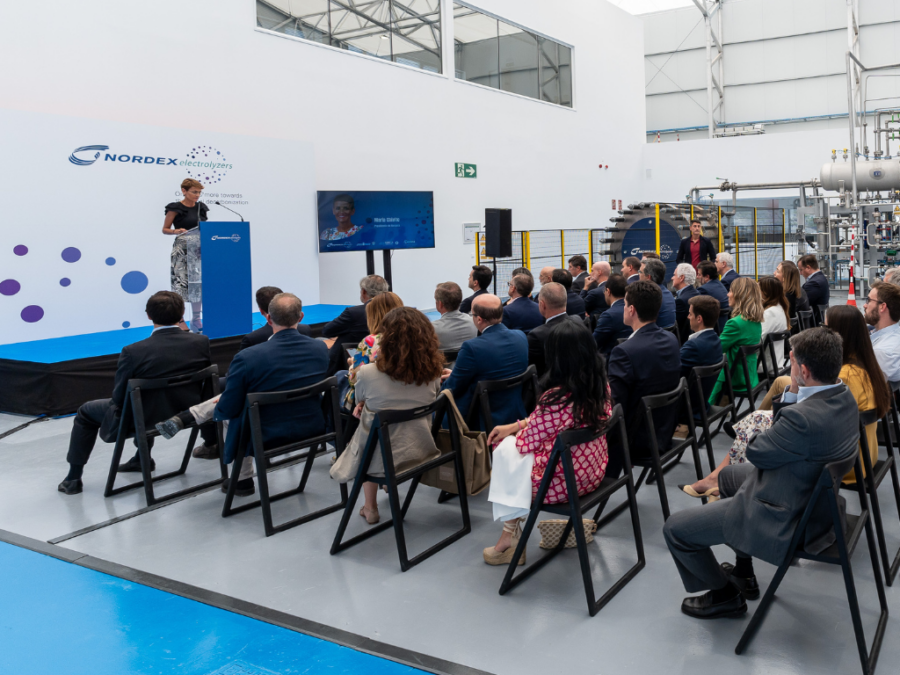
Nordex Electrolyzers has presented the prototype of an electrolyzer with an output of 500 kilowatts. © Nordex Electrolyzers SL
(Germany) Nordex Electrolyzers SL – a joint venture between the government of the Spanish province of Navarre and the wind turbine manufacturer Nordex Group – has inaugurated a test facility for electrolyzers. The company presented its first self-developed prototype of a 500-kilowatt alkaline pressure electrolyzer. The device was developed in Navarre and is being validated at a plant that Nordex Electrolyzers built on the Nordex Group's rotor blade manufacturing site in Lumbier, near Pamplona. It is capable of producing more than ten kilograms of hydrogen per hour with an energy consumption of less than 50 kilowatt-hours per kilogram. Nordex Electrolyzers was founded in 2022 with the goal of manufacturing alkaline pressure electrolyzers. The development is being funded by the European Commission with twelve million euros under the IPCEI (Important Project of Common European Interest) from the Hy2Tech program. The 50-kilowatt prototype has been in operation since 2023 and is currently undergoing testing at Nordex Electrolyzers in Puertollano (Ciudad Real). "Our goal is to produce a series-production megawatt-scale product by 2026," says Luis Solla, CEO of Nordex Electrolyzers.
+ + + + +
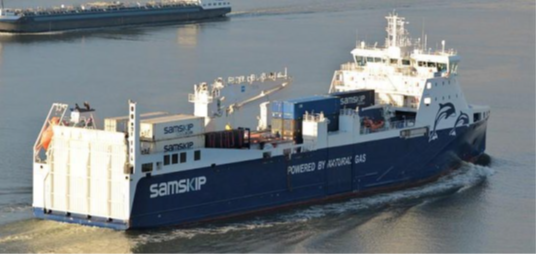
Teco 2030 and Blom Maritime are to convert Samskip's Kvierta to hydrogen. © Teco 2030
(Norway) Teco 2030 and Blom Maritime plan to convert a liquefied natural gas (LNG)-powered vessel belonging to the logistics company Samskip to run on fuel cells and hydrogen. The companies have received an undisclosed grant from Enova SF, a company under the Norwegian Ministry of the Environment that provides funding for the transition to a climate-friendly economy. The "Kvitnos" currently operates from Rotterdam (Netherlands) along most of the Norwegian coast to Hammerfest. The project also aims to secure long-term hydrogen supply contracts, given the vessel's fixed route, which began operating in 2015. Blom Maritime will assist engineers in preparing the documentation required for the preliminary approval of the fuel cell and hydrogen solution. Samskip already has a hydrogen-powered container ship under construction as part of the SeaShuttle project.
+ + + + +
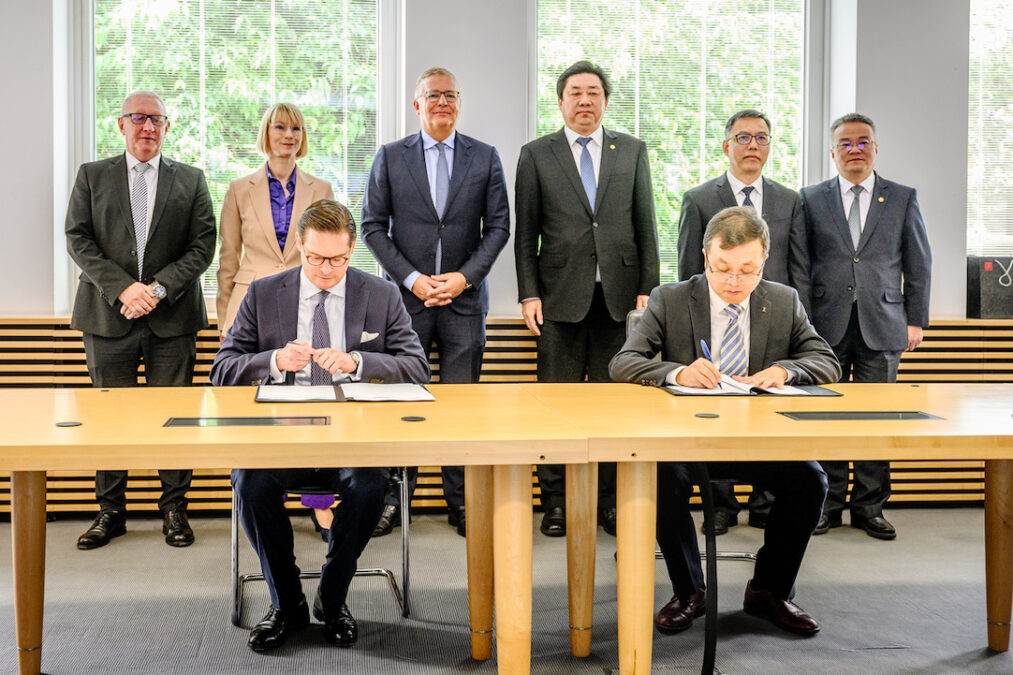
Voith and Weifu sign a cooperation agreement in the presence of representatives from politics and business. Front: HySTech CEO Maximilian Giehr (left) and Deputy General Manager of Weifu Liu Jinjun © Voith
(Germany) The technology group Voith has signed a cooperation agreement with the Chinese Weifu Group and established two joint ventures. Voith and Weifu will collaborate on the research, development, production, and application of hydrogen storage systems. One of the joint ventures is designed for the global market (excluding China). Voith, through its subsidiary HySTech GmbH, founded in April 2024, holds the majority stake in this venture. The second joint venture, for the Chinese market, will be majority-owned by Weifu. Voith describes Weifu as "the ideal complementary partner, bringing with it the necessary expertise in scaling automotive applications and supply chains, as well as crucial access to the Chinese market." Furthermore, Weifu has been active in the hydrogen sector for several years. The agreement was facilitated by the German company Bosch, which has been collaborating with Weifu on fuel cell development since early 2022 and holds strategic stakes in Weifu. The establishment of the two joint ventures is expected in the fourth quarter of 2024. According to reports, the Weifu Group is among the 30 leading companies in the Chinese automotive industry.
+ + + + +

Hyundai's Xcient Fuel Cell Heavy Duty Trucks have covered more than ten million kilometers in Switzerland since 2020. © Hyundai Motor Company
(Switzerland) According to the Hyundai Motor Company, its fuel cell trucks operating in Switzerland have now covered a cumulative total of more than ten million kilometers. The Korean manufacturer delivered the first "Xcient Fuel Cell" trucks to the country in October 2020, and there are now 48 of these vehicles on Swiss roads. The vehicles have a combined output of 180 kilowatts (two 90-kilowatt fuel cell systems) and a 350-kilowatt electric motor. Their range is over 400 kilometers. All Xcient Fuel Cell heavy-duty trucks operating in Switzerland use green hydrogen, the manufacturer states. They are currently in use in the USA, Switzerland, the Netherlands, Germany, France, New Zealand, Korea, Israel, Saudi Arabia, and the United Arab Emirates.
+ + + + +
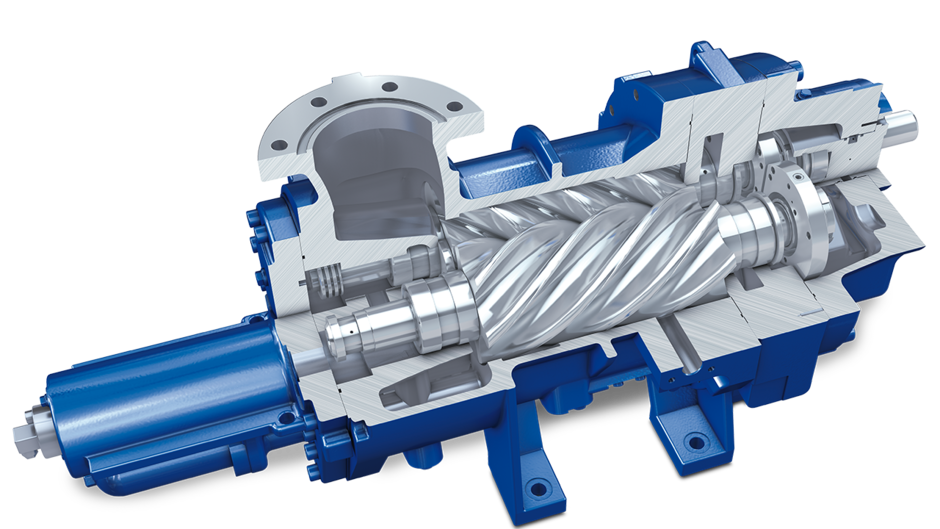
Cross-section: Due to its properties, hydrogen is difficult to compress, as it has "a very low energy density" due to its volume flow, explains Aerzen GmbH. For the compression of H2 in the low-pressure range, screw compressors are a "sensible solution or addition to high-pressure compressors". © Aerzener Maschinenfabrik GmbH
(Germany) Aerzener Maschinenfabrik GmbH, based in southern Lower Saxony, is to supply three VRW 536M type units to hydrogen producer HH2E AG. As previously reported, the Hamburg-based company is currently planning the construction of a large-scale electrolysis plant in Lubmin (Mecklenburg-Western Pomerania) with an initial output of 100 megawatts. This would allow for the annual production of approximately 6.000 tons (over 200.000 megawatt hours) of green hydrogen. By 2030, the output is to increase to one gigawatt, producing 60.000 tons per year. Production is scheduled to begin in 2026. HH2E intends to install production facilities with a total capacity of at least four gigawatts in Germany by 2030. According to the manufacturer, the units each have a flow rate of 4.700 cubic meters per hour and a final pressure of 8,0 bar and were "specifically developed for the efficient and safe compression of hydrogen." As a screw compressor, the VRW 536M can also process larger volume flows of up to 6.000 cubic meters per hour. The output of the Lubmin hydrogen plant is intended to be fed into the natural gas grid. The pipeline system from the Baltic Sea to southern Germany is part of the German core hydrogen network.
+ + + + +
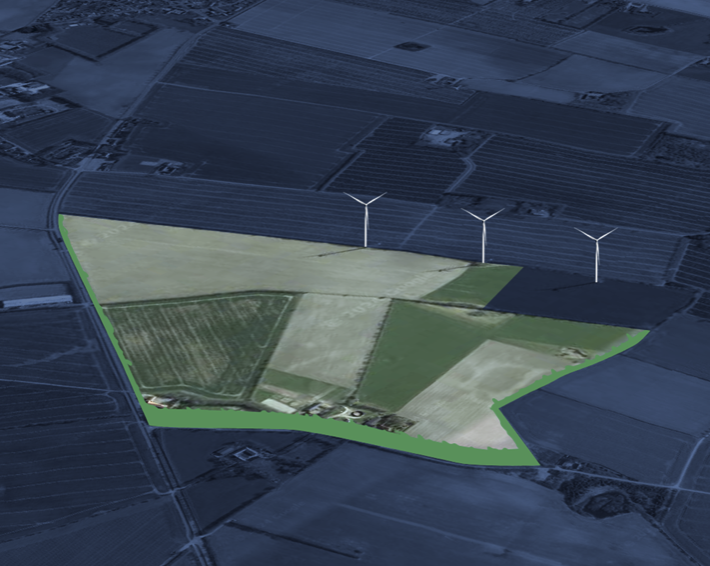
Rendering of the possible location for hydrogen production with a capacity of up to two gigawatts in the Danish municipality of Vejen. © Everfuel A/S
(Denmark) Everfuel A/S has submitted a proposal for a green hydrogen production facility with a capacity of up to two gigawatts. The proposed site is the Revsing Energy Park, being developed by the municipality of Vejen. The project, dubbed "Frigg," will be Everfuel's first large-scale production facility for supplying industrial customers in Germany with hydrogen via pipeline. The company has already secured a plot of land and is now continuing development work. The project has the potential for direct connection to local solar and wind farms. "Frigg" is located in the immediate vicinity of the Revsing substation and at the intersection of the north-south and east-west hydrogen backbones ("Lower T"), which, according to an announcement by the Danish transmission system operator Energinet, is the first section of the Lower T and is scheduled for completion and commissioning by 2028. In May, Everfuel announced a letter of intent with an unnamed German industrial customer for the initial delivery of up to 10.000 tons of green hydrogen per year.
+ + + + +
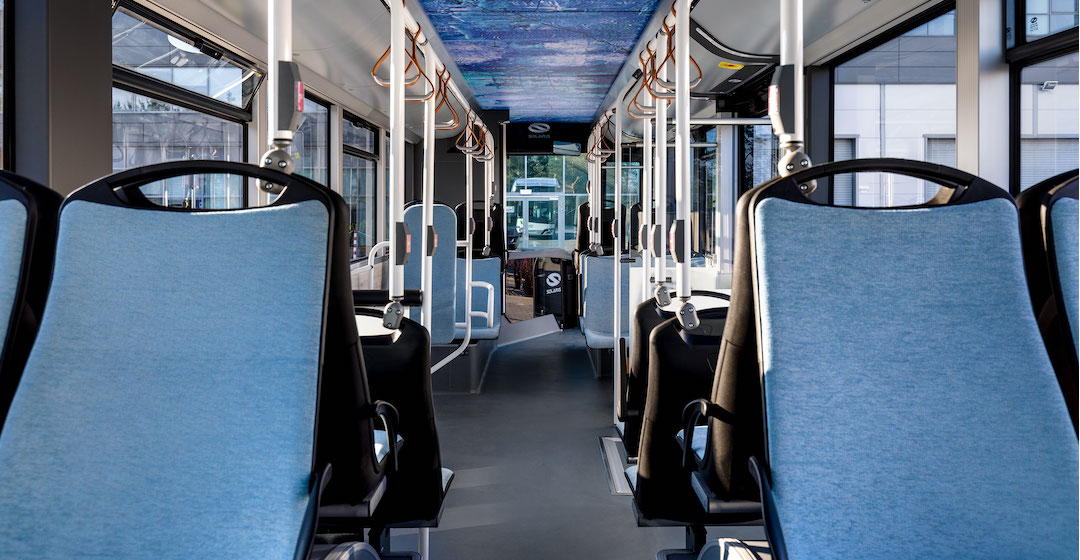
Gummersbach wants to add 15 H2 buses of the type “Urbino 12” to its fleet. © Solaris Bus & Coach
(Germany) The Oberbergische Verkehrsgesellschaft (OVAG) has ordered 15 Urbino 12 hydrogen buses from the Polish vehicle manufacturer Solaris Bus & Coach. The city of Gummersbach intends to use these buses to expand its public transport fleet. The buses will be equipped with traction batteries that support the fuel cell during peak demand and will be heated by a heat pump. The vehicles will be powered by a 160-kilowatt central electric motor. Delivery is scheduled for 2025. According to Solaris, it has received orders for Urbino hydrogen models from Frankfurt, Essen, Cologne, and Groß-Gerau in Germany in recent months.
+ + + + +
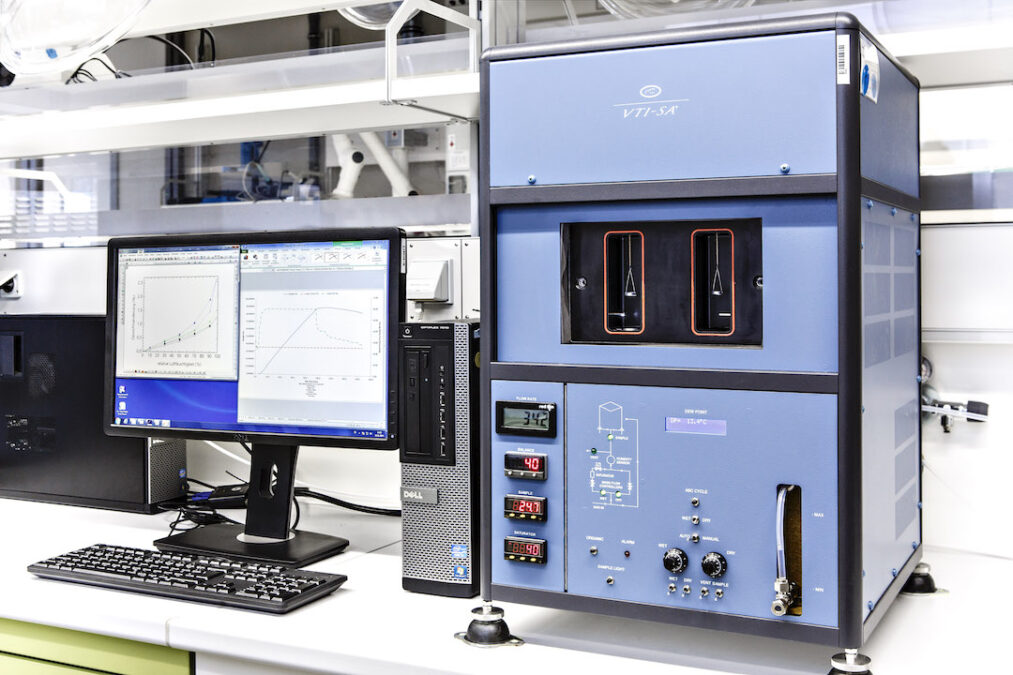
The Fraunhofer LBF wants to improve the material properties of fuel cell membranes and increase their service life. Sorption measurements are also used to create models and simulations. © Fraunhofer LBF
(Germany) The Fraunhofer Institute for Structural Durability and System Reliability LBF aims to improve fuel cell systems. Modeling the material behavior of polyelectrolyte membranes (PEMs) under thermal and hygrothermal loads could "contribute to increasing the lifespan of fuel cells," according to the scientists. In the new project "Capture and Parameterization of the Time-Dependent Material Behavior of Polyelectrolyte Membranes under Hygrothermal Loads – PEMPAR," the researchers intend to develop a method to reduce the testing and inspection times of PEM fuel cells and electrolyzers. The project is scheduled to run for 24 months and is being funded by the German Federal Ministry for Economic Affairs and Energy with an undisclosed sum.
+ + + + +
DISCOUNT promotion: Your ADVERTISING on the PtX portal
Photos
iStock / © Danil Melekhin



