

USA: AiLO orders 100 hydrogen trucks from Nikola +++ Norway: Teco 2030 tests fuel cell at full power on test bench +++ Sweden: Hynion begins construction of an H2 filling station in Jönköping +++ Germany: Vitesco supplies drive system for Honda's fuel cell SUV +++ Germany: Cabinet approves Hydrogen Acceleration Act +++ Germany: EWE plans to convert natural gas storage facilities for hydrogen in Huntorf +++ Portugal: Fusion Fuel delivers 100 kW electrolyzer for hospital +++ Germany: GP Joule builds hydrogen filling station in Schwerin +++ Finland: P2X and Enersense agree on production in Harjavalta +++ Germany: OVAG prepares for hydrogen buses +++ Tunisia: Verbund and TE H2 plan H2 project in Tunisia +++ Germany: Baden-Württemberg funds hydrogen concepts with 1,5 million euros +++ Norway: Alperia orders filling stations from Nel +++ DISCOUNT promotion: Your ADVERTISEMENT on the PtX portal
A selection of PtX topics summarized at the end of the week
+ + + + +

AiLO Logistics wants to add another 100 fuel cell trucks from Nikola. © AiLO
(USA) US company Ai Logistics (AiLO) has ordered 100 fuel cell trucks from truck manufacturer Nikola Corp. Deliveries are planned for 2025. AiLO provides drayage services, including in the ports of Los Angeles and Long Beach. Drayage refers to the transport of containers and other goods within port areas or freight centers to distribution centers or customers. According to the company, this will allow them to "meet the growing demands of the port industry." AiLO had previously ordered 50 Class 8 trucks (15 tons and above) from Nikola, and deliveries of these have already begun. AiLO emerged from a rebranding of MDB Transportation and other companies. The logistics provider already uses vehicles powered by compressed natural gas (CNG) and renewable natural gas (RNG).
+ + + + +

The Teco 2030 fuel cell system on the test bench at the AVL facility in Graz, Austria. © Teco 2030
(Norway) Teco 2030 has achieved "stable and maximum power output" with its new fuel cell system on the test bench. The system has been connected to the AVL test facility in Graz since November 2023. After "minor modifications and adjustments," maximum power output has now been achieved. The fuel cell technology offers a modular system with an installed capacity of 400 kilowatts. "We now have a fully functional fuel cell that is almost ready for market and supplies our customers' applications with emission-free, hydrogen-powered electricity," says Teco CEO Tore Enger. It is designed for maritime applications, especially for heavy-duty industrial applications.
+ + + + +

Construction begins with a groundbreaking ceremony for the Hynion hydrogen filling station in Jönköping, Sweden. © Hynion AS
(Sweden) Hynion AS has broken ground on a hydrogen refueling station in Jönköping. The station is part of Hynion's initiative to develop "a new generation" of hydrogen with a daily capacity of 1.500 kilograms. While designed for heavy vehicles, the station will also be able to refuel passenger cars. Completion is expected in September of this year. The site is "LogPoint South Sweden," a 700-hectare logistics park located on the E4 motorway. Companies such as IKEA, Elgiganten, Post Nord, DSV, DHL, and UPS have already established operations there. The station is being built in the southern part of the logistics park, next to two truck stops. The company received a grant of 61,4 million kroner (5,4 million euros) from the Swedish Energy Agency for the construction of two hydrogen refueling stations. The first station, in Västerås, is already under construction.
+ + + + +

Vitesco Technologies from Regensburg supplies the EMR3 axle drive for Honda's new fuel cell SUV “CR-V e:FCEV”. © Vitesco Technologies GmbH
(Germany) Vitesco Technologies GmbH from Regensburg will supply the EMR3 (Electronics, Motor Reducer) axle drive to Honda. The system will be installed in the new CR-V e:FCEV fuel cell vehicle , which, as previously reported, will be available in the USA and in Japan by the end of 2024. Honda will also install the bypass valve developed by Vitesco Technologies, which controls the airflow to and from the fuel cell stack. The vehicle has a long range, enables fast refueling, and features a 17,7 kilowatt-hour battery, allowing it to travel approximately 60 kilometers on electric power alone. Furthermore, according to Honda, the vehicle is equipped with a 110-volt outlet and, with a power output of up to 1.500 watts, serves as a "clean power source" for operating small household appliances, portable air conditioners, power tools, camping equipment, and much more. According to Vitesco Technologies, over 900.000 units of the EMR3 had been delivered for numerous brands and vehicle models by the end of March 2024. In the Honda SUV, the powertrain delivers 128 kilowatts. A full hydrogen tank is projected to provide a vehicle range of over 600 kilometers. Production of the EMR3 has already begun at the Vitesco Technologies factory in Tianjin, China.
+ + + + +

The cabinet approved the bill to accelerate the expansion of hydrogen infrastructure. © Federal Government / Steins
(Germany) At the end of May, the Federal Cabinet approved the Hydrogen Acceleration Act. This creates the legal framework for the rapid development and expansion of hydrogen infrastructure. According to Federal Minister for Economic Affairs Robert Habeck, it removes "obstacles to the approval of infrastructure projects that produce, store, or import hydrogen" and "accelerates, simplifies, and digitizes the relevant planning, approval, and procurement procedures." Specifically, the draft law provides for, among other things, maximum deadlines for water permit procedures, digital approval processes, facilitation for the early commencement of projects, accelerated procurement procedures, shortened appeal processes, accelerated expedited procedures, and a reduction in the administrative burden for the modernization of electrolyzers. To protect drinking water and the water balance, "the overriding public interest applies without restriction to these facilities in all non-critical cases where no water shortage is to be feared." However, in problematic cases where water withdrawal by electrolyzers could significantly impair the public water supply or the water balance, the "overriding public interest" does not apply. This applies to problematic cases where the public drinking water supply, as a core component of the public water supply system, is affected, or where areas relevant to climate protection, such as floodplains, moors, and protected wetlands, are directly impacted. The Federal Council and the Bundestag will next consider the law.
+ + + + +
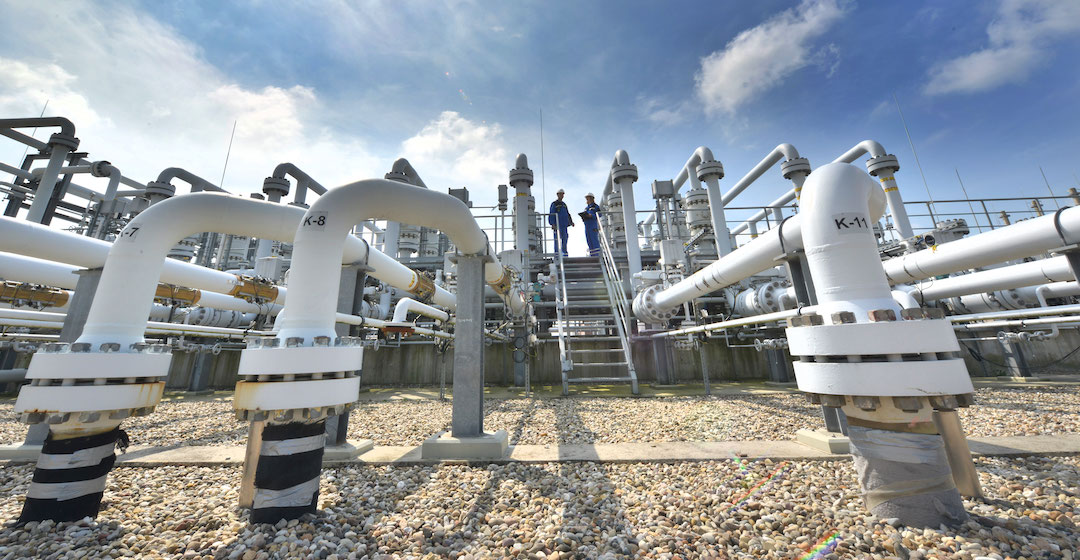
As part of the IPCEI “Clean Hydrogen Coastline” project, EWE is planning to convert a natural gas storage facility at its cavern site in Huntorf for the large-scale storage of hydrogen. © EWE AG / Torsten Ritzmann
(Germany) The Oldenburg-based energy provider EWE AG is planning to convert a natural gas storage facility at its Huntorf site for the large-scale storage of hydrogen. The goal of the "Clean Hydrogen Coastline – Huntorf Storage" project is to convert one of seven large underground caverns near Elsfleth in Lower Saxony. EWE intends to store hydrogen in the cavern starting in 2027. This will improve security of supply for future hydrogen users. Natural gas will continue to be stored in the other six existing caverns at the EWE storage site in Huntorf for the time being. In Rüdersdorf near Berlin, EWE tested the storage of hydrogen in a salt cavern. The company is currently testing the operation of the storage facility at various pressure levels in the next phase of testing. EWE intends to transfer the findings to large-scale caverns like the one in Huntorf. Initial construction work is scheduled to begin there in the fall. Implementation is still subject to approval of funding. The company will inform interested citizens about the plans on June 18th in the village community center in Butteldorf (7:30 pm, registration via email to wasserstoff@ewe.de).
+ + + + +
(Portugal) Fusion Fuel Green plc is to supply a 100-kilowatt electrolyzer to a hospital in Sabugo, Portugal. The hydrogen will be used to generate electricity. The hospital plans to use the green oxygen, a byproduct of the electrolysis process, for medical applications. Additionally, new materials for the gas diffusion and transport layers within Fusion Fuel's HEVO PEM microelectrolyzer technology will be developed and tested.
+ + + + +

Agree on the development of a hydrogen economy in Schwerin as part of the “H2 for SN” project (from left): Josef Wolf (Chairman of Stadtwerke Schwerin), André Steinau (Managing Director of GP Joule) and Hanno Nispel (Managing Director of Stadtwerke Schwerin). © Stadtwerke Schwerin
(Germany) Schwerin's municipal utility company, Stadtwerke Schwerin, and GP Joule Hydrogen GmbH have agreed to develop a hydrogen economy in the greater Schwerin area. As part of the "H2 for SN" project, a joint venture will construct and operate a hydrogen production plant with a capacity of three to five megawatts in the Göhrener Tannen industrial park. The hydrogen will be produced using a photovoltaic system to be installed on-site. According to a press release, it will be used both for a hydrogen refueling station for heavy goods vehicles operated by GP Joule and for supplying regional industrial customers. The hydrogen can also be blended into the three new gas turbines in Schwerin's modernized combined heat and power plants or fed into the gas grid. "The turbines can generate heat and electricity with a hydrogen blend of ten percent, and after a retrofit, with up to 20 percent," says Josef Wolf, CEO of Stadtwerke Schwerin. Following the project planning, the next step is the preparation of the funding application.
+ + + + +

Sunfire's 20 MW pressure alkaline electrolyser is expected to deliver up to 400 kilograms of hydrogen per hour in Harjavalta using wind power. © Sunfire GmbH
(Finland) P2X Solutions Oy and Enersense International Plc have signed an agreement under which Enersense will be responsible for services related to the operation and maintenance of the hydrogen production plant in Harjavalta. Construction began in 2022, and the 20-megawatt electrolyzer is scheduled for completion in autumn 2024. It will be Finland's first industrial-scale production plant for green hydrogen and synthetic methane. The electrolyzer was supplied and installed earlier this year by the German company Sunfire GmbH. In addition to Harjavalta, P2X is planning hydrogen production plants in Joensuu and Oulu. Enersense has been a co-owner of P2X Solutions since February 2022.
+ + + + +

A Solaris hydrogen bus is being tested in the Oberberg district. © OVAG
(Germany) The Oberbergische Verkehrsgesellschaft mbH (OVAG) is preparing for the deployment of hydrogen buses. "With its current fleet of 25 buses, the depot in Wipperfürth-Hämmern is ideally sized to be fully converted to hydrogen operation within a manageable timeframe," says OVAG Managing Director Corinna Güllner. The depot's geographical proximity to the two neighboring transport companies with hydrogen bus depots, RVK and WSW mobil in Wuppertal, also makes it a suitable location. In 2023, OVAG ordered 15 "Urbino 12 Hydrogen" fuel cell-powered buses from the Polish bus manufacturer Solaris. Delivery of the buses will begin in early 2025. The purchase is being subsidized with €4,3 million by the Federal Ministry of Transport. This covers 80 percent of the additional costs compared to purchasing diesel buses. Refueling will initially be carried out via a mobile refueling station with trailers provided by the industrial gas manufacturer Air Liquide. The green hydrogen is produced using electricity from a wind farm. The tender for the construction and operation of a stationary hydrogen refueling station will be issued "shortly," so it is expected to be operational in 2026. OVAG is the municipal bus company of the Oberbergischer Kreis district. In addition to the district, eleven towns and municipalities in the region are its owners.
+ + + + +

TE H2 and Verbund are planning a large-scale hydrogen project in Tunisia. © Verbund AG
(Tunisia) The Austrian energy supplier Verbund AG and TE H2, an 80/20 joint venture between Total Energies and the Eren Group, have signed a letter of intent with the Republic of Tunisia. The aim is to implement a large-scale project called "H2 Notos" to explore the export of green hydrogen via pipeline to Central Europe. The electrolyzers will be powered by wind and solar energy projects as well as desalinated water. Initial production is planned to reach approximately 200.000 tons of hydrogen annually, with the potential to increase this to one million tons. The project will access the European market via the " SoutH2 Corridor ," which connects North Africa with Italy, Austria, and Germany and is expected to be operational around 2030. TE H2, together with Verbund, will manage the development, financing, construction, and operation of the integrated project. Verbund will coordinate the transport of the produced hydrogen to Central Europe.
+ + + + +

The Baden-Württemberg Ministry of the Environment promotes planning and networking to prepare for a hydrogen economy. © State Ministry of Baden-Württemberg
(Germany) The state of Baden-Württemberg is funding regional hydrogen initiatives with €1,5 million. The 16 projects selected following a call for proposals include, for example, projects on hydrogen transformation in various application areas, demand analyses, and the planning of production, distribution, and storage infrastructure. These decentralized projects are characterized by the fact that green hydrogen is produced and/or consumed within the local region. "To enable the production, transport, and use of green hydrogen, combined with the corresponding development of local value chains, it is crucial that regional stakeholders join forces and develop appropriate concepts together," states the funding program . Details of the 16 projects can also be found there. The maximum funding amount per individual project is €100.000. Each project runs for six months.
+ + + + +
(Norway) Cavendish Hydrogen ASA, a subsidiary of Nel ASA, will build hydrogen refueling stations in Italy for Alperia Greenpower SRL. The location is Bruneck, South Tyrol. It will be Nel's first H2 station in the country, says Cavendish CEO Robert Borin. The station will be built "primarily" for the transport vehicles of the 2026 Winter Olympics. The agreement has a total value of approximately €3,8 million and includes a two-year service and maintenance contract. The station is scheduled to be operational in the second half of 2025.
+ + + + +
DISCOUNT promotion: Your ADVERTISING on the PtX portal
Photos
iStock / © Danil Melekhin



