

Germany: Andritz commissions gigawatt-scale electrolyzer production +++ Serbia: Leipzig-based Energie Group plans 2 MW electrolyzer for green hydrogen +++ Austria: Methane pipeline to also transport hydrogen in dual-use +++ Germany: Thyssenkrupp Nucera and Fraunhofer IKTS open SOEC pilot production facility for stacks +++ Canada: Sierra Northern Railway orders twelve 1,5 MW fuel cell engines from Ballard Power +++ Germany: REVG puts 26 Solaris H2 buses on the road +++ Great Britain: ITM Power to supply electrolyzers for Uniper's Humber H2ub project +++ Germany: Thyssenkrupp Nucera prepares FEED study for 600 MW hydrogen project
A selection of PtX topics summarized at the end of the week
+ + + + +
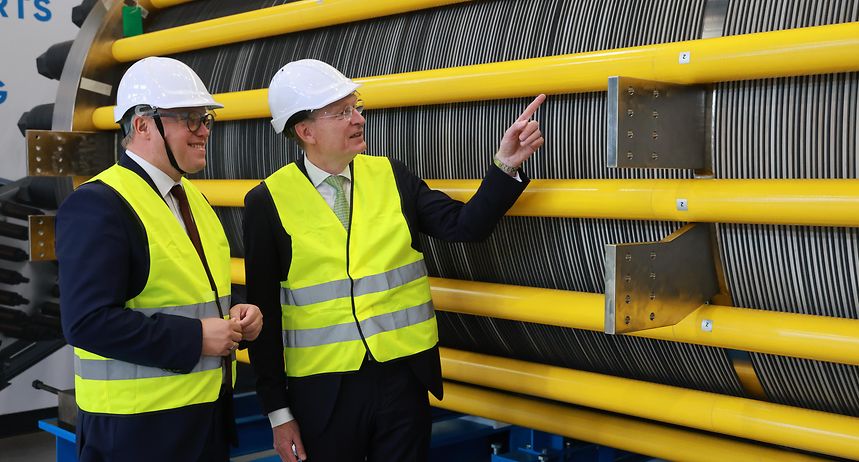
Inauguration of the new Gigafactory for electrolyzers in Erfurt (from left): Thuringia's Minister President Mario Voigt and Joachim Schönbeck, CEO of Andritz. © Andritz Group
(Germany) The Andritz Group has opened an electrolyzer factory in Erfurt, Thuringia. According to the company, the initial production capacity is around one gigawatt – equivalent to approximately 160 to 200 electrolyzers per year. Key components for the production of green hydrogen, including electrolysis stacks and phase separators, have already been manufactured at the site since March of this year. Andritz has been producing presses there for many years. Around 350 people currently work in Erfurt, and nearly 100 will be employed at the electrolyzer gigafactory in the future. Erfurt is strategically located and offers direct access to major transport networks. The first electrolyzers manufactured at the plant are destined for Salzgitter AG's 100-megawatt hydrogen plant for low-CO2 steel production ( as previously reported ).
+ + + + +
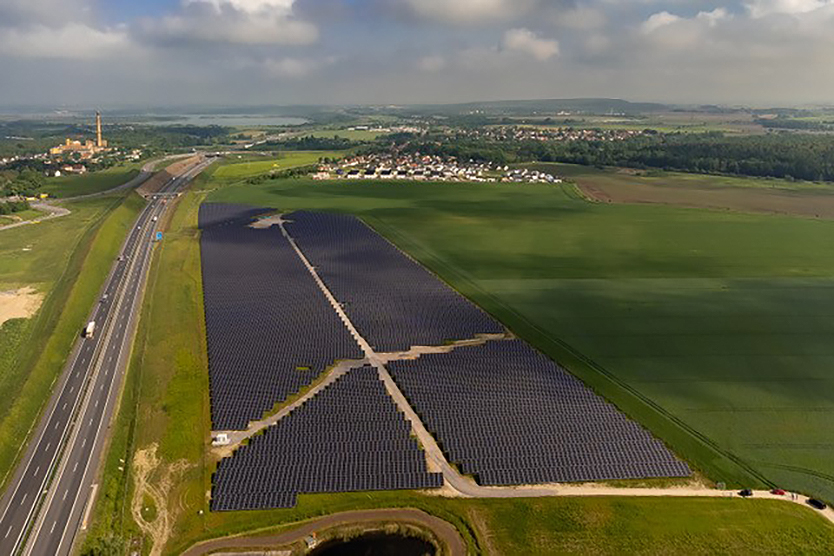
Leipziger Energiegesellschaft's PV plant in Serbia, with an installed capacity of four megawatts, will supply electricity for a two-megawatt electrolyzer. © Leipziger Energiegesellschaft mbH & Co. KG
(Serbia) Leipzig-based energy company mbH & Co. KG is planning a pilot project called "HyDSerbia" in Sombor, northern Serbia, to produce green hydrogen. A photovoltaic system with an installed capacity of four megawatts will supply the electricity for a two-megawatt electrolyzer. Production is scheduled to start at the end of 2026. This information comes from a report by the German government's economic development agency, Germany Trade and Invest (GTAI), following an event hosted by the German-Serbian Chamber of Commerce (AHK Serbia) in Belgrade. The green hydrogen produced in Sombor is intended primarily for domestic use but could also be exported to the EU. The largest customer is the gas transmission system operator Srbijagas, with whom Leipzig-based energy company is entering into a strategic partnership. According to GTAI, other hydrogen projects planned include the company Pan Ledi from Pančevo (filling station in Nova Pazova), the oil company NIS (production of green and blue hydrogen near the gas refinery in Elemir), the Elixir Group (production using electricity from a Danube hydroelectric power plant), and the Chinese company Shanghai Fengling Renewables (construction of a wind and solar park and production of up to 30.000 tons of green hydrogen per year). Germany Trade and Invest – the German government's foreign trade and investment promotion agency – is affiliated with the Federal Ministry for Economic Affairs and Energy.
+ + + + +
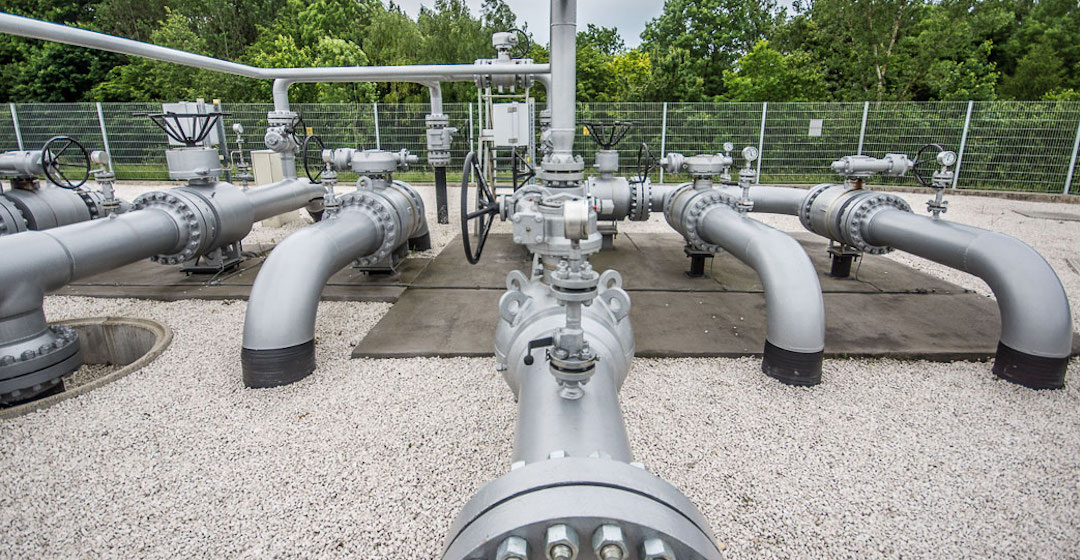
The energy supplier Netz Oberösterreich GmbH plans to convert 40 kilometers of its transmission network to dual-use transport. © Netz Oberösterreich GmbH
(Austria) Netz Oberösterreich GmbH has submitted the building application for the "dual use for HDL012" project as part of the Upper Austrian hydrogen start-up network. This project aims to convert a 40-kilometer pipeline network between Linz-Ebelsberg and Sattledt to dual-use operation, enabling the transport of both methane (natural gas, biogas, or synthesis gas) and hydrogen; however, not multiple media simultaneously. The pipeline, with a diameter of 40 centimeters, will have a capacity of 50.000 cubic meters of hydrogen per hour (approximately 170 megawatt-hours). "The dual use of existing infrastructure allows for the rapid integration of hydrogen into our energy system," says Michael Haselauer, Managing Director of Netz Oberösterreich GmbH. Since methane in the form of natural gas will also need to be transported to customers for the time being, a second pipeline system will be constructed in parallel. This new pipeline is also fundamentally suitable for transporting hydrogen. The project is being developed primarily in Upper Austria because the growing demand for hydrogen is already being felt there, according to the company, for example through planned electrolyzers and storage facilities as well as potential industrial customers in Linz.
+ + + + +
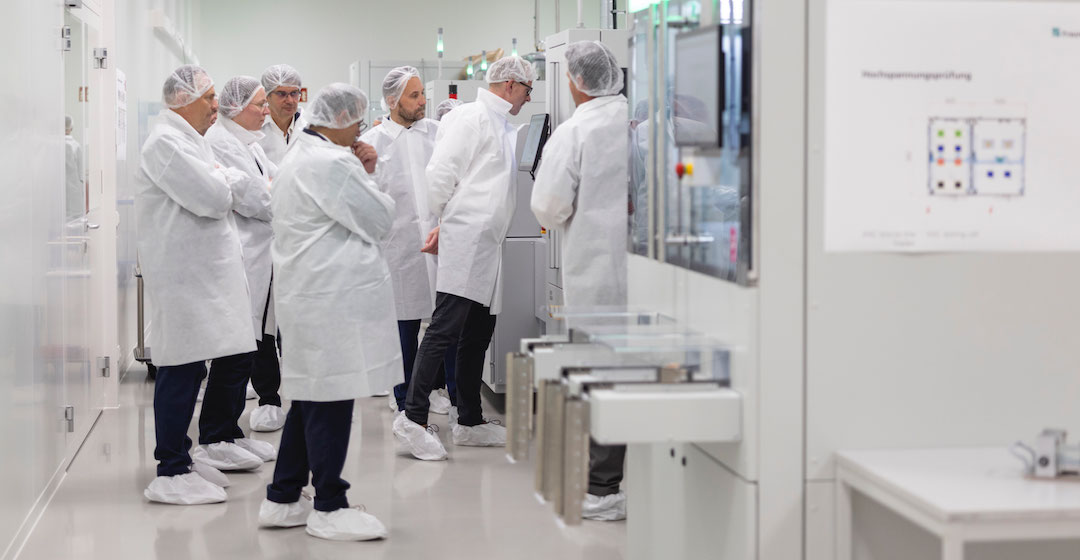
Thyssenkrupp Nucera and Fraunhofer IKTS have opened a pilot production facility for high-temperature solid oxide electrolysis (SOEC) stacks in Arnstadt. © Fraunhofer IKTS / Paul-Philipp Braun
(Germany) Thyssenkrupp Nucera AG & Co KGaA and the Fraunhofer Institute for Ceramic Technologies and Systems IKTS have opened a pilot production plant for stacks for high-temperature electrolysis (SOEC) in Arnstadt, Thuringia. The strategic collaboration was agreed upon in March 2024. Fraunhofer IKTS designed and built the plant. Initially, stacks will be produced in small quantities, with a production capacity of eight megawatts per year. SOEC electrolysis ensures high efficiency because less electrical energy is required to split the water vapor at high temperatures. If commercial high-temperature electrolysis is used in processes that generate large amounts of waste heat—such as in the steel industry—electricity consumption can be reduced by 20 to 30 percent compared to other technologies. Furthermore, industrial CO2 can be used as a raw material and, together with green hydrogen, converted into green synthesis gas to produce sustainable chemical feedstocks and eFuels. The operation of the pilot production plant would generate, in particular, the necessary experience that would flow into the construction of a fully automated, large-scale industrial SOEC production plant for high-performance stacks.
+ + + + +
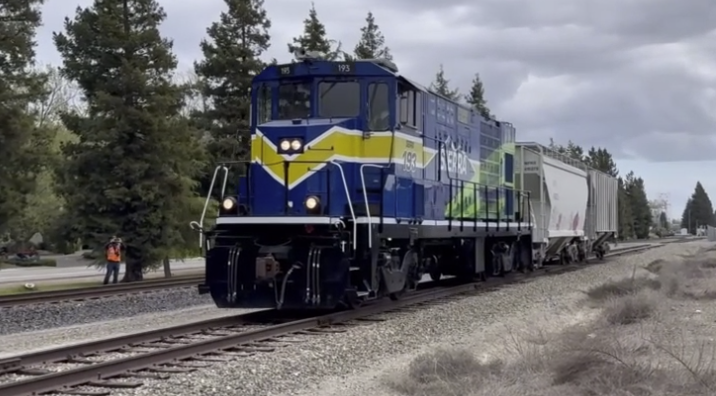
SERA plans to put three more H2 locomotives on the tracks and has ordered 1,5 MW motors from Ballard Power. © Sierra Northern Railway / Screenshot from test run video
(Canada) Ballard Power Systems Inc. has entered into an agreement with California-based railway operator Sierra Northern Railway (SERA). Under the agreement, twelve 1,5-megawatt "FCmove-XP" fuel cell engines will be delivered to SERA this year to convert three diesel locomotives into hydrogen-powered vehicles for operation on non-electrified railway lines. Just a few weeks ago, Sierra Northern Railway completed testing of its first four-axle hydrogen-powered shunting locomotive ( as previously reported ). This was "another important milestone" in bringing such locomotives "commercially viable" for short-distance operation, said SERA President Kennan H. Beard at the time.
+ + + + +
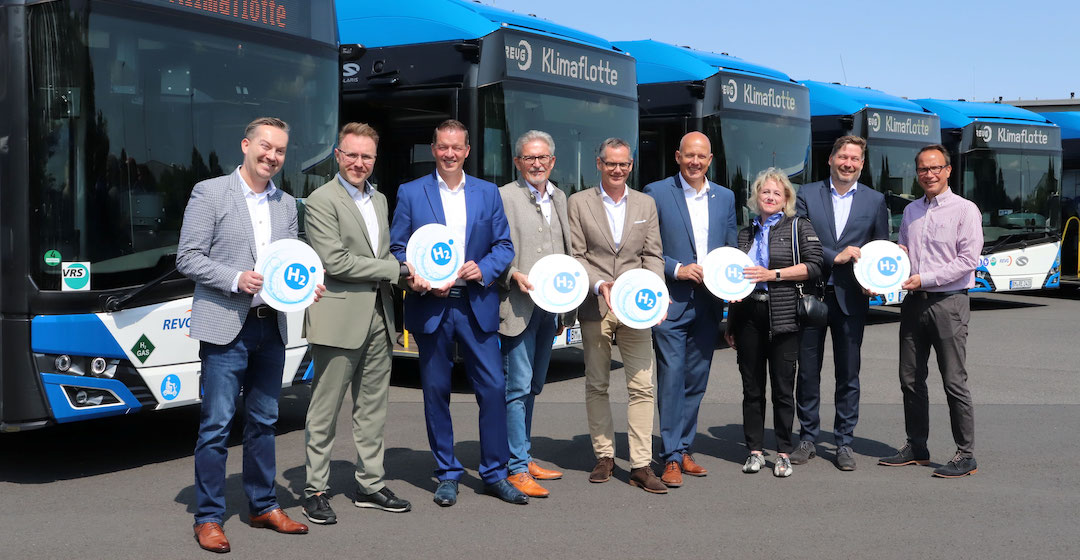
Presentation in the presence of representatives from companies and industry: REVG will put 26 hydrogen buses on the road in the Rhein-Erft district by the end of June. © REVG
(Germany) Twenty-six Urbino nE12 Hydrogen fuel cell buses from Polish manufacturer Solaris will soon be operating on public transport in the Rhein-Erft district near Cologne (North Rhine-Westphalia). REVG Rhein-Erft-Verkehrsgesellschaft mbH (REVG) took delivery of two vehicles in July 2024, and the complete delivery is scheduled for completion by the end of June 2025. The buses have a range of up to 350 kilometers and can be refueled in approximately 10 to 15 minutes. The 70-kilowatt fuel cells are supplied by Canadian manufacturer Ballard Power Systems Inc. The fuel cell technology and the five composite tanks are located under the raised roof structure. Refueling takes place at the REVG depot at the filling station built in October 2024, which is supplied exclusively with green hydrogen. The German Federal Ministry of Transport is subsidizing the purchase of the buses with €7,48 million.
+ + + + +
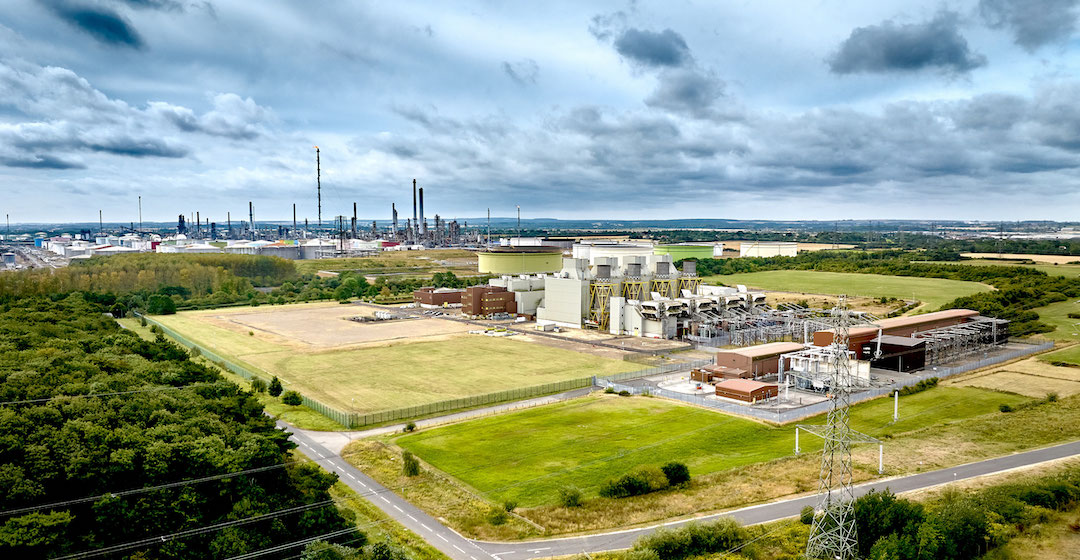
Uniper's Killingholme power plant will also produce green hydrogen in the future. © Uniper SE
(Great Britain) Energy company Uniper SE has selected ITM Power Plc as the electrolyzer supplier for the "Humber H2ub" (Green) project in Killingholme, UK. The company will supply six 20-megawatt (MW) "Poseidon" units. Following the engineering phase, Uniper will make the final investment decision (FID) in 2026. The plant is scheduled to go online by 2029. The initial capacity of 120 MW can be expanded by at least another 200 MW. The green hydrogen produced there will be used at the Humber refinery, operated by Phillips 66 Limited, as a replacement for some of the refinery fuel gas in industrial heating systems ( as previously reported ). In April 2025, the project was shortlisted as one of 27 under the UK government's Hydrogen Allocation Round 2 (HAR2 ) program . Just prior to this, ITM Power also announced that it had received an order from the Dortmund-based electricity and gas distribution network operator Westnetz GmbH for the delivery of the containerized 5-megawatt "Neptun V" electrolyzer. Westnetz will integrate the system for a public transport company and a subsidiary of a German energy supplier. The project is part of plans to establish a zero-emission hydrogen bus fleet by 2030. Almost simultaneously, an order for a 2-megawatt "Neptun 2" system was received from a Spanish cement manufacturer.
+ + + + +
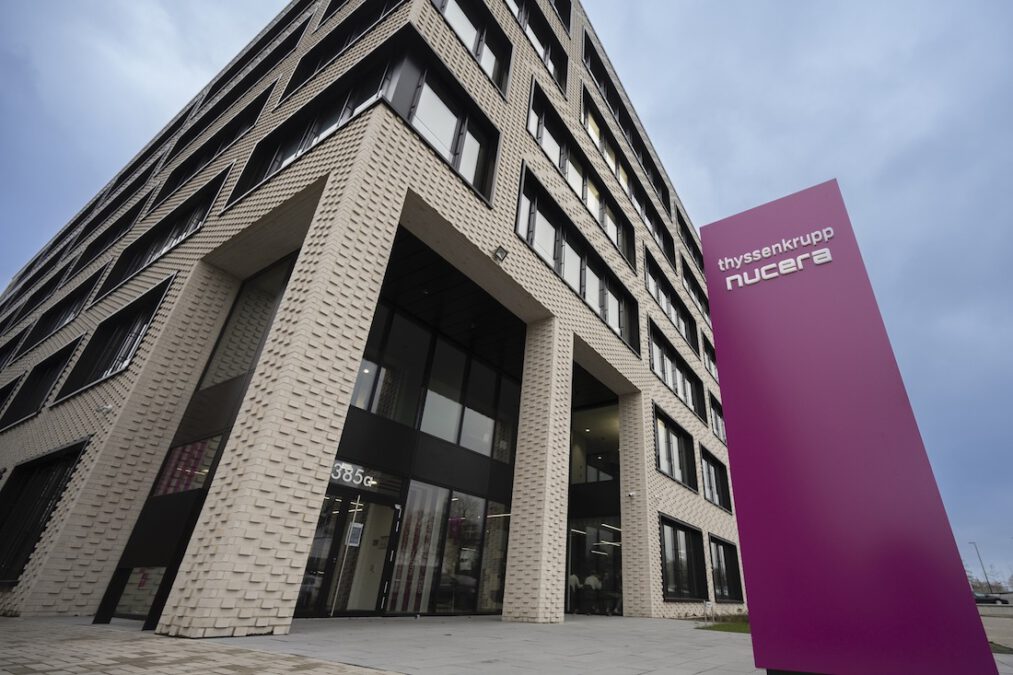
Thyssenkrupp Nucera is to conduct a FEED study for a 600 MW electrolysis plant for an unnamed customer. © Thyssenkrupp Nucera AG & Co KGaA
(Germany) Thyssenkrupp Nucera AG & Co KGaA has announced it will conduct a Front-End Engineering and Design (FEED) study for a 600-megawatt hydrogen project in Europe. The company has not disclosed the client. The hydrogen is intended to supply customers in heavy industry. The goal is to sign an EPF (Engineering, Procurement, Fabrication) contract as a next step. Implementation of the project is contingent upon a Final Investment Decision (FID), which could be made in 2026. This would be Thyssenkrupp Nucera's third large-scale hydrogen project. Other projects in the pipeline include a 200-megawatt plant for Shell in Rotterdam and a 740-megawatt plant for the Swedish company Stegra (formerly H2 Green Steel AB) to build the first industrial green steel plant in Europe.
+ + + + +
Photo above
iStock / © Danil Melekhin



