

USA: Plug receives $1,66 billion loan guarantee from the Department of Energy +++ Germany: BMDV promotes fuel cell technology for aircraft +++ Germany: H2 Mobility and BASF invest in hydrogen refueling station +++ USA: Nikola opens Hyla refueling station in California +++ USA: Electric Hydrogen receives $100 million loan to develop 100 MW electrolyzer +++ Germany: Wesermarsch Hydrogen Alliance presents feasibility study +++ Sweden: Metacon and Siemens plan to collaborate on electrolyzer development +++ India: HHP plans to produce ammonia in the Tata Steel Special Economic Zone Industrial Park +++ DISCOUNT promotion: Your advertisement on the PtX portal
A selection of PtX topics summarized at the end of the week
+ + + + +

Plug Power wants to finance six production plants for green hydrogen with a loan commitment worth billions. © Plug Power Inc.
(USA) Plug Power Inc. has received a conditional loan commitment of up to $1,66 billion from the Loan Programs Office (LPO) of the U.S. Department of Energy. This funding will be used to finance the development and construction of up to six of its own green hydrogen production facilities. The facilities would be installed nationwide and would supply large companies, including Plug Power's existing customers. The hydrogen would then be used for applications in material handling, transportation, and industry. Plug Power commissioned its first commercial green hydrogen plant in Woodbine, Georgia, in early 2024. The company's current green hydrogen production network has a production capacity of approximately 25 tons of liquid hydrogen per day.
+ + + + +
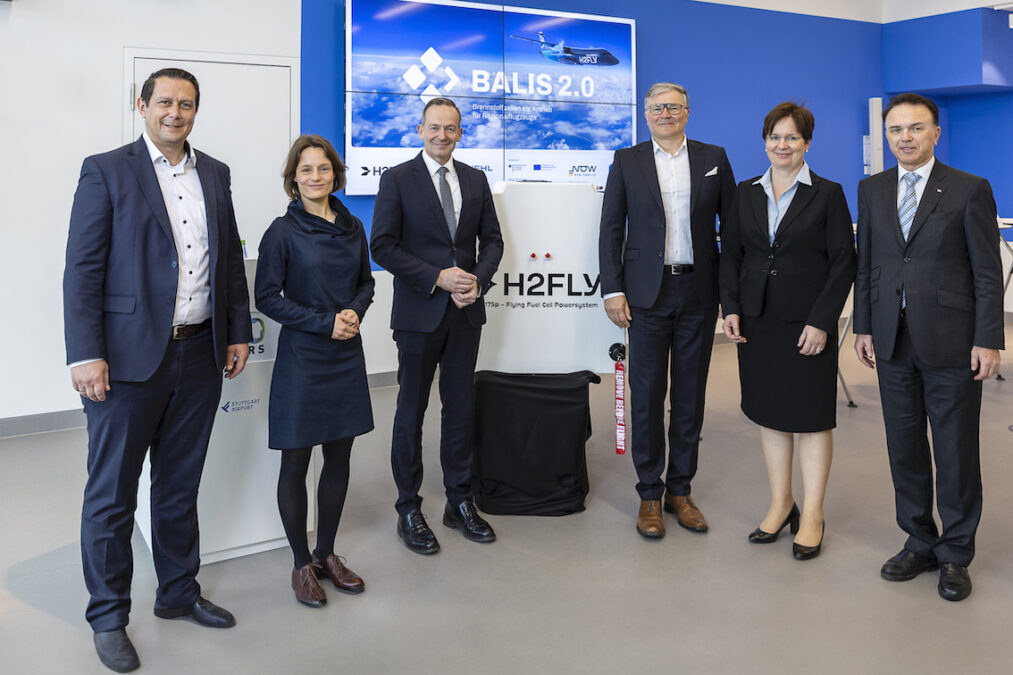
Federal Transport Minister Volker Wissing (3rd from left) presents the funding notice for the further development of fuel cell drives for regional aircraft at Stuttgart Airport. © H2Fly GmbH
(Germany) The Federal Ministry for Digital Affairs and Transport (BMDV) is funding the BALIS 2.0 research project for the further development of fuel cell technology for regional aircraft with €9,3 million for the period 2024 to 2026. Led by the Stuttgart-based company H2FLY and in cooperation with the German Aerospace Center (DLR) and Diehl Aerospace, a high-performance, aviation-grade fuel cell module with a power output of 350 kilowatts is being developed and tested. This basic module will serve as the foundation for megawatt-scale propulsion systems. In the future, this could enable emission-free propulsion of commercial regional aircraft with 40 to 80 seats. In the BALIS test environment, DLR is investigating the coupling behavior of fuel cell systems with an electric drive and the optimization of overall system operation. Diehl Aerospace is further developing its technology to enable efficient coupling and scaling of fuel cell systems. The first ground tests are planned for this year in the DLR test field in Empfingen, which was set up as part of the predecessor project BALIS 1.
+ + + + +
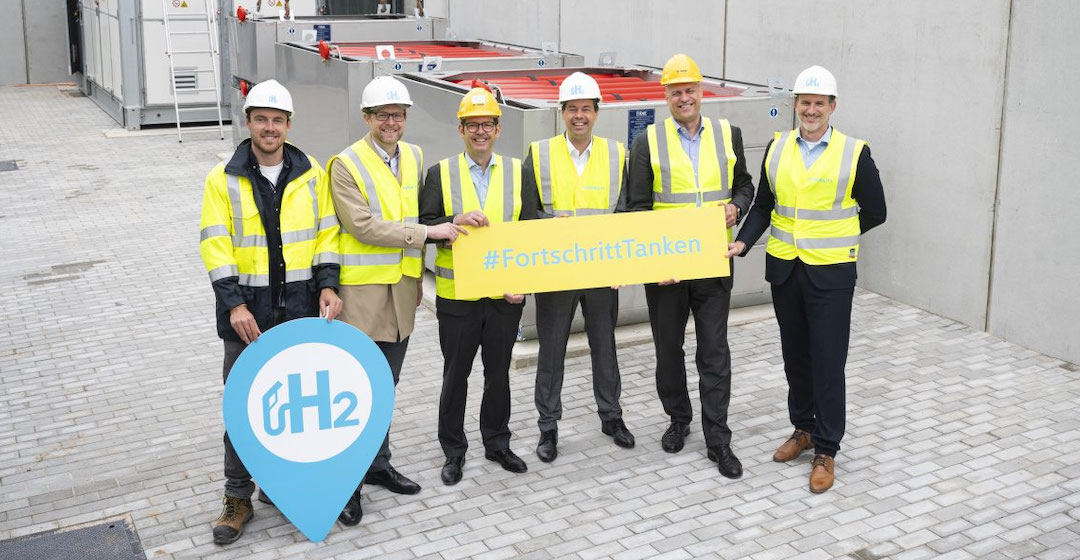
In the presence of Frankenthal Mayor Nicolas Meyer (fourth from left), the project partners presented the construction progress of the hydrogen filling station from H2 Mobility and BASF. © BASF
(Germany) H2 Mobility Deutschland GmbH and the chemical company BASF are jointly investing in the construction of a hydrogen refueling station in Frankenthal. The publicly accessible station is being built next to BASF's plant in Rhineland-Palatinate. In the future, cars and light commercial vehicles (700 bar) as well as trucks and buses (350 bar) will be able to refuel there. The compressor and two medium- and high-pressure storage tanks were recently delivered. The first phase of construction is planned to have a daily capacity of 700 to 800 kilograms of hydrogen of undisclosed origin. This corresponds to more than 30 trucks and buses. Until the planned opening at the end of 2024, the technical components of the system will be prepared for use in a commissioning process lasting several months, including refueling tests. By 2027, H2 Mobility, the station's operator, plans to double the capacity in a second phase. At that point, three vehicles will be able to refuel simultaneously, says Martin Jüngel, Managing Director and CFO of H2 Mobility Deutschland. Due to its location on the A6 motorway, the filling station is strategically well-situated and easily accessible for logistics traffic. Three more hydrogen filling stations of similar size and capacity will be built in the Rhine-Neckar metropolitan region by 2026. The development of the hydrogen region is being supported by the Federal Ministry of Transport with €20 million as part of the National Innovation Programme for Hydrogen and Fuel Cell Technology.
+ + + + +

Nikola is opening a new hydrogen filling station under its “Hyla” brand in California. © Nikola Corp.
(USA) Nikola Corporation has opened a second hydrogen refueling station in California under its "Hyla" brand. According to the company, it is located near the Port of Long Beach. The facility is open 24/7. Through "coordination with leading industry partners," Nikola is securing its hydrogen supply chain and expanding its refueling infrastructure to support increased demand. The company plans to establish a network of nine stations by mid-2024, with a total of 14 operational sites expected to be completed by the end of the year. These will include modular and permanent Hyla stations. Furthermore, a ten-year agreement is in place with First Element Fuel for a hydrogen refueling station in Oakland, California.
+ + + + +

EH2 has secured a $100 million credit line to finance a 100 MW electrolysis plant. © Electric Hydrogen ©
(USA) Technology company Electric Hydrogen (EH2) has secured a $100 million (€93 million) credit line from a banking consortium. The funds will be used to develop a 100-megawatt electrolysis plant. This plant will include all system components necessary to produce green hydrogen using PEM technology. "With this loan guarantee, we are well-positioned to deliver gigawatts of electrolysis plants in the coming years and enable our customers to achieve their decarbonization goals," said Derek Warnick, the company's Chief Financial Officer. Electric Hydrogen had previously announced $65 million in funding from the U.S. Department of Energy and $50 million from the U.S. investment firm Trinity Capital to scale up its electrolyzer factory in Devens, Massachusetts. The first electrolyzers from the gigafactory are expected to be delivered to a project in southeastern Texas later this year. Electric Hydrogen has offices in California and Massachusetts.
+ + + + +
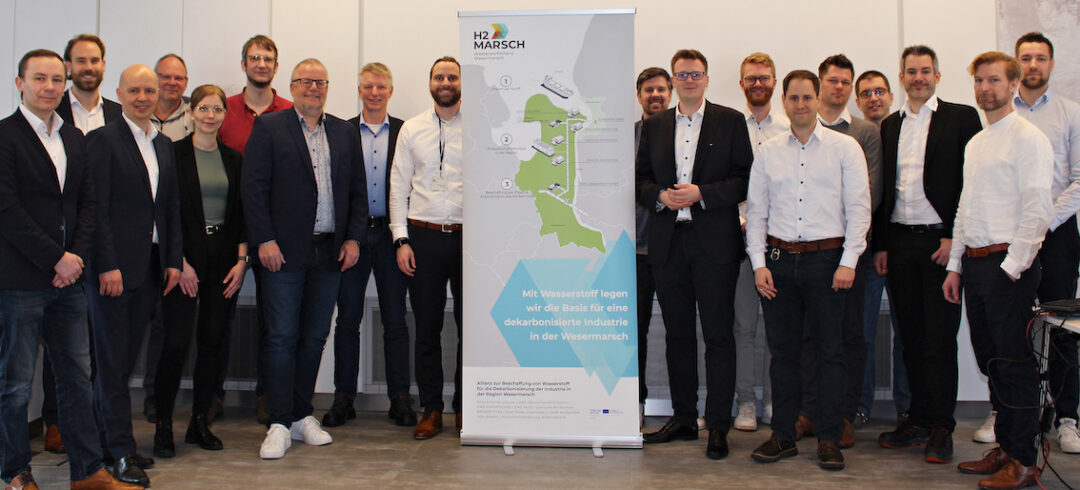
The hydrogen alliance H2 Marsch has presented a feasibility study for the decarbonization of the Wesermarsch. The consortium includes Airbus Aerostructures, DMK Deutsches Milchkontor, Glencore Nordenham, Kronos Titan, USG-Blexen, the energy company EWE, the Wesermarsch economic development agency and the cities of Brake (Unterweser) and Nordenham. © EWE / Dennis Wenzel
(Germany) The "H2 Marsch Hydrogen Alliance," founded last year by business and political stakeholders, has completed a feasibility study for the Wesermarsch region in northern Germany, examining the options for hydrogen supply for companies and other interested parties. The study demonstrates how industry can be decarbonized and which renewable energy sources are suitable for replacing fossil fuels. The goal is to achieve decarbonization by the mid-2030s. "On the one hand, this means investing in energy efficiency measures. On the other hand, half of the future energy requirement of around 500 gigawatt-hours annually could be electrified," says Tim Eshold, spokesperson for the H2 Marsch initiative. The other half would have to be converted to molecular energy carriers "due to technical limitations in production processes." "Hydrogen has emerged as the best option for this." According to the study, approximately 13.000 tons of hydrogen would be needed annually for industry. According to the study, approximately one-third of the hydrogen could be produced in the region surrounding the four urban centers of Bremen, Bremerhaven, Oldenburg, and Wilhelmshaven. To meet the overall demand, hydrogen would need to be imported or transported via a supra-regional pipeline network, such as the nationally planned hydrogen core network. The H2 March partners have already developed a roadmap to achieve the climate protection and transformation goals of industry. As a next step, the companies intend to develop their concepts for implementation and financing.
+ + + + +
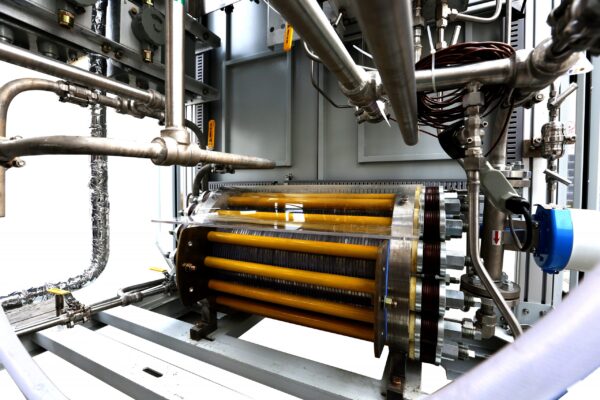
Metacon's PEM megawatt electrolyser for large-scale industrial applications. © Metacon AB
(Sweden) Metacon AB and Siemens AB have signed a letter of intent to accelerate the production of hydrogen production systems in Sweden for the European market. According to the companies, Metacon has held the exclusive rights since the beginning of the year to manufacture complete electrolysis plants based on the alkaline electrolysis module (stack) technology of the Chinese company PERIC Hydrogen Technologies Co., Ltd. One of the key components is the 5-megawatt module. Metacon also has access to the 10-megawatt module that PERIC recently launched. The rights have been granted for most European countries. Metacon aims to become one of the market leaders in Europe for this type of large-scale hydrogen plant. Siemens is now the technology partner, contributing its expertise in automation, power distribution, electrification, instrumentation, building technology, and drives. Furthermore, Siemens can contribute digital services and software for optimization, standardization, and simulation during both the manufacturing and operational phases of hydrogen plants.
+ + + + +
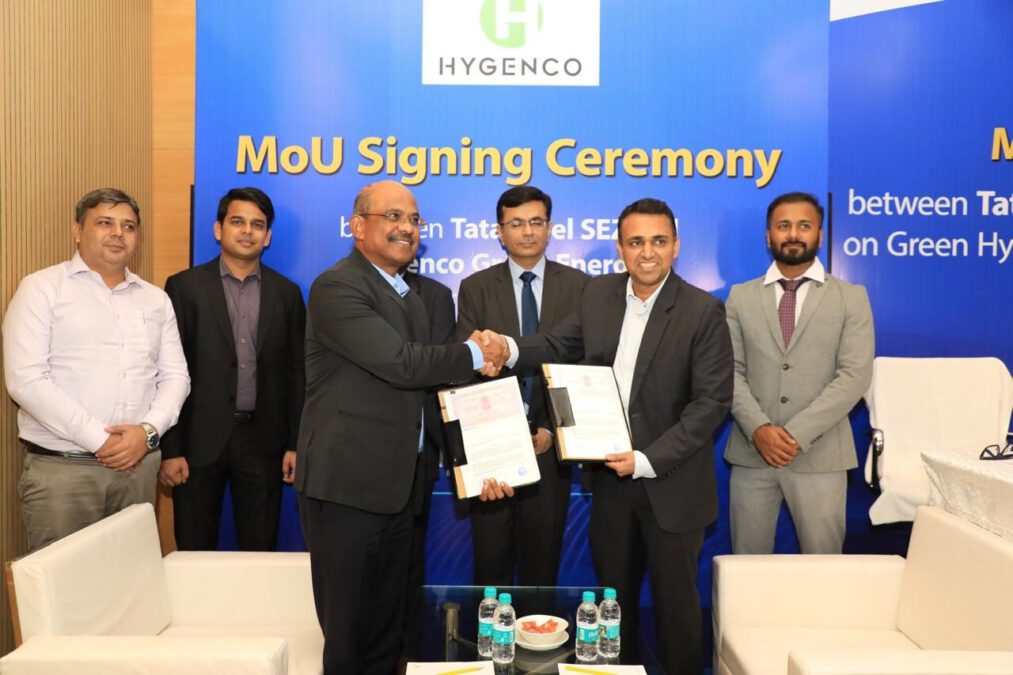
Signing of the agreement between Hygenco and Tata Steel. © Hygenco Green Energies Pvt Ltd
(India) HHP Five Private Ltd., a subsidiary of Hygenco Green Energies Pvt Ltd, has entered into a binding agreement with the Tata Steel Special Economic Zone Industrial Park (GIP) to establish a large-scale green ammonia project in Gopalpur, Odisha. The plant is expected to produce 1,1 million tons of green ammonia annually, with the first phase scheduled to begin operations by December 2026. Project approval was granted by the High-Level Clearance Authority in February 2024. Hygenco is strengthening "our industrial park as the country's potential green hydrogen and ammonia hub," said Manikanta Naik, CEO of the Tata Steel Special Economic Zone. Hygenco has already signed several long-term offtake agreements for green hydrogen, including for the recently commissioned megawatt plant of a steel company in Hisar, Haryana. Another plant for STL (Vendanta Group) in Maharashtra is under construction.
+ + + + +
DISCOUNT promotion: Your ADVERTISING on the PtX portal
Photos
iStock / © Danil Melekhin



