

Germany: EWE commissions Neumann & Esser to supply compressor for electrolyzer in Emden +++ USA: Primary Hydrogen begins hydrogen exploration in Colorado +++ Germany: BASF produces green ammonia in Ludwigshafen +++ Chile: Total Energies plans to invest 16 billion dollars in wind power, hydrogen and ammonia +++ Norway: Höegh Evi and Wärtsilä develop floating ammonia-hydrogen cracker +++ Scotland: 3,4 million pounds for eleven hydrogen projects +++ USA: Toyota intensifies its hydrogen ambitions +++ Germany: Governments must become more active in power-based fuels
A selection of PtX topics summarized at the end of the week
+ + + + +

EWE's construction site in Emden: Starting in 2027, green hydrogen will be produced here on an industrial scale. © EWE / Jan Lübkemann
(Germany) EWE AG has commissioned the Aachen-based family business Neumann & Esser GmbH & Co. KG to supply three compressors for a hydrogen production plant. The electrolyzers, with a capacity of 320 megawatts, will be located in Emden, northern Germany, and are part of the "Clean Hydrogen Coastline" project. "Our goal is to produce hydrogen from renewable energy sources where it is both beneficial to the grid and economically viable," says EWE CEO Stefan Dohler. "With its existing grid infrastructure and high proportion of curtailed wind power, Emden offers ideal conditions." With the four-part "Clean Hydrogen Coastline" project, EWE is bringing together the production, storage, transport, and use of green hydrogen. It is being funded under the European IPCEI (Important Project of Common European Interest) program (as previously reported). EWE is currently in the detailed planning phase. Simultaneously, the site is being prepared for construction. Deep foundation work is scheduled to begin next winter, followed by the construction of the buildings and the installation of the hydrogen production technology. From 2027, the plants are slated to produce green hydrogen on an industrial scale. Stefan Dohler, however, criticizes the current EU regulations regarding stringent requirements for electricity origin, which increase the production costs per kilogram of hydrogen by 50 percent. "We could produce hydrogen significantly more cheaply if we were allowed to react flexibly to favorable green electricity offers on the spot market," says the CEO. "Instead, current EU regulations force us to align production with a specific wind farm in terms of timing and geography." This offers no ecological benefit and, particularly in regions like Emden with approximately 500.000 megawatt hours of curtailed wind power annually, is not only inefficient but also economically questionable. The company expects the new German government to secure the ramp-up of the hydrogen economy with a stable, long-term framework and to advocate strongly in Brussels for an adjustment of the EU electricity procurement criteria.
+ + + + +
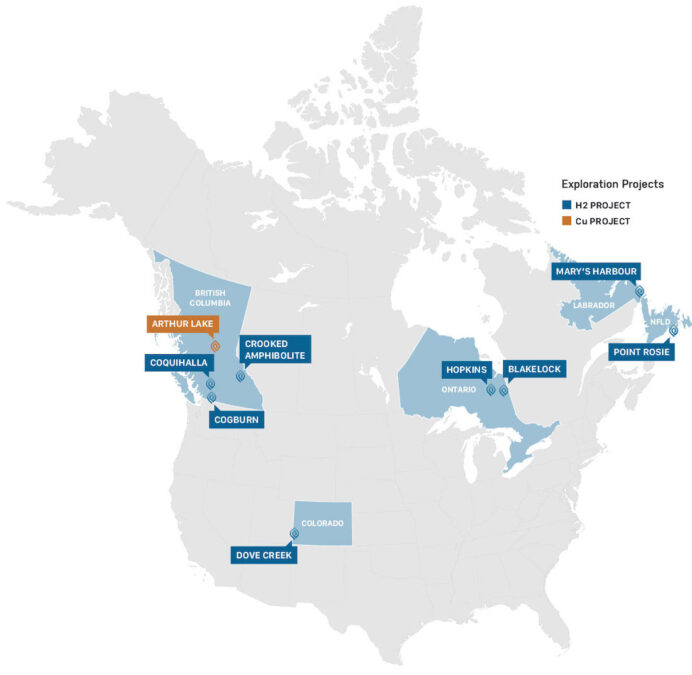
Primary Hydrogen aims to explore and develop natural hydrogen resources. © Primery Hydrogen Corp
(USA) Canadian Primary Hydrogen Corp. is commencing the first phase of its exploration program at Dove Creek, Colorado . The company aims to assess the region's potential for natural hydrogen deposits. The project is located in the southwest of the state, near the Utah border, within the Paradox Basin, adjacent to the San Juan Basin to the south and the Uinta-Piceance Basin to the north. Primary Hydrogen bases its assessment of the likelihood of hydrogen deposits on certain subsurface geological structures in the area. Its current portfolio includes projects at Blakelock, Hopkins, Mary's Harbour, Point Rosie, Crooked Amphibolite, Coquihalla, and Cogburn, spanning hundreds of square kilometers in Canada and the USA.
+ + + + +
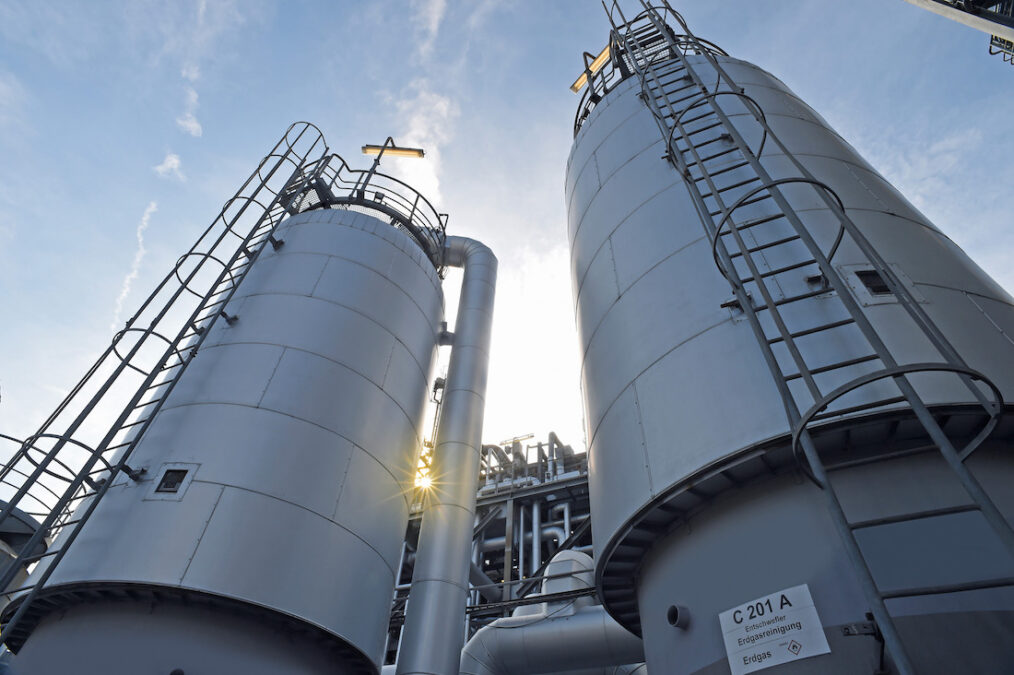
BASF claims to offer "the first renewable ammonia produced in Central Europe" with a very low CO2 footprint (Product Carbon Footprint, PCF). © BASF SE
(Germany) The chemical company BASF SE is partially replacing fossil gas with green hydrogen in its ammonia production. In Ludwigshafen, BASF produces renewable ammonia and renewable 24,5 percent ammonia solution by feeding hydrogen into the ammonia plant, thereby reducing the plant's natural gas consumption. The hydrogen is produced from both fossil and renewable energy sources. For accounting purposes, the hydrogen produced from renewable energy sources is included in the new ammonia products. Demand for green ammonia has risen steadily in recent years and is expected to continue increasing. "Both our customers and BASF's own downstream businesses already require low-carbon products to serve the market," says BASF manager Jens Aßmann. BASF operates ammonia plants with a total capacity of over 1,7 million tons in Ludwigshafen, Antwerp, and jointly with Yara in Freeport, Texas. Ammonia is an essential raw material for polyamides, isocyanates, and urea resins.
+ + + + +
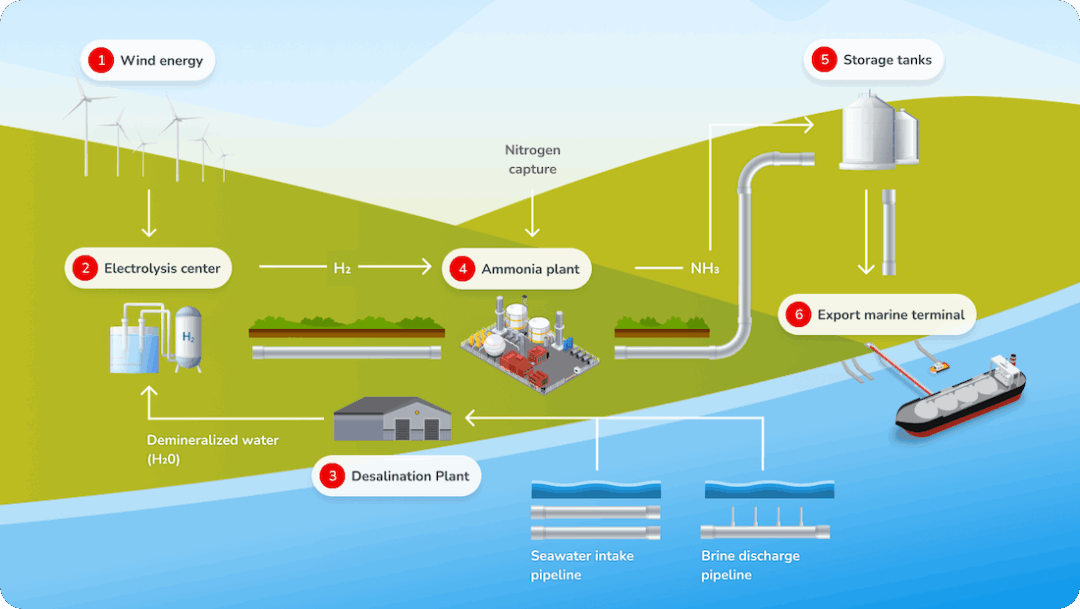
Graphic representation of the plans for Total Energies' H2-Magallanes project in Chile. © Total Energies
(Chile) Total Eren, a subsidiary of the French company Total Energies SE, has submitted the environmental impact assessment (EIA) documents for its "H2 Magallanes" project. This was announced by Invest Chile, the Chilean agency for foreign investment. The project is projected to cost approximately $16 billion. Located on 11.500 hectares of public land in the municipality of San Gregorio in Chile's Magallanes region, the project includes an electrolysis plant to produce over 800.000 tons of green hydrogen per year, from which 4,4 million tons of green ammonia will be produced. The electricity was originally supplied by approximately 608 wind turbines with a combined installed capacity of ten gigawatts (GW). The plan also includes a seawater desalination plant, an export port, and infrastructure such as roads, substations, and internal transmission lines. “H2-Magallanes” is designed for three construction phases: The first phase includes an installed wind power capacity of 1,5 GW and an electrolysis plant of one gigawatt; in the second phase the wind power capacity will be increased to five gigawatts and in the third phase further increased to the planned ten gigawatts.
+ + + + +

To meet future hydrogen demand, Höegh Evi is developing several hydrogen terminal projects in Europe that are scheduled to be operational before 2030. © Höegh Evi
(Norway) Höegh Evi Ltd., a provider of marine energy infrastructure, and Wärtsilä Gas Solutions, part of the Finnish technology group Wärtsilä Corp., have completed the development of what they claim is the "world's first" floating ammonia-to-hydrogen cracker. This will enable the production of hydrogen in industrial quantities at floating ammonia import terminals. The ammonia cracker has a modular design and can be integrated into both hybrid floating storage and regasification units (FSRUs) and dedicated floating hydrogen terminals. The ammonia storage tanks can hold between 10.000 and 120.000 cubic meters, allowing for the production of up to 210.000 tons of hydrogen annually, according to the companies. The project was built at Sustainable Energy's Norwegian Catapult Center in Stord and was financed with approximately €5,9 million from the Norwegian government's Green Platform program, covering about 50 percent of the development costs. Project partners include the Institute for Energy Technology (IFE), the University of Southeast Norway, Sustainable Energy, and BASF SE. A floating infrastructure using ammonia cracking technology will enable the large-scale supply of a stable baseload energy source to industries that are difficult to access.
+ + + + +
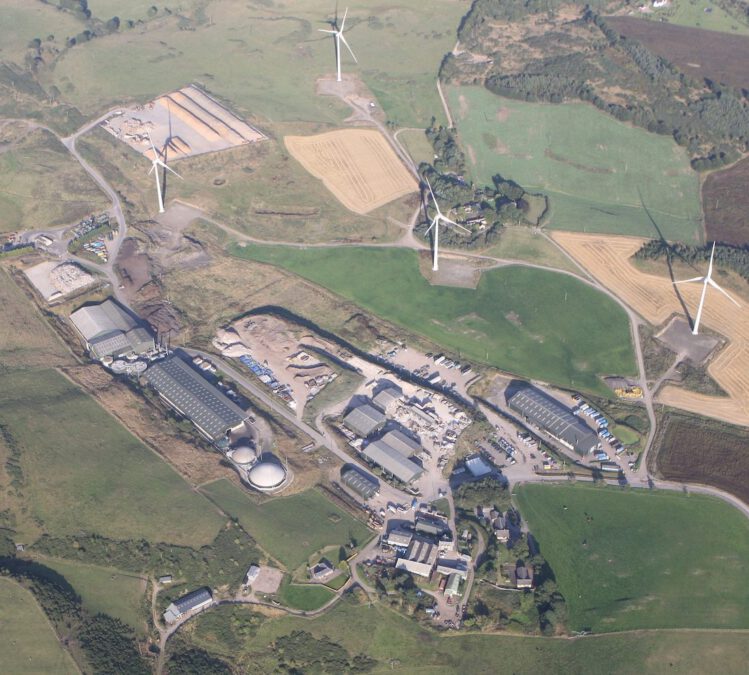
Scottish project developer Green Cat Hydrogen Ltd. (GCH) will receive a total of £1,1 million in funding for three projects, including approximately £260.000 for the "Binn Ecopark Hydrogen" in Perth and Kinross to build a local energy network with direct connections to renewable energy sources for the production of 1.000 tons of hydrogen annually. © Green Cat Hydrogen Ltd.
(Scotland) Eleven hydrogen projects will receive a total of £3,4 million (€4,1 million) in government funding. The Scottish government launched a call for proposals last September, initially considering 18 applications. Following a review and selection process, the remaining companies will receive grants of up to 50 percent of their investment costs. The funds will support the construction of electrolyzers for green hydrogen, feasibility studies, and improvements to transport, storage, and infrastructure across the entire value chain. The companies, projects, and grant amounts are listed on the government website .
+ + + + +

The study was supported by the International PtX Hub, a knowledge and exchange platform to promote the market development of sustainable PtX. © Agora Energiewende
(Germany) The slow pace of market introduction of sustainable PtX fuels such as hydrogen and e-fuels produced using renewable electricity threatens climate protection efforts in international air and sea transport. A combination of quota regulations to guarantee purchase and government auction mechanisms for producers and consumers is the most suitable policy to stimulate supply and demand in these sectors. These are the findings of the study "Scaling Power-to-X Fuels in Transport" by Agora Transport Transformation gGmbH (Agora Verkehrswende). The analysis evaluates regulatory and market-oriented policy measures in eight countries, all of which aim to promote the use of hydrogen and e-fuels in the transport sector, particularly in shipping and aviation. Emerging economies have so far largely adopted non-binding regulations, while some have the potential not only to become important production centers for PtX fuels but also significant demand markets due to their rapidly growing fuel consumption. The EU, Germany, and the United Kingdom have introduced the most ambitious and comprehensive policy regulations. With greater political ambition, the use of hydrogen and e-fuels in transport could be rapidly increased while simultaneously ensuring economic viability, says Wiebke Zimmer, Deputy Director of Agora Verkehrswende. The authors identify the price difference between expensive PtX fuels and the still-affordable conventional alternatives as the biggest obstacle to widespread adoption. Consumers accustomed to buying inexpensive conventional fuels in the short term are hesitant to enter into long-term purchase contracts for more expensive PtX fuels. This discourages investment in production and simultaneously restricts the flow of capital. "Clear and enforceable regulations that promote the introduction of PtX fuels are essential," Zimmer concludes.
The study “Scaling Power-to-X Fuels in Transport: A Cross-National Analysis and Policy Toolkit” is available free of charge in English as a PDF (68 pages).
+ + + + +
Photo above
iStock / © Danil Melekhin



