

A selection of PtX topics summarized at the end of the week
+ + + + +
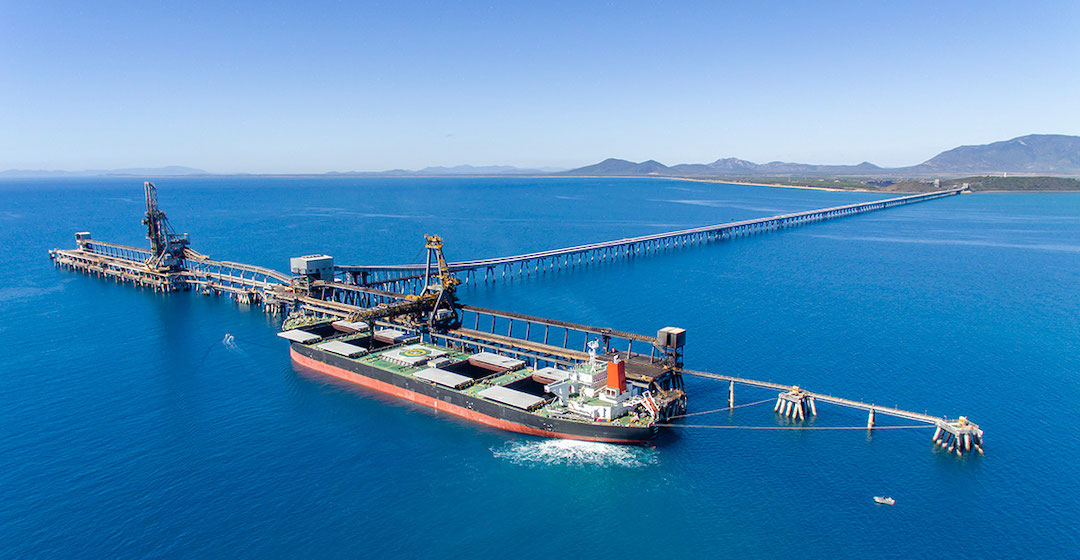
Adani expects new export markets for hydrogen after acquiring a coal terminal in Australia. © NQXT
(Australia) Adani Ports and Special Economic Zone Ltd. (APSEZ) is acquiring the NQXT terminal in the Port of Abbot Point on the east coast, approximately 25 kilometers north of Bowen, in North Queensland . NQXT is a natural deep-water export terminal with a current capacity of 50 million tons per year and has been designated a strategic port and a priority port development area by the Queensland government. According to the company, NQXT had a secured contract capacity of 40 million tons in fiscal year 2025. "The acquisition of NQXT is a crucial step in our international strategy, opening up new export markets for us," says APSEZ CEO Ashwani Gupta. NQXT is strategically located on the East-West trade corridor and is "ready for robust growth," including long-term potential for green hydrogen exports. Currently, the terminal handles almost exclusively coal. NQXT's enterprise value is estimated at 3.975 million Australian dollars (2.217 million euros). The transaction is cashless, involving the acquisition of Abbot Point Port Holdings Pte Ltd (APPH), the owner and operator of the North Queensland Export Terminal, from Carmichael Rail and Port Singapore Holdings Pte Ltd, Singapore (CRPSHPL), through a share and stock swap.
+ + + + +
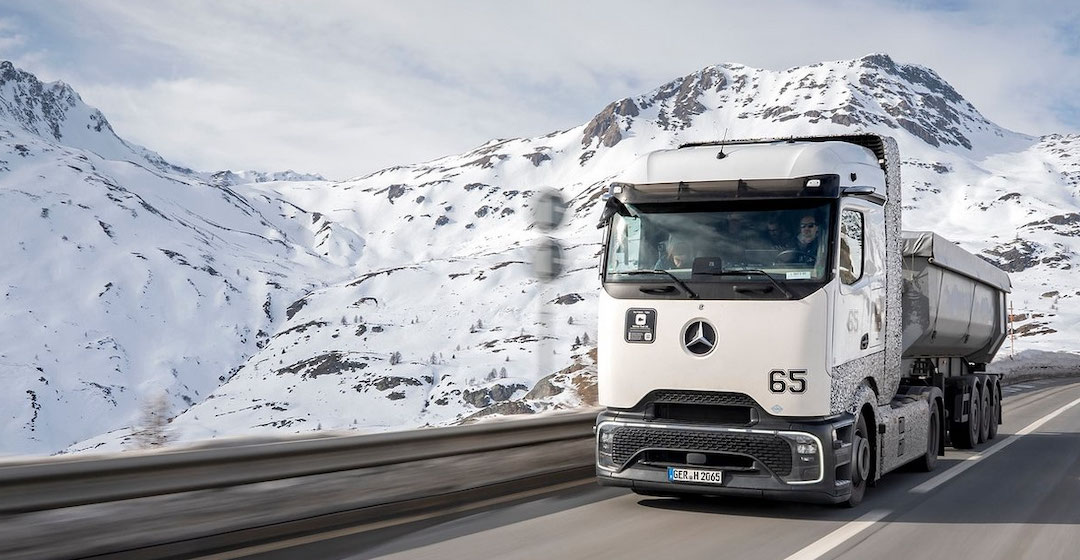
Daimler Truck tested two fuel cell trucks in Switzerland under winter conditions. © Daimler Truck AG
(Germany) Daimler Truck has subjected the first prototypes of the next generation of the Mercedes-Benz GenH2 fuel cell truck to winter testing on the Simplon Pass in the Swiss canton of Valais. The cold and snowy conditions, along with the region's steep gradients, "offered ideal conditions" for testing the technology of the liquid hydrogen-powered vehicles under realistic extreme conditions and gaining valuable insights, according to the company. "With a pass altitude of over 2.000 meters above sea level and a climb from 600 to 2.000 meters, the route provided excellent conditions for testing the fuel cell system with its further developed components," including the interaction of the fuel cell, high-voltage battery, e-axle, tank system, and thermal management, says Rainer Müller-Finkeldei, Head of Mercedes-Benz Trucks Product Engineering. The two hydrogen-powered trucks completed a 14-day test program with a total vehicle weight of up to 40 tons, covering a total of 6.500 kilometers, including 20-kilometer ascents and descents of mountain passes with gradients of ten to twelve percent. The vehicles were refueled using a mobile station from Air Products. Daimler Truck is receiving €226 million in public funding for the development and small-series production of 100 trucks. The tractor units are scheduled to enter practical operation with customers starting at the end of 2026.
+ + + + +
The Federal Network Agency is requesting industry comments online on the ramp-up fee. © Federal Network Agency
(Germany) The Federal Network Agency has published its draft proposal for the ramp-up fee for the hydrogen core network, along with a position paper outlining key points for a differentiated fee system, for further discussion online. The ramp-up fee of €25 per kilowatt-hour per year is intended to apply uniformly across Germany at all entry and exit points of the hydrogen core network until 2055. It must, firstly, fully cover the costs incurred during the ramp-up phase and, secondly, be competitive. The mechanism is designed to compensate for the imbalance between the initially low demand for hydrogen transport capacity and the high costs of infrastructure development. Setting a ramp-up fee that remains constant over the years will result in lower revenues during the initial phase. Later, however, the ramp-up fee is expected to generate revenues exceeding the annual costs, thus creating additional revenue. Furthermore, the Federal Network Agency has published a position paper outlining key points for a differentiated fee system for consultation. Comments can be submitted until May 2, 2025. The draft decision and the underlying expert opinion (79 pages) are published on the website of the Federal Network Agency.
+ + + + +
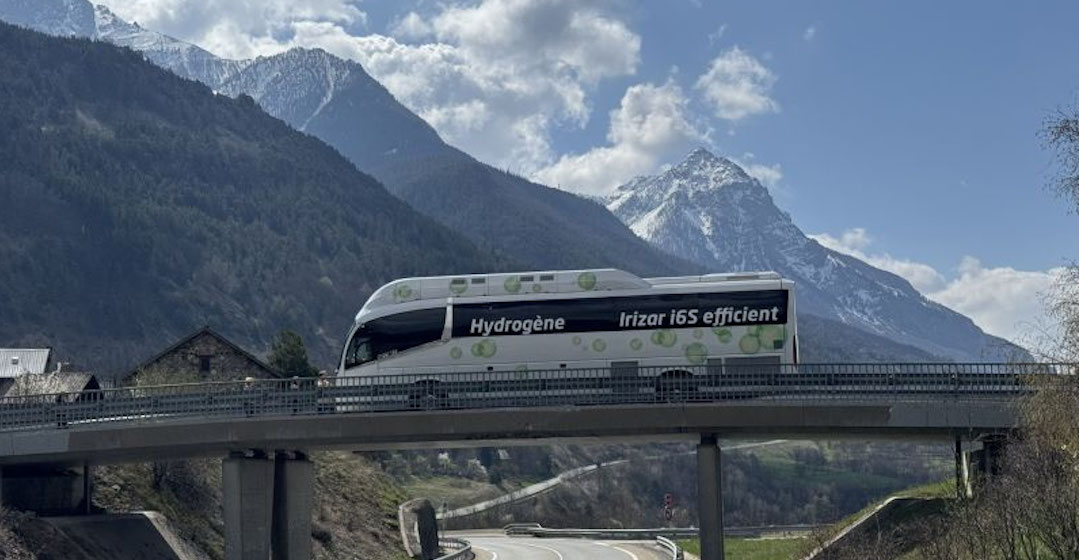
The "Irizar i6S Efficient Hydrogen" fuel cell bus completed a 2.500-kilometer promotional tour. © Irizar S. Coop.
(Spain) The hydrogen-powered "i6S Efficient Hydrogen" coach from the Basque Country-based vehicle manufacturer Irizar S. Coop. has completed a 2.500-kilometer test drive. The circular route began at the company headquarters in Ormaiztegi (Gipuzkoa), crossed the Pyrenees and traveled through Provence to Briançon in the French Alps. The tour also served as a promotional event: During the journey, the bus was presented to various institutions in the Provence-Alpes-Côte d'Azur region of France to "demonstrate the potential of hydrogen as a viable and sustainable alternative to conventional fossil fuels." The "Irizar i6S Efficient Hydrogen" is equipped with a 510 hp electric motor. According to the company, it is now "ready for series production" and is already working on "various related projects."
+ + + + +
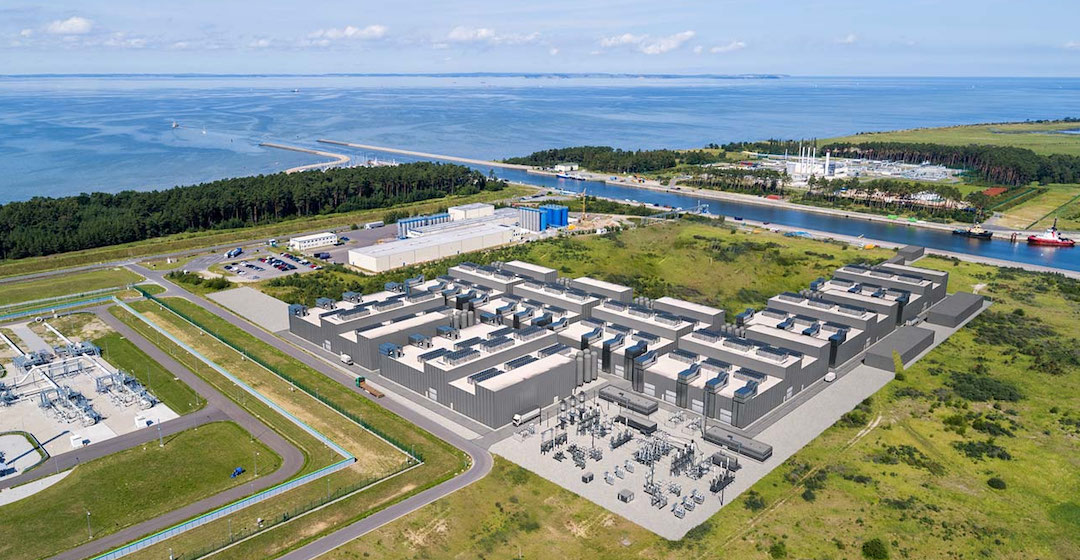
H2APEX is building a large-scale electrolysis plant with a capacity of up to 600 megawatts on the site of the former nuclear power plant in Lubmin and has now also acquired Lubminwerk GmbH from the insolvent HH2E AG. © Graphic: H2APEX
(Germany) H2APEX, based in Rostock and a subsidiary of the Luxembourg-based H2APEX Group SCA, has acquired Lubminwerk GmbH from the Hamburg-based company HH2E and intends to complete the planned green hydrogen production plant in Lubmin. This gives the company two projects on the site of the former nuclear power plant on the Greifswald Bodden (Mecklenburg-Western Pomerania). H2APEX is acquiring the land and all existing connections for electricity and water supply. This also includes direct access to several pipelines, which are to be converted to hydrogen operation by 2027, thus connecting to the German core hydrogen network. The acquisition entails the construction of a 100-megawatt plant in the first phase, scheduled for completion by 2028, with plans to expand to 1.000 megawatts in the medium term. The company estimates the investment for infrastructure, expert reports, studies, planning and permitting services, as well as personnel costs, at a three-figure million euro amount. H2APEX has been developing a 100-megawatt electrolysis plant in Lubmin since 2023, with planned completion in 2028. The long-term goal is to expand the plant to 600 megawatts. "As a hub in the German hydrogen core network and with its proximity to offshore wind farms, Lubmin is the most promising location for the German hydrogen industry," says CEO Peter Rößner. H2APEX has project experience with its existing plant at its headquarters in Rostock-Laage, as well as with the "H2-Wyhlen" and "HyBit" projects in Bremen. HH2E AG, founded in 2021, and its subsidiary HH2E Lubminwerk GmbH filed for insolvency at the Berlin-Charlottenburg District Court in November 2024. Reports indicate that the British majority shareholder, Foresight Group, refused further financing.
+ + + + +
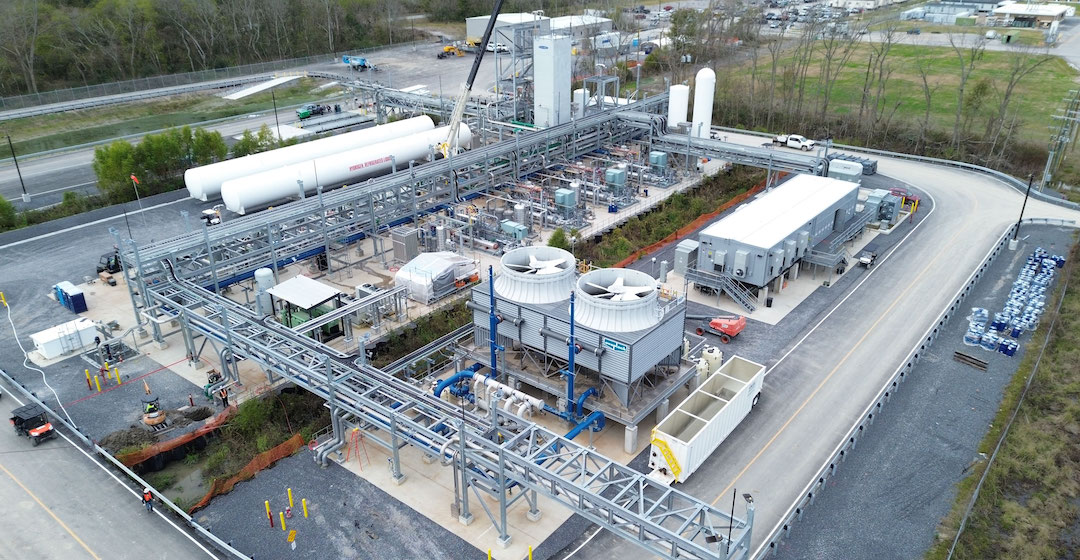
Plug Power and Olin's new plant in Louisiana can liquefy 15 tons of hydrogen per day. © Plug Power Inc
(USA) Hidrogenii, a joint venture between Plug Power Inc. and Olin Corporation, has commissioned a hydrogen liquefaction plant with a processing capacity of 15 tons per day. Located in St. Gabriel, Louisiana, it is said to be one of the largest facilities of its kind in North America. The hydrogen is produced by Olin and then liquefied and delivered to customers by trailer. The capacity can be increased to 40 tons of gaseous hydrogen. Hidrogenii was founded in 2022 specifically for the construction of the plant and, according to Plug, complements its existing production facilities in Woodbine, Georgia (15 tons), and Charleston, Tennessee (10 tons).
+ + + + +
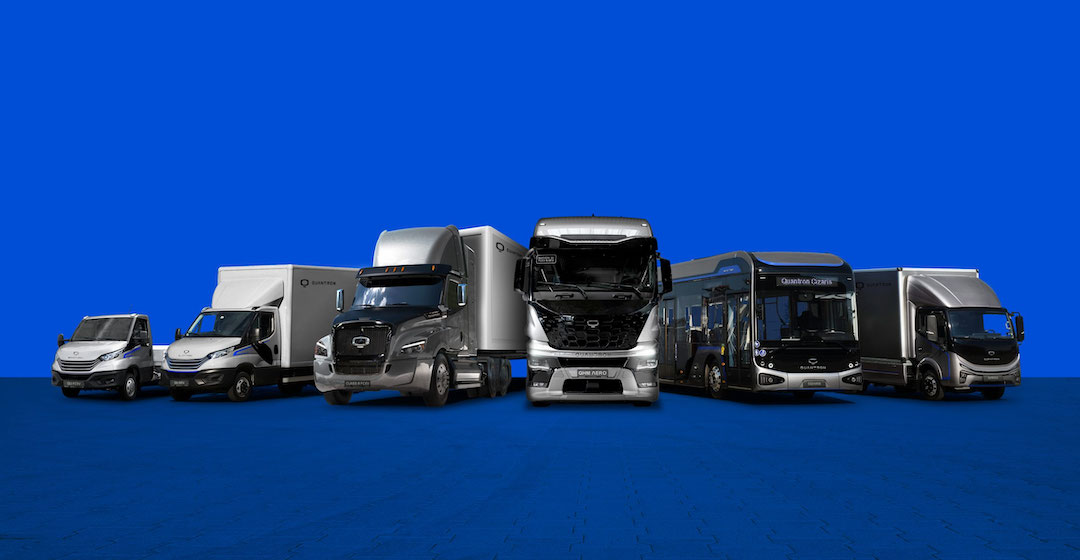
Back with the company founder: Andreas Haller takes over Quantron, the insolvent provider of battery- and hydrogen-electric drive solutions for trucks and buses. The image shows the vehicle portfolio in 2023. © Quantron AG
(Germany) Andreas Haller Holding GmbH is acquiring all relevant assets and the remaining 35 employees of the insolvent Augsburg-based vehicle manufacturer Quantron AG. According to the insolvency administrator, the creditors' committee has approved the acquisition. Quantron manufactures battery- and hydrogen-powered commercial vehicles. Andreas Haller founded the company in July 2019 as a spin-off from Haller GmbH & Co. KG and employed over 100 people in October 2024. In recent years, there have been several promising developments: In October 2022, Quantron signed a framework agreement with the US-based TMP Logistics Group Ltd. for the delivery of 500 fuel cell-powered trucks, with a volume of nearly one billion euros. In April 2023, Quantron and Norwegian Hydrogen AS entered into a five-year cooperation agreement to promote hydrogen-powered heavy-duty transport in Norway, Iceland, Sweden, Finland, and Denmark. In August 2023, Quantron announced its intention to deliver 25 to 40 fuel cell vehicles that year . Insolvency proceedings were initiated on January 1, 2025. An investor group pledged the necessary funds to continue operations until the end of March. The company website now proclaims, "Quantron recharged." Andreas Haller stated that "the groundwork has been laid to position Quantron for long-term resilience, profitability, and a sound future."
+ + + + +
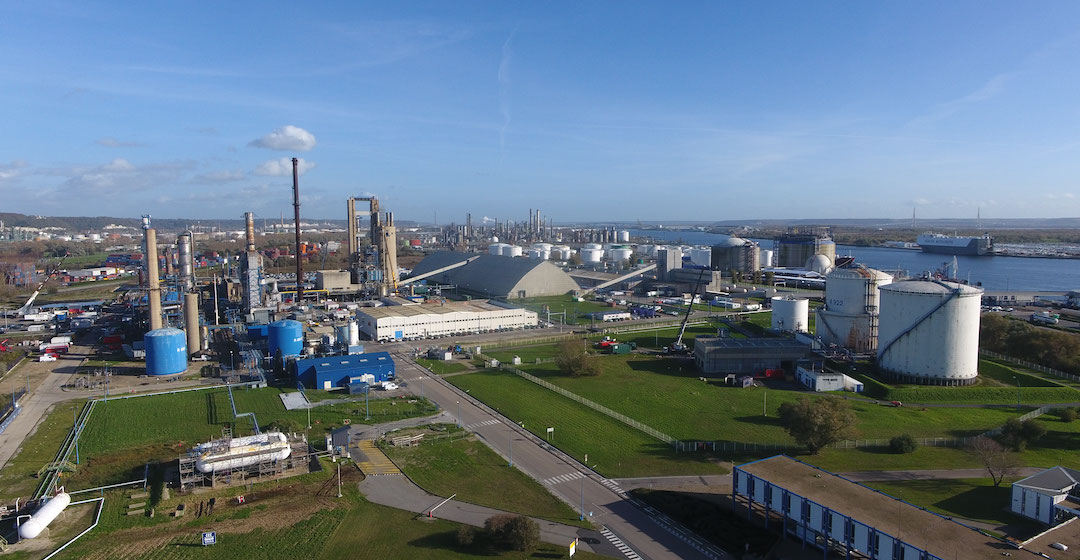
Yara's fertilizer factory in Le Havre, a future recipient of green hydrogen from Lhyfe. © Yara via LinkedIn
(France) Lhyfe will receive a grant of €149 million over four years for a green hydrogen production plant. This has now been finalized with a signed agreement. The first payment of €18 million from the French state-owned investment bank, Bpifrance, is scheduled for June 2025. The project, called "Green Horizon," is expected to reach a capacity of 34 tons per day and be completed by 2029. It is located near the Grand Canal du Havre (Normandy), one of Europe's largest industrial port areas, and close to a factory belonging to fertilizer manufacturer Yara, which produces ammonia and urea there. Customers will be supplied via a direct pipeline. According to CEO and founder Matthieu Guesné, upon completion, Lhyfe will "exceed the milestone of 100 megawatts of installed electrolysis capacity." The funding was initially committed by the French government in March 2024.
+ + + + +
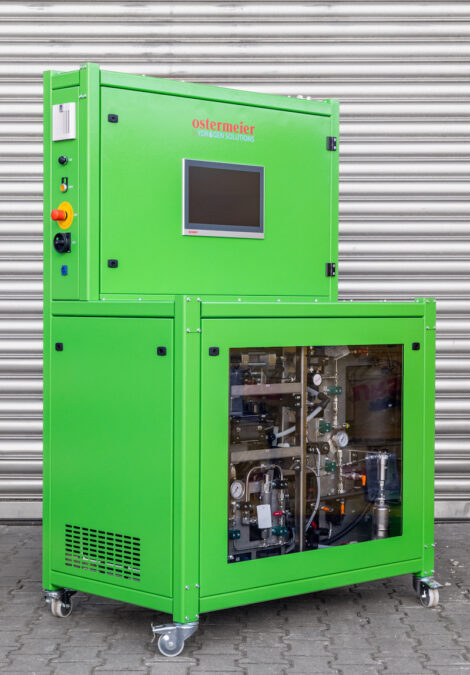
System for training in hydrogen production and utilization. © Ostermeier H2ydrogen Solutions GmbH / Michael Hopf
(Germany) Ostermeier H2ydrogen Solutions GmbH has developed a hydrogen training system for educational purposes, which, according to the company, "clearly illustrates the entire process chain." The training system consists of an electrolyzer, a fuel cell for reconversion to electricity, and a hydrogen tank. It also includes a battery for additional energy storage, a control system, and an interface for user interaction and real-time monitoring. Safety features for handling hydrogen and high-voltage components, as well as programming tasks and sample collection, can also be "clearly taught and practiced." Target groups include vocational schools and universities, as well as training and continuing education institutions in electrical, energy, and process engineering, mechanical engineering, and automotive engineering.
+ + + + +
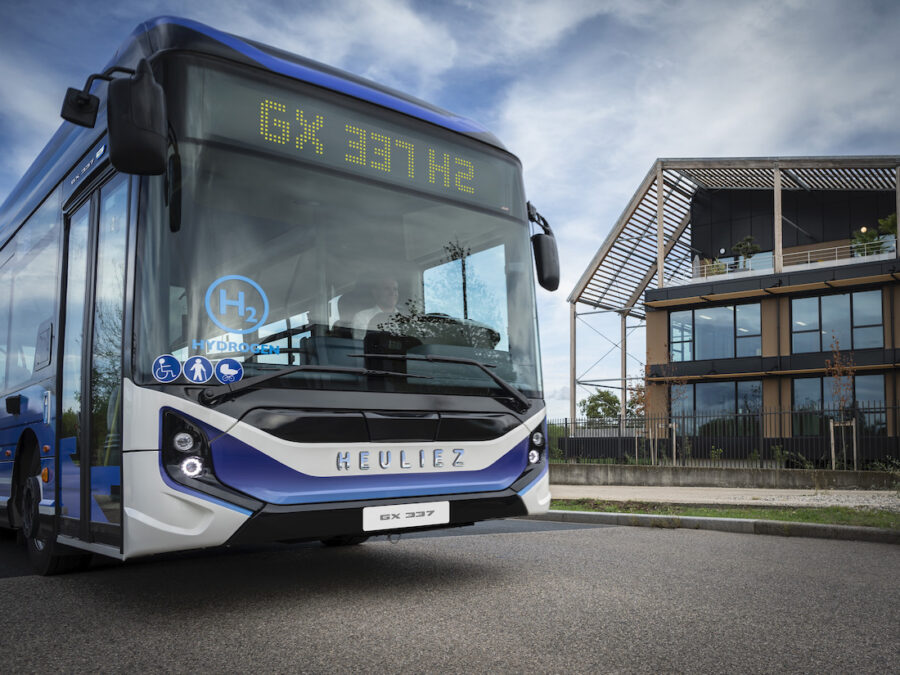
Iveco is delivering 13 hydrogen buses to Dunkirk and Grand Annecy. © Iveco Group NV
(France) The city of Dunkirk has ordered ten hydrogen-powered buses from Iveco, and the Grand Annecy metropolitan area has ordered three more. The vehicles will supplement the existing fleets of electric buses from the same manufacturer in both networks. The 100-kilowatt fuel cells are supplied by Hyundai and are paired with a 69-kilowatt-hour battery from FPT Industrial. This combination will enable a reduction in hydrogen consumption of 15 to 20 percent. The twelve-meter-long buses can carry 110 passengers. Deliveries will be phased in until 2026.
+ + + + +
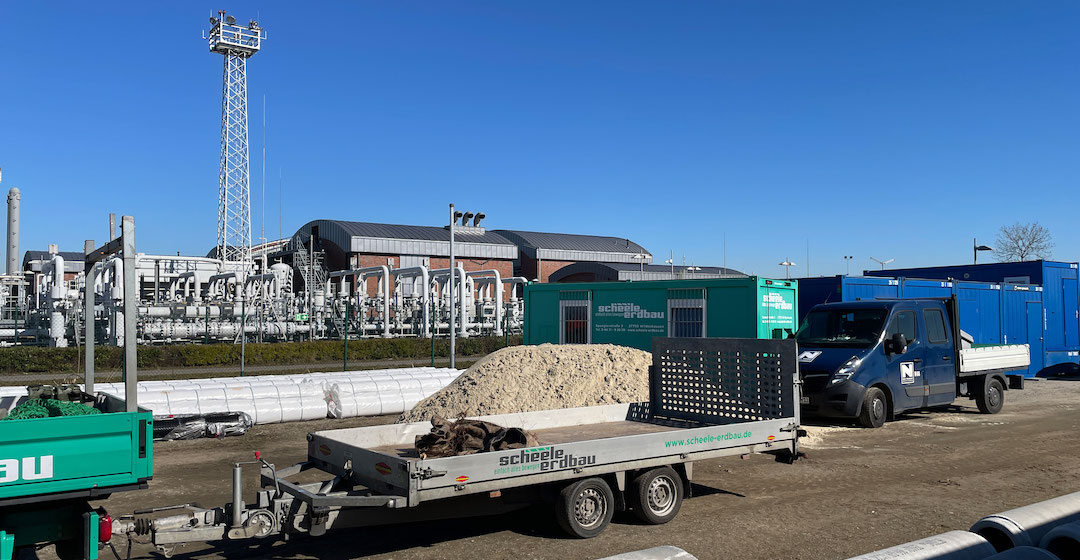
Site preparation at the Huntorf hydrogen storage site. © EWE / Hayo Seeba
(Germany) EWE AG has begun converting one of seven natural gas caverns in Huntorf, Lower Saxony, for hydrogen storage. The project is part of the major "Clean Hydrogen Coastline" initiative, which aims to integrate the production, storage, transport, and use of green hydrogen. The company has already completed initial construction work, including setting up containers and stationing construction equipment. The next steps involve large-scale site development, construction preparation, and sand deposition. Actual construction work will begin in the fall. EWE is currently in the detailed planning phase and is commencing preparatory measures for the construction of the hydrogen storage facility, with the goal of injecting and withdrawing hydrogen within the next two to three years.
+ + + + +
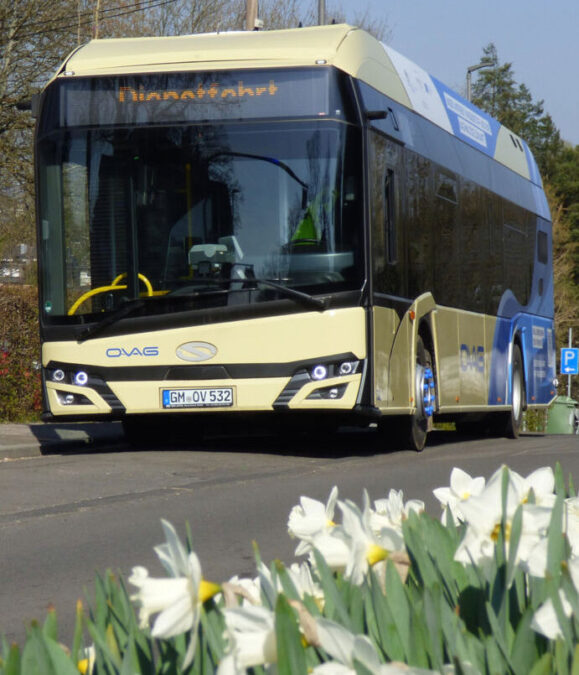
OVAG will receive 15 Solaris buses for local public transport. © Oberbergische Verkehrsgesellschaft mbH
(Germany) The Oberbergische Verkehrsgesellschaft mbH (OVAG) has put its first hydrogen buses into operation. The 15 "Urbino 12 hydrogen" vehicles from the Polish bus manufacturer Solaris Bus & Coach are stationed at the new hydrogen depot in Wipperfürth-Hämmern. The fuel cells deliver 70 kilowatts, and Solaris high-power traction batteries support the fuel cell during peak electricity demand. A 160-kilowatt central electric motor provides the drive. The five gas tanks on the roof each have a capacity of 312 liters. A fully fueled bus has a range of up to 350 kilometers (according to the manufacturer) with a consumption of 7,5 kilograms of hydrogen per 100 kilometers.
+ + + + +
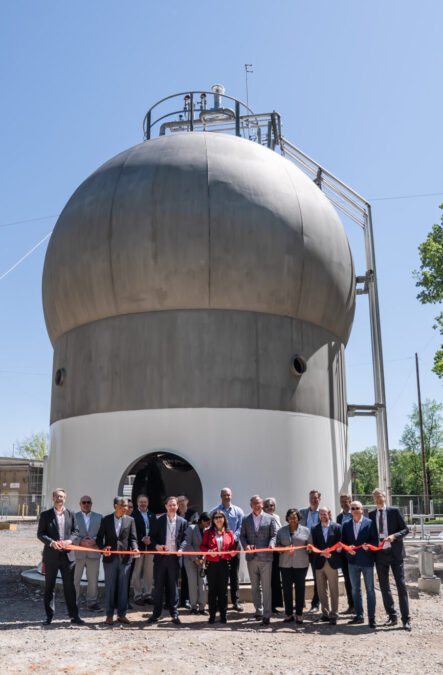
The first liquid hydrogen tank on NASA's Alabama campus. After a testing phase, the concept is expected to have a capacity of 100.000 cubic meters. © CB&I
(USA) A consortium of industry and academia has unveiled a large-scale storage concept for liquid hydrogen (LH2) at NASA's Marshall Space Flight Center (MSFC) in Huntsville, Alabama. The consortium includes US plant engineering firm CB&I, Shell International Exploration and Production, Inc., hydrogen infrastructure company GenH2 Solutions, and the University of Houston. Development of the project, funded by the US Department of Energy (DOE), began in 2021. The vacuum-free tank concept for the large-scale storage of 100.000 cubic meters of LH2 offers a significant cost advantage over conventional vacuum-insulated tanks. A smaller-scale tank has been built for testing purposes at the MSFC. This demonstration tank will significantly increase the LH2 storage capacity of the MSFC hydrogen test facility and will be used to characterize the behavior of materials under cryogenic conditions by simulating normal filling and emptying cycles and testing materials without vacuum insulation. In addition to the six-month test period, an agreement provides for the MSFC's use of the tank for a further five years. CB&I and Shell would test new insulation technologies there under non-vacuum conditions. According to CB&I, it built the first LH2 sphere for NASA in the 1960s with a capacity of 170 cubic meters. The capacity has since been increased to 5.000 cubic meters, most recently with a tank completed in 2022 at the Kennedy Space Center for the Artemis program.
+ + + + +
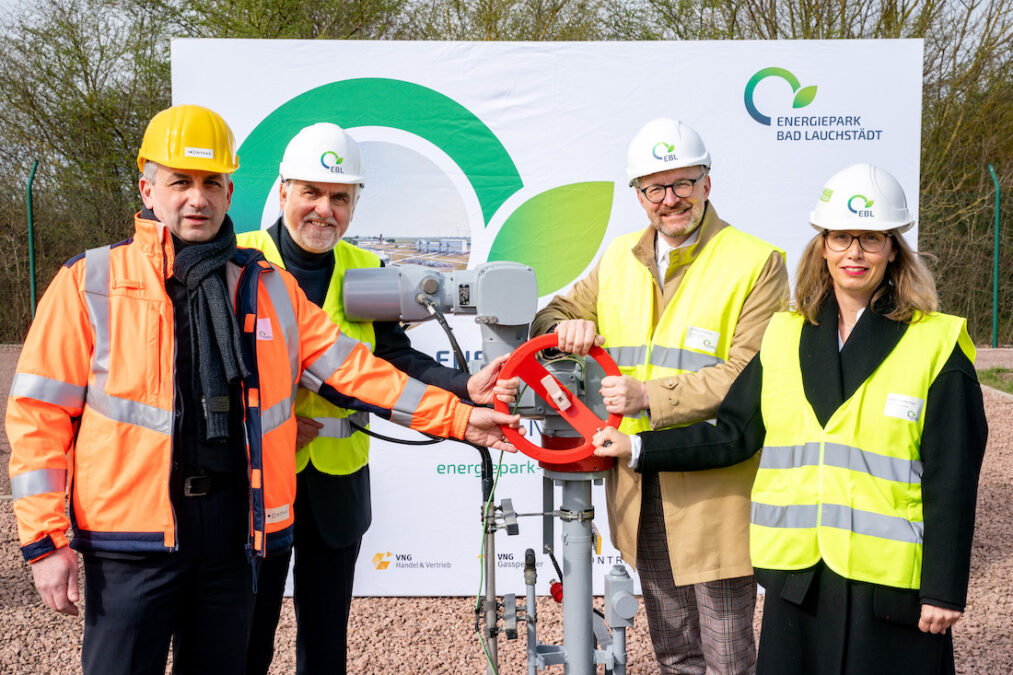
Commissioning the repurposed natural gas pipeline for the transport of hydrogen in Bad Lauchstädt (from left): Gunar Schmidt (Ontras Managing Director), Armin Willingmann (Energy Minister of Saxony-Anhalt), Thomas Kralinski (State Secretary of Saxony), Cornelia Müller-Pagel (EBL Project Manager) © Energiepark Bad Lauchstädt / Tom Schulze
(Germany) Gas transmission system operator Ontras Gastransporte GmbH has converted a 25-kilometer natural gas pipeline to hydrogen at the Bad Lauchstädt Energy Park (EBL, Saxony-Anhalt). This is the first section of the hydrogen core network in eastern Germany. The pipeline connects the electrolyzer currently under construction with the Total Energies refinery in Leuna, Central Germany. The pipeline will enable the connection of other hydrogen core network projects, such as Green Octopus Central Germany (GO) towards Magdeburg-Salzgitter, the Central German Chemical Triangle, and the Leipzig-Halle region (LHyVE). This will also make the energy park part of the European Hydrogen Backbone. "We are enabling the transport of 2.700 tons of green hydrogen annually to customers in Leuna," says Gunar Schmidt, Ontras Managing Director for Operations and Safety. After an inspection of its technical condition, some upgrades, and its disconnection from the natural gas network, the pipeline has now been approved for hydrogen transport. “As soon as the electrolysis plant starts operating and the Leuna off-site station is also operational, the entire value chain for green hydrogen will be functioning,” says Cornelia Müller-Pagel, spokesperson for the EBL consortium and Head of Green Gases at VNG AG. The first delivery is expected towards the end of the year; a wind farm for generating the green electricity required for electrolysis is already in operation. The pipeline also serves as the starting point for Ontras’ H2 start-up network. A pipeline length of approximately 600 kilometers is planned.
+ + + + +
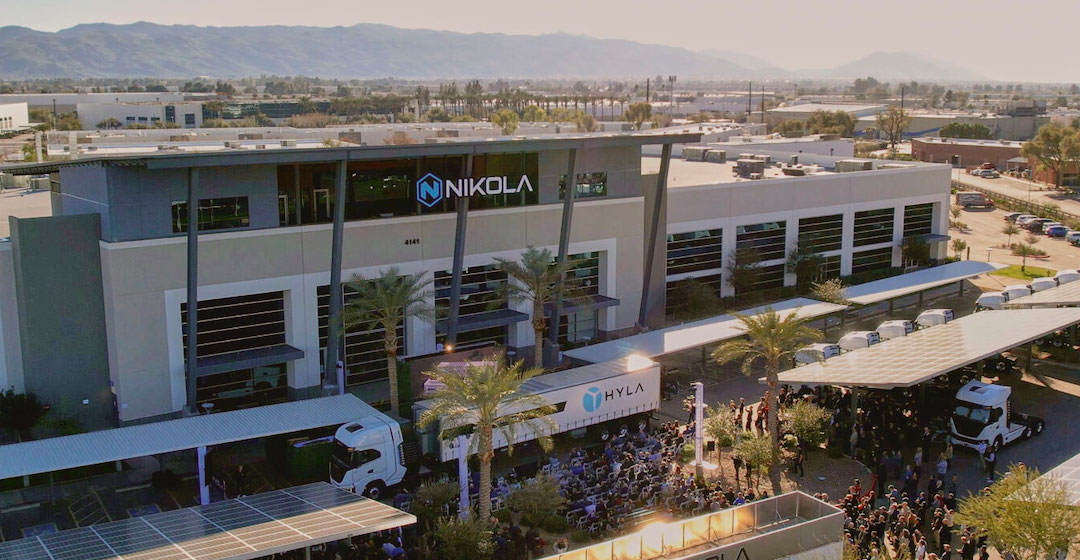
The Lucid Group is buying Nikola assets, including its headquarters in Phoenix, but explicitly not the fuel cell truck business. © Nikola Corp.
(USA) Electric vehicle manufacturer Lucid Group, Inc. plans to acquire select facilities and assets from Nikola Corporation, including Nikola's former manufacturing plant in Coolidge, Arizona, and its headquarters and product development center in Phoenix, Arizona. These facilities will expand Lucid's Arizona site by more than 884.000 square meters. The facilities include development areas with extensive battery and environmental test chambers, a chassis dynamometer, and machining equipment. Both sites are located near Lucid's factory in Casa Grande. Lucid also plans to offer employment to more than 300 former Nikola employees at its Arizona facilities. The transaction explicitly excludes the acquisition of Nikola's business, customer base, or fuel cell truck technology. The agreement is subject to approval by the U.S. Bankruptcy Court for the District of Delaware. Nikola's bankruptcy auction concluded on April 10, 2025, as part of the bankruptcy proceedings initiated in February.
+ + + + +
KfW has transferred the first tranche of a loan for the expansion of the hydrogen core network. © KfW
(Germany) H2 Amortisationskonto GmbH (AMKG) has disbursed the first funds, amounting to approximately €172 million, to 18 hydrogen core network operators to support the hydrogen rollout. In principle, the financing of the hydrogen core network is privately funded by the operators of the pipeline infrastructure. A corresponding concept was developed by the German Federal Government and enshrined in the Energy Industry Act. This is intended to prevent the hydrogen rollout from being jeopardized by excessively high charges in the initial years and therefore includes a cap on network charges for hydrogen consumers. By converting existing gas pipelines and constructing new hydrogen pipelines, an infrastructure with a total length of 9.040 kilometers is to be created by 2032. KfW is providing a loan of €24 billion via the Amortisationskonto to finance this. The next disbursement will take place in March 2026. Repayment of this interim financing will be made through privately generated network charges after the market ramp-up has been achieved. H2 Amortisationskonto GmbH (AMKG) was established as a special-purpose vehicle by the hydrogen core network operators to manage the amortization account. The shareholders of AMKG are the hydrogen core network operators and Trading Hub Europe (THE).
+ + + + +
Photo above
iStock / © Danil Melekhin



