

Germany: Nuclear fusion is not an option for the energy industry in the coming decades +++ Poland: Solaris holds a 69 percent share of the European H2 bus market +++ Germany: Associations call on the new government to establish a European hydrogen alliance +++ USA: EH2 and Titan plan to build modular production facilities for 100 MW electrolyzers +++ Germany: EWE commissions Neumann & Esser to supply compressors for hydrogen caverns +++ China: Sungrow delivers 16 alkaline electrolyzers to China Coal Ordos Energy Chemical +++ Germany: Duisburg puts eleven fuel cell buses into operation +++ Estonia: Stargate Hydrogen raises eleven million euros for precious metal-free electrolyzers +++ Germany: Researchers investigate corrosion in fuel cells +++ Scotland: Hydrasun awards contracts for the construction of a BP hydrogen filling station +++ Germany: Saxony and Northern Germany receive 154 million euros for H2 technology centers +++ Latvia: Latvenergo and H2Pro launch project for decoupled electrolysis +++ Germany: Ruhrbahn hydrogen buses begin regular service
A selection of PtX topics summarized at the end of the week
+ + + + +
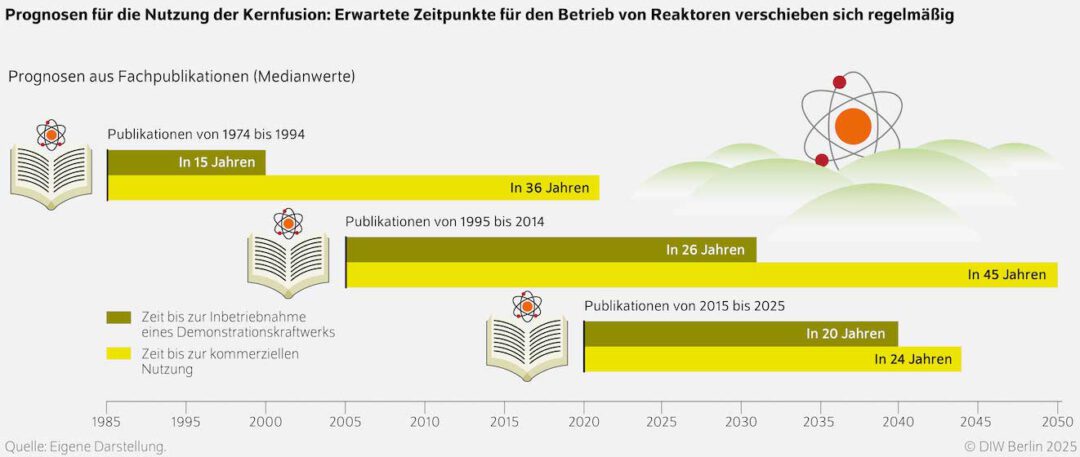
Christian von Hirschhausen: "The use of nuclear fusion for electricity and energy supply remains unforeseeable, as it has been for 70 years." The focus of the participating companies is not on the energetic use of nuclear fusion, but rather "on the further development of more useful products such as magnets and lasers." © DIW Berlin, Weekly Report 13-2025
(Germany) "Commercial use of nuclear fusion for energy production is not currently foreseeable." A concrete path to its energy use is not discernible. This is the conclusion of a study by the German Institute for Economic Research (DIW). According to the study, the "fundamental challenges remain unresolved"—despite some technological advances. "From an energy economics perspective, nuclear fusion is today 'just as far from commercial use as it was in the 1950s,'" says Christian von Hirschhausen, co-author of the study. "It is therefore irrelevant for the energy transition." The international experimental reactor ITER, with the participation of 33 countries, has been "continuously delayed" since the 1980s. Originally, a demonstration reactor was planned for the 2020s; now, commissioning is not expected before the second half of this century. Cost forecasts have increased more than tenfold: "While initial estimates were around five billion euros, figures of more than 50 billion euros are now being discussed," the analysis states. Some of the compiled facts were already expected. Nevertheless, the presumptive new Chancellor Friedrich Merz emphasized fusion energy as a great source of hope in a ZDF political discussion in November. This desire even later appeared in the CDU/CSU election manifesto : They were focusing "on research into fourth- and fifth-generation nuclear energy, small modular reactors, and fusion power plants" (page 20). Incidentally, the Austrian Ministry of the Environment had already warned against placing too much hope in small modular reactors (SMRs) in 2022: "The development should be rejected also because it would come far too late in the fight against climate change." The DIW report "Nuclear Fusion Irrelevant for the Energy Transition – Nevertheless, New Dynamics in Research Detectable" is available free of charge as a PDF (eight pages, DIW Weekly Report 13-2025).
+ + + + +
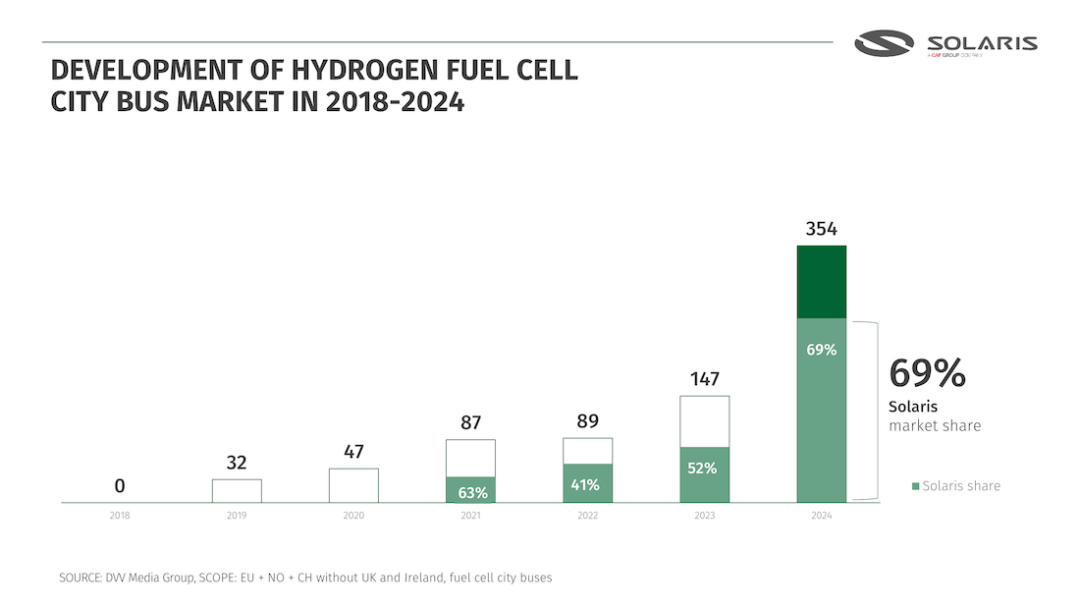
Polish bus manufacturer Solaris claims to have a 69 percent market share for hydrogen buses in Europe. © Solaris Bus & Coach sp. z oo
(Poland) According to its own figures, vehicle manufacturer Solaris Bus & Coach sp. z o.o. held a market share of just over two-thirds in the European fuel cell bus market last year. Of a total of 354 fuel cell buses in Europe, 69 percent came from Solaris (including Norway and Switzerland, but excluding the UK and Ireland). According to its 2024 annual report, the company delivered a total of 1.525 vehicles (up 4,7 percent compared to 2023), of which 544 were electric and 259 were fuel cell. Alternative drive systems (including hybrids) accounted for 83 percent, with the remainder being natural gas and diesel. Annual revenue totaled €927 million (up 13 percent).
+ + + + +
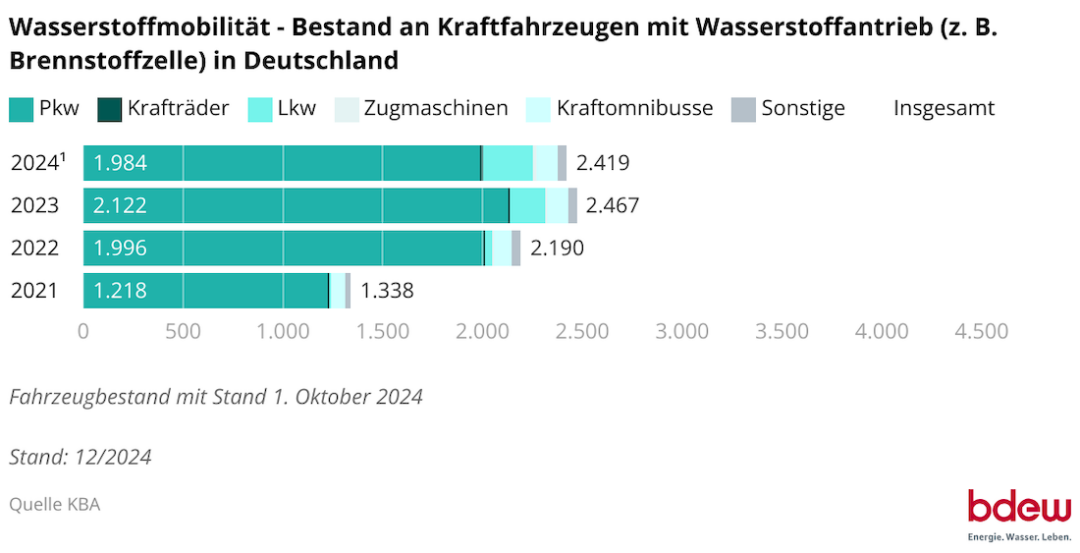
Associations call for a European Hydrogen Alliance: Stock of hydrogen-powered vehicles in Germany. © BDEW
(Germany) Around a dozen industry associations are appealing to Friedrich Merz to establish a European hydrogen alliance in a future government. The geopolitical power shifts and international competition for value creation require "a strategic approach to secure energy and technological sovereignty and to strengthen the competitiveness and resilience of our industrial base." Hydrogen plays a key role in this. Currently, there is no alliance of states at the EU level to accelerate the hydrogen rollout. Germany should therefore take the initiative and enshrine a hydrogen alliance in the coalition agreement. The goals include, for example, "revising the delegated acts on renewable and low-carbon hydrogen to improve their practicality, advocating for a globally compatible certification system, accelerating the expansion of the hydrogen backbone and subsequent corridors outside the EU, and further strengthening the EU Hydrogen Bank and other funding instruments." The full text can be found on the website of the German Association of Energy and Water Industries (BDEW).
+ + + + +
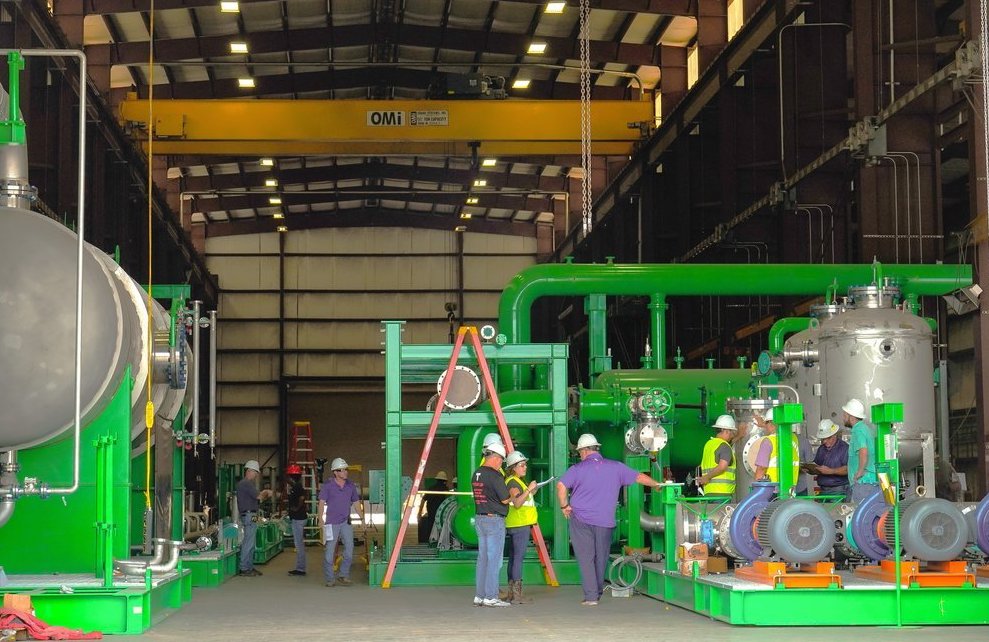
EH2 and Titan are collaborating to build 100-megawatt electrolyzers in Texas. The first plant has already been built. © Titan Production Equipment LLC
(USA) Electric Hydrogen (EH2), a manufacturer of high-performance electrolysis plants, plans to establish a production facility for its 100-megawatt electrolyzers in partnership with technology company Titan Production Equipment LLC. According to the company, manufacturing will take place at Titan's facility in Columbus, Texas, and an initial unit has already been built. "By combining our proprietary technology with Titan's expertise and facilities for manufacturing process equipment, we are able to offer a superior electrolyzer solution at half the cost of others on the market," said Raffi Garabedian, CEO and co-founder of Electric Hydrogen. To ensure rapid deployment, Electric Hydrogen's fully integrated 100-MW units will be pre-assembled and tested before delivery to the customer.
+ + + + +
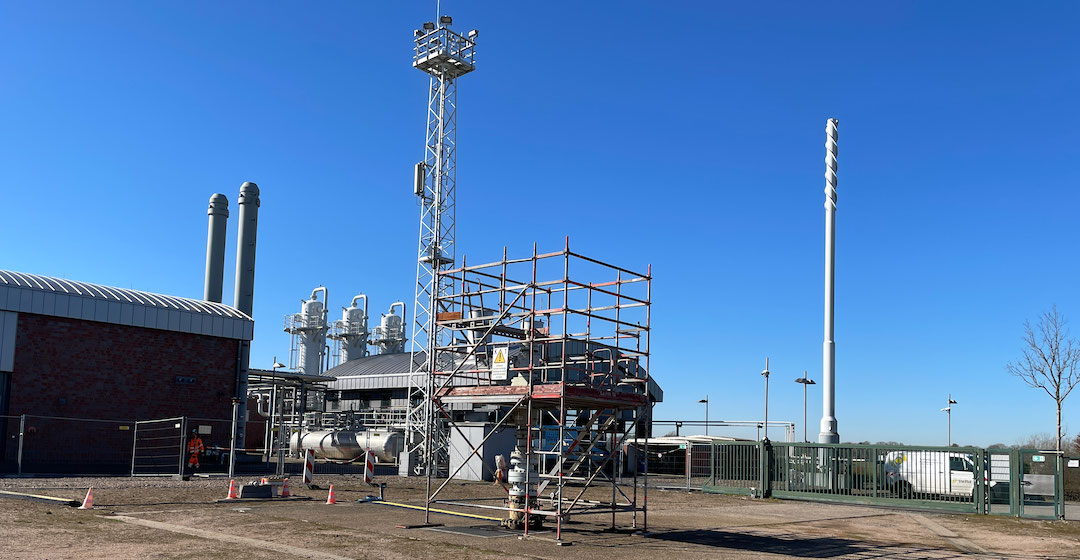
View of the cavern square in Huntorf, Wesermarsch. © EWE AG / Hayo Seeba
(Germany) EWE AG has commissioned the family-owned company Neumann & Esser to supply compressors for a hydrogen cavern in the Wesermarsch region. The compressors will be a key component for the future large-scale hydrogen storage facility in a converted natural gas cavern in Huntorf. EWE plans to store hydrogen there starting in 2027 to manage deliveries to future users more flexibly. The green gas will then be available when needed, not just when it is produced. The conversion of one of seven underground natural gas caverns at EWE's Huntorf site is part of the major "Clean Hydrogen Coastline" project, which aims to integrate the production, storage, transport, and use of green hydrogen. EWE has already demonstrated that the energy carrier can be safely stored in salt caverns at its gas storage facility in Rüdersdorf near Berlin (as we have reported several times).
+ + + + +
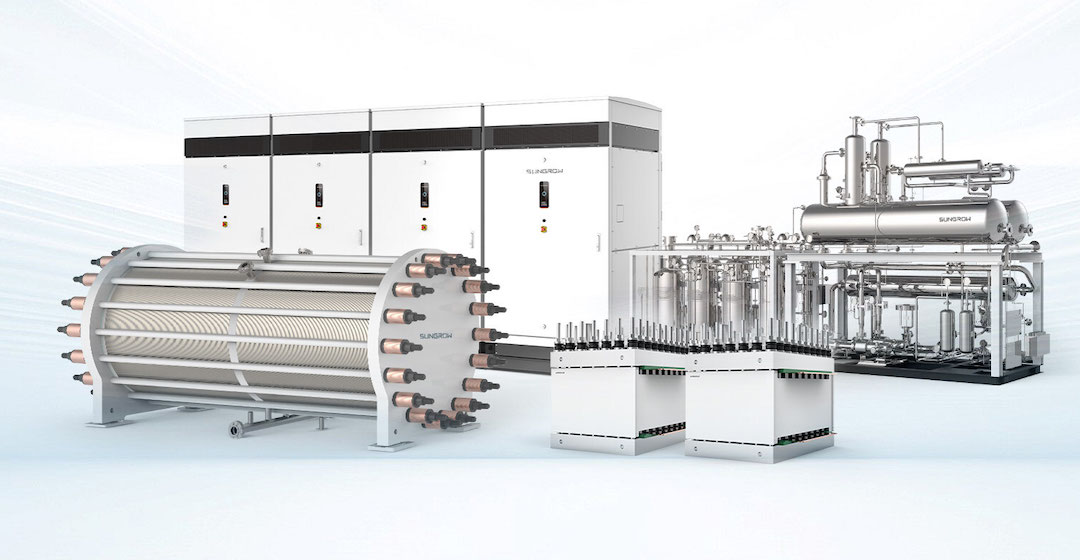
Sungrow supplies hydrogen equipment to China Coal Ordos Energy Chemical. © Sungrow
(China) The petrochemical company China Coal Ordos Energy Chemical has awarded Sungrow Hydrogen a contract to supply 16 alkaline electrolyzers (each with a capacity of 1.200 cubic meters per hour) as well as other equipment. According to the subsidiary of the Chinese inverter manufacturer Sungrow Power Supply Co. Ltd., this secures them the "largest share of the tender" for a 100.000-ton green methanol project. The project, estimated at $680 million, integrates renewable energy, hydrogen, and storage systems. Plans include wind and solar PV plants with an installed capacity of 625 megawatts, electrolyzers with an annual capacity of 21.000 tons, and methanol production on the order of 100.000 tons per year.
+ + + + +
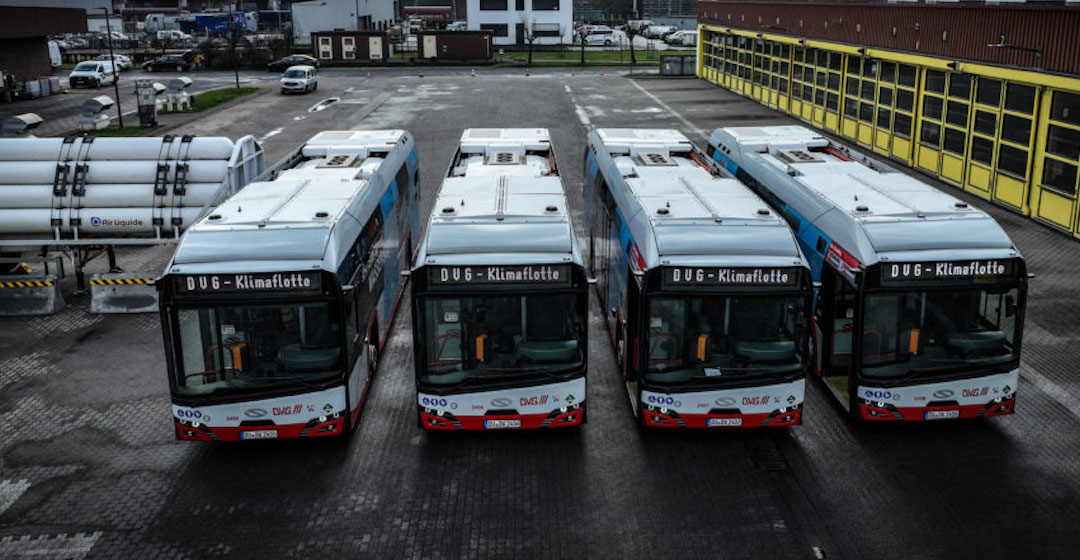
Solaris has delivered eleven Urbino 12 hydrogen solo buses to DVG. Fourteen articulated buses will expand the fleet by the end of 2025. © Solaris Bus & Coach sp. z ooSolaris
(Germany) Duisburg's public transport company, DVG, has put eleven fuel cell buses from the Polish bus manufacturer Solaris Bus & Coach sp. z o.o. into service for local public transport. A total of 25 vehicles were ordered in July 2023. The "Urbino 12 hydrogen" solo buses that have now been delivered will be followed by fourteen more "Urbino 18 hydrogen" articulated buses by the end of the year. DVG invested around €20,5 million in expanding its fleet and in the hydrogen refueling and maintenance infrastructure. The Rhine-Ruhr Transport Association (VRR) financed around €7 million of this. The infrastructure requires an investment of around €20 million, of which approximately €18 million is being subsidized by the state of North Rhine-Westphalia. Until the permanent refueling station is completed, a mobile station from the industrial gas supplier Air Liquide will serve as a temporary solution.
+ + + + +
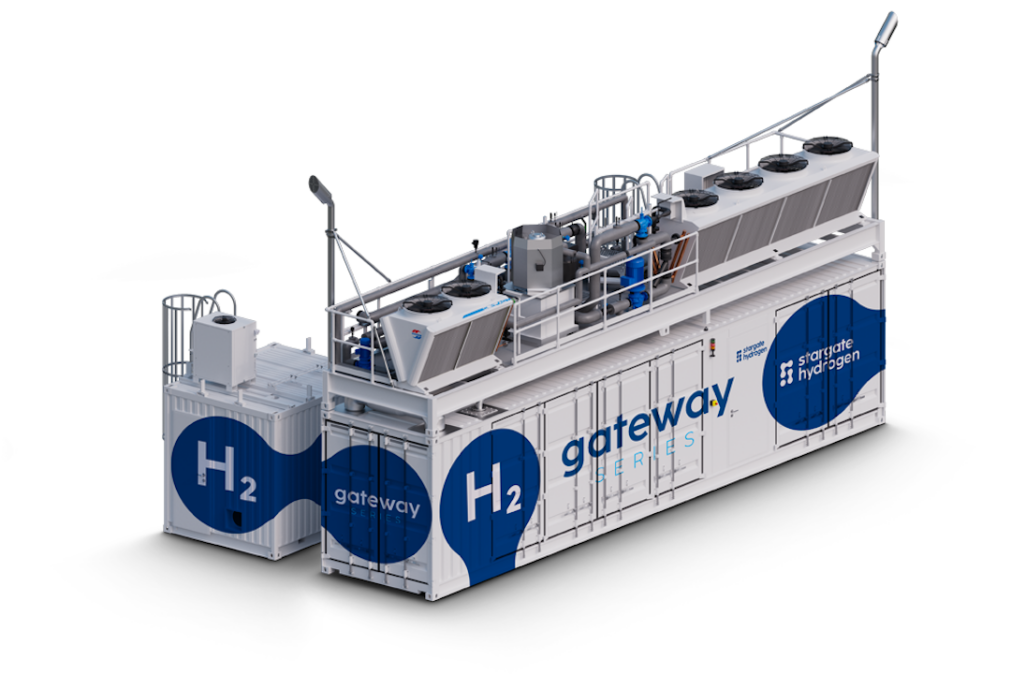
Stargate Hydrogen receives private and government funding to develop efficient electrolyzers. © Stargate Hydrogen
(Estonia) Electrolyzer manufacturer Stargate Hydrogen Solutions has raised €11 million in a financing round. The funds will be used for the further development of green hydrogen production plants, which, according to the company, will "radically reduce costs because they operate with higher efficiency compared to existing solutions." Stargate uses ceramic-based catalyst material instead of precious metals. This technology increases the reliability of hydrogen production throughout its entire life cycle and minimizes degradation. The performance of the Stargate stacks has been validated by the ZSW test center for electrolysis plants in Stuttgart. Investors from the renewable energy and utility sectors include Giga and UG Investments, as well as the government-backed SmartCap Green Fund, which is financed by the "Next Generation EU" program.
+ + + + +
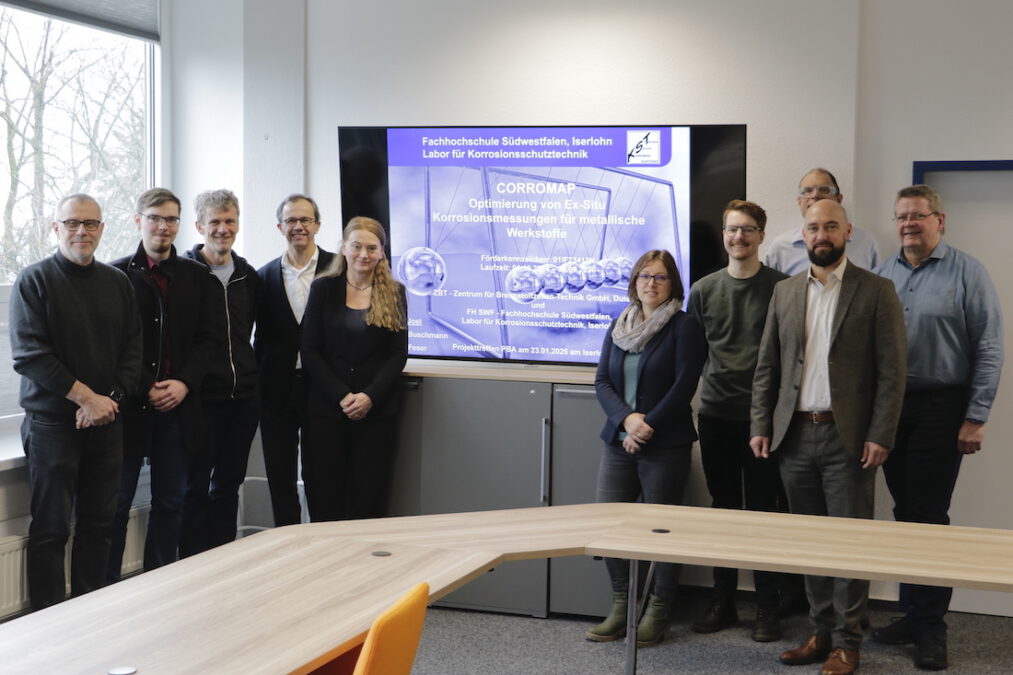
Project leader Professor Ralf Feser (4th from left) with representatives of the cooperation partners at the kick-off event for the Corromap project. © University of Applied Sciences Südwestfalen / Christian Klett
The University of Applied Sciences South Westphalia in Iserlohn and the Center for Fuel Cell Technology Duisburg (ZBT) are collaborating on a project called "Corromap" to investigate the largely unknown corrosion processes in fuel cells. "I noticed that the performance of fuel cells is related to the contact resistance of their plates," explains project manager Ralf Feser. If the contact resistance increases, the performance decreases. "We know that the resistances change due to corrosion products – that is, through reaction with oxygen," Feser continues. "But we don't know exactly how and when." Analyses of the corrosion of materials used have so far only been conducted "ex situ," meaning on opened, non-functional fuel cells. In the Corromap project, however, the research team aims to perform the measurements "in situ" within the fuel cell itself. This will involve integrating sensors. Under laboratory conditions, corrosion conditions will then be varied: hydrogen over- or undersupply, humidity, and temperature. The project's goal and final step is to integrate the sensors into fuel cell stacks that provide the necessary power for operating, for example, car engines. The goal is to prevent corrosion and thus performance losses in the fuel cell technology required for this purpose. Approaches to corrosion reduction include temperature control, as well as the optimization of materials and coatings. The Federal Ministry for Economic Affairs and Energy is supporting Corromap with approximately €500.000. The South Westphalia University of Applied Sciences and the ZBT (Center for Technology and Building Technology) are each contributing 50 percent to the funding.
+ + + + +
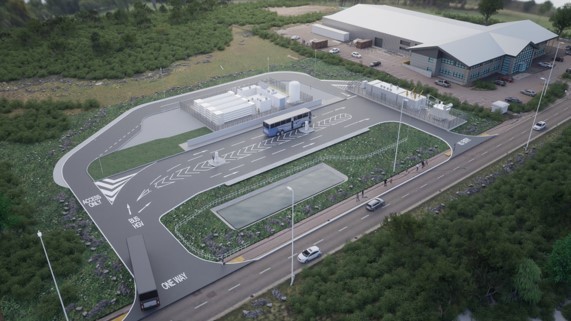
Rendering of the planned gas station in Aberdeen. © Hydrasun
(Scotland) Project developer Hydrasun Ltd. has awarded three contracts for the equipment of the “Aberdeen Hydrogen Hub.” The scalable hydrogen refueling station is a joint venture between the British oil company BP plc and Aberdeen City Council in northeast Scotland. The station is intended to eventually produce and store green hydrogen on-site. Norwegian company Nel Hydrogen, a subsidiary of Nel ASA, will supply a 2,5-megawatt PEM electrolyzer. Maximator GmbH is responsible for the high-pressure and compression technology, and Chesterfield Specialist Cylinders Ltd. for the storage system.
+ + + + +
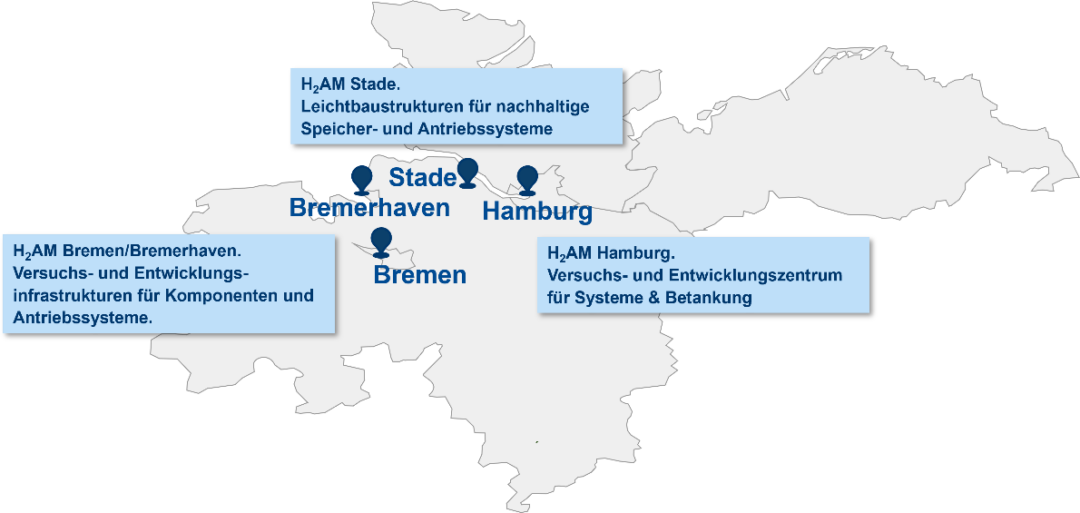
Overview of the locations of the Hanseatic Hydrogen Center for Aviation and Maritime (H2AM) in Northern Germany. © BIS Bremerhaven
(Germany) The Federal Ministry of Transport is funding the development of decentralized hydrogen innovation and technology centers (ITZ-H2) with a total of €154 million. Of this, approximately €84 million will go to Chemnitz, with the state of Saxony contributing around €14 million in co-financing. The Hydrogen Innovation Center (HIC) there supports the transformation of the supplier industry and mechanical engineering. The focus is on components, assemblies, and systems, as well as new testing methods and digital twins, particularly in the field of fuel cells and hydrogen applications. The North German cluster comprising Bremen, Bremerhaven, Hamburg, and Stade will receive €70 million. At the Hanseatic Hydrogen Center for Aviation and Maritime (H2AM), work will concentrate on the development and integration of fuel cell systems, hybrid drives, refueling concepts, and the storage and logistics of hydrogen and its derivatives. In Bremen, the German Aerospace Center (DLR) is building an "LH2 test stand" for alternative aviation fuels, while in Bremerhaven, the Technology Transfer Center (ttz) is constructing the "H2-3D test stand," a sea state simulator. The H2AM site in Stade focuses on lightweight structures for sustainable storage and propulsion systems, and the Hamburg site is home to a test and development center for systems and refueling. Organizationally, the Bremen/Bremerhaven, Hamburg, and Stade sites, with their eight operators, function as equal entities.
+ + + + +
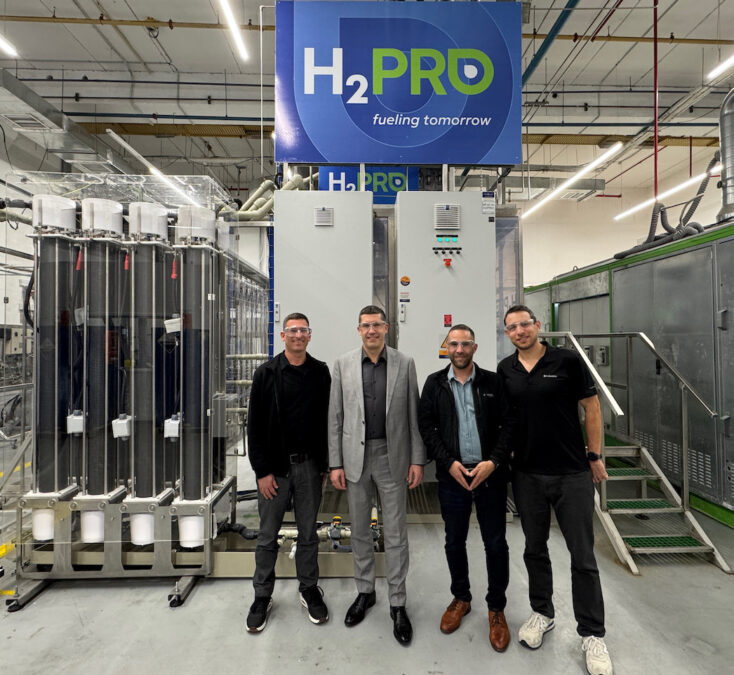
H2Pro Head of Marketing (CBO) Rotem Arad (left) and Latvenergo CEO Mārtiņš Čakste (2nd from left). © H2Pro
(Latvia) Latvia's state-owned electricity company Latvenergo AS and the Israeli start-up H2Pro plan to test a pilot project for a five-megawatt electrolyzer within Latvenergo's energy infrastructure and explore opportunities for commercial deployment in future projects. The collaboration aims to integrate H2Pro's decoupled electrolysis technology into Latvia's renewable energy sources while ensuring the long-term economic viability of green hydrogen production. According to Latvenergo, the project is not only about demonstrating technical feasibility but also about laying the foundations for a cost-effective, scalable green hydrogen economy. Decoupled electrolysis is intended to simplify the integration of intermittent energy sources such as wind and solar. Investors include Bill Gates' Breakthrough Energy Ventures fund, Temasek Holdings, ArcelorMittal, CSN, Sumitomo Corporation, and Yara Growth Ventures.
+ + + + +
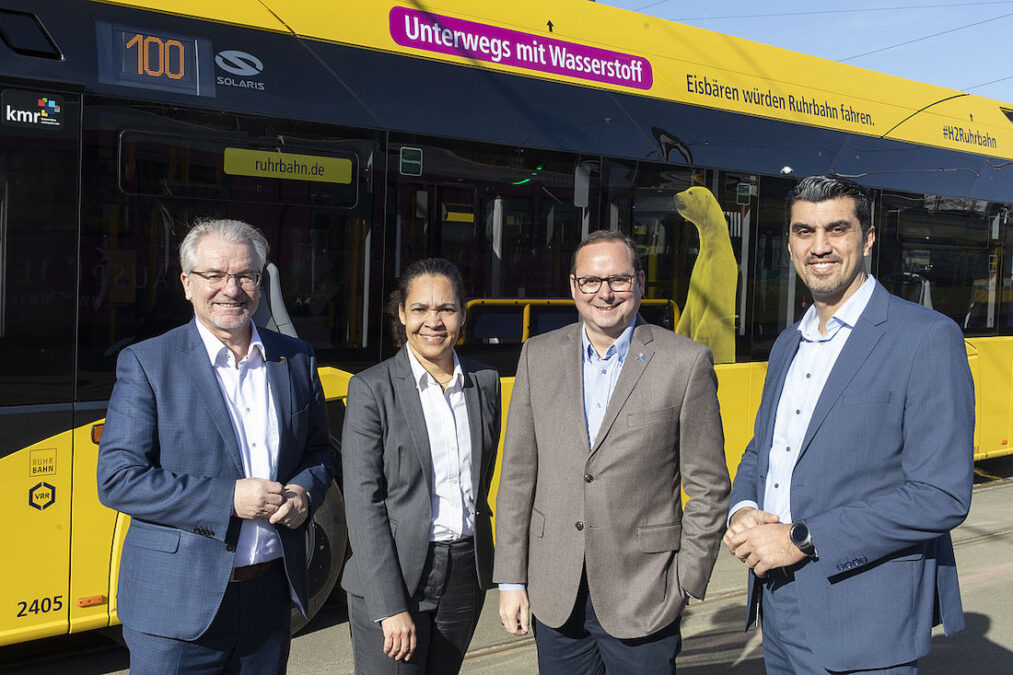
Putting hydrogen buses into operation (from left): Mayor Marc Buchholz, Linda Kisabaka (spokesperson for the management), Mayor Thomas Kufen, and Ahmet Avsar (Ruhrbahn Managing Director). © Ruhrbahn GmbH
(Germany) The first hydrogen-powered buses operated by Ruhrbahn have begun their trial run in Essen and Mülheim. In 2021, a decision was made to switch to hydrogen as the drive technology for future bus procurements. Implementation is taking place in two phases: In the first phase, 19 vehicles were ordered for Essen and Mülheim, nine of which have already been delivered, with ten more to follow by mid-2025. Before the complete switch to hydrogen begins in the second phase in 2026, the process will be reviewed and the relevant committees will be consulted again. The new vehicles consist of a total of ten articulated buses of the "Urbino 18 hydrogen" type and nine solo buses of the "Urbino 12 hydrogen" type, all manufactured by the Polish company Solaris. The procurement is being subsidized with €4,8 million by the Ministry of Transport of the state of North Rhine-Westphalia.
+ + + + +
Photo above
iStock / © Danil Melekhin



