

Netherlands: Eems Energy Terminal assesses interest in continuing operation of the LNG terminal and building a hydrogen terminal +++ Poland: MPK Poznań orders five hydrogen buses from Solaris +++ Great Britain: Energy sector executives' confidence in climate targets declines +++ Finland: Verso Energy plans to build an eSAF factory in Oulu +++ Germany: Siemens, Guofu Hydrogen, and RCT GH aim to further develop the global hydrogen market +++ Mexico: CalYan XGH orders 100.000 tons of green hydrogen from Aslan +++ Netherlands: Evonik and VoltH2 plan to accelerate green hydrogen production in Delfzijl +++ Germany: Schott receives SPIE Catalyst Award for producing glass using hydrogen +++ Germany: Stadtwerke Ulm/Neu-Ulm cancel "H2 Factory" and seek a new concept +++ Norway: Vireon receives ten million euros for H2 filling stations +++ Germany: Uniper and Kyuden cooperate on hydrogen and ammonia trading +++ Germany: Quest One anticipates cutting 120 jobs
A selection of PtX topics summarized at the end of the week
+ + + + +
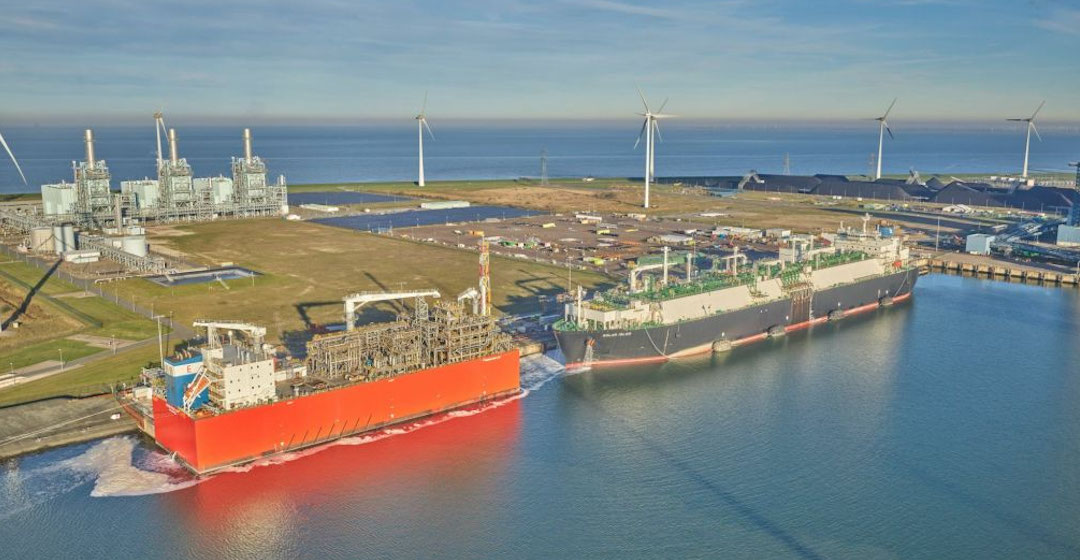
Eems Energy Terminal is promoting the continued operation of the LNG terminal and wants to push ahead with the construction of a hydrogen terminal. © Eems Energy Terminal BV
(Netherlands) Eems Energy Terminal is assessing interest in further imports of liquefied natural gas (LNG). The aim is to determine whether the floating terminal in the port of Eemshaven will remain operational in the long term. It was developed by the joint venture between Gasunie and Vopak in September 2022 to increase energy security in the Netherlands and Northwest Europe immediately following the disruption of Russian gas supplies. Operation was originally planned to continue until the end of 2027. A final decision on its continued use is expected by the end of this year. In addition to its expansion, Gasunie and Vopak are also jointly exploring options for constructing a hydrogen import terminal in Eemshaven, according to the company. The Netherlands and other European countries will remain largely dependent on gas imports for years to come, the company argues in favor of continued operation.
+ + + + +
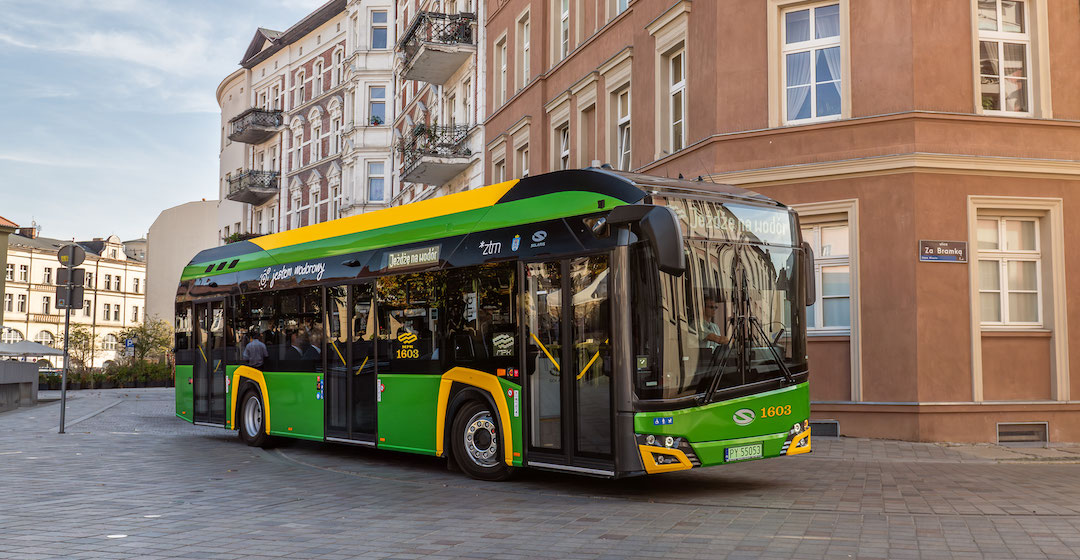
Poznań's public transport company will receive five hydrogen buses of the type "Solaris Urbino 12", with four more optionally ordered. © Solaris Bus & Coach
(Poland) The public transport company MPK Poznań has signed a contract with Solaris Bus & Coach for the delivery of five Urbino 12 hydrogen buses and intends to exercise an option for four more. According to the manufacturer, the vehicles are scheduled to enter service on the streets of Poznań from April 2026, expanding the city's existing fleet of 25 Urbino buses. MPK Poznań currently operates around 330 city buses, 300 of which are from Solaris, including 58 electric and 25 hydrogen vehicles. In January, MPK ordered 17 electric articulated buses from Solaris.
+ + + + +
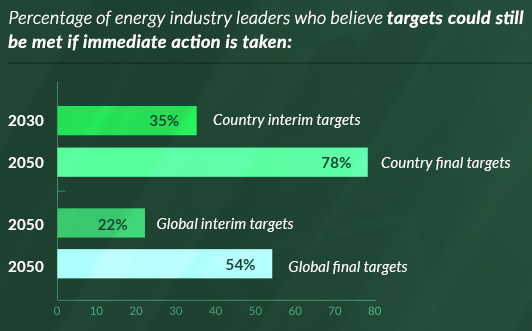
Bad mood in the British energy industry: 35 percent of executives believe that their country's climate targets can be achieved by 2030 - but only if politicians take immediate action. © Energy Industries Council (EIC)
(Great Britain) Only 16 percent of 68 energy sector executives surveyed, primarily in the UK, believe the world can achieve net-zero emissions targets by 2050. Last year, that figure was 45 percent. Only 14 percent believe their own country will meet its 2030 climate targets, compared to 16 percent in last year's report. This is according to the "Net Zero Jeopardy Report II" by the London-based Energy Industries Council (EIC), an association with 950 energy sector members. "Industry leaders warn of fundamental obstacles, including unstable policies, weak investment, and slow project approvals," says author Mahmoud Habboush. Other obstacles to progress include a lack of clear legal frameworks, financial uncertainty, bureaucratic hurdles, and delays in project implementation up to the final investment decision (FID). For example, current offshore wind installations in the UK are “largely the result of investment decisions made ten years ago.” Investors remain hesitant to provide support, particularly in areas such as hydrogen, carbon capture and storage, and grid infrastructure. Only 10 percent of offshore wind projects and 9 percent of hydrogen projects have achieved Financial Investment Designation (FID), compared to 21 percent for oil and gas projects. “The energy sector faces real challenges in translating commitments into projects,” said Stuart Broadley, CEO of the Energy Information Centre (EIC). “If the UK government is serious about meeting its interim targets, it needs to listen carefully” to what industries across the value chain are saying. The report will be published on February 26, 2025.
+ + + + +
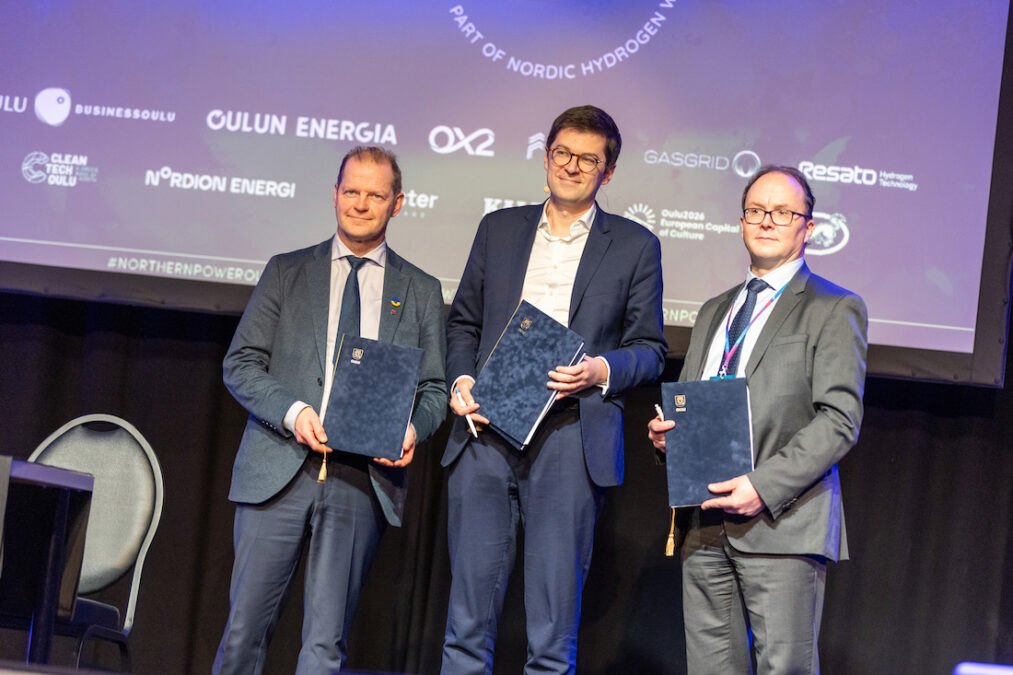
The Finnish city of Oulu and the French Verso Energy SAS are cooperating on the construction of a hydrogen and eSAF production facility in the port area (from left): Mayor Ari Alatossava, Antoine Huard (CEO Verso Energy) and Marko Mykkänen (CEO Port of Oulu). © City of Oulu
(Finland) The city of Oulu and the French energy provider Verso Energy SAS have signed a cooperation agreement for the construction of a hydrogen processing plant. According to reports, Verso Energy plans to build an eSAF (electronic sustainable aviation fuel) factory with an annual production capacity of 80.000 tons in the port area of the EU's northernmost major city. The investment is estimated at €1,4 billion, and 250 jobs are expected to be created. The agreement is valid until the end of 2026. During this period, both parties will work on implementation and the distribution of responsibilities. Verso Energy has several hydrogen and synthetic fuel plants for aircraft and ships in the planning stages in France. The plant planned for Oulu is one of the company's first projects abroad. Starting this year, the fuel used at the EU's largest airports must contain a two percent blend of eSAF. Currently, there are no production facilities for this in Finland. In this country, “the land use planning process can be carried out in parallel with a company’s project planning, which offers more flexibility compared to some other countries,” emphasizes Marko Kilpeläinen, head of the municipal environmental services of the city of Oulu.
+ + + + +
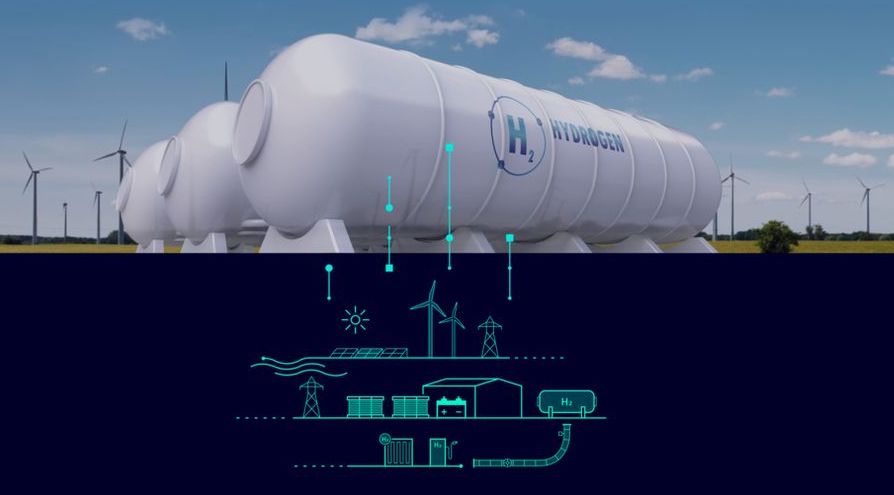
Siemens, Guofu Hydrogen and RCT GH Hydrogen want to conquer the global hydrogen market. © Siemens AG
(Germany) Siemens AG, the Chinese company Guofu Hydrogen Energy Equipment Co., Ltd., and RCT GH Hydrogen GmbH plan to jointly develop a hydrogen value chain. According to a letter of intent, the project encompasses both the manufacturing of electrolyzers and the production of green hydrogen. Siemens will become the preferred supplier and technology partner for Guofu Hydrogen's expansion plans. This includes the development and engineering of Guofu's electrolyzers and the equipping of new electrolyzer manufacturing plants, starting in Germany. RCT GH Hydrogen, as the technology partner, will lead the engineering, procurement, and construction of state-of-the-art hydrogen production plants. The companies' portfolios and expertise are expected to set new standards for the efficiency and scalability of electrolyzers, says Axel Lorenz, CEO of Process Automation at Siemens. Guofu Hydrogen anticipates that the collaboration will significantly accelerate its expansion into global markets and strengthen its position as a leading provider of green hydrogen solutions, says CEO Pinfang Wu. RCT GH Hydrogen will contribute its expertise in hydrogen plant construction and system integration, while Siemens will supply products and services. The agreement also covers electrification and building technology, communications, and cybersecurity.
+ + + + +
CalYan XGH orders 100.000 tons of green hydrogen from Aslan. © Aslan Energy Capital
(Mexico) California-based CalYan XGH Inc. has ordered sustainably produced hydrogen from Aslan Energy Capital. Under the agreement, Aslan will be responsible for delivering 100.000 tons annually to the Southern California border, while CalYan will handle distribution and infrastructure within California. The energy carrier will be produced at the Aslan Net-Zero Energy Mexico (ANEM) project, a solar-powered facility for the production of green hydrogen and green ammonia. The site is a 35.000-hectare area in Caborca, Sonora, Mexico, near the port city of Puerto Lobos. Commissioning is scheduled for 2028. According to a press release from last summer, the project will be developed over a ten-year period in four phases, with Phase 1 expected to produce nearly 600.000 tons of green ammonia per year. Capacity will double in Phase 2 by 2030. ANEM is intended to serve the domestic market in Mexico, with surpluses being transported to the USA by rail. Aslan Energy Capital, a subsidiary of LNG Alliance Pte Ltd, Singapore, is a portfolio company for project development, operation, and new energy facilities, focusing on the green hydrogen and ammonia value chain.
+ + + + +
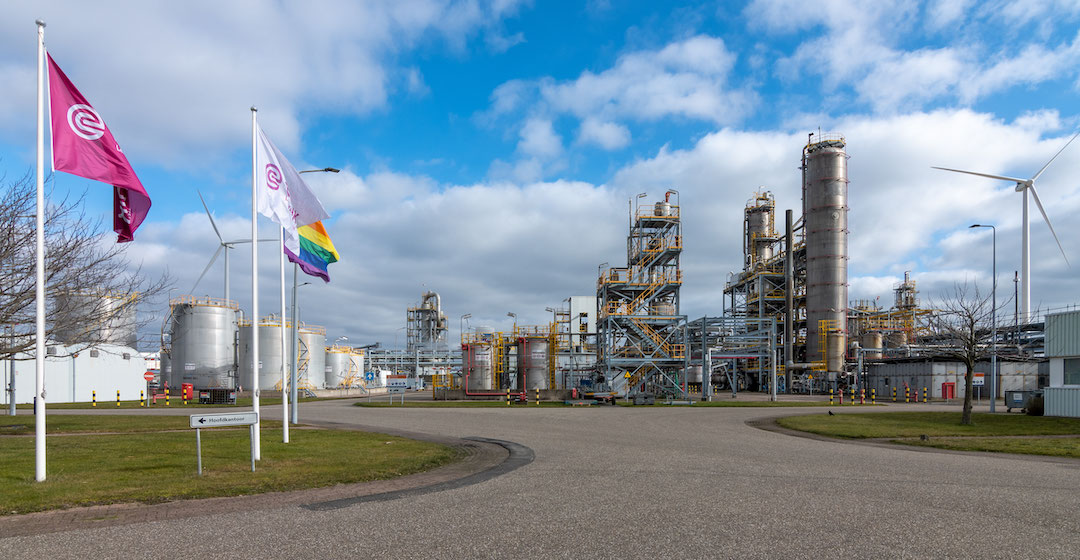
VoltH2 is to build a 50-megawatt electrolyzer in the Delfzijl chemical park near Evonik's hydrogen peroxide plant (photo). © Evonik Industries AG
(Netherlands) VoltH2, a Dutch developer and operator of green hydrogen plants, will build a 50-megawatt electrolyzer near the hydrogen peroxide (H2O2) plant of chemical company Evonik Industrial AG at the Delfzijl Chemical Park. Once completed, Evonik will meet a significant portion of its hydrogen needs from the plant, which is scheduled to go into operation at the end of 2027. It will be the first industrial-scale green electrolysis plant in the northern Netherlands. In the medium term, Evonik's remaining hydrogen needs will continue to be met by its own conventional on-site production until green hydrogen is available at all times. VoltH2 will also build a trailer-mounted hydrogen refueling station on the Evonik site. The hydrogen will then be available to other VoltH2 customers around the clock.
+ + + + +
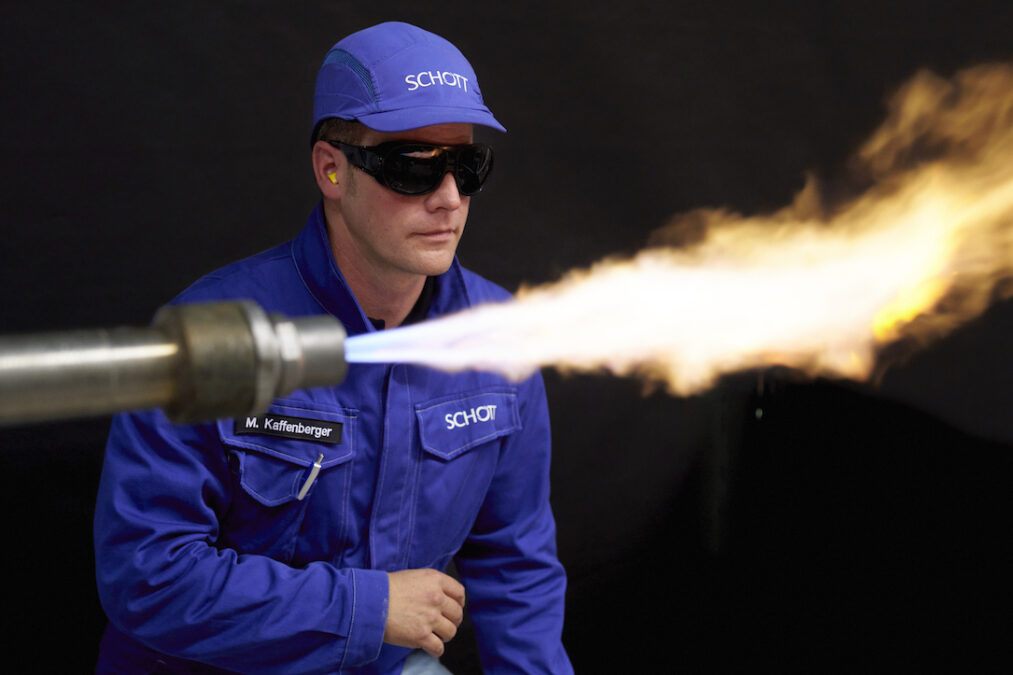
Matthias Kaffenberger, hydrogen expert and head of the “H2 Industries” research project at Schott. © Schott AG
( Germany) Schott AG, a manufacturer of specialty glass, has received the SPIE Catalyst Award for its industrial developments in the production of optical glass using 100 percent hydrogen as a fuel source. Six years of research advanced the project from small-scale trials to large-scale production, achieving a seamless transition from natural gas to hydrogen while maintaining consistently high glass quality. A three-day continuous operation last March demonstrated that glass can be produced in this way without any loss of quality (as previously reported ). The SPIE Catalyst Award recognizes Schott's pioneering work in decarbonizing high-temperature glass melting – a process that requires temperatures of up to 1.700 degrees Celsius. The company has thus "set a new benchmark for sustainability in glass production." Schott's infrastructure, including a 5.000-cubic-meter hydrogen furnace and adapted burner systems, enables stable melting with hydrogen. The tests showed that hydrogen can completely replace natural gas. To date, Schott has used gray hydrogen due to limited access to green hydrogen.
+ + + + +

The SWU is looking for concepts for the development of hydrogen projects. © SWU Stadtwerke Ulm/Neu-Ulm GmbH
(Germany) The Ulm/Neu-Ulm municipal utility company (SWU) has abandoned plans to build a two- to three-megawatt electrolysis plant near the Center for Solar Energy and Hydrogen Research (ZSW). The "H2-Factory" project will not be implemented after a lengthy negotiation phase, the company stated. "The project goals could not be achieved jointly by the project partners," it said. No further details regarding the reasons were given. SWU is "now developing new concepts and examining other options" to redirect the already committed funding of three million euros from the European Regional Development Fund (ERDF) and the Ministry for the Environment, Climate and Energy to a project at a different location. SWU is currently in the process of acquiring funding for an electrolysis project on the Neu-Ulm side of the border. The company plans to promote research into climate-neutral hydrogen production in the region by building electrolyzers. Currently, there is no hydrogen content in the municipal utility's gas networks. However, work is underway to prepare the natural gas network for large-scale distribution using hydrogen.
+ + + + +
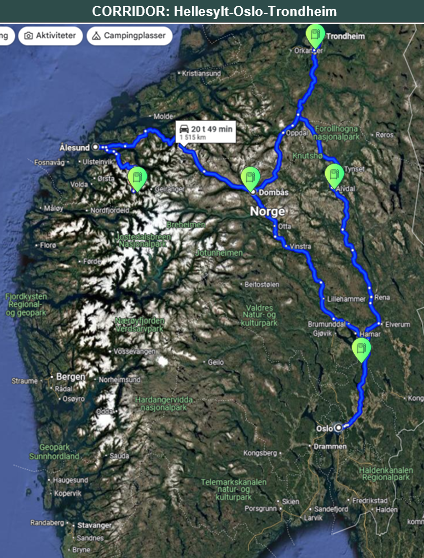
Once the stations are completed, truck drivers will be able to refuel with hydrogen on two routes between Oslo and Trondheim. © Vireon AS
(Norway) Vireon AS has received ten million euros to build Norway's first hydrogen refueling corridor. The grant, awarded by the Norwegian state financing agency Enova, will support four stations between Trondheim and the capital, Oslo. These stations will be built primarily for heavy commercial vehicles and will offer green hydrogen at 350 and 700 bar. To ensure redundancy, the corridor will allow truck drivers to travel between the two cities on two different routes. The funding will primarily be used to purchase a fleet of hydrogen transport tanks that will carry the energy carrier from the production sites to the refueling stations. This is an important milestone in Vireon's plan to establish a Nordic network of hydrogen refueling stations for heavy commercial vehicles, says CEO Per Øyvind Voie. Vireon AS, a subsidiary of Norwegian Hydrogen AS founded in 2023, operates hydrogen refueling stations for heavy goods vehicles in the Nordic countries.
+ + + + +
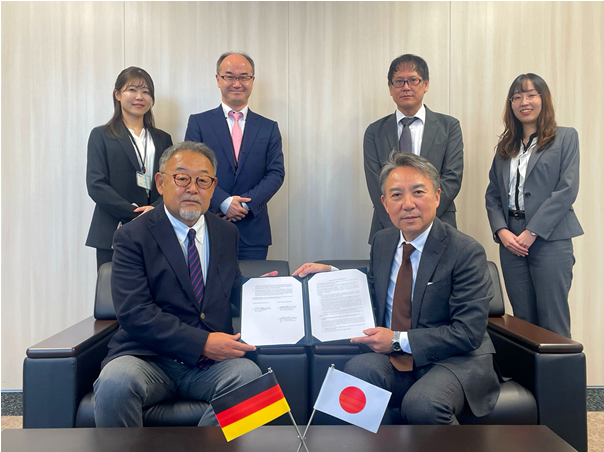
Signed the letter of intent in Fukuoka, Japan: Yukitaka Kurata (Uniper, front left), Takashi Mitsuyoshi (Kyuden, front right). © Uniper SE
(Germany) Uniper SE and the Japanese Kyuden International Corporation plan to collaborate in the areas of hydrogen and ammonia trading, renewable energies, and carbon capture, utilization, and storage (CCUS). The partnership is intended, among other things, to help unlock further opportunities for the Kyuden Group to expand its business activities in Europe. At the same time, Uniper will accelerate its business development in Asia, "where our company possesses in-depth expertise," says Andreas Gemballa, CCO of Global Origination at Uniper.
+ + + + +
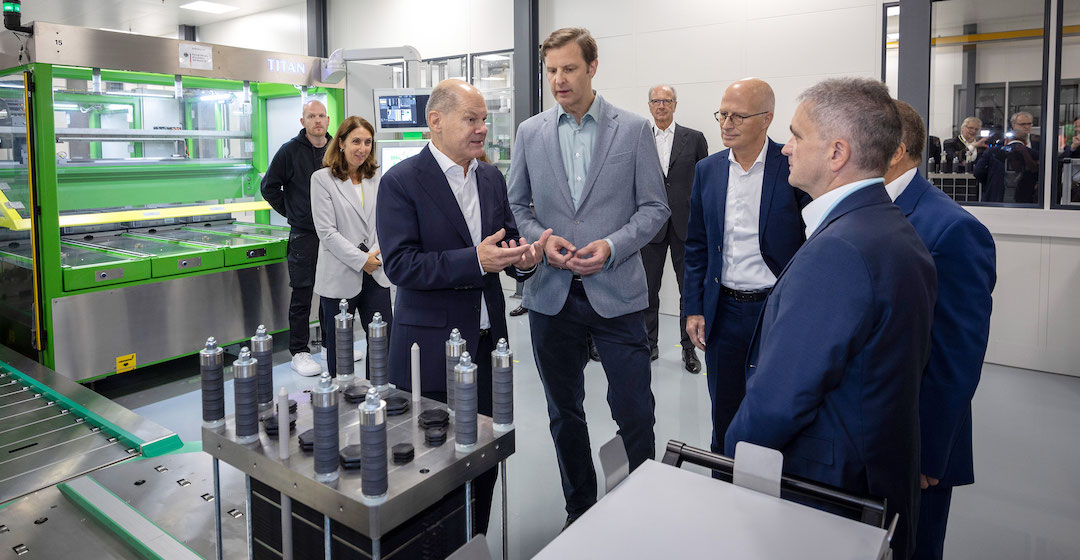
In October 2024, Quest One GmbH opened a factory for electrolysis stacks in Hamburg in the presence of Federal Chancellor Olaf Scholz and Hamburg's First Mayor Peter Tschentscher. © Quest One GmbH
(Germany) The management of Quest One GmbH anticipates that 120 jobs will be cut at its Augsburg and Hamburg locations. This is to be achieved, if possible, without compulsory redundancies. "The growth of the global hydrogen economy has so far fallen significantly short of industry expectations and the plans outlined in the German and European hydrogen strategies," says CEO Michael Meister. The company now intends to "increase its own competitiveness and align its internal capacity with the current market situation." Quest One plans to simplify workflows, structures, and processes, thereby reducing costs. Quest One expects savings in the low to mid-double-digit millions.
+ + + + +
Photos
iStock / © Danil Melekhin



