

Finland: P2X Solutions orders green electricity from Fortum for hydrogen production +++ Korea: Amogy opens office in Pangyo +++ Germany: Feasibility study on hydrogen infrastructure for North and Central Hesse +++ USA: Fuel Cell Energy builds fuel cell power plant for baseload electricity +++ Finland: Ren-Gas orders methanization reactor from MAN for Tampere +++ Chile: KfW supports Chile with 100 million euros in the development of a green hydrogen economy +++ Sweden: Lhyfe receives funding for 10 MW hydrogen production +++ Germany: Lower Saxony funds hydrogen campus Salzgitter with 2,5 million euros +++ Australia: Ballard sells two 70-ton trucks to transport company +++ Germany: Researchers work on hydrogen production using plasma cracking
A selection of PtX topics summarized at the end of the week
+ + + + +
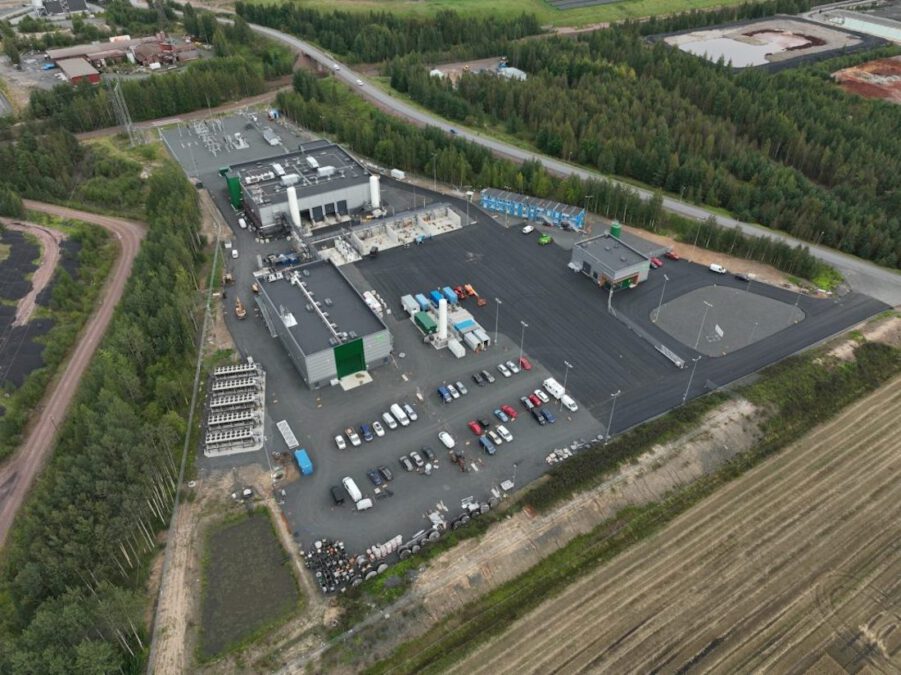
The plants are currently being started up in Harjavalta in western Finland. The electrolyzer comes from Dresden-based Sunfire GmbH, and a methane plant was supplied by Finnish Q Power Oy. © P2X Solutions Oy
(Finland) P2X Solutions Oy and the energy company Fortum have signed a five-year power purchase agreement. The company intends to use this agreement to produce green hydrogen at its Harjavalta site in southwestern Finland, in accordance with the EU Renewable Hydrogen Regulation (RFNBO). The agreement includes a guarantee of origin from Fortum and runs until the end of 2029. The 20-megawatt plant is currently being commissioned. In October 2024, P2X Solutions commissioned the Swiss technology company ABB to install an energy management system for its large-scale green hydrogen and synthetic methane production plant in Harjavalta. A few months earlier, P2X had signed an agreement stipulating that Enersense International Plc would be responsible for operational and maintenance services. Enersense has been a co-owner of P2X Solutions since February 2022. In June 2024, the Swiss energy company Alpiq acquired a 54,9 percent stake in the company through a capital increase. P2X Solutions aims to achieve a cumulative production capacity of one gigawatt by 2031.
+ + + + +
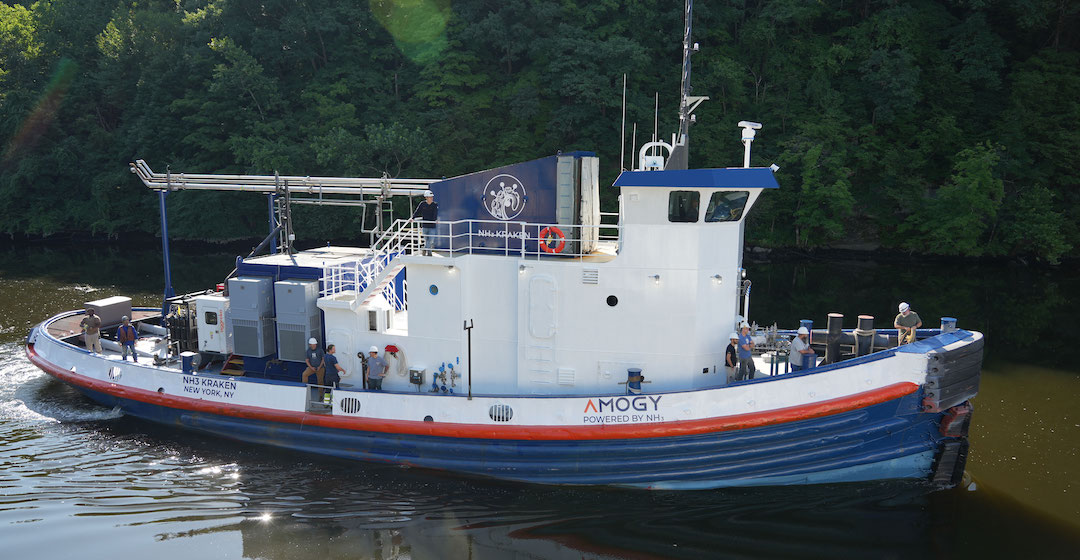
In September 2024, Amogy demonstrated its technology with the NH3 Kraken tug converted to ammonia propulsion. © Amogy Inc.
(Korea) Amogy Inc. is expanding its operations into South Korea. With the opening of an office near Seoul in the "Pangyo Techno Valley," considered the country's Silicon Valley, the company aims to increase its presence with investors and move closer to key supply chains for ship and hydrogen technology. Amogy develops ammonia-powered propulsion systems for ships and launched its first tugboat converted to this technology in September 2024. Partners include SK Innovation, Samsung Heavy Industries, HD Hyundai, Hanwha , SV Investment, and Korea Zinc. CEO and co-founder Seonghoon Woo stated that the South Korean network in manufacturing, shipping, and hydrogen and ammonia technologies has already been instrumental in accelerating Amogy's growth. This expansion lays the foundation for a stronger presence in the region. Korea's status in ammonia and fuel technologies, along with its "sound national policies supporting the clean-tech economy," were key factors in the decision to locate there. Furthermore, South Korea, with three world-leading shipyards, is "at the forefront of maritime innovation and the development of hydrogen technologies." The country aims to generate two percent of its electricity from hydrogen and ammonia by 2030, and seven percent by 2035.
+ + + + +
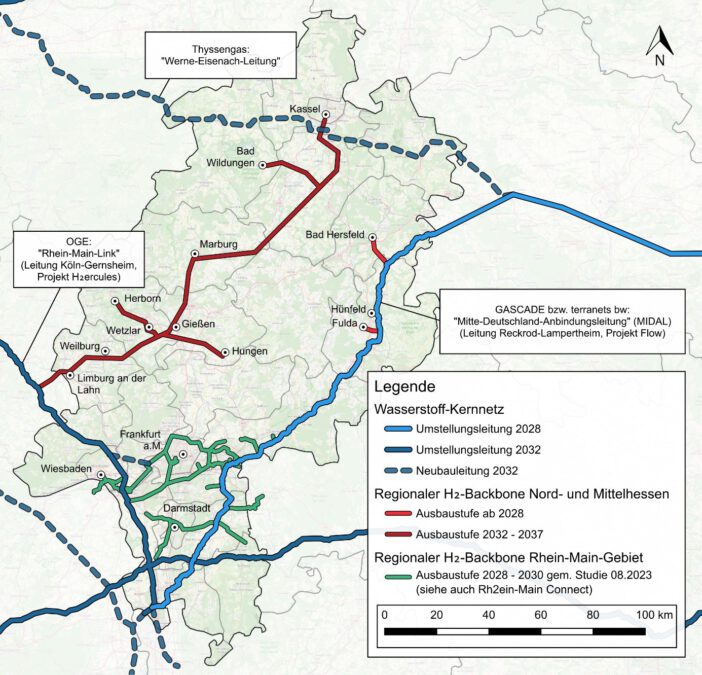
A study shows how hydrogen can be distributed from the core network in the North and Central Hesse region to the area. © Hessian Ministry of Economic Affairs, Energy, Transport, Housing and Rural Areas
(Germany) The German state of Hesse is to be connected to the planned hydrogen core network via the "H2ercules" and "Flow" pipelines, as well as the "Werne-Eisenach pipeline." A study prepared by the North and Central Hesse region in cooperation with gas network operators outlines how the hydrogen can be further distributed across the region. Based on anticipated demand, regional production potential, possible import volumes, and taking into account the existing gas network infrastructure, the analysis outlines a pipeline route from the Lahn Valley to the Kassel area, supplemented by local branch lines to supply large commercial consumers. The route includes both newly constructed sections and repurposed gas pipelines. A complete hydrogen supply via the existing gas network is not initially possible, as customers will still need to be supplied with natural gas through the current networks, according to the Hessian Ministry of Economic Affairs. The costs for these approximately 280-kilometer-long regional sections are estimated at between 245 and 300 million euros. The project involved the Hydrogen Unit of the Hessian State Energy Agency, Ernst & Young Real Estate GmbH, 15 gas distribution network operators, and four long-distance gas pipeline operators. The " Technical Feasibility Study for the Development of a Regional Hydrogen Backbone in Northern and Central Hesse " is available free of charge as a PDF.
+ + + + +
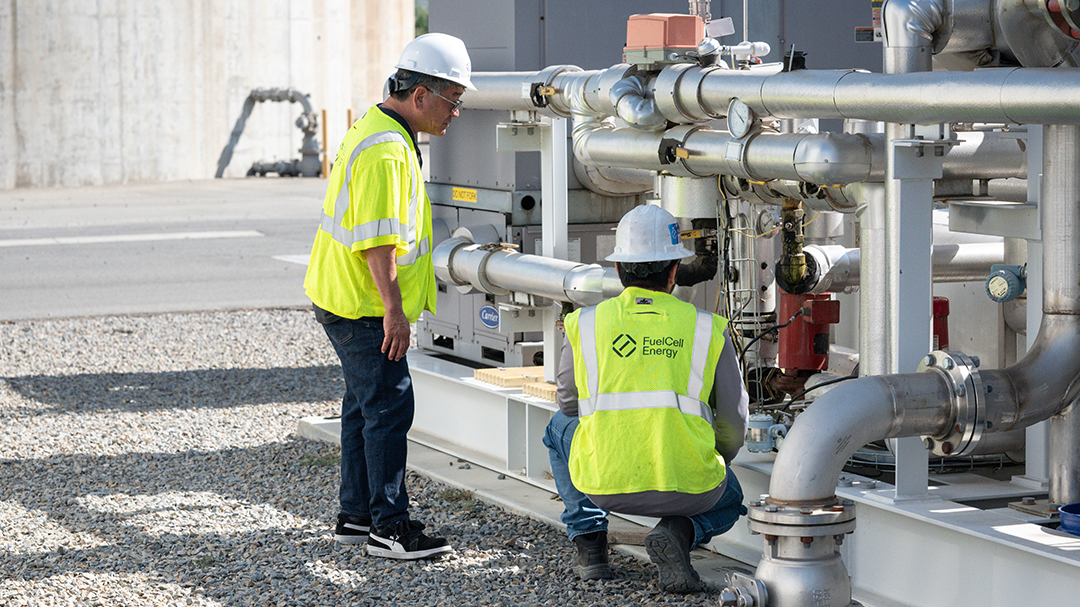
Fuel Cell Energy plans to build a 7,4-megawatt fuel cell power plant in Connecticut that will provide baseload electricity. © Fuel Cell Energy
(USA) Fuel Cell Energy, Inc. will build a 7,4-megawatt fuel cell power plant in Hartford, Connecticut. The plant will eventually feed baseload renewable energy into the local power grid. Local utilities Eversource and United Illuminating will be the customers under a 20-year power purchase agreement (PPA). The energy will improve the public power grid in a key load range serving significant commercial and industrial areas in the region, the company said. "Fuel cells are ideal for urban environments because they are space-saving, quiet, and emission-free, delivering decentralized, resilient, and reliable power," said Jason Few, President and CEO of Fuel Cell Energy. Other such plants in Connecticut support the power grid, a microgrid at the US subbase New London, and various decentralized energy solutions. In Korea, the Hwaseong Baran Industrial Complex fuel cell power plant, which has been in operation since 2013, supplies approximately 135.000 households with electricity and 20.000 households with hot water for heating, using 42 fuel cell modules and a capacity of 58,8 megawatts.
+ + + + +
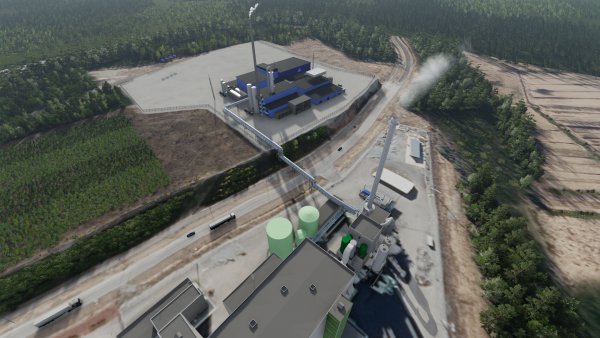
Graphic representation of the e-methane plant planned by Ren-Gas in Tampere, Finland. © Nordic Ren-Gas Oy
(Finland) Nordic Ren-Gas Oy has ordered a catalytic methanization plant from MAN Energy Solutions for the conversion of green hydrogen and captured biogenic CO2 into renewable e-methane. MAN is responsible for the design, manufacturing, delivery, installation supervision, commissioning, and performance testing of the plant in Tampere, from the initial design to final performance validation. Ren-Gas plans to produce e-methane there for heavy-duty road transport and maritime shipping. The methanization reactor will use green hydrogen and approximately 40.000 tons of carbon dioxide captured annually from the flue gases of the Tarastenjärvi waste incineration plant. The yield is projected to be around 200 gigawatt-hours of fuel and 180 gigawatt-hours of district heating for Tampere annually. The plant is scheduled to go into operation in 2027.
+ + + + +
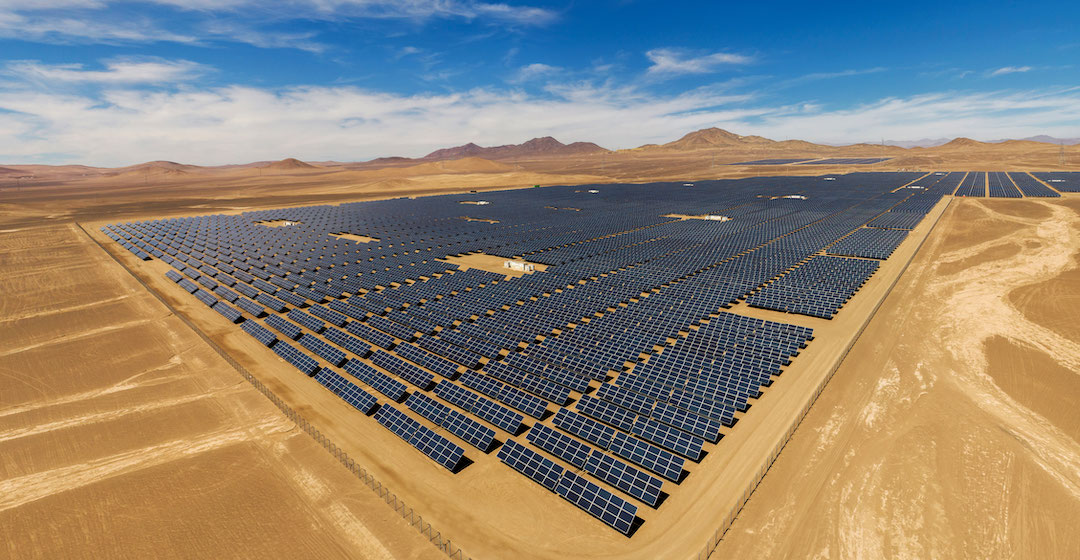
With its large land areas, sunny deserts and strong winds, Chile offers excellent conditions for generating green electricity for the development of a competitive hydrogen economy. The picture shows the 40 megawatt PV power plant "Chañares" of the Italian energy group Enel SpA in the Chañaral region in the Atacama Desert. © Enel SpA
(Chile) The German state-owned development bank KfW, acting on behalf of the Federal Ministry for Economic Affairs and Climate Action (BMWK), has signed a €100 million loan agreement with the Republic of Chile to support the development of a green hydrogen economy . Chile is represented by the Ministry of Finance and the Economic Development Agency Cooperación de Formento de la Producción (CORFO). The loan is part of the European Global Gateway Renewable Hydrogen Funding Platform. This platform provides financing for private and public investments and comprises a total of €1 billion, which CORFO uses to refinance banks or provide guarantees to them. The banks, in turn, extend loans to hydrogen projects. Financing is provided along the entire value chain, including electrolyzers, processing plants (e.g., for ammonia), transport infrastructure for the industrial use of green hydrogen (e.g., in steel production), and factories for manufacturing electrolyzers. The KfW financing is intended to have a "structural impact" in order to mobilize private capital for Chilean green hydrogen projects on an industrial scale. Later, the distribution of green hydrogen to European customers will also be facilitated within the framework of hydrogen partnerships.
+ + + + +

Lhyfe receives funding for hydrogen production in Sweden. © Lhyfe
(Sweden) French hydrogen producer Lhyfe has received a grant of 130 million Swedish kronor (11,3 million euros) from the Swedish Environmental Protection Agency (Klimatklivet) for a second production facility with a capacity of ten megawatts. According to the company, this will allow for the production of 4,4 tons of hydrogen per day. The site is located in Vaggeryd, Jönköping County, in the south of the country. The town is strategically located between Stockholm, Gothenburg, and Malmö, near major transport hubs such as the E4 motorway and National Route 40, as well as nearby logistics centers. The plant is scheduled to go into operation in 2027. The funding covers approximately 35 percent of the total investment. The plant will supply a number of hydrogen refueling stations currently under construction in the region. Lhyfe received the same amount of funding last year for a similarly sized plant in Trelleborg.
+ + + + +
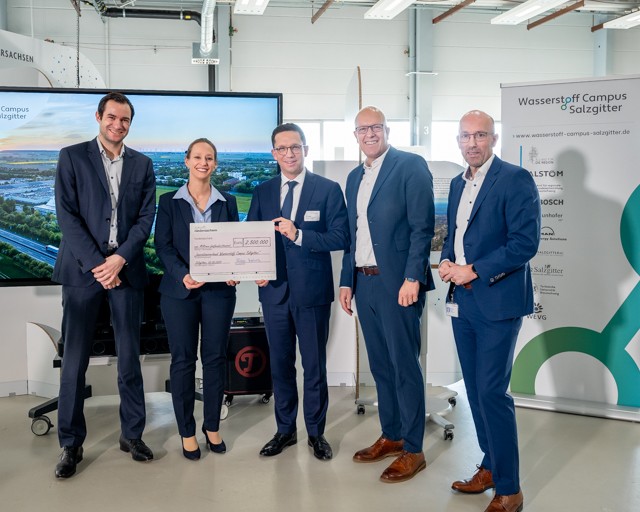
Handing over the funding notice: (from left) Christoph Imdahl (Head of the Hydrogen Campus Salzgitter office), Sabrina Zellmer (Deputy Director of the Fraunhofer IST and spokesperson for the joint project), Falko Mohrs (Minister for Science and Culture), Christoph Herrmann (Chairman of the Board of the Hydrogen Campus Salzgitter eV) and Michael Gensicke (Director of the Fraunhofer IST and Managing Director of Robert Bosch Elektronik GmbH). © Fraunhofer IST
(Germany) The Fraunhofer Institute for Surface Engineering and Thin Films IST will receive approximately €2,5 million from the Lower Saxony Ministry of Science and Culture for research projects at the "Hydrogen Campus Salzgitter," which are being conducted jointly with the Technical University of Braunschweig. A key focus will be on the further development of innovative hydrogen technologies and their production processes, as well as on the development of "digital simulation models for integrated value chains in the future hydrogen economy," says Sabrina Zellmer, Deputy Director of the Institute and spokesperson for the joint project. The research will focus on, among other things, the establishment of hydrogen supply chains, the decarbonization of industry and urban areas, the flexible production of components for fuel cells and electrolyzers, and fuel cell mobility. The Hydrogen Campus is located on the grounds of the Bosch Elektronik GmbH plant. "With the Hydrogen Campus, we are taking a significant step towards a sustainable future at Lower Saxony's third-largest industrial location, creating new training and further education opportunities and thus a solid foundation for future-proof jobs in the hydrogen economy," says Mayor Frank Klingebiel. The members of the association are Allianz für die Region GmbH, Alstom Transport Deutschland GmbH, the Fraunhofer Institute for Surface Engineering and Thin Films IST, Ingenieurbüro Zammit GmbH, the Peine district, MAN Energy Solutions SE, Robert Bosch Elektronik GmbH, Salzgitter AG, the city of Salzgitter, the Technical University of Braunschweig, TLK-Thermo GmbH, the VDI Braunschweig district association, and WEVG Salzgitter GmbH & Co. KG. The funding of the accompanying scientific research at the Salzgitter Hydrogen Campus is part of the "Future Lower Saxony" program, through which the state government and the Volkswagen Foundation have allocated a total of 145 million euros for research projects.
+ + + + +
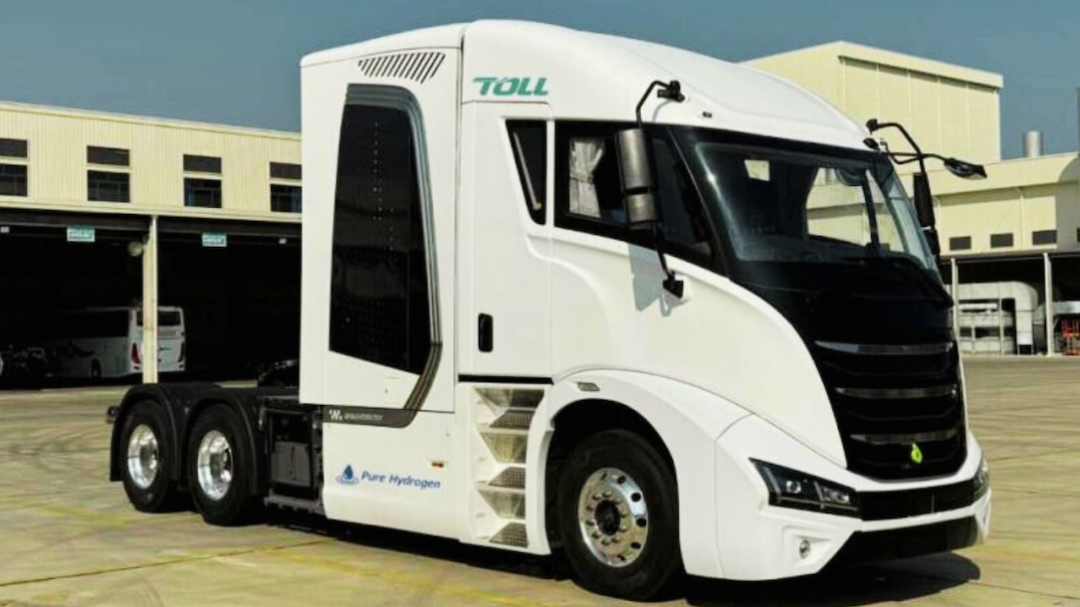
The fuel cell powered “Taurus” has a payload of 70 tons. © Ballard Power Systems
(Australia) Transport provider HDrive has received an order for two "Taurus" trucks. The 70-ton, fuel cell-powered vehicles from US manufacturer Ballard Power Systems will go to freight company TOLL Transport. According to Ballard, the vehicles were developed by the Chinese commercial vehicle manufacturer Wisdom. The truck has a maximum range of 1.000 kilometers, is scheduled for delivery by the end of 2025, and will then be deployed in the state of Victoria. The "Taurus" is already in operation in Australia with Barwon Water and PepsiCo. With its gross payload of 70 tons, it is the largest clean-fuel truck approved for Australian roads.
+ + + + +
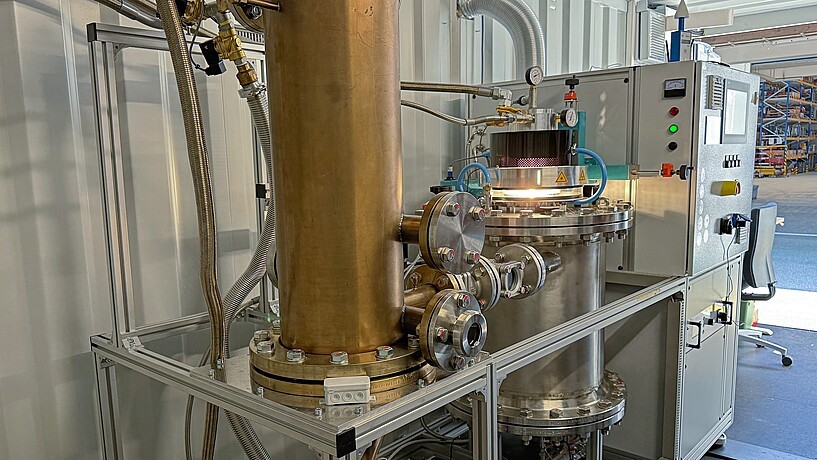
Using plasma cracking, the research partners at the Tiefstack site in Hamburg want to investigate the splitting of methane into hydrogen and carbon black. © HAW Hamburg
(Germany) Researchers are using a process called "plasma cracking" to split methane into its components, hydrogen and solid carbon particles (carbon black), using microwaves. Because the process takes place in the absence of oxygen, the scientists say, no CO2 is produced, making it "CO2-negative." If the carbon black is bound and stored long-term, it can be permanently removed from the cycle. The targeted microwave radiation directed at the methane bonds requires less energy than other technologies, such as steam reforming or electrolysis. Initial testing will be conducted with conventional natural gas. In the future, biomethane will be used as the feedstock. The technology can be scaled through the modular interconnection of multiple units and, thanks to microwave technology, can be flexibly started up and shut down. In addition to investigating plant operation, the project aims to examine product quality, process stability, and energy and CO2 balances. Project partners of the research project MEDEA (Methane Decarbonization using Microwave Low Temperature Plasma Cracking) are the Competence Center for Renewable Energies and Energy Efficiency (CC4E) of the Hamburg University of Applied Sciences (HAW), Iplas GmbH and Hamburger Energienetze GmbH.
Photo above
iStock / © Danil Melekhin



