

India: AM Green and DP World develop ammonia and methanol supply chain +++ Canada: Pause in subsidies for zero-emission vehicles +++ Netherlands: Gasunie prepares for hydrogen transport +++ USA: Subsidies also for hydrogen produced with nuclear power
A selection of PtX topics summarized at the end of the week
+ + + + +
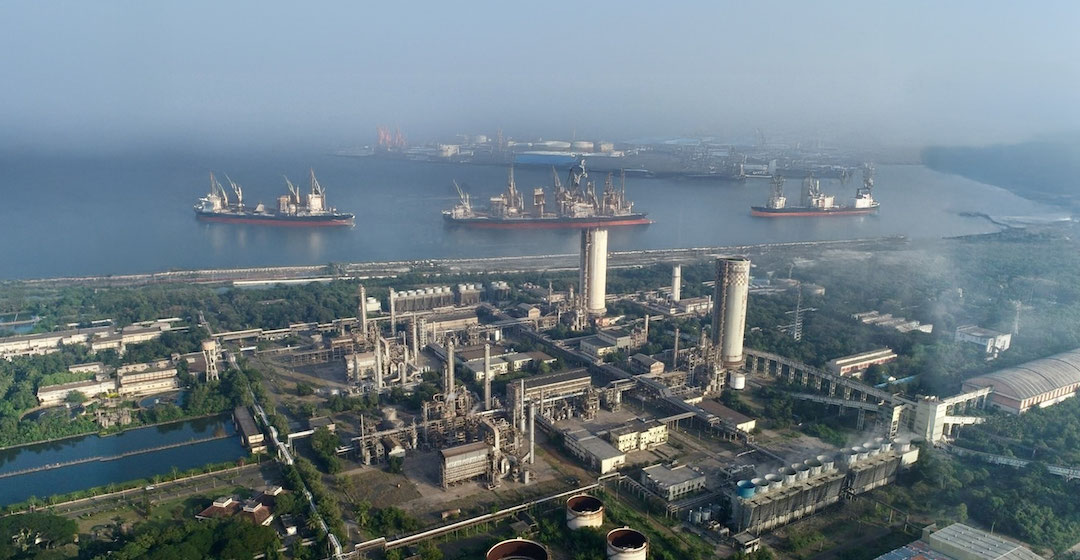
AM Green Ammonia factory and infrastructure at the port of Kakinada, India. © AM Green Ammonia
(India) AM Green has partnered with logistics company and one of the world's largest port operators, DP World, to establish a sustainable supply chain for green fuels and chemicals. According to a letter of intent, the companies plan to develop a logistics and storage infrastructure to enable the global export of one million tons of green ammonia and one million tons of green methanol per year. This will involve further developing port infrastructure in AM Green's Net-Zero Industrial Clusters, establishing bunkering infrastructure for green ammonia and methanol in Dubai, India, and Southeast Asia, and creating terminal and supply infrastructure in the European Union, the Far East, and the United Arab Emirates. AM Green is already developing several projects in India that utilize renewable energy sources such as solar, wind, and hydropower to produce sustainable aviation fuel (SAF), green ammonia, green hydrogen, chemicals, and biofuels. The company aims to reach a production capacity of five million tons by 2030. AM Green has already made a final investment decision for a green ammonia project in Kakinada, Andhra Pradesh, on the east coast of India (as we reported).
+ + + + +

Canada's Minister of Transport and Trade Anita Anand is pleased "with the success of the iZEV program" - but is now putting it on pause. © Government of Canada
(Canada) The government has temporarily halted the "Incentives for Zero-Emission Vehicles" (iZEV) program, introduced in 2019 to promote zero-emission vehicles – or more precisely, it has "paused" it, as the Ministry of Transport officially calls it. The program was originally scheduled to end on March 31, 2025, but it appears that Canadians have already claimed all the allocated funds. According to a positive list, the subsidies were used almost exclusively for the purchase or leasing of electric and hybrid vehicles (BEV; PHEV) of various model years with electric ranges of 50 kilometers or more. The only fuel cell vehicle listed is the Toyota "Mirai XLE" of various model years. Purchase subsidies reached up to 5.000 Canadian dollars (3.390 euros) in individual cases. Since the program's inception, more than 546.000 vehicles have been subsidized, according to the Ministry, helping Canada achieve a new ZEV market share of 11,7 percent in 2023 (2019: 3,1 percent). A record high of 16,5 percent was reached in the third quarter of 2024. Canadian companies and organizations that purchase or lease zero-emission trucks can continue to benefit from the iMHZEV zero-emission medium and heavy-duty vehicle program, which runs until March 31, 2026, provided funds last until then.
+ + + + +
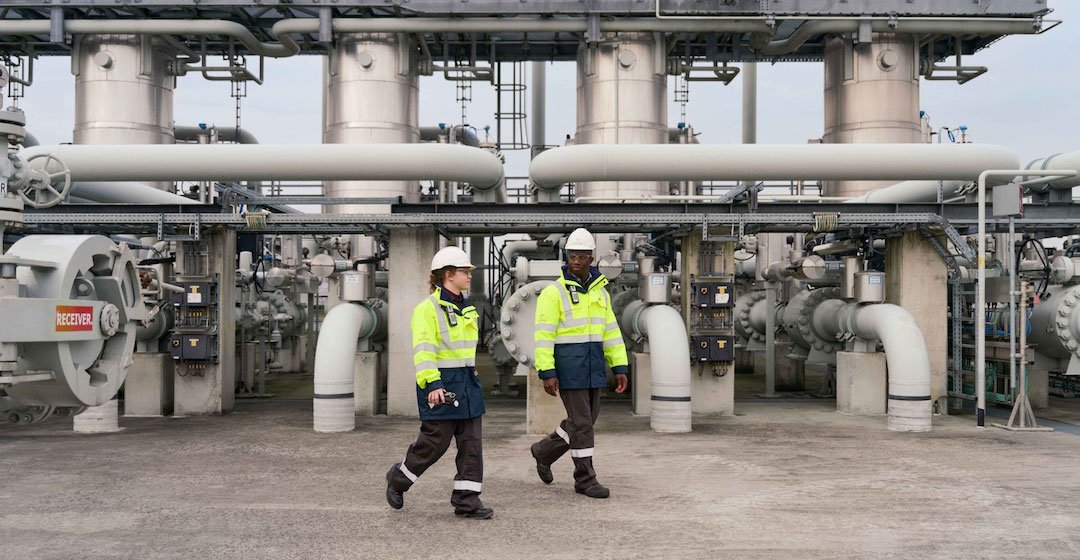
According to CEO Willemien Terpstra, Gasunie is developing "new energy infrastructures, including for hydrogen transfer and CO2 transport." © Gasunie BV
(Netherlands) The state-owned energy company Gasunie BV has signed contracts with several companies for the replacement, maintenance, and expansion of stations and facilities for both current and future gas flows. "The shift in focus from natural gas to new energy carriers such as hydrogen and biomethane, as well as heat and CO2, requires a new approach to procurement, maintenance, and infrastructure development," the company stated. The agreements with the three contractors, DES (Dura Vermeer/Equans), Bilfinger, and Hanab, represent an investment volume of €2,5 billion over a ten-year period.
+ + + + +
(USA) The US Department of the Treasury and the Internal Revenue Service (IRS) have published the final rules for the tax credit for clean hydrogen production. This resolves the contentious issue of whether and to what extent nuclear power can be used in electrolysis to qualify for tax credits as a hydrogen producer . It is now clarified that, under certain conditions, electricity from nuclear power plants with a maximum generation capacity of 200 megawatts (MW) qualifies as "clean," and the hydrogen produced with it can be subsidized if there is otherwise a risk that the reactor would be shut down due to lack of economic viability. According to Reuters, reactors in the US typically have a capacity of 300 MW to over 1.000 MW. Under the regulations, reactors that restart after being shut down can also receive credits. The law stipulates that the value of the tax credit is based on the life-cycle greenhouse gas emissions of the hydrogen production. To qualify as clean hydrogen, the life-cycle greenhouse gas (GHG) emissions of the hydrogen production process must not exceed four kilograms of carbon dioxide equivalent (CO2) per kilogram of hydrogen produced. Qualifying clean hydrogen is categorized into four tiers, with the hydrogen produced with the lowest GHG emissions receiving the highest credit. According to the news agency , the new regulation now allows nuclear power and other industries, such as the natural gas industry, that use carbon capture and storage to avoid emissions, "to qualify for billions of dollars in hydrogen production credits."
+ + + + +
Photos
iStock / © Danil Melekhin



