
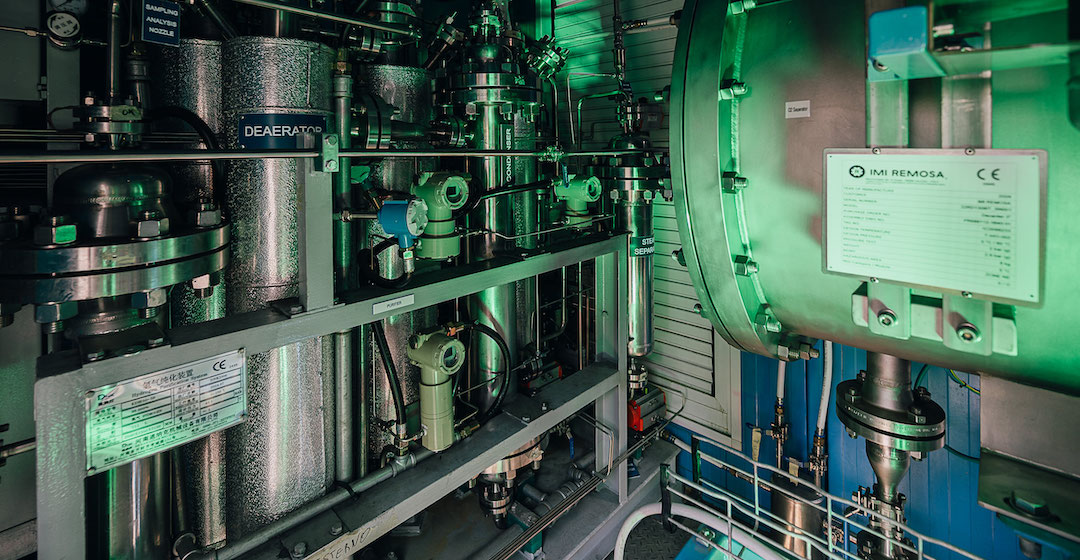
(Zittau, Germany) – The Zittau municipal utility company (Saxony) has commissioned a pilot plant that utilizes the waste heat from a PEM electrolysis process via a heat pump and feeds it into the city's district heating network. The plant primarily serves to optimize operations for the efficient coupling of electrolyzers and heat pumps in electricity-, heat-, or hydrogen-driven modes. Depending on whether the focus is on utilizing surplus green electricity, reducing fossil fuel consumption, or optimizing hydrogen production, the operating mode and parameters change.
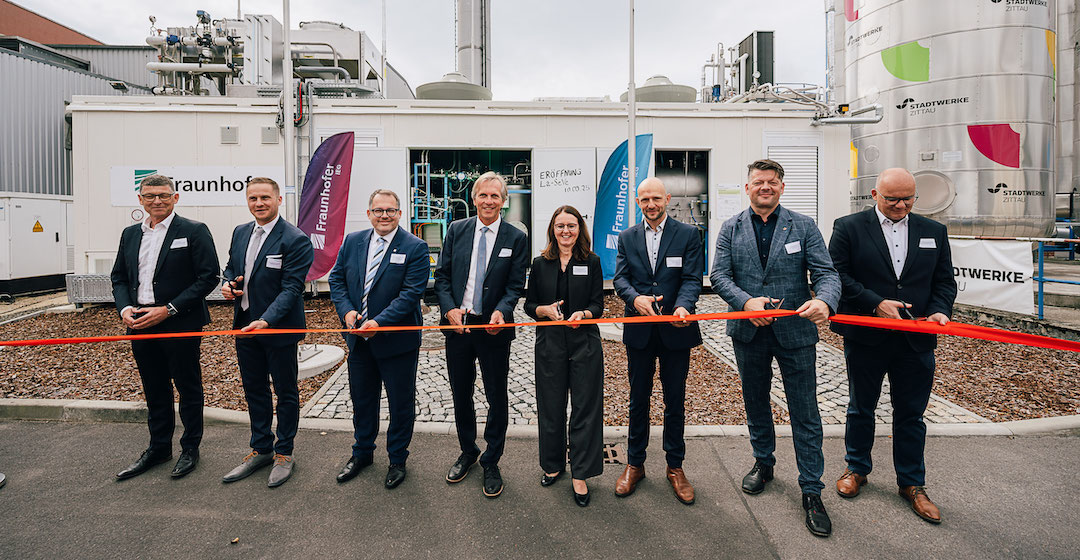
Representatives from politics and industry at the opening of the pilot plant in front of the containerized PEM electrolyzer. © Fraunhofer IEG / Paul Glaser
"With our pilot plants, we are creating an infrastructure for testing and qualifying industrial-scale processes," says Clemens Schneider, project manager at the Fraunhofer Research Institution for Energy Infrastructures and Geotechnologies IEG. "We are testing how the heat and oxygen byproducts from electrolysis can be optimally processed under dynamic operating conditions." Furthermore, the platform could enable manufacturers and operators to test and qualify industrial-scale processes, such as carbon dioxide methanation, closed carbon cycles, testing oxygen and hydrogen compressors, hydrogen burners, and other components for utilizing the main and byproducts from PEM electrolysis.
The "Laboratory Facility for Sector-Coupled Utilization of PEM Electrolysis Products" (LA-SeVe) was built with an investment of €2,7 million. The electrolyzer is housed in a container and is supplied with electricity via a new transformer station. The heat pump, with a capacity of 105 kilowatts (thermal), is located in a nearby hall along with the buffer storage, pumps, and control technology and is connected to the electrolyzer via a water circuit.
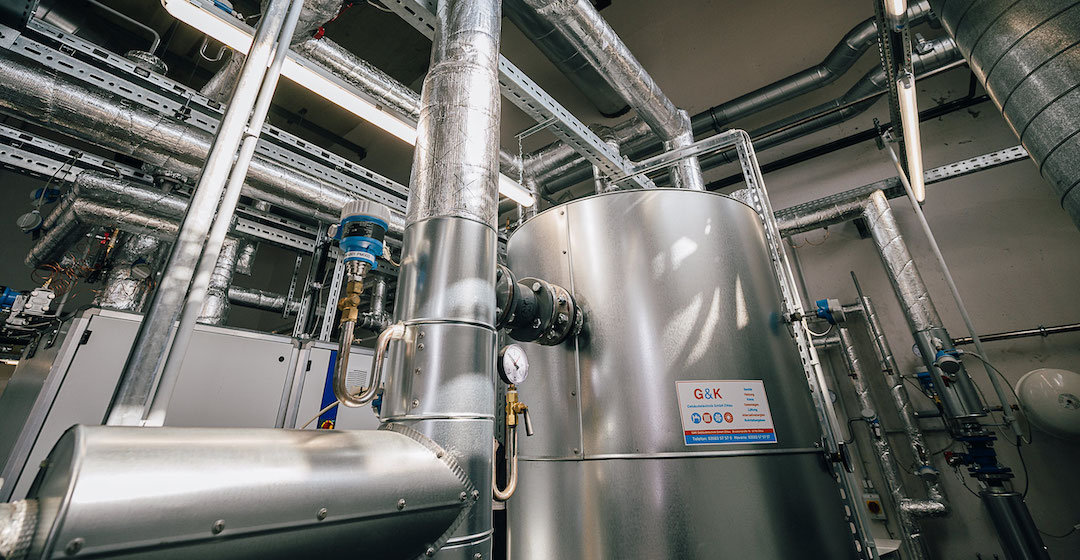
The heat pump system utilizes the waste heat from PEM electrolysis and prepares it for use in the Zittau municipal utility's district heating network. © Fraunhofer IEG / Paul Glaser
Proton exchange membranes or polymer electrolyte membranes (PEMs) allow only specific reaction products to pass through. PEM electrolyzers have good partial load capability and high efficiencies. They are insensitive to load changes, which makes them particularly suitable for producing hydrogen using electricity from volatile renewable sources, according to the scientists. In PEM electrolysis, approximately one-third of the electrical energy used is converted into waste heat. Furthermore, the oxygen produced during the electrolysis process usually remains unused.
At the Zittau site, Fraunhofer IEG and its consortium partner Linde GmbH are conducting research focusing on regional industry and municipal heat supply. Industrial processes and environmental heat sources are being analyzed to integrate untapped heat potential. The "IntegrH2ate" project is part of the H2Giga hydrogen flagship project and focuses on the efficient use of heat and oxygen as byproducts from PEM electrolysis. The German Federal Ministry of Research, Technology and Space (BMFTR) is funding the project with approximately ten million euros.
Photo above
Fraunhofer IEG, Linde GmbH, and Zittau's municipal utilities have commissioned a pilot plant that utilizes waste heat from PEM electrolysis using a heat pump. © Fraunhofer IEG / Paul Glaser



