
(Dillingen, Germany) – Steel manufacturer Stahl-Holding-Saar GmbH & Co. KGaA (SHS) has signed a contract with the French energy company Verso Energy SAS for the annual purchase of at least 6.000 tons of green hydrogen. Deliveries will begin in 2029 for a period of ten years. The company stated that this marks the "starting signal for the regional, cross-border hydrogen economy." The SHS Group companies involved include AG der Dillinger Hüttenwerke, Saarstahl AG, and ROGESA Roheisen- und Rohstoffgesellschaft Saar mbH.
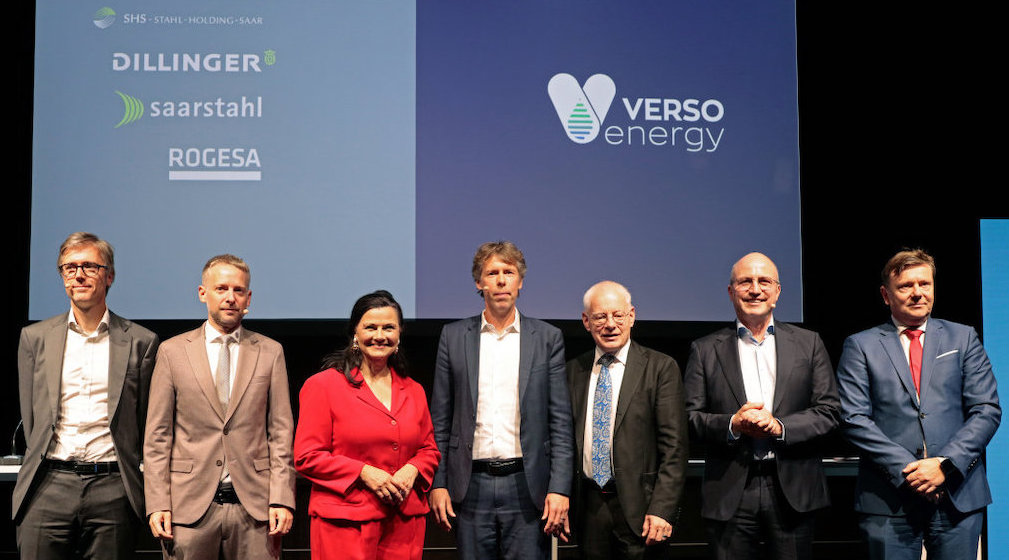
Close Franco-German Hydrogen Cooperation (from left): Romain Verdier (Verso Energy), Stefan Rauber (CEO SHS, Member of the Board of Saarstahl and Dillinger), Gitta Connemann (State Secretary in the Federal Ministry of Economics), Jonathan Weber (CEO SHS, Member of the Board of Saarstahl and Dillinger), Jürgen Barke (Minister of Economic Affairs of Saarland), Xavier Caïtucoli (Verso Energy), Frank Becker (ROGESA). © SHS Group
Verso Energy plans to produce the energy carrier in Carling, France, as part of the "Carlhyng" (Carling Hydrogen Next Generation) project, where it will invest more than €100 million in the construction of an electrolyzer. The hydrogen will be produced using electricity from renewable energy sources and certified according to the EU's "Renewable Fuels of Non-Biological Origin" (RFNBO) standards. The company says it has renewable energy projects with a total capacity of two gigawatts under development, construction, or operation and plans to build seven e-SAF production plants in France, Finland, and the United States.
The "Carlhyng" output will be fed into the Moselle-Saar Hydrogen Conversion (mosaHYc) pipeline network. The SHS Group had already agreed to this in April 2024 with the network operators Creos Deutschland Wasserstoff GmbH and NaTran Deutschland SA (formerly GRTgaz SA). The hydrogen will be transported to the region and to the Dillingen site via the German-French pipeline network. In the final expansion phase, SHS plans to use up to 120.000 tons of hydrogen annually. This will make it "the largest consumer in the region in the future."
Reliable framework conditions from Berlin necessary
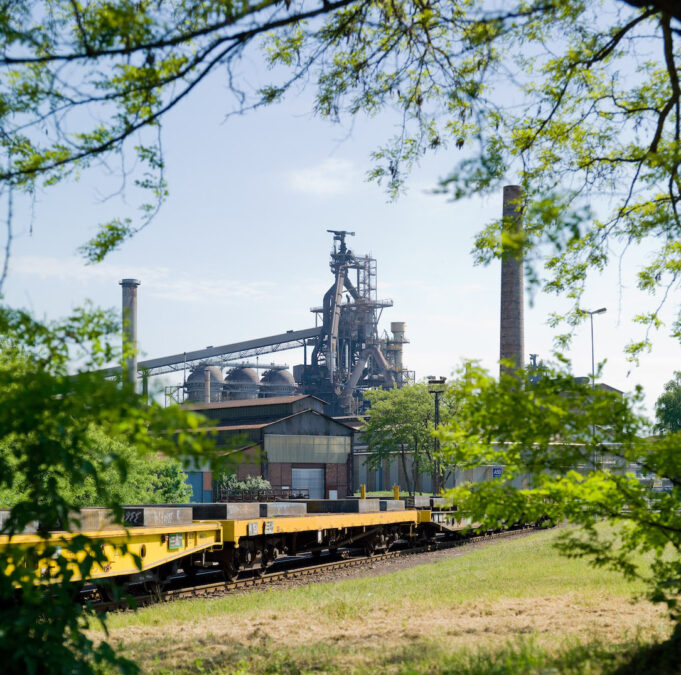
The hydrogen is transported via the German-French "mosaHYc" pipeline network to the SHS site in Dillingen, where it is used for steel production. © AG der Dillinger Hüttenwerke
The availability of renewable hydrogen is "an important criterion for the success of our Power4Steel decarbonization project," says Stefan Rauber, SHS Managing Director and Chairman of the Saarstahl and Dillinger Management Board. The transformation is progressing "according to plan" and will offer customers "a high-quality portfolio of CO2-reduced steel products." According to Saarland's Minister of Economic Affairs, Jürgen Barke, the German-French cooperation is "a strong signal to Brussels and Berlin to ensure reliable framework conditions."
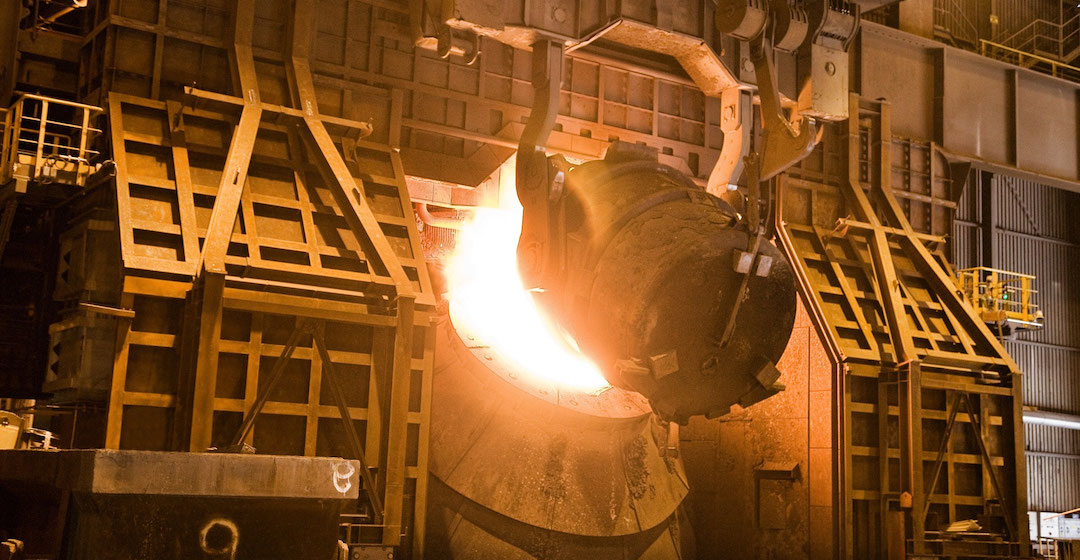
Stefan Rauber, SHS Managing Director and member of the Saarstahl and Dillinger Board of Management: "We will offer customers a high-quality portfolio of CO2-reduced steel products." (Photo: Converter being filled with liquid steel) © AG der Dillinger Hüttenwerke
The SHS Group is one of Germany's largest steel producers, producing around five million tons of steel annually. Using the initial quantities of hydrogen now ordered, steel scrap, and a new direct reduction reactor (DRI) and electric arc furnace (EAF) at the Dillingen site, as well as another EAF in Völklingen, the company aims to achieve a reduction in CO30 emissions of up to 2 percent by the early 55s.
DRI will supply the two production sites with iron pellets in the future. The Midrex Flex technology used can operate with varying mixtures of natural gas and hydrogen. As previously reported , Primetals Technologies, Midrex Technologies Inc., and the DSD Steel Group have been commissioned to build the plant. The EAF (Energy Expansion Facility) for the heavy plate manufacturer Dillinger will also be built by Primetals Technologies and the DSD Steel Group. The SMS Group was selected for the EAF of the wire rod and bar manufacturer Saarstahl. Commissioning of the plants is scheduled for 2028/29.
Green steel with IPCEI billions
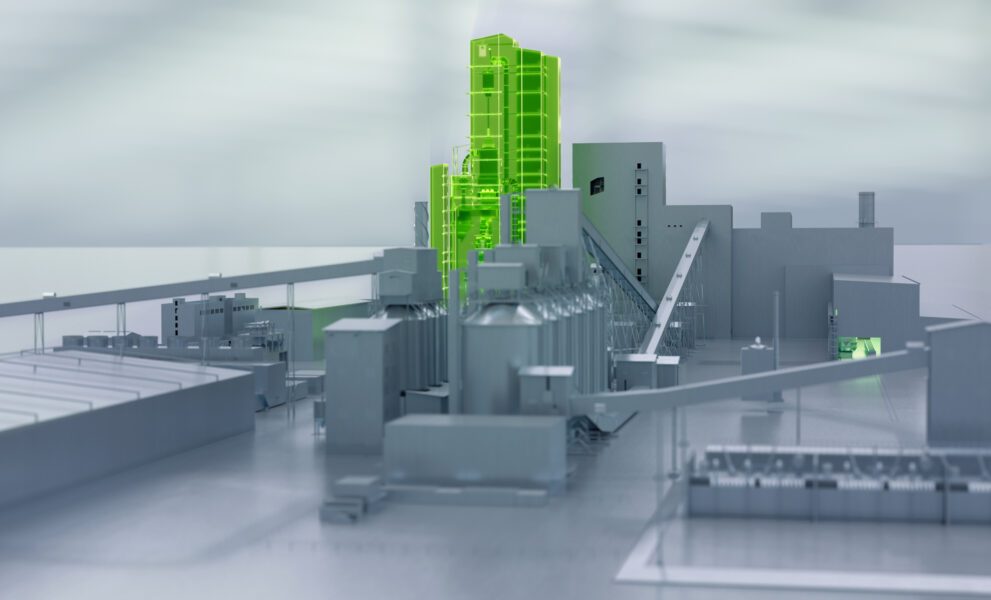
Sketch of the DRI plant at Dillinger Hütte. © AG der Dillinger Hüttenwerke
The total investment for the conversion to green steel production using hydrogen, including infrastructure and logistics, amounts to approximately €4,6 billion. The "Power4Steel" decarbonization project by Dillinger, Saarstahl, and their joint subsidiary ROGESA is receiving €2,6 billion in funding from the federal and state governments as part of the EU's IPCEI program.
For similar projects, Salzgitter Flachstahl GmbH received one billion euros in funding and Thyssenkrupp Steel Europe AG two billion euros. Competitor ArcelorMittal SA got cold feet in June and withdrew from its projects in Bremen and Brandenburg. The Luxembourg-based company had claimed approximately 1,3 billion euros in EU-approved funding and also planned to use green hydrogen and direct reduction plants to extract iron from the ores and process the resulting pellets into crude steel in an electric arc furnace.
End of Iqony's PEM electrolyzer
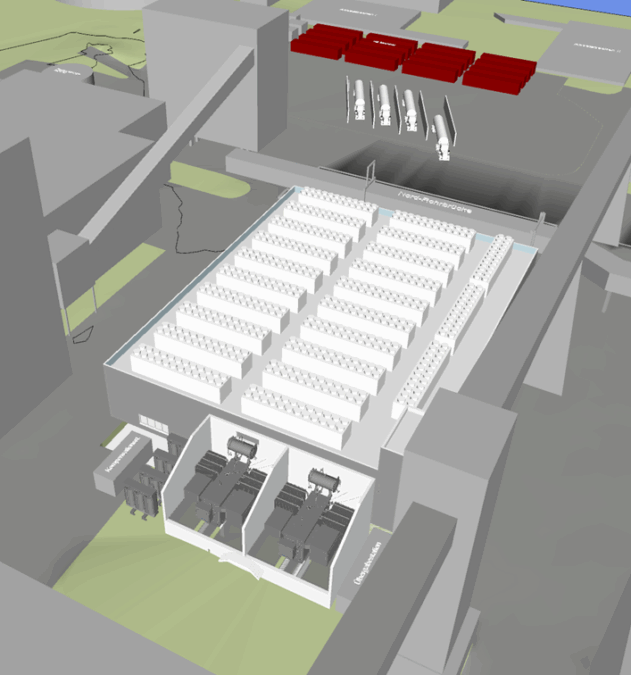
Sketch of Iqony's originally planned electrolysis halls (front), along with the gas processing, hydrogen storage, and a trailer filling station. © Iqony GmbH
Another company, the Essen-based STEAG subsidiary Iqony GmbH, had also allegedly hoped to sign a contract with SHS. A PEM electrolyzer with a capacity of 55 megawatts and an annual output of 8.200 tons of hydrogen was to be built near the plant in Völklingen. In July 2024, the "Hydrohub Fenne" received notification of funding in the amount of €100 million from the federal and state governments under the EU's IPCEI program. According to a press release, the investment decision was expected in August 2025.
But the project has apparently now fallen through – presumably due to the contract between SHS and Verso. Iqony itself had not commented further. Last week, however, the Saarland Broadcasting Corporation (SR) reported on the electrolyzer's demise. The main reason, according to the broadcaster citing an Iqony spokesperson, was "the lack of an anchor customer." The economic risks for the project were deemed "too high despite the millions in subsidies." It remains unclear, however, whether Iqony even submitted a final bid to the steel company in the tendering process. Neither company was willing to comment to SR.
Pipeline not yet finalized
However, the planned pipeline for transporting Verso hydrogen to the SHS steelworks is not yet a done deal. The planning approval process is currently underway for a section between the border town of Leidingen and the Dillingen steelworks. Part of this network is the new, approximately 21-kilometer-long hydrogen pipeline, which is intended to connect Dillingen to the existing Carling-Perl pipeline. The gas network operator Creos is planning and building the approximately 16-kilometer-long new "mosaHYc" pipeline on the German side. However, a citizens' initiative, supported by the German Federation for the Environment and Nature Conservation (BUND), has raised concerns about the infrastructure project by the gas network operator Creos, reports SR . Therefore, the timeline is by no means guaranteed.
The Saarland Ministry of Economic Affairs has published the planning documents on its website , where they will be available for public inspection until September 24, 2025. Anyone whose interests are affected by the project may submit objections up to one month after the end of the public inspection period. The statutory deadline, which runs until October 24, 2025, will not be extended.
Photo above
With green hydrogen, direct reduction, and an electric arc furnace, SHS aims to reduce its CO2 emissions from steel production by up to 55 percent. © AG der Dillinger Hüttenwerke



