
(Etzel / Germany) – Investor Patrizia SE and its operating company Storag Etzel GmbH have signed option lease agreements with the Dutch company Gasunie NV for the hydrogen caverns in Etzel, Lower Saxony. This includes the storage of hydrogen with an energy equivalent of more than one terawatt-hour.
Since 2022/2023, the companies have been conducting what they describe as "the largest research projects on industrial-scale hydrogen storage in Europe." " H2CAST Etzel " is testing the feasibility of large-scale storage in underground caverns under real-world conditions, including injection and withdrawal, as well as testing the integrity of the storage facility.
From natural gas to hydrogen storage
The “H2CAST Etzel” pilot project includes the conversion of two natural gas caverns to hydrogen caverns, the construction of an above-ground facility and a subsequent test and research phase, which is scheduled to be completed by the end of 2026. The location is strategically located and has a connection to the Dutch and German hydrogen markets near the future Gasunie Hyperlink hydrogen network and the energy hub in Wilhelmshaven. The project is being funded by the federal government and the state government of Lower Saxony with a low double-digit million amount, which corresponds to a funding rate of more than a third of the total costs.
The German power plant strategy to expand gas-fired power plants, which enable a later conversion to hydrogen, will further increase the need for hydrogen storage, the companies said. The cavern field in the Etzel salt dome could help meet this increasing demand. The connection to the storage facility is also part of the planned hydrogen core network to cover future demand in Germany.
Heat for 100.000 households
The Etzel underground facility can be expanded to ninety-nine caverns that have already been approved, which would correspond to an additional capacity of twenty-four caverns with an equivalent of around five terawatt hours of hydrogen. An average natural gas cavern is around 0,7 million cubic meters in size and can store around one terawatt hour of energy. That's enough to supply 100.000 households with heat and hot water for a year. Due to the lower calorific value of hydrogen, the required storage volume for H2 is four times higher than that of natural gas.

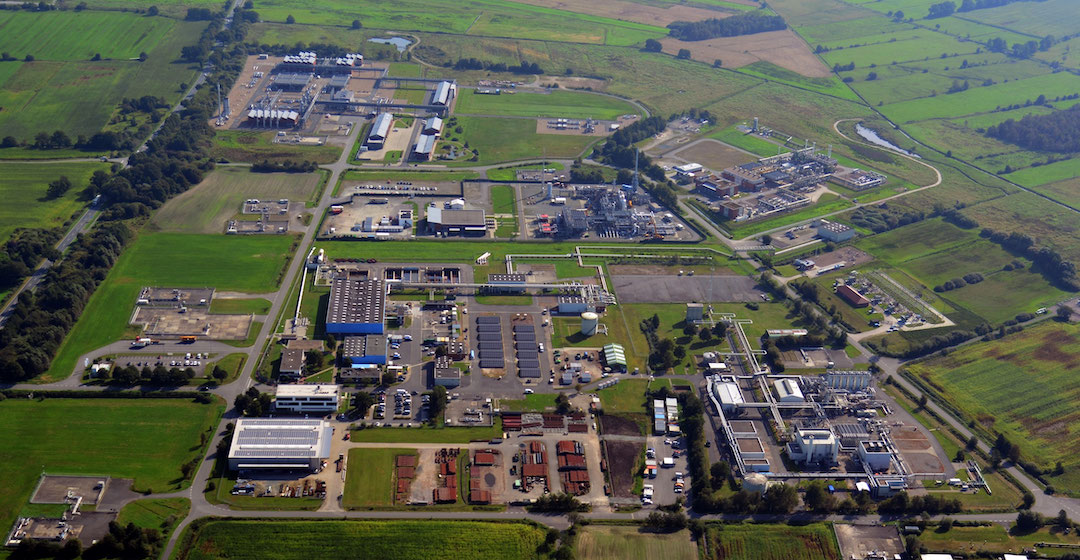
In Etzel, experts are investigating whether the local salt domes are suitable for storing large amounts of hydrogen. © Storag Etzel / Deep KBB
Storag Etzel has been operating large oil and gas storage facilities in underground caverns for over 50 years. The Etzel salt dome includes 75 operating caverns that can currently store 3,9 billion cubic meters of natural gas and ten million cubic meters of crude oil. Gasunie has also started developing underground hydrogen storage facilities in the Netherlands (HyStock). Renewable energies are expected to make up a significant part of the European energy mix in 2050. Hydrogen could account for 20 percent. 20 to 50 percent of transport needs and five to 20 percent of industry energy needs could be covered with hydrogen. Storing hydrogen on an industrial scale is “an important prerequisite for balancing fluctuations in green energy production from sun and wind and ensuring a stable energy supply for our power grids.”
The globally active Patrizia Group offers investments in real estate and infrastructure for institutional, semi-professional and private investors. The company currently manages capital goods with a volume of 58 billion euros. Two cavern funds were also launched in 2013 and 2018.
Photos
Above-ground part of the cavern complex in Etzel. © Storag Etzel



