
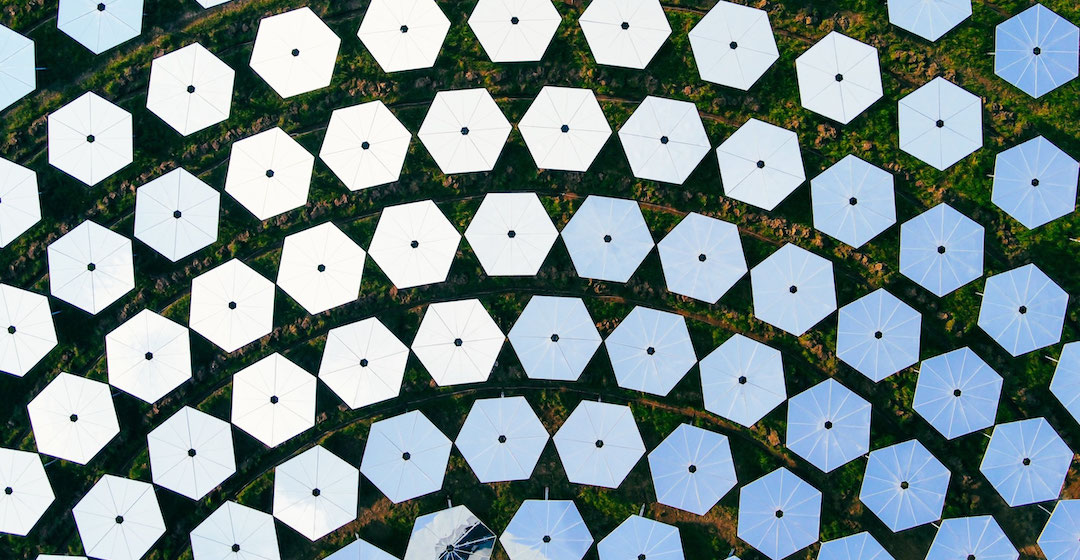
(Jülich, Germany) – Synhelion has opened a plant in Jülich for the production of synthetic fuels using concentrated solar power (CSP). "DAWN" consists of a 20-meter-high solar tower and an array of heliostats. The tower houses a receiver, a thermochemical reactor, and a thermal energy storage system, enabling "cost-effective, round-the-clock production of solar fuels." Production is scheduled to begin in 2024, with DAWN then producing several thousand liters of fuel per year.
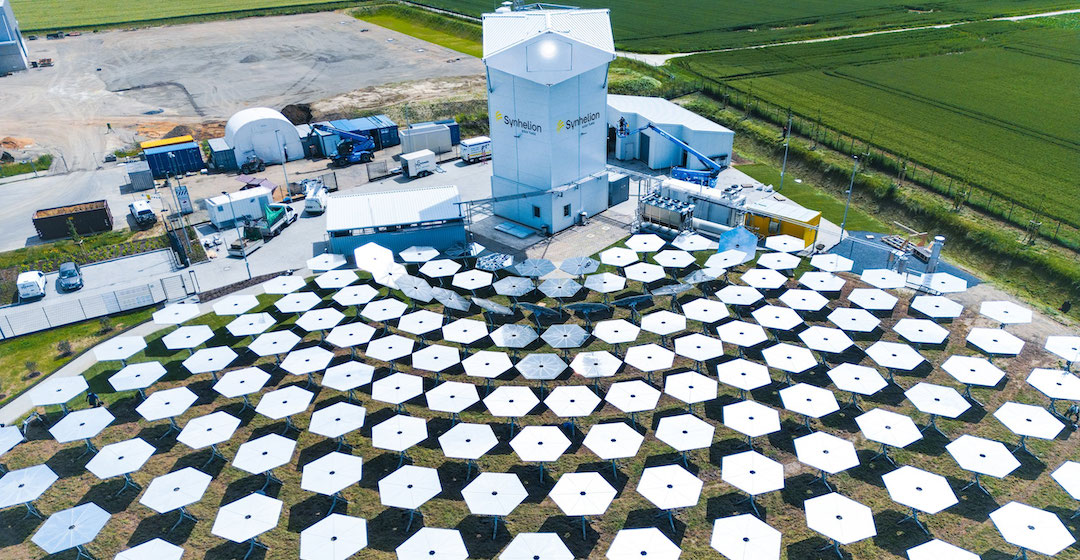
Synhelion's industrial demonstration plant "DAWN": The mirrors concentrate the light on the solar tower. © Synhelion
Synthetic crude oil, known as "syncrude", is produced directly in the plant. The solar radiation is reflected by the mirror field, concentrated on the receiver and converted into high-temperature process heat. The heat generated is fed to the thermochemical reactor, which produces synthesis gas, a mixture of hydrogen (H2) and carbon monoxide (CO). This intermediate product is particularly suitable for transport. It is then processed into certified fuels in a conventional oil refinery.
Kerosene, petrol and diesel with solar energy
Synhelion will use solar energy to produce kerosene for aviation, as well as gasoline and diesel for road traffic and shipping applications. Solar fuels can directly replace fossil fuels and are fully compatible with the world's existing fuel infrastructure - from storage and transport to combustion engines and aircraft engines.
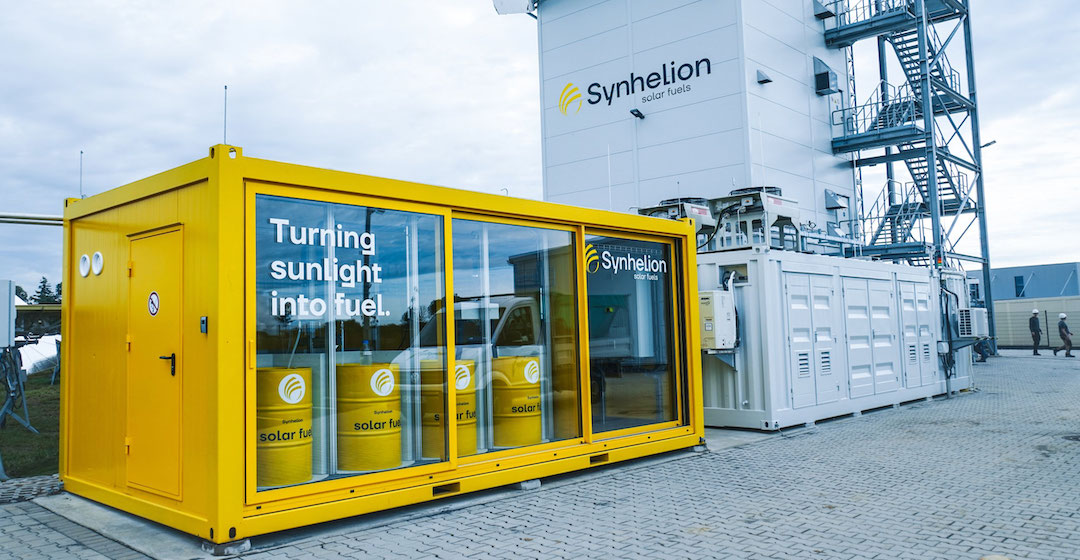
Solar tower of the DAWN solar fuel plant and storage and exhibition room for the solar synthetic crude oil. © Synhelion
The company, founded in 2016 as a spin-off of ETH Zurich, first proved in 2019 in a mini-refinery on the roof of ETH that fuels can be produced using solar heat. Since then, the company has been working on scaling the "sun-to-liquid" technology and making it industrially usable.
Synhelion plans to build the first commercial plant in Spain from 2025. A total of around 1.000 tons of fuel per year are to be produced there. Plants planned for the future would "significantly exceed the size of the first two plants and thus offer a much higher production capacity," according to the company. An annual production volume of around one million tons is to be achieved within ten years.
Synhelion says it is supported by a number of international corporations, including the oil multinational Eni SpA (Italy), the building materials manufacturer Cemex SA de CV (Mexico), Lufthansa Group (Germany), Swiss International Air Lines (Switzerland), the metal processor SMS Group (Germany), the exploration company Wood Group (Great Britain), AMAG Group (Switzerland), Zurich Airport and Pilatus Aircraft Works (Switzerland).
Photo above
Synhelion uses heliostats that concentrate sunlight on the tower to produce fuel. © Synhelion



