
(Bochum, Germany) – Industrial companies in Germany primarily import significant amounts of energy in the form of oil and natural gas. The emerging hydrogen economy will also "rely on hydrogen imports in the medium to long term," either via pipelines from European production or in the form of derivatives from overseas. This is one of the findings of a study by the Fraunhofer Institute for Energy Infrastructures and Geothermal Energy IEG.
Study “Hydrogen distribution options 2035.” © Fraunhofer IEG
In their study, the researchers assessed and compared all major hydrogen derivatives and their transport options between the import hub and consumers for the first time. They analyzed the technical and economic aspects of the modes of transport that can deliver hydrogen derivatives to the industrial end user when the hydrogen core network is installed in 2035. “Particularly for locations that do not process hydrogen, but rather its derivative products, purchasing them directly may be more cost-effective,” say the authors Christoph Nolden and Thorsten Spillmann. Inland waterway vessels are already an established transport option for substances such as ammonia, methanol or liquid fuels. Most of the locations considered had hydrogen requirements that could be transported via a large freight train.
Discussion about the pipeline network falls short
Since domestic transport only makes up part of the entire supply chain, the different transport options only lead to small differences in overall costs. “The current discussion about connection to the future pipeline network falls short. “Other infrastructure, such as the rail network or waterways, can represent a flexible alternative for numerous locations, especially in the ramp-up phase,” the paper says.
In parallel to the expansion of the planned hydrogen core network, the authors propose accompanying measures, such as the expansion of the rail network, a differentiated hydrogen import strategy, the certification of the sustainability of energy sources as well as international standards and continuous planning and adaptation of the transport infrastructure for hydrogen and other materials, such as CO2.
Import dominates cost component
The supply costs modeled in the study vary between 3.400 and 16.000 euros per ton of hydrogen equivalent. With a cost share of between 41 percent and 100 percent, import costs represent the dominant cost component. Domestic transport costs, with an average cost share of five percent, are in most cases a minor cost factor. A majority (85 percent) of the more than 570 locations examined had a comparatively low annual demand of less than 150 gigawatt hours of hydrogen equivalent. Around eleven percent of the locations required over 500 gigawatt hours.
The analysis was commissioned as part of the “HySupply – German-Australian feasibility study on hydrogen from renewable energies” project and funded by the Federal Ministry of Education and Research.
The study “Hydrogen distribution options 2035. Supply possibilities for consumption sites in Germany with imported hydrogen” is available free of charge as a PDF (61 pages).
Photos
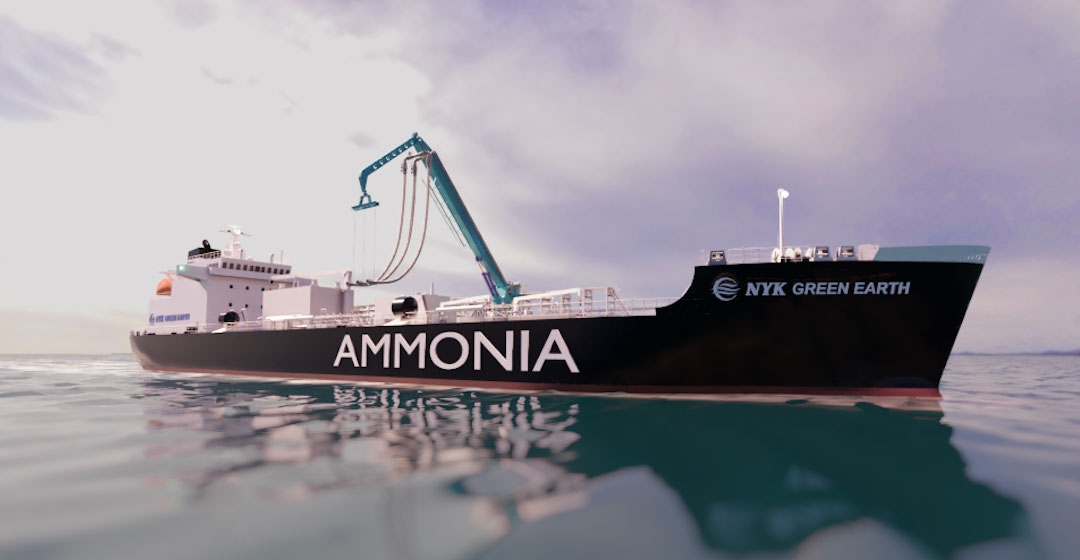
Ocean-going tankers are only part of the transport chain for green hydrogen. In addition to pipelines, barges, trains and trucks can supply many industrial consumers. © Ammonia Energy Association



