
(Dubai / United Arab Emirates) – The global energy landscape must fundamentally change if climate change is to be curbed while simultaneously ensuring a secure and affordable energy supply, according to a new study by the International Renewable Energy Agency (IRENA): “Green hydrogen plays a crucial role in the global energy transformation and in coupling different energy sectors.” The authors examine the techno-economic potential for trading in green hydrogen and related derivatives such as ammonia and e-methanol, as well as the use of direct reduced iron (DRI) in 2050.
IRENA study “Analysis of the potential for green hydrogen and related commodities trade”. © IRENA
According to the analysis, demand for green energy sources varies considerably. According to the study, only 2050 percent of global demand will be for pure hydrogen in 14,4, but 30 percent for ammonia and 18 percent for e-methanol due to lower transport risks and costs. In addition, iron directly reduced using hydrogen will account for 14 percent. Investments in infrastructure measures along the entire green hydrogen value chain will amount to approximately $2050 trillion by 2,49. Renewable energies with an installed capacity of 4,7 terawatts (TW), electrolyzers with a capacity of 2,1 TW, and battery storage with a capacity of 0,9 terawatt hours (TWh) will be needed to produce it and meet demand.
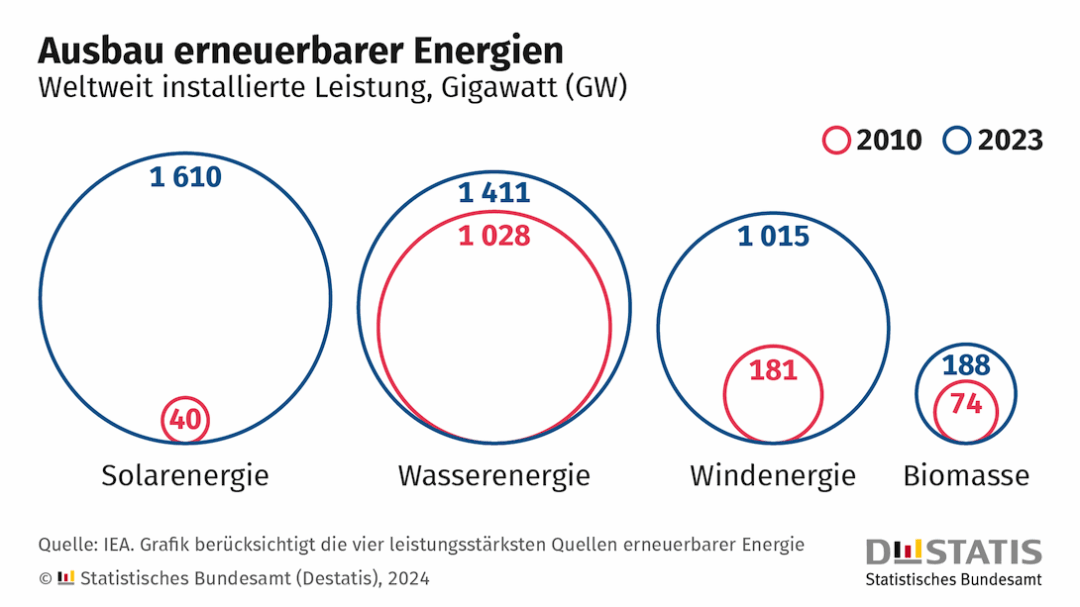
In 2023, renewable energy capacity with a capacity of around 4,2 terawatts was installed globally. © Federal Statistical Office
To put these figures into perspective: According to the Federal Statistical Office, citing the International Energy Agency's (IEA) "World Energy Outlook 2024 ," global renewable energy sources reached a cumulative installed capacity of approximately 4,2 TW in 2023 (compared to 1,3 TW in 2010). The four most powerful sources were solar (1.610 GW), hydropower (1.411 GW), wind (1.015 GW), and biomass (188 GW). However, it's important to note that the electricity generated is used entirely for households, industry, and transportation, and demand is increasing. The projected figures from the IRENA study therefore represent additional capacity solely for hydrogen production, beyond existing installations.
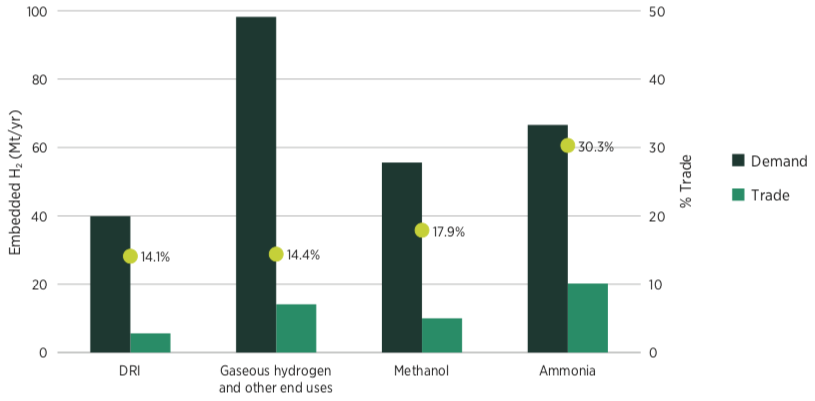
By 2050, approximately 30 percent of global demand will be traded, while 70 percent of demand will be met locally through domestic production. For methanol, the traded volume is around 18 percent, and 82 percent of demand would be met through local production. The volume of traded gaseous hydrogen is approximately 14,4 percent of total demand; the majority of this trade would be conducted via gas pipelines. © IRENA study "Analysis of the potential for green hydrogen and related commodities trade"
Green hydrogen and its derivatives could strengthen trade and industrial competitiveness by providing many sectors with access to efficient decarbonization tools for the first time. At the same time, they would support economic development and diversification in producing regions "by offering countries the opportunity to cost-effectively access green feedstocks from resource-abundant locations where production costs may be lower," the authors say.
To this end, they examined 35 regions globally and their potential for renewable energy, infrastructure costs, and commodity-specific restrictions, including parameters such as capital costs for electrolyzers and renewable energy generation, as well as transport costs and how financing conditions affect trade competitiveness. Factors such as political stability, economic development, or internal institutional frameworks within a country were not directly considered.
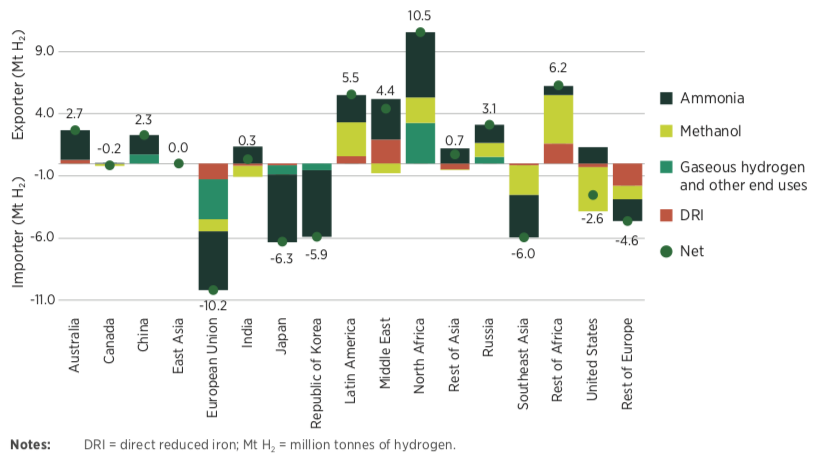
The expected main exporters of green hydrogen in 2050 are Latin America, the Middle East, North Africa, and Sub-Saharan Africa, while importers include Europe, Southeast Asia, Japan, and the Republic of Korea. However, a "net status" as an exporter or importer may not correspond to the status of all green commodities. For example, according to the study, the Middle East would import part of its demand in the form of methanol and would export a large amount of green DRI and ammonia, which would ultimately make it a net exporter of green hydrogen. © "Analysis of the potential for green hydrogen and related commodities trade
In an underlying scenario, the regions of Latin America, the Middle East, North Africa, and Sub-Saharan Africa would likely be the largest exporters due to their abundant natural resources. Broken down to individual countries, Australia, China, and the United States are expected to lead the way. In contrast, regardless of financing conditions, Europe, Southeast Asia, Japan, and the Republic of Korea are the regions and countries where part of the demand could be met through imports.
However, increased international cooperation and policy measures to promote a green hydrogen economy are necessary, warns IRENA. Investments in renewable energy infrastructure should be aligned with national hydrogen strategies, but prioritize areas such as electrification, energy access, and basic services. Certifications and other framework conditions must be standardized to facilitate global trade.
The EU-funded report “Analysis of the potential for green Hydrogen and related commodities trade” is available free of charge as a PDF (40 pages).
Photo above
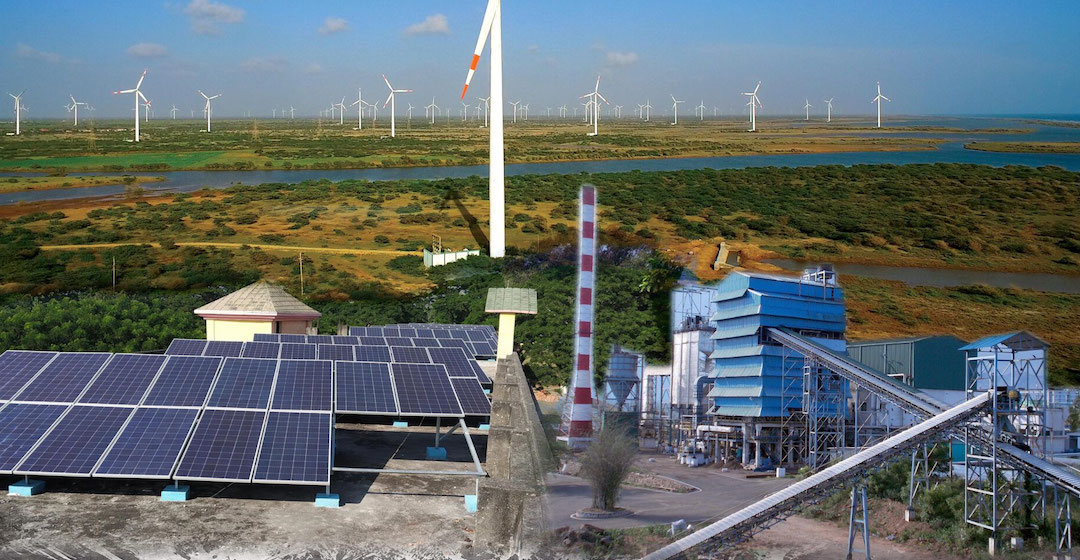
Green hydrogen will be essential by 2050: According to an IRENA study, its production and meeting demand will require, among other things, renewable energies with an installed capacity of 4,7 terawatts, electrolyzers with a capacity of 2,1 TW, and battery storage with a capacity of 0,9 terawatt hours. © MNRE



