
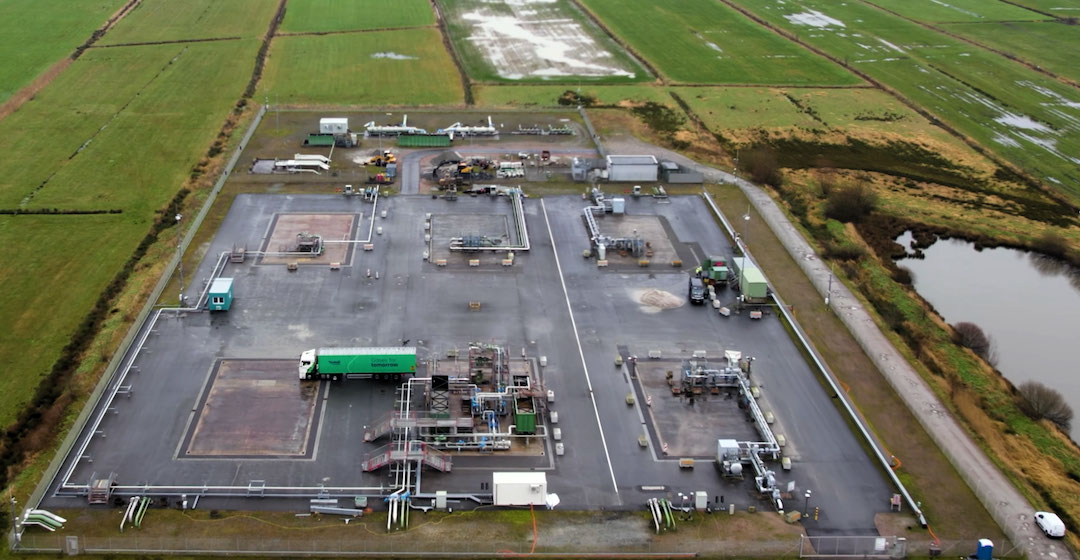
(Etzel / Germany) – Storag Etzel GmbH has begun storing hydrogen in Etzel, Lower Saxony, southwest of Wilhelmshaven. This follows the completion of leak tests after the conversion of two caverns.
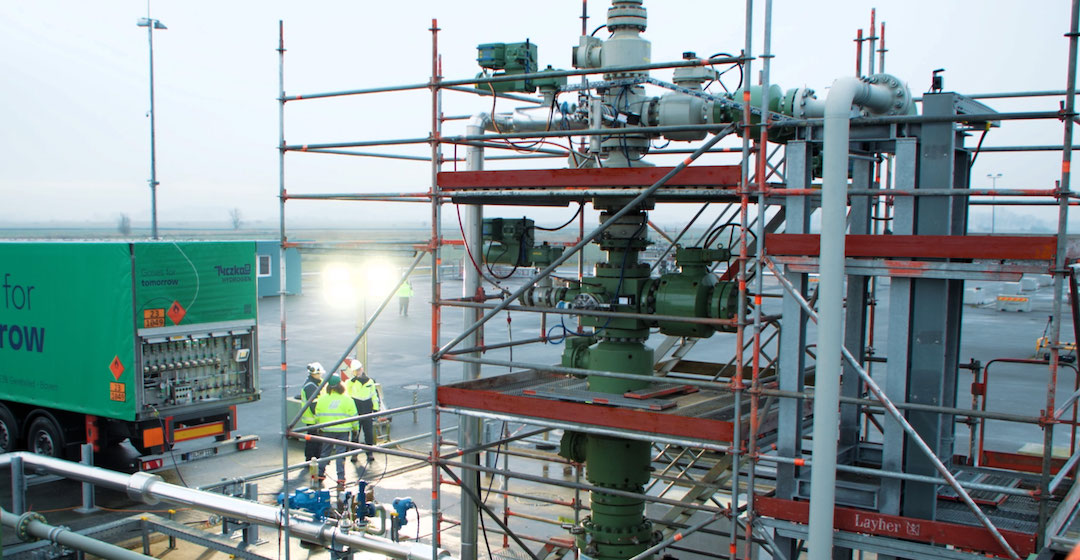
Currently, the hydrogen is delivered by truck. With the connection to the future hydrogen core network, delivery will be via pipeline. © Storag Etzel GmbH
The hydrogen is delivered by truck. Until the summer, three loads per week will arrive in Etzel – a total of approximately 200 trips will be required to fill the caverns with hydrogen. In the future, once connected to the planned hydrogen core network , the site will be supplied via pipeline. During storage, the hydrogen displaces the brine from the caverns.
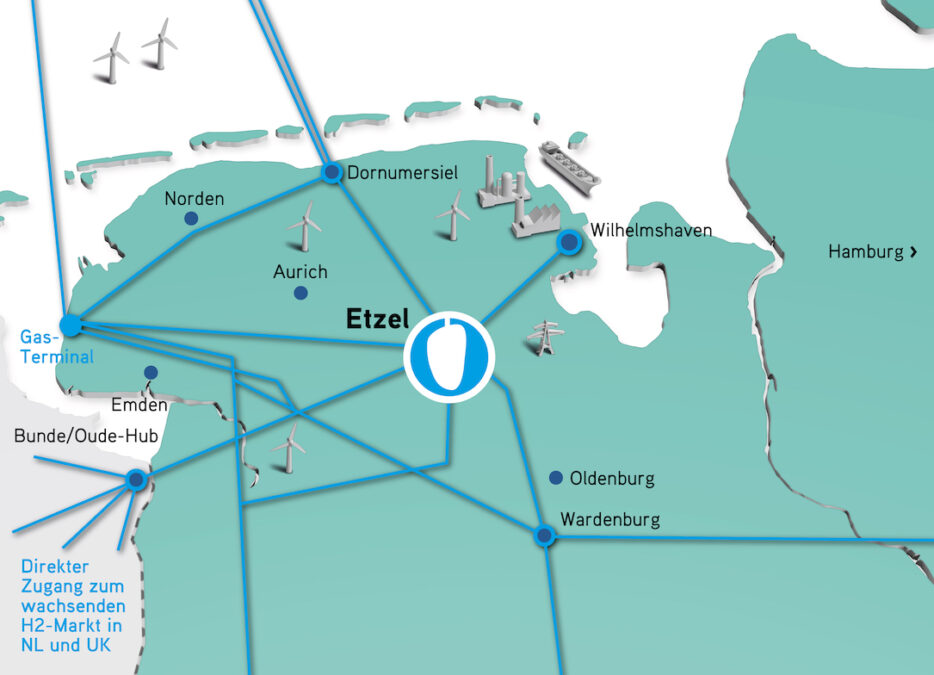
Future connection with hydrogen pipelines in Etzel. © Storag Etzel GmbH
As expected, there were teething problems in procuring hydrogen. "You can see that the hydrogen market is still in its infancy," says Carsten Reekers, project manager of the "H2CAST Etzel" research project. However, by the end of January, several tons had already been safely stored underground at a maximum pressure of 170 bar. "We have shown that the existing facilities in the Etzel cavern field are suitable," says Reekers. The caverns are scalable and flexible. Other underground gas and oil storage facilities there could also be "repurposed in a timely manner" for the use of hydrogen.
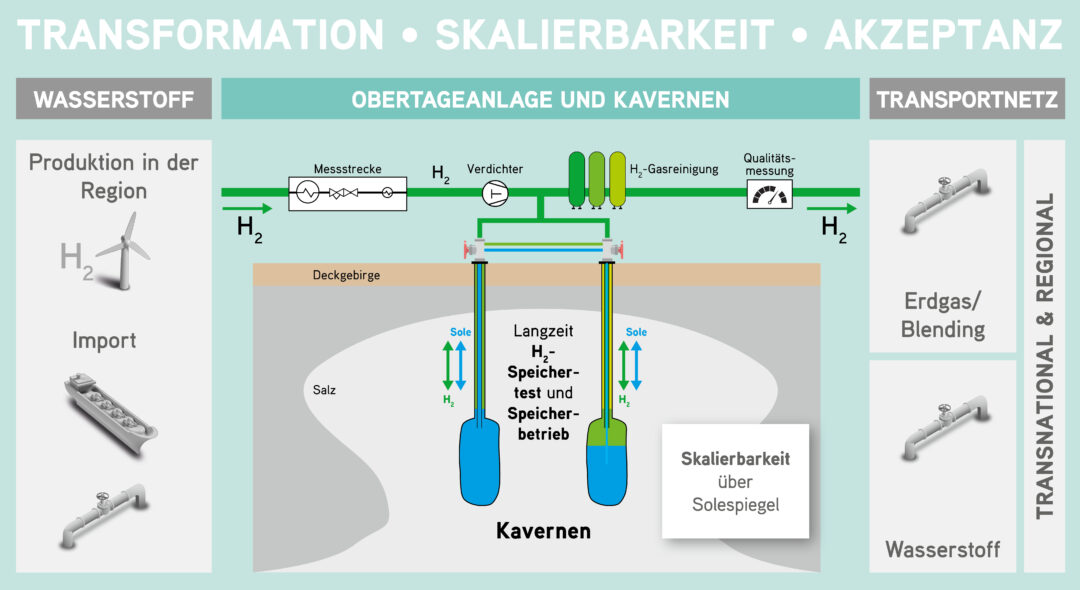
In the future, green hydrogen will primarily be produced in the region. The pressure during storage displaces the brine. When it is withdrawn, the gas is cleaned and can then be used or fed into natural gas pipelines if required. © Storag Etzel GmbH
After filling with the first tranche of around 45 tonnes of hydrogen, the caverns will be loaded in a second tranche to the planned target quantity of 90 tonnes up to the highest permissible pressure. Construction of an above-ground test facility will begin in spring. This year, the focus of the project will be on commissioning the hydrogen purification systems. Different processes and their efficiency will be tested. Preparations for this are already underway. This will enable gas storage operations with compression, gas drying and purification, pressure control, and quantity and quality measurement to begin in winter 2025.
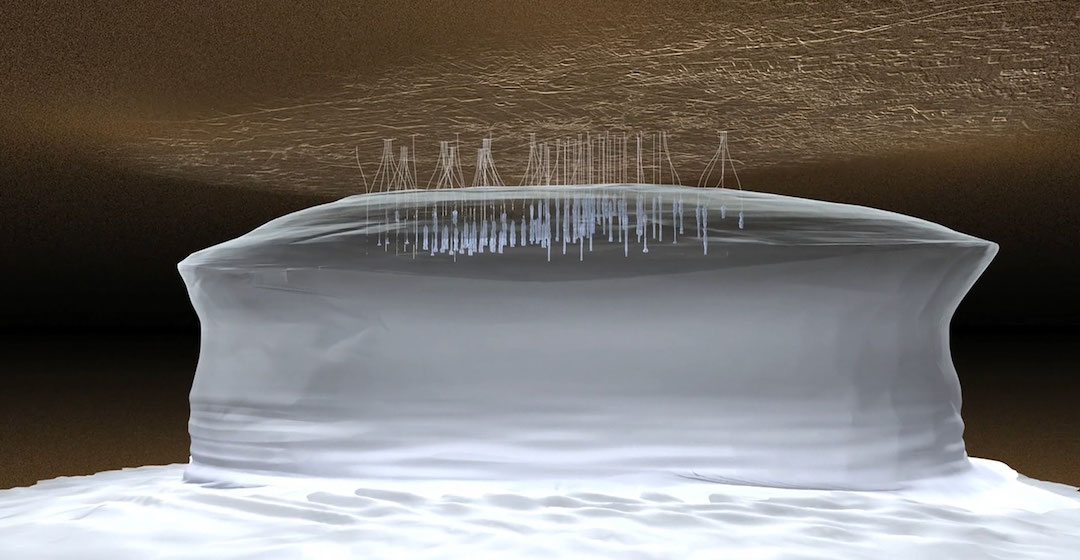
The caverns in which oil, gas or hydrogen can be stored extend underground into the salt layer, the "salt dome". The Etzel site is to be "H2026-ready" by 2. © Storag Etzel GmbH
The Etzel site is to be "H2026-ready" by 2. The research project "H2CAST" (H2 CAvern Storage Transition) is funded by the state of Lower Saxony and the Federal Ministry for Economic Affairs and Climate Protection (BMWK). The aim is to demonstrate the fundamental feasibility of large-volume underground storage of hydrogen and to prove the suitability of the salt caverns in Etzel for this purpose. The operational operation is being tested and will serve to establish a hydrogen industry in Germany and Europe.
Subsequently, the research results and technical standards will be made publicly available. Etzel will thus serve as a blueprint for the conversion of caverns for future hydrogen storage in Germany. Participating in the project are Clausthal University of Technology, the long-distance pipeline operator Gasunie , the German Aerospace Center (DLR), Sonar Control Kavernenvermessung GmbH (Socon), Hartmann Valves GmbH, and Deep KBB GmbH.
Next step: One million cubic meters
A few days ago, Storag Etzel and the energy supplier EnBW announced the next step for the large-scale storage of hydrogen: The cavern storage provider and the EnBW subsidiary EnBW Etzel Speicher GmbH have secured a contract for the construction and operation of new hydrogen cavern storage facilities.
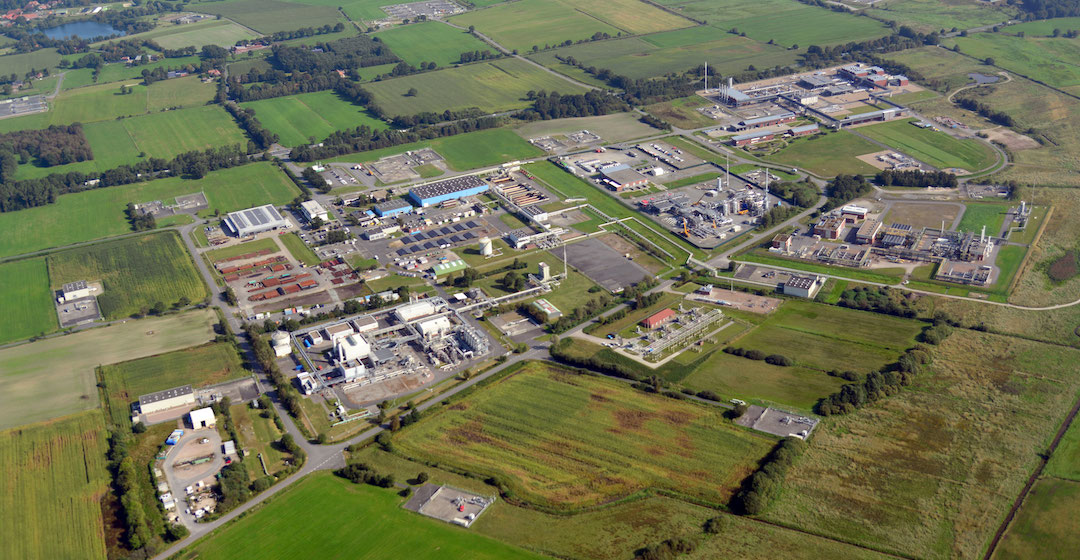
EnBW and Storag Etzel want to jointly develop and long-term operate underground hydrogen storage capacities of over one million cubic meters. © Storag Etzel GmbH
According to the information, the companies want to develop hydrogen storage capacities in several new caverns with a volume of over one million cubic meters. The EnBW subsidiary would also build a new above-ground hydrogen plant on the site in Etzel. However, for a final investment decision, "a regulatory and legal framework is still needed" that enables the "hydrogen storage" business model. In particular, securing the initial high investments over the long operating period "cannot currently and foreseeably be realized on the market," says Peter Bux, Managing Director of EnBW Etzel Speicher GmbH.
The Etzel cavern facility currently comprises 75 caverns for oil and gas storage. There is potential for expansion of 24 caverns, some of which are already partially developed. Due to the very good local geology, a typical cavern in Etzel can have a geometric cavity volume of up to 800.000 cubic meters. This corresponds to a hydrogen capacity of 200 to 250 gigawatt hours per cavern.
Photo above
In Etzel, the filling of two converted natural gas caverns with hydrogen by trucks with trailers has begun. © Storag Etzel GmbH



