

(Hoofddorp / Netherlands) – Once full of plans, now a retreat: The Netherlands-based automotive conglomerate Stellantis NV is abandoning fuel cell technology. The company cites a "limited availability of hydrogen refueling infrastructure," "high capital requirements," and a lack of purchase incentives for consumers as reasons.
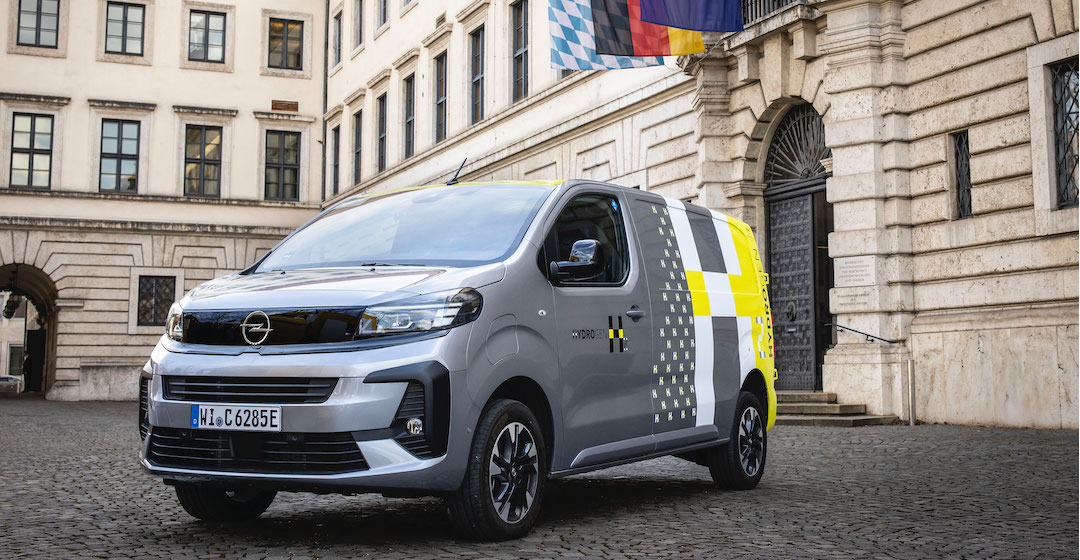
Stellantis brings together more than a dozen brands under its umbrella, including Abarth, Alfa Romeo, Chrysler, Citroën, Dodge, Fiat, Jeep, Lancia, Maserati, Opel, Peugeot, Ram, and Vauxhall. The company unveiled the new generation of the Opel "Vivaro Hydrogen" just this March. The vehicle will be available "soon," Lars Peter Thiesen, Head of Hydrogen and Fuel Cell Introduction Strategy, announced at a conference in Bavaria. © Stellantis Germany GmbH
They do not expect "hydrogen-powered light commercial vehicles to become widespread before the end of the decade." As a result, Stellantis will not launch its new range of hydrogen-powered "Pro One" vehicles this year. However, series production was imminent. The first mid-size vans were scheduled to roll off the production line in Hordain, France, and large vans in Gliwice, Poland, this summer.

Hype planned to deploy up to 1.000 hydrogen-powered taxis from Stellantis – but then backed off and switched to battery-electric vehicles. © Stellantis NV
Two years ago, the company celebrated the delivery of 50 vehicles from the Peugeot (e-Expert Hydrogen) and Citroën (ë-Jumpy Hydrogen zero emission) brands to Paris. Their business partner was "Hype," an organization for people with reduced mobility, which has been operating hydrogen taxis for several years, providing a platform for hydrogen mobility that includes supply, production, distribution, and use. The plans called for 15 more major cities to be integrated into the concept by the end of 2025. Ultimately, up to 1.000 such vehicles were envisioned ( as we reported ). However, Hype withdrew from the project. According to media reports, there were serious disputes behind the scenes with operators of hydrogen filling stations and suppliers such as Total Energies and Air Liquide, who were accused of not expanding the network quickly enough and of driving up prices through monopolistic practices.
In April 2024, media reports also stated that Stellantis intends to build around 2030 vehicles per year by 100.000. Battery and fuel cell drives are not competition, the head of the hydrogen program, Jean-Michel Billig, was quoted as saying.
Faith vs. Annual Report
"The hydrogen market remains a niche segment with no prospects for medium-term economic sustainability," says Jean-Philippe Imparato, Chief Operating Officer for Enlarged Europe, regarding the turnaround. While numerous media outlets then led with the headline that Stellantis had "lost faith in hydrogen," bare numbers may be playing a role in the background.
A look at the annual reports shows that in 2024, sales of Europe's second-largest car company fell by 17,23 percent compared to 2023, from 189 billion to 156 billion euros. Profits even plummeted by more than 70 percent over the same period: from 18,6 billion to 5,5 billion euros.
Financial forecast for 2025 suspended
And things didn't improve in the first quarter of 2025: Net sales were €35,8 billion – a 14 percent decline compared to the same period last year, "primarily due to lower sales volumes," said Chief Financial Officer Doug Ostermann at the presentation. In numbers: a decline of nine percent to 1,217 million units. The company subsequently suspended its financial guidance for 2025, citing uncertainties related to US tariffs.
Analysts see the company, formed in 2020 from the merger of Groupe PSA and Fiat Chrysler Automobiles, which unites more than a dozen European and US brands under its umbrella, as still under enormous pressure on three fronts. In the US, Stellantis apparently came under scrutiny from the National Highway Traffic Safety Administration (NHTSA), as reported by the industry portal " Börse Express " in early July. Following complaints from vehicle owners about brake defects, a recall of approximately 1,2 million Ram trucks was initiated. Furthermore, in Italy, one of its most important European production locations, the market contracted by 27 percent in the first half of 2025; for passenger cars, the decline was 34 percent. Finally, according to the report, Bank of America also sounded the alarm, downgrading Stellantis stock from "Buy" to "Neutral" and drastically slashing its price target from €16 to €10. The reason given: "Structural weaknesses in Europe, where Stellantis lags significantly behind the competition in the electric vehicle sector."
Symbio partner: worried and angry
Some consequences of the decision are not yet foreseeable. In May 2023, Stellantis acquired a 33,33 percent stake in the joint venture Symbio SAS, in which tire manufacturer Michelin and French automotive supplier Faurecia SE, part of the Forvia Group, also hold equal shares. In December 2023, Symbio opened a gigafactory for fuel cells near Lyon, France, dubbed "SymphonHy" for marketing purposes.

The Symbio fuel cell factory "SymphonHy" was commissioned in December 2023. 2026 systems are expected to be delivered annually starting in 50.000. © Symbio SAS
Last year, Symbio entered into a series of business partnerships: For example, it was to develop a 300-kilowatt fuel cell bus with the Northern Irish bus manufacturer Wrightbus. The company unveiled its first heavy-duty fuel cell truck at the ACT Expo auto show in California, and Kawasaki Heavy Industries also signed an agreement to develop additional fuel cells.
With the announcement of the fuel cell halt, Stellantis also announced talks with shareholders "to assess the current market impact and safeguard Symbio's best interests in accordance with their respective obligations." However, both shareholders are visibly upset and also very concerned, as Stellantis' orders alone account for approximately 80 percent of Symbio's planned production volume, they unanimously stated in a "clarification."
Decision with irreversible consequences
The companies were informed in May of Stellantis' new plan to discontinue its hydrogen activities in 2026. "This unexpected change comes despite the fact that Stellantis is both a co-shareholder and a major customer of Symbio and has long had the ambition to shape the hydrogen mobility market for light commercial vehicles."
Over the past two years, Symbio has scaled its investments, hiring, and development plans based on the requirements specified by Stellantis for the next eight years. Recently, Symbio was also "fully prepared" to produce fuel cells for Stellantis vehicles eligible for this program, as part of a project call announced by the French government in April 2025, according to Michelin and Forvia. Stellantis' decision "will have irreversible operational and financial consequences for Symbio," the co-shareholders fear. They are also particularly concerned about the impact on the more than 600 employees.
Lost faith or chased by investors?
Stellantis' next quarterly report is scheduled for July 29. It will likely be presented by the new CEO, Antonio Filosa, who has formally taken office since June 23. The executive—most recently COO and responsible for the Americas business—is an in-house decision. The appointment is subject to approval by the extraordinary general meeting on July 18.
Former CEO Carlos Tavares resigned in December 2024. Typically, such steps at companies of this size are communicated with "personal" or "health" reasons, accompanied by warm farewell wishes. But here, Senior Independent Director Henri de Castries made a rather unusual comment: "Stellantis' success is based on perfect alignment" between the Board of Directors and the CEO. "However, in recent weeks, differences of opinion have emerged, leading the Board of Directors and the CEO to make today's decision (to resign / ed.)." Was there already something?
Overall, this could mean that the poor market environment for hydrogen cited by the company has only a fraction to do with the company's demise, but rather that financial burdens that are not prestige-related are currently being cut. Has the company not really lost faith in the technology, but rather is the management perhaps being hounded by investors? July 29 could provide answers.
Photo above
A year ago, Stellantis announced series production of its fuel-cell commercial vehicles. Now the company is discontinuing its fuel cell division. © Stellantis NV



