
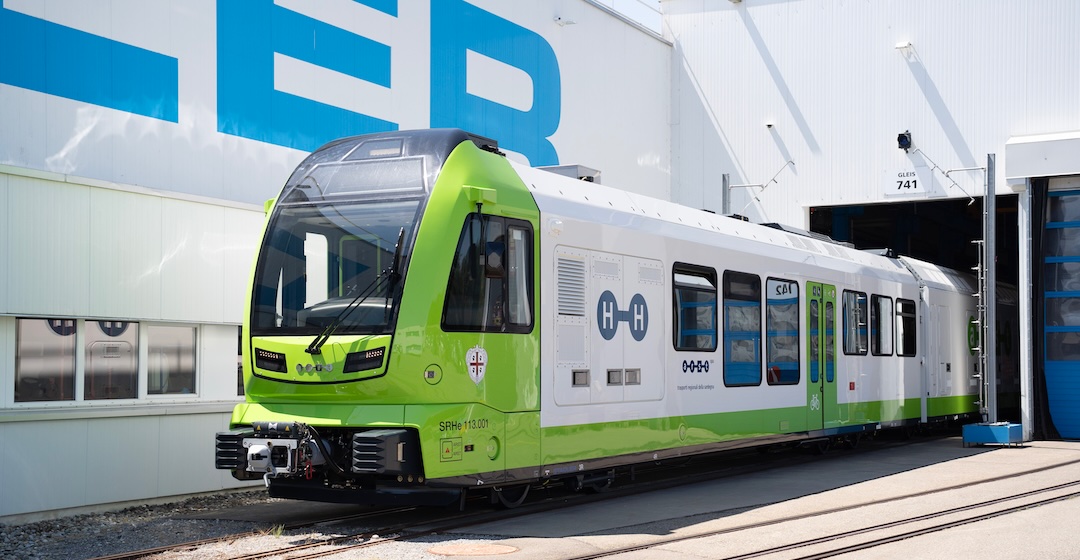
(Bussnang / Switzerland) – Swiss rail manufacturer Stadler Rail AG has developed what it claims is the "world's first hydrogen train for narrow-gauge lines" for the southern Italian rail operator Trasporti Regionali della Sardegna (ARST). Compared to diesel vehicles, the ten new trains on the ARST line save over 2.100 tons of CO2 annually.
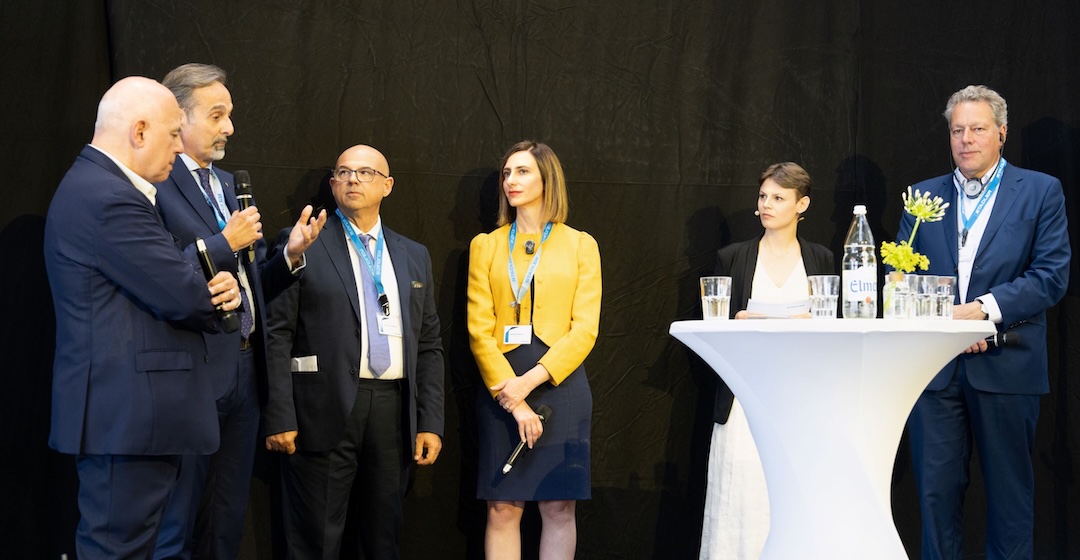
Presenting the new development from Stadler (from left): Maurizio Oberti (Stadler Sales Manager for Italy), Carlo Poledrini (Central Director of ARST), Giovanni Mocci (Sole Director of ARST), Barbara Manca (Minister of Transport for the Region of Sardinia), Alessandra Silvestri (Communications Stadler), Ansgar Brockmeyer (Division Head of Marketing & Sales and Deputy CEO of Stadler). © Stadler Rail AG
The trains are expected to connect Alghero Airport on the island's northwest coast with the suburb of Mamuntanas from 2028 onwards, as well as the northeastern province of Sassari with Alghero and the coastal town of Sorso. "The hydrogen trains on the ARST line are a prime example for the environment, the local economy, and the development of important skills in our region," says Barbara Manca, Minister of Transport for the Region of Sardinia. For Giovanni Mocci, Sole Director of ARST, it is "a historic technological leap in quality for our fleet."
Hydrogen from renewable energy
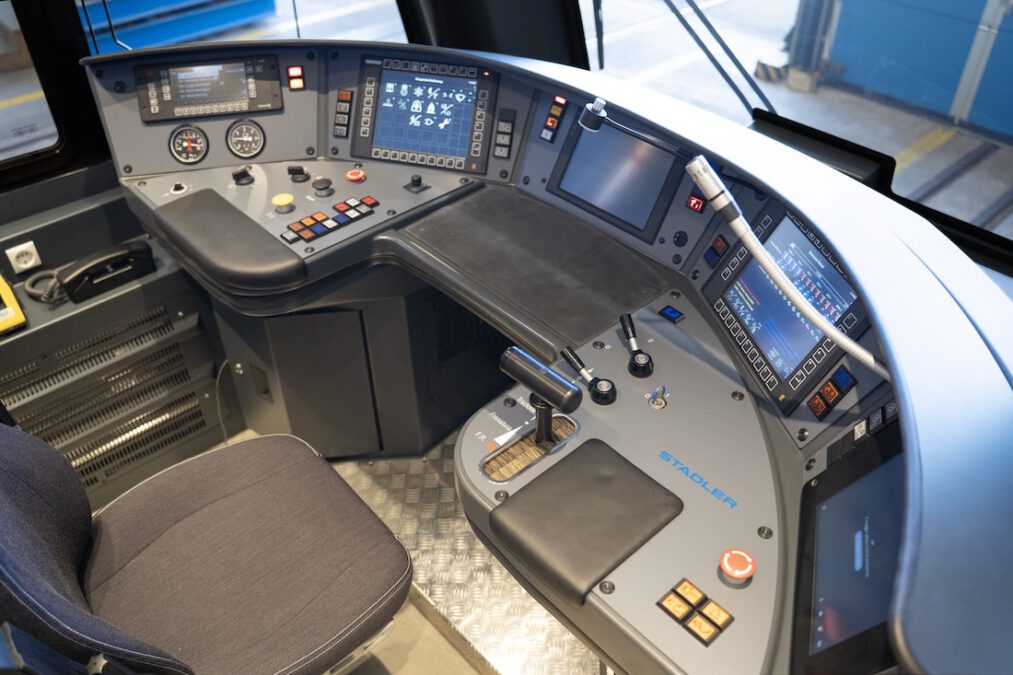
Train drivers enter the driver's cab via a separate entrance. © Stadler Rail AG
The core of the new trains is the fuel cell drive system integrated into the center car. The "Power Pack" converts hydrogen into energy and then charges the batteries. The trains will then operate on non-electrified lines. The green hydrogen is produced entirely using solar power. The electrolyzer is currently under construction.
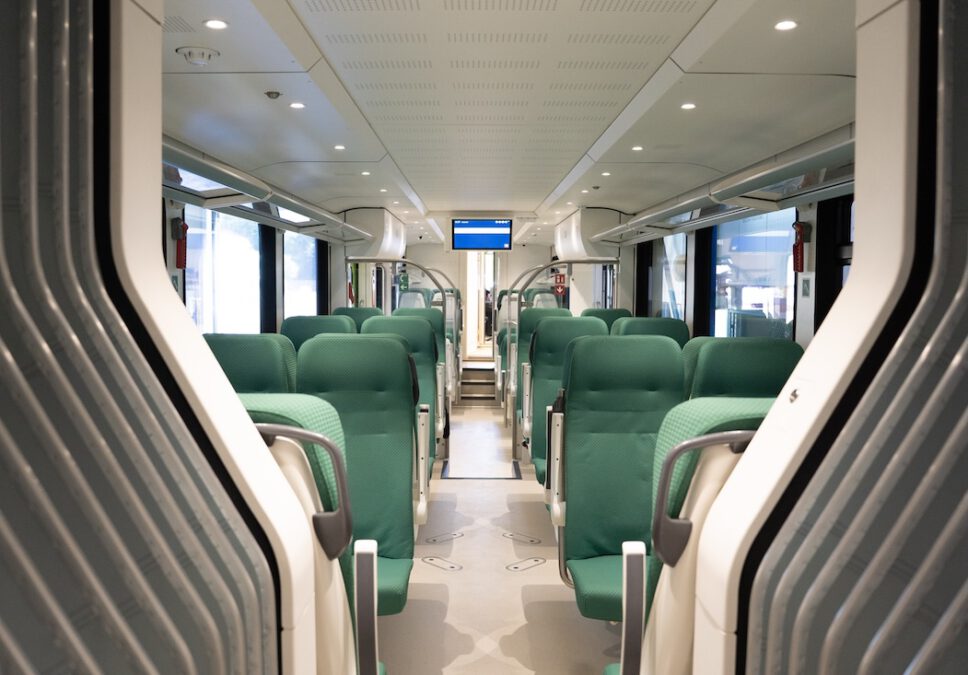
Interior view of the fuel cell-powered narrow-gauge railway. © Stadler Rail AG
Narrow-gauge railways in Italy, due to the design of the track infrastructure, only allowed for low axle loads. The new low-floor vehicles were therefore designed as lightweight trains. Compared to diesel trains, the hydrogen trains are quieter, which increases passenger comfort. Before entering service, they will undergo the standard tests according to the guidelines of the Italian Agency for the Safety of Transport and Infrastructure (ANSFISA).
The project is part of an initiative launched by the Italian government to decarbonize regional rail transport in southern Italy. According to Stadler, in addition to ARST, two other Italian operators are converting their trains to hydrogen. The company is reportedly building two more regional trains for the Sicilian Ferrovia Circumetnea (FCE) and nine for the Calabrian Ferrovie della Calabria (FdC).
Photo above
Stadler Rail is building hydrogen trains for the Italian regions of Sardinia, Sicily, and Calabria. © Stadler Rail AG



