
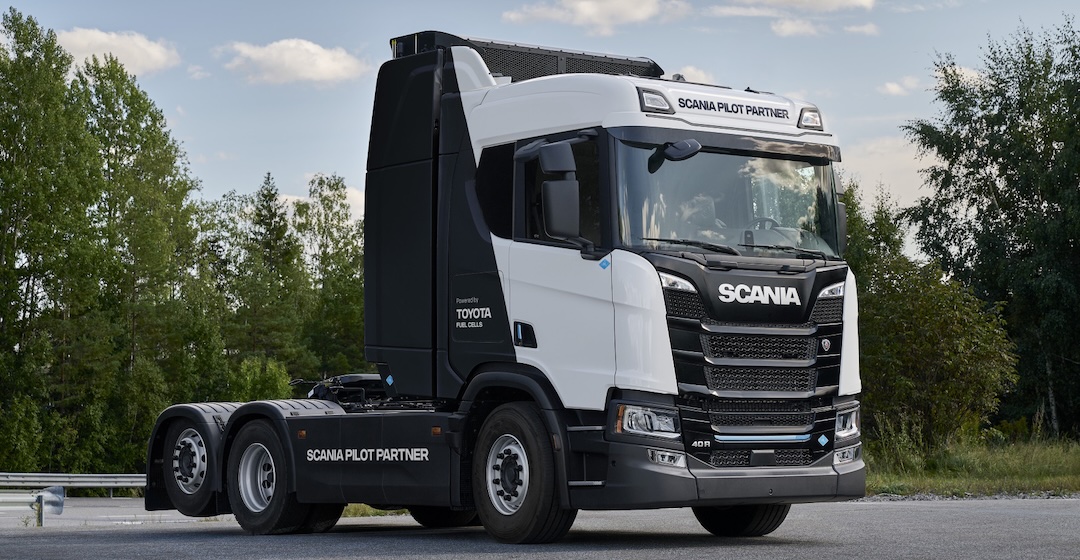
(Brussels / Belgium) – Vehicle manufacturers Toyota and Scania plan to conduct large-scale testing of fuel cells in heavy-duty trucks. As part of the pilot program, Toyota's third-generation systems, with a power output of 300 kilowatts, will be integrated into 40 Scania vehicles in a compact design. The first trucks equipped with these systems will enter operation in early 2027. The aim is to evaluate the technology's potential based on real-world data.
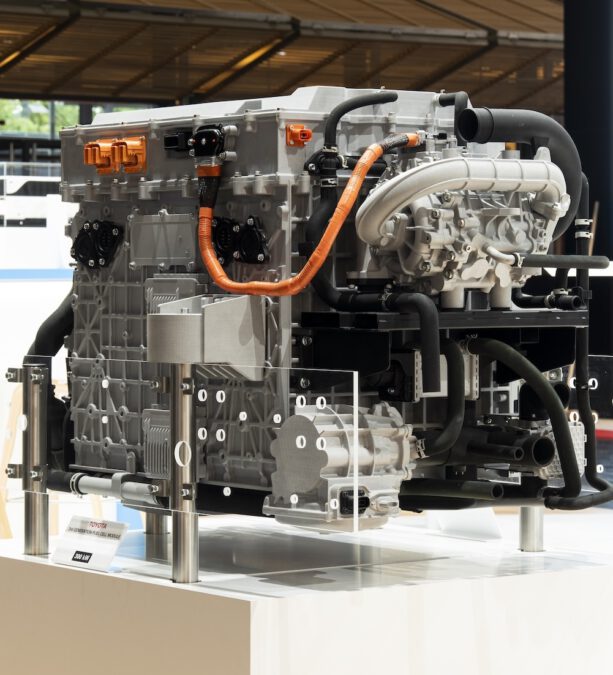
Toyota's third-generation fuel cell engine with 300 kilowatts of power, shown here at the IAA Hannover 2026. © Toyota Motor Corp.
As “the applications of zero-emission heavy-duty fuel cells continue to grow,” it is expected that “this initiative will validate the technical performance, operational efficiency, and total cost of ownership.” Hydrogen is “the right solution for demanding heavy-duty applications where long range, high utilization, and operational efficiency are essential,” says Hiroki Nakajima, Executive Vice President, Toyota Motor Corporation. By integrating the fuel cell systems into the logistics operations of Scania customers, “we are jointly taking an important step toward enabling hydrogen-powered mobility to play a greater role in the European transport industry.” Heavy-duty transport is “key to building hydrogen demand and infrastructure.”
Cooperation also with Iveco
Furthermore, the Japanese manufacturer announced a collaboration with the Italian Industrial Vehicles Corporation SpA (Iveco). Toyota will also supply the 300 kW fuel cell system for a new generation of trucks in this project. The "Iveco S-eWay Fuel Cell" will have a range of 900 kilometers and is designed for more than 25.000 operating hours. Validation will begin in the fourth quarter of 2026, and road tests are planned for the first half of 2027, Toyota announced on Monday at the IAA trade fair, which is now underway in Hanover.
Hilux with fuel cells at the Dakar Rally
Furthermore, Toyota continues to test hydrogen technologies "in demanding environments." For example, the company, through its motorsport division Gazoo Racing, will equip the Hilux pickup truck with fuel cells and enter it in the "Future Mission 1000" category for zero-emission prototypes at the Dakar Rally.
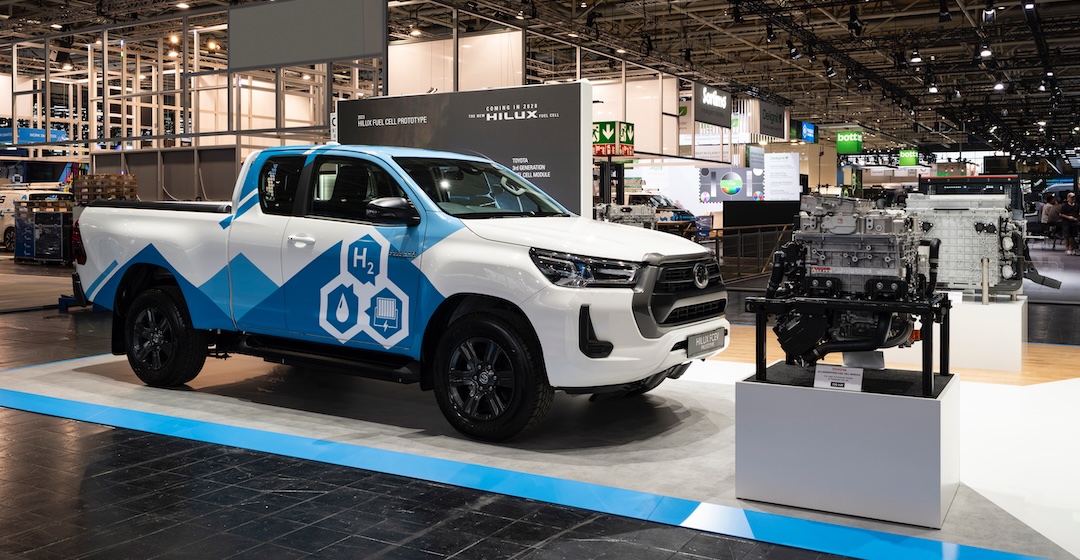
Toyota plans to launch the Hilux Fuel Cell pickup truck in 2028. Prior to this, its motorsport division, Gazoo Racing, will test the vehicle as a prototype in the Dakar Rally. © Toyota Motor Corp.
The Hilux Fuel Cell, with a target range of over 400 kilometers and a towing capacity of 2,5 tons, is slated for market launch in 2028. However, the company believes that vehicles alone will not be enough to scale hydrogen mobility. Infrastructure, hydrogen supply, customer demand, and political frameworks must develop together to create local hydrogen ecosystems that can gradually connect to broader networks.

In June 2024, Cellcentric began pilot production of its fuel cell systems for trucks in Esslingen. Toyota is now joining the joint venture between Volvo and Daimler. © Cellcentric GmbH & Co KG
In July, Toyota finalized its investment in Kirchheim-based Cellcentric GmbH, a joint venture founded by the Volvo Group and Daimler Truck AG for the production of fuel cells. Previously, the shares were split equally. Toyota will become an equal partner and shareholder. Going forward, each partner will hold one-third of the shares. The planned investment was announced in March. The transaction is expected to close towards the end of 2026 or the beginning of 2027. ( More information available here ).
Photo above
In a pilot project, 40 Scania heavy-duty trucks are being fitted with Toyota fuel cells to collect operational data under real-world conditions. © Scania Group



