
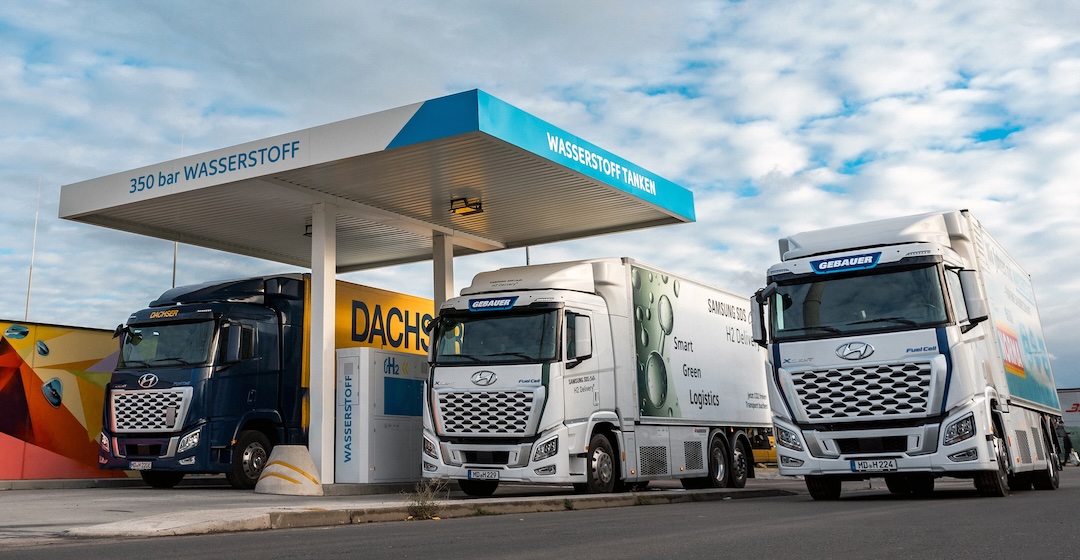
(Aachen / Germany) – The Chair of Production Engineering of E-Mobility Components (PEM) at RWTH Aachen University is coordinating the "HyConnect" research project, which began at the start of the year. According to the chair, the goal is "to develop a digital platform for the efficient use of existing and future hydrogen infrastructure in the transport and logistics sector. The tool should enable the reservation of refueling capacities and complete payment processing, create transparency and planning security, and thereby support the market ramp-up of hydrogen technologies."
Efficient data exchange
“The sparse infrastructure and limited capacity of hydrogen refueling stations can force logistics companies to take time-consuming and costly detours,” says PEM project manager Achim Kampker. On the other hand, the still small number of hydrogen trucks leads to planning uncertainties for refueling station operators, which they pass on in the form of high prices. “Efficient data exchange between IT systems can significantly reduce these effects, but is often only possible on a small scale using individually developed and therefore expensive tools,” explains PEM project manager Maximilian Bayerlein.
Minimizing risks for fleets and filling stations
The project aims to combine data on the hydrogen demand of truck fleet operators with information on hydrogen availability from filling station operators. This will enable precise planning and help prevent supply bottlenecks. In the long term, the solution should increase the market share of hydrogen trucks and stimulate investment in infrastructure by minimizing risks for all stakeholders.
“HyConnect” investigates price elasticity and its impact on gas station selection, planning, and cost transparency. An AI-based universal data interface will be implemented as a prototype and subsequently evaluated. Based on this, the capacity management and reservation platform will be designed and piloted during the course of the project.
The project “HyConnect – Connecting Hydrogen Supply and Demand for Sustainable Transport Logistics,” scheduled to run for two and a half years and scalable for the EU internal market, is being funded by the Ministry of Economic Affairs, Industry, Climate Protection and Energy of the State of North Rhine-Westphalia with an undisclosed sum and co-financed by the EU. Participating institutions include RWTH Aachen University, Offenburg University of Applied Sciences, H2 Mobility Deutschland GmbH & Co. KG, H2 Green Power & Logistics AG, and Mansino GmbH.
Photo above
Industry and scientists are working on "HyConnect" to facilitate the use of fuel cell trucks in the transport and logistics sector with a digital reservation and booking platform. © H2 Green Power & Logistics AG



