
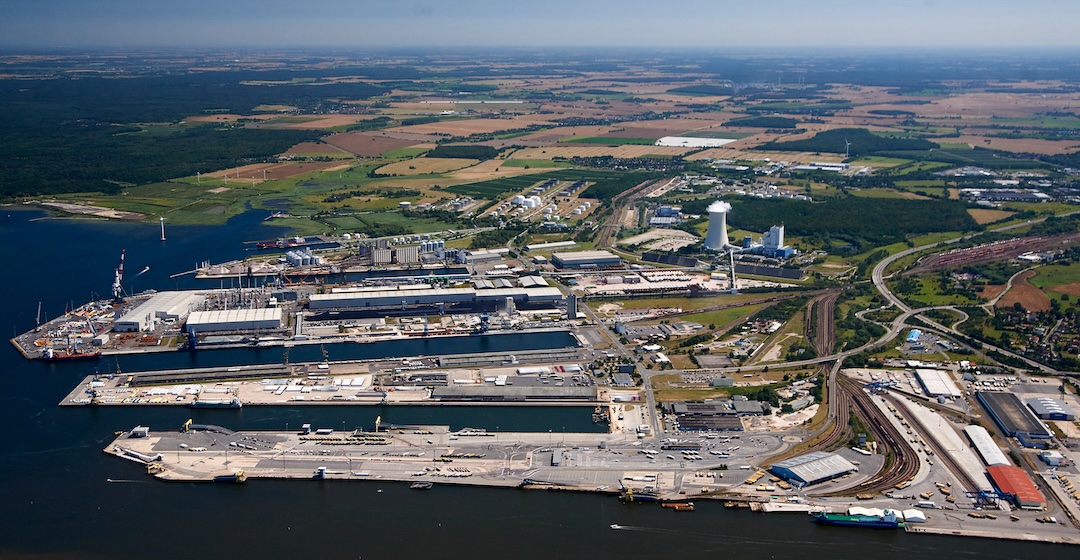
(Riyadh / Saudi Arabia) – ACWA Power, a Saudi developer and operator of renewable energy plants, aims to create a corridor for green ammonia from the Middle East to Europe. The company reaffirmed this commitment through an agreement with energy supplier EnBW Energie Baden-Württemberg AG, Leipzig-based gas importer VNG AG, and port operator Rostock Port GmbH.
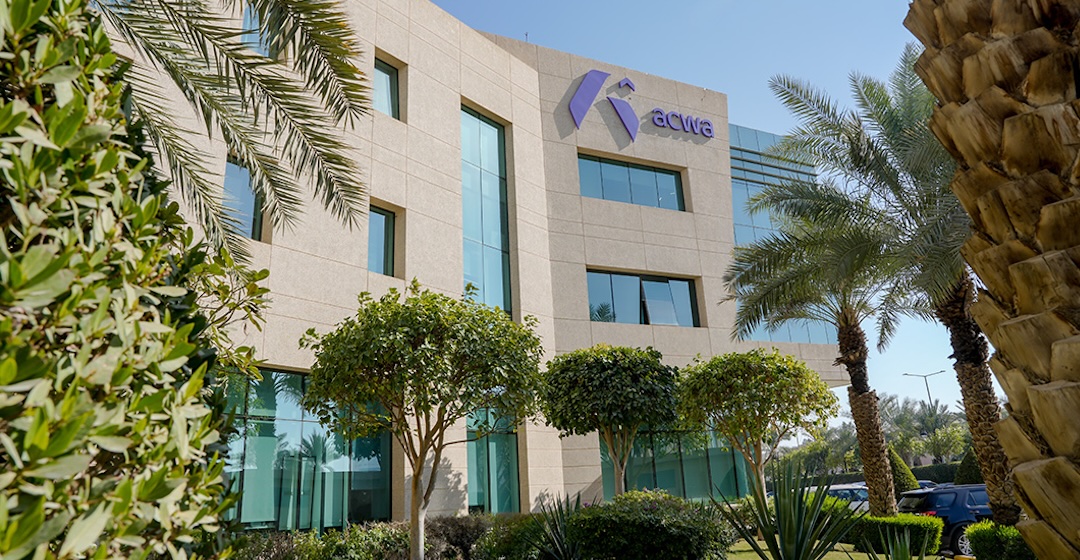
Acwa Power headquarters in Riyadh: The Saudi Arabian energy company aims to gain a foothold in the European market with ammonia. © Acwa Power
The starting point is the "Green Hydrogen Hub" in the Saudi port city of Yanbu. There, Acwa, with support from EnBW, is currently developing a green hydrogen factory that will convert the energy carrier into ammonia for transport. The infrastructure project, scheduled to go into operation in 2030, is a complex with its own power generation from renewable sources, a desalination plant, electrolysis, an ammonia plant, and an export terminal. According to Acwa, the targeted capacity is 2,5 million tons per year. A study on the front-end engineering design (FEED) for the process plants will be completed by mid-2026.
This agreement with EnBW, Rostock Port, and VNG is "a crucial step towards creating a reliable export corridor to Germany," says Acwa Managing Director Marco Arcelli. EnBW will also act as the purchaser of the green ammonia and organize its commercial and logistical delivery to Rostock, according to Georg Stamatelopoulos, Managing Director of EnBW. There, the chemical will be converted back into hydrogen using an ammonia cracker from VNG, which will then be fed into the German hydrogen core network.
Cooperation between countries on hydrogen
The agreement was signed during a meeting between German Federal Minister for Economic Affairs and Energy Katherina Reiche and Saudi Arabian Energy Minister Abdulaziz Bin Salman Bin Abdulaziz. Both countries intend to strengthen their cooperation in the energy sector, as outlined in a Memorandum of Understanding (MoU). This complements a memorandum of understanding on hydrogen signed in 2021. The agreement covers all energy sectors as well as the chemicals industry. Saudi Arabia is pursuing "ambitious investment programs," Reiche is quoted as saying by the Frankfurter Allgemeine Zeitung.
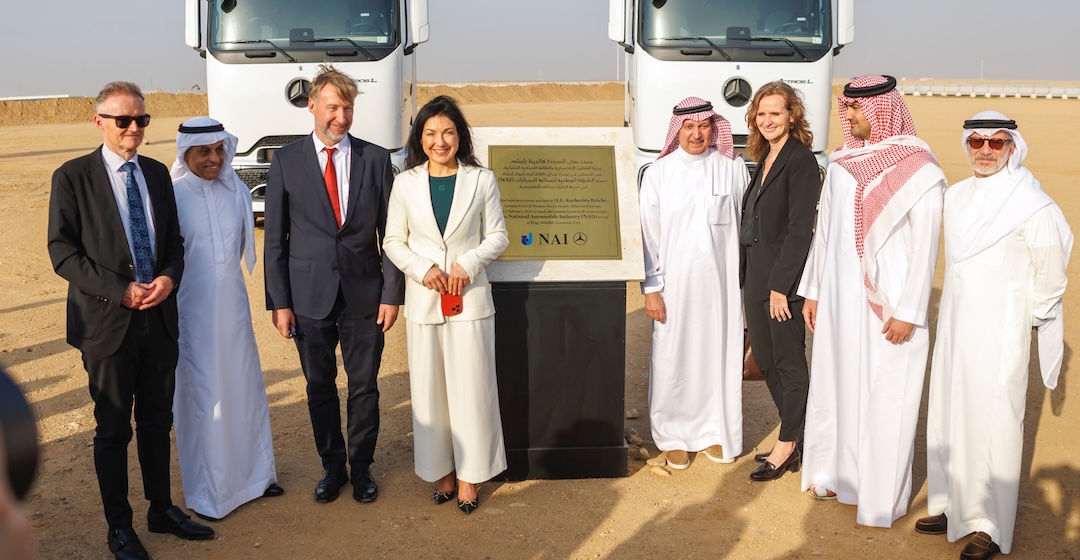
Federal Minister for Economic Affairs Katherina Reiche (4th from left) on an official trip: Saudi Arabia plans to invest $190 billion in renewable energies and $36 billion in sustainable hydrogen. © BMWE / Thomas Imo / photothek.de
By 2030 alone, $190 billion is earmarked for renewable energies and $36 billion for sustainable hydrogen. According to the newspaper, the German Federal Minister for Economic Affairs criticized EU regulations for green hydrogen before departing for Riyadh. She stated that these regulations are so complicated that they lead to very high prices of eight to twelve euros per kilogram. As a result, hydrogen currently finds hardly any buyers in Germany, the article states. The EU must adjust the definition so that "hydrogen or derivatives can be imported at reasonably competitive prices."
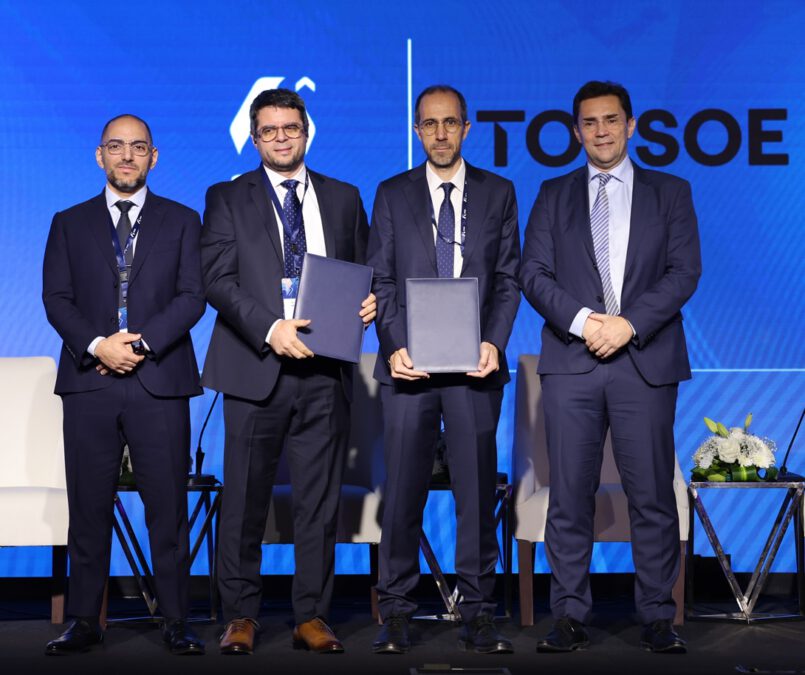
Topsoe is supplying Acwa with the technology for ammonia production at the “Yanbu Green Hydrogen Hub” (from left): Yassir Ghiyati (Topsoe CCO), Mohammed Benchekchou (Topsoe CEO Europe, Middle East, Africa and Central Asia), Alfons Juan (Vice President for Strategic Supply and Contracts, Acwa), Thomas Altmann (Executive Vice President, Innovation & New Technology, Acwa) © Topsoe A/S
Shortly before, Acwa had reached an agreement with the technology company Topsoe A/S. According to the agreement, the Danish company will supply the technology to convert the green hydrogen produced in the "Yanbu Green Hydrogen" project into ammonia on-site. Furthermore, Topsoe will supply technical equipment to Sinopec and Tecnicas Reunidas, who are jointly carrying out the FEED (Front-End Engineering Design) contract. The collaboration with Topsoe to convert renewable energy into green hydrogen-based fuels and ammonia on an industrial scale "strengthens the hydrogen corridors that connect competitive renewable resources with global demand centers," says Driss Berraho, Vice President of Business Development Green Hydrogen at Acwa.
Photo above
The port of Rostock will eventually handle green ammonia from Saudi Arabia and convert it back into hydrogen, which will then be fed into the hydrogen core network. © Rostock Port GmbH



