
(Düsseldorf, Germany) – The Düsseldorf-based defense company Rheinmetall AG has presented plans that would enable European armed forces to independently produce synthetic fuels (eFuels) "decentrally and independently of global fossil fuel supply chains." The "Giga PtX" project envisions the construction of a Europe-wide network of several hundred modular e-fuel production plants. These plants are intended to produce diesel, marine diesel, or kerosene in quantities of 5.000 to 7.000 tons per year. Rheinmetall aims to "sustainably strengthen the energy self-sufficiency and resilience of European armed forces and simultaneously contribute to the stability of critical energy infrastructure."
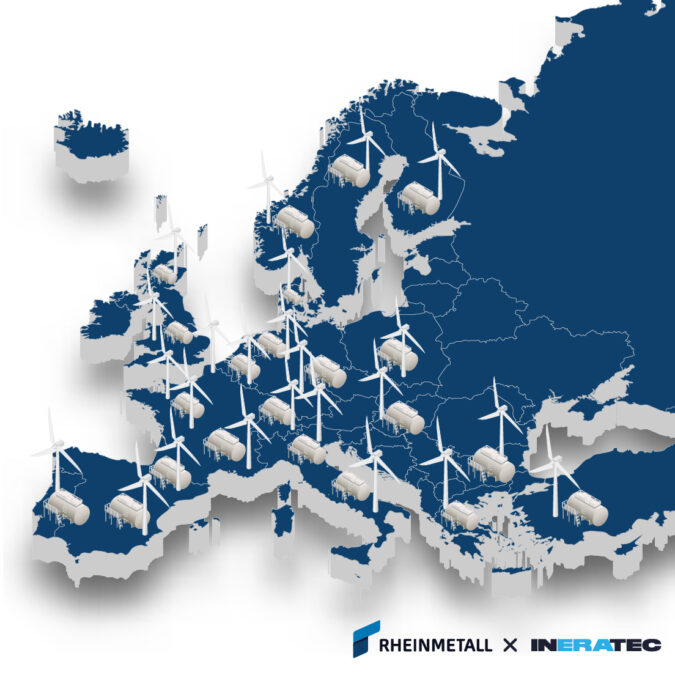
Visualization of the Giga PtX solution: Development of a Europe-wide network of several hundred modular eFuel production plants. Specific locations are not disclosed. © Ineratec GmbH
To achieve this, the company is relying on a consortium of leading German industrial players. Dresden-based Sunfire SE will contribute the pressure alkaline electrolyzers for the production of green hydrogen. Duisburg-based Greenlyte Carbon Technologies GmbH is slated to supply the carbon dioxide required for synthetic fuels. Rheinmetall's long-standing cooperation partner, Ineratec GmbH from Karlsruhe, will also provide the plant technology for converting hydrogen and carbon dioxide into synthetic fuels using the Fischer-Tropsch process. The company recently commissioned what it describes as "Europe's largest power-to-liquid plant" in Frankfurt am Main, where up to 2.500 tons of sustainable fuel are produced annually.
Rheinmetall is ready to "go with a gun at hand"
Rheinmetall itself is acting as the general contractor and is responsible not only for system integration but also for the design, construction, maintenance, and operation of "the plants designed for large-scale, industrial use." These could be implemented in the short term as soon as the political and regulatory framework is established, according to the company, which describes itself as "the leading international systems house for the defense industry." "We are ready and can start immediately," says Birgit Görtler, Vice President Sales Hydrogen at Rheinmetall: "We are literally standing by, ready to sustainably strengthen fuel resilience in Germany and Europe."
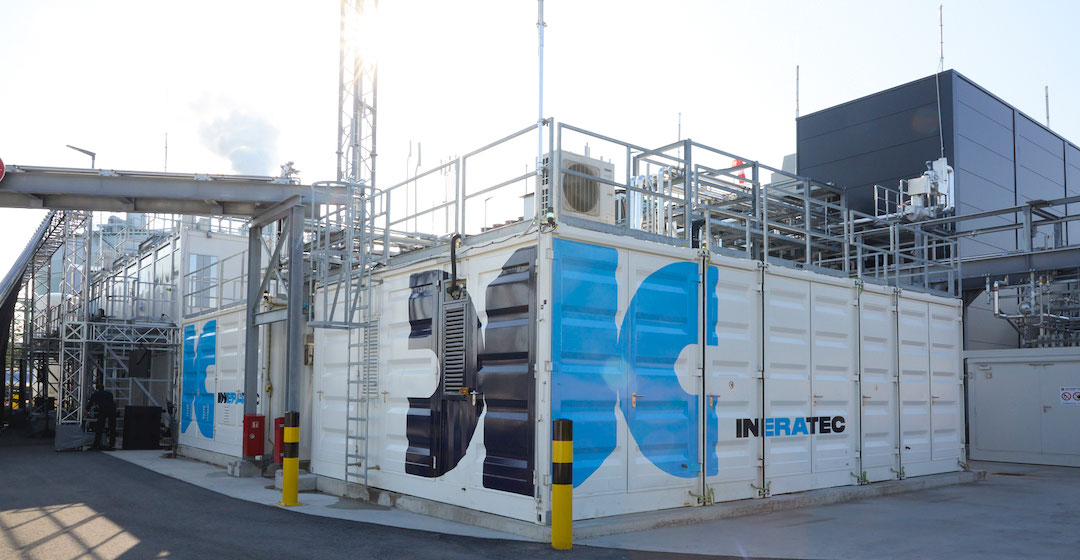
At the end of October, the Japanese oil and gas company Idemitsu Kosan Co., Ltd. invested in Ineratec, a developer and manufacturer of power-to-X plants for the production of synthetic fuels. © Ineratec GmbH
Maintaining fossil fuel supply chains will be challenging for European states in the event of a defense emergency, says Armin Papperger, CEO of Rheinmetall AG. "War readiness" requires a resilient energy infrastructure. "With the Giga PtX plants, Rheinmetall and its partners are sending a strong signal for industrial transformation, climate protection, and Europe's security resilience." Details regarding locations, capacities, costs, and financing were not disclosed.
The military is responsible for around 5,5 percent of CO2 emissions – putting it on par with the entire aviation and maritime sectors. At the same time, Europe, with its solar, wind, and hydropower, possesses all the necessary resources to independently produce clean energy carriers such as green hydrogen, according to one of the consortium partners. "European electrolysis technology thus not only contributes to decarbonization but also makes an indispensable contribution to a strong, resilient Europe," says Sunfire CEO Nils Aldag. One could also say: If there has to be war, then at least make it environmentally friendly.
Photo above
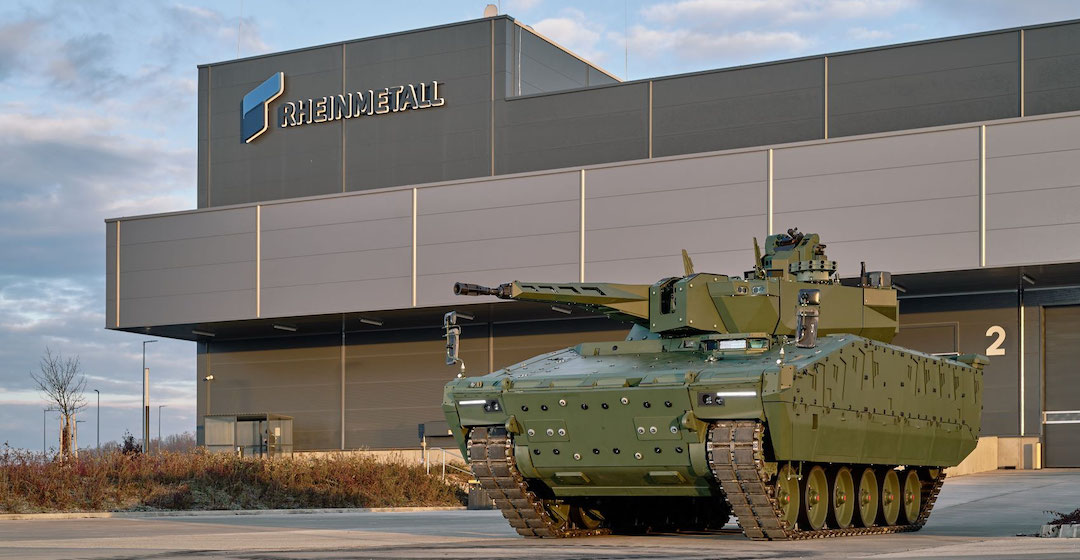
Rheinmetall AG and Leonardo Rheinmetall Military Vehicles announced a joint venture in early November for the delivery of 21 infantry fighting vehicles to Italy. © Rheinmetall AG



