
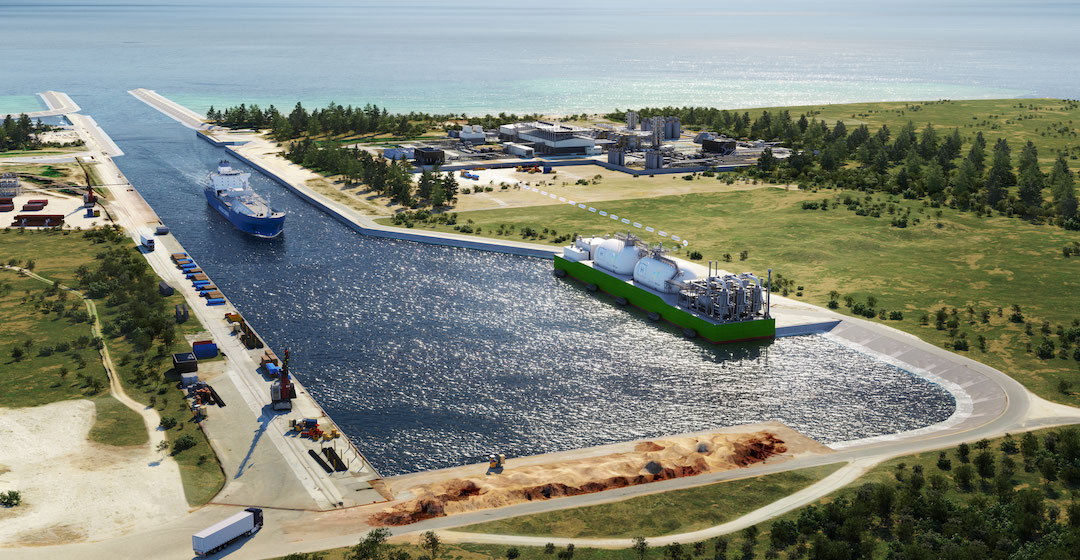
(Lubmin, Germany) – Deutsche Regas GmbH & Co. KGaA and the Norwegian company Höegh LNG AS plan to develop a hydrogen import terminal in Lubmin, Mecklenburg-Western Pomerania. According to the companies, it will be "the world's first floating import terminal for the large-scale conversion of green ammonia to green hydrogen." Production capacity is projected at 30.000 tons of hydrogen per year. Commissioning is planned for early 2026.
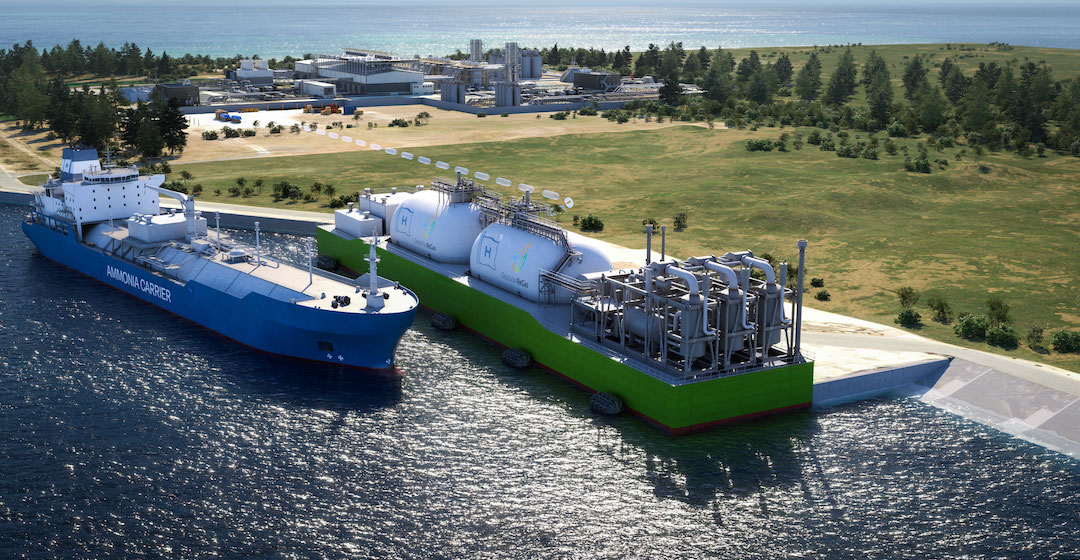
According to the company, the “H2 Import Terminal Lubmin” is the world’s first floating import terminal for the large-scale conversion of green ammonia into green hydrogen. © Höegh LNG AS
The ammonia cracker technology embedded in the barge was developed by Höegh LNG and serves as an industrial pilot project for the conversion and decarbonization of tank storage and regasification vessels (FSRU, Floating Storage and Regasification Unit). Deutsche Regas will provide the onshore infrastructure and take over the overall coordination of the project, including the approval procedures and the marketing of import capacities. The hydrogen will be fed into the hydrogen core network via the existing feed-in point at the terminal in the port of Lubmin.
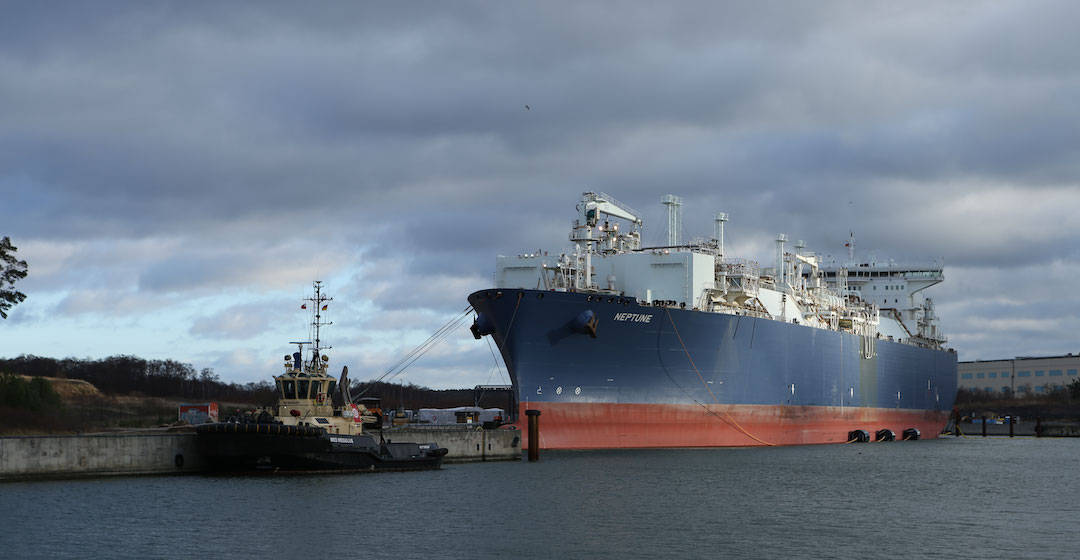
At the beginning of July, the regasification ship "Neptun" was moved from Lubmin to the energy terminal "Deutsche Ostsee" in the industrial port of Mukran on Rügen. According to Regas, together with the second regasification ship "Energos Power", the terminal will then offer an annual regasification capacity of up to 13,5 billion cubic meters of natural gas and will be able to cover up to 15 percent of Germany's total natural gas demand. The Rügen terminal is connected to Lubmin via a pipeline. © Deutsche Regas / Sebastian Frauenlob
The Lubmin H2 import terminal strengthens "Mecklenburg-Western Pomerania's position as a green energy powerhouse," says Ingo Wagner, Managing Director of Deutsche Regas. "Importing hydrogen from global producers overseas is the key to industrial decarbonization," says Erik Nyheim, CEO of Höegh LNG. "By adapting existing marine infrastructure elements with our cracking solution, we can offer access to cost-effective hydrogen within the next few years." The know-how, technology and infrastructure elements are available.
Deutsche Regas is a medium-sized company in the European energy infrastructure sector and operator of the privately financed LNG terminals in Germany in Lubmin and Mukran. In addition, the company also plans to build electrolyzers and import solutions for hydrogen derivatives. Höegh LNG is the owner and operator of maritime energy infrastructure, floating storage and regasification units and LNG tankers.
Federal government uses four FSRUs
In order to enable the direct import of liquefied natural gas (LNG) to Germany in the short term, the federal government is deploying four FSRUs. Two of these plants have already started operations in Brunsbüttel and Wilhelmshaven. According to the Federal Ministry of Economics, two more are planned to be deployed in Stade and at a second location in Wilhelmshaven.
In addition to the FSRU operated by the federal government, the privately operated FSRU "Neptune" has been in operation in Lubmin since December 2022 and was relocated to Mukran on Rügen at the beginning of July 2024. A second regasification ship "Energos Power" complements the site there. This is the fifth FSRU chartered by the federal government, which is sub-chartered to Deutsche Regas for use in Mukran.
The LNG import infrastructure created in Germany only offers the option of importing LNG if there is a need. "It cannot be equated with actual, physical imports and consumption on the scale of the available regasification capacity," says the Federal Ministry of Economics.
Graphic above
Deutsche Regas and Höegh LNG want to develop a "Lubmin H2 import terminal". Commissioning is planned for early 2026. © Höegh LNG AS



