
(Leipzig / Germany) – The long-distance pipeline operator Ontras Gastransport GmbH has ordered over 100 kilometers of pipeline from the steel company Salzgitter AG. According to the company, the orders will be carried out by Salzgitter subsidiaries Mannesmann Linepipe GmbH (38,2 kilometers) and Mannesmann Großrohr GmbH (70,6 kilometers).

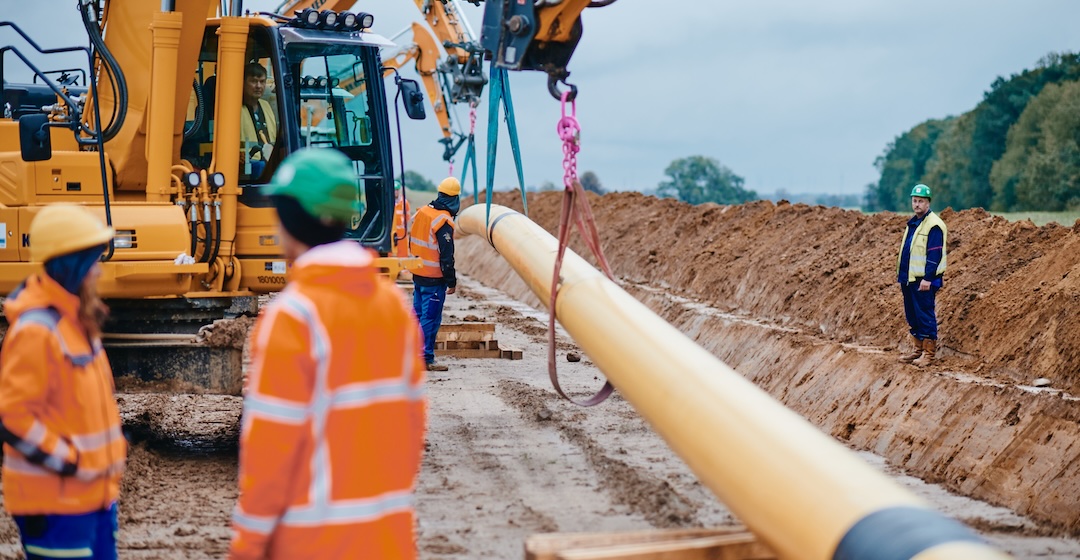
The 702 long-distance gas pipeline is being converted to hydrogen. A new 67-kilometer section is being constructed between Salzgitter and Wefensleben (Lower Saxony), and a 34-kilometer section between Preußlitz and Angersdorf in Saxony-Anhalt. © Ontras Gastransporte GmbH
The pipes are being used to construct two sections of the long-distance gas pipeline 702 (FGL) – part of the IPCEI project Green Octopus Central Germany (GO). The FGL 702, originally built to transport natural gas, is now being converted to hydrogen as part of the "Ontras H2 start-up network." The new construction will cover 67 kilometers between Salzgitter and Wefensleben (Lower Saxony) and 34 kilometers between Preußlitz and Angersdorf in Saxony-Anhalt.
The remaining sections of the route could be converted to hydrogen transport after review and approval by experts. Planning approval procedures for both new construction projects are scheduled to begin in 2026, with construction starting in 2027/2028. Commercial operation and the supply of hydrogen to customers are planned to begin in December 2029.
Hydrogen for steel production
The steelworks in Salzgitter is currently being converted to low-CO2 steel production in several stages. The transformation program "Salcos" (Salzgitter Low CO2 Steelmaking) requires green hydrogen for the production of green steel, therefore "connection to the hydrogen core network and its rapid construction are of great importance," according to Salzgitter AG.
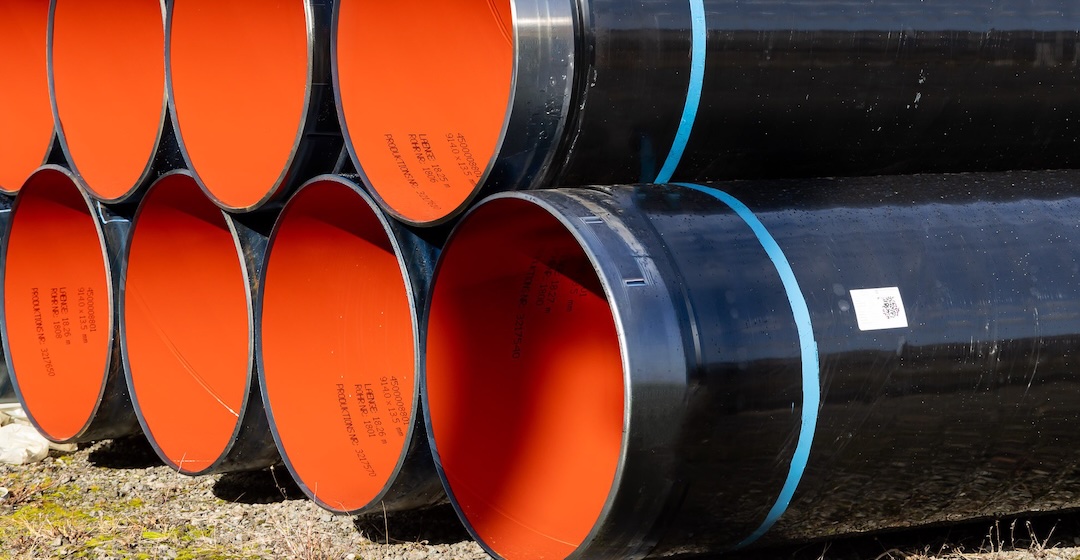
Ontras has ordered pipes from two subsidiaries of Salzgitter AG. For the group, connection to the hydrogen pipeline is of central importance for its transformation of steel production. © Salzgitter AG
Just a few days ago, the German government pledged a further €322 million in funding to the steel company for the transformation of its industrial production process ( as we reported ). Salcos had already received a grant of €1 billion in 2023 as an "Important Project of Common European Interest" (IPCEI) to convert its Salzgitter plants in three stages from the traditional blast furnace route to low-CO2 crude steel production. Three coking coal-fired blast furnaces will be replaced with a combination of direct reduction plants and electric arc furnaces, increasingly using hydrogen. The hydrogen will be supplied, among other things, via a specially constructed electrolyzer, but primarily through the future hydrogen core network.
Photo above
The "Ontras H2 start-up network" is eventually intended to transport hydrogen over a distance of 600 kilometers (symbolic image: laying of natural gas pipelines near Neustrelitz). © Ontras Gastransporte GmbH



