
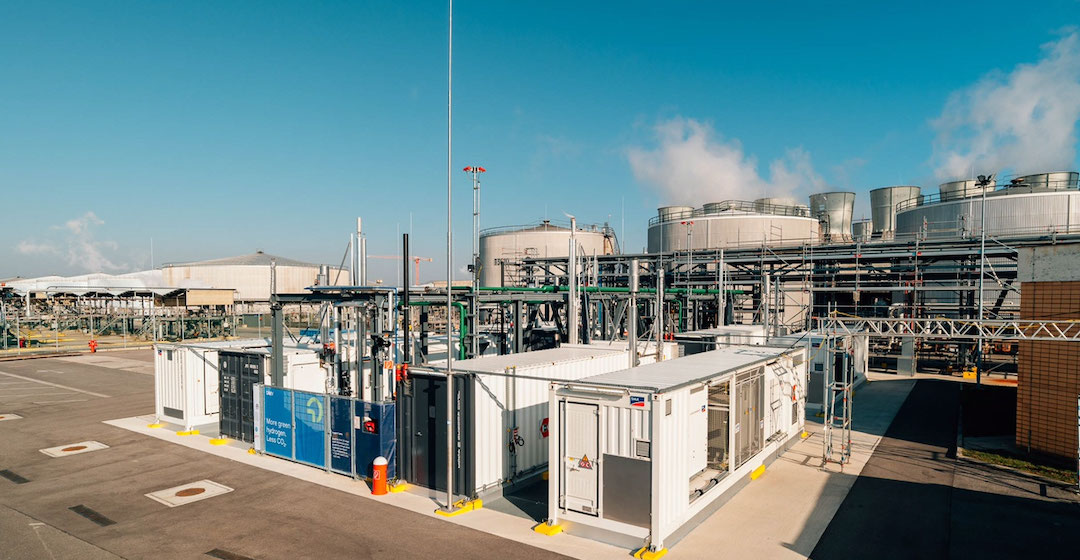
(Vienna / Germany) – The Austrian petrochemical company OMV Aktiengesellschaft has commissioned what it claims is the largest production plant for green hydrogen in Austria. It is located at the Schwechat refinery near Vienna.
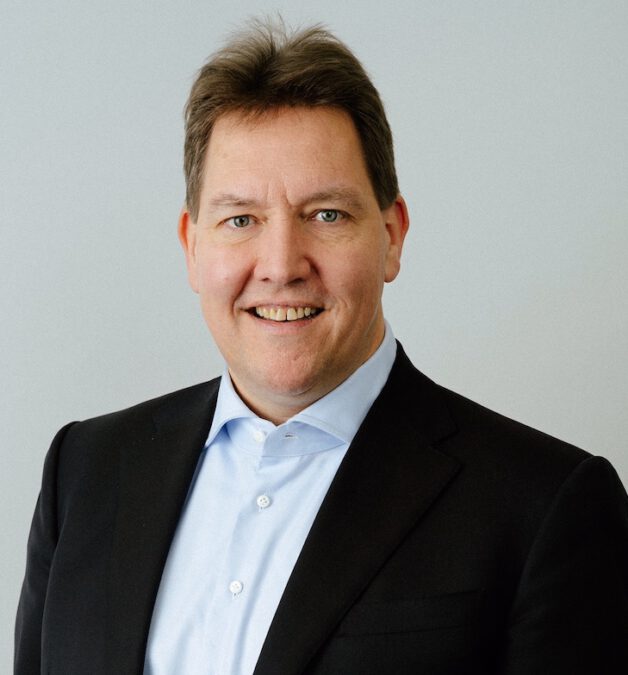
Martijn van Koten, OMV Executive Board Member: "By building robust local production and supply chains for green hydrogen in Europe, OMV is not only advancing its own climate goals but also securing industrial progress." © OMV Aktiengesellschaft
The polymer electrolyte membrane electrolyzer (PEM) will be powered by solar, wind, and hydropower, has a capacity of ten megawatts, and an annual production capacity of 1.500 tons. The investment was €25 million.
Green hydrogen is "crucial in the production of fuels and chemicals while simultaneously supporting the decarbonization of our Schwechat site," says Martijn van Koten, OMV Executive Board member and Executive Vice President Fuels & Feedstock and Chemicals. The energy carrier will be used to produce more sustainable fuels and chemicals, including sustainable aviation fuel (SAF) and renewable diesel (HVO).
Agreement with Masdar
Almost simultaneously, OMV and Abu Dhabi Future Energy Company PJSC (Masdar) announced an agreement for the production of green hydrogen and its derivatives in Austria, the United Arab Emirates (UAE), and Central and Northern Europe. The aim is to accelerate the scaling and commercialization of green hydrogen to advance the energy transition and energy security. However, this is only a "non-binding letter of intent," OMV explained after the signing.
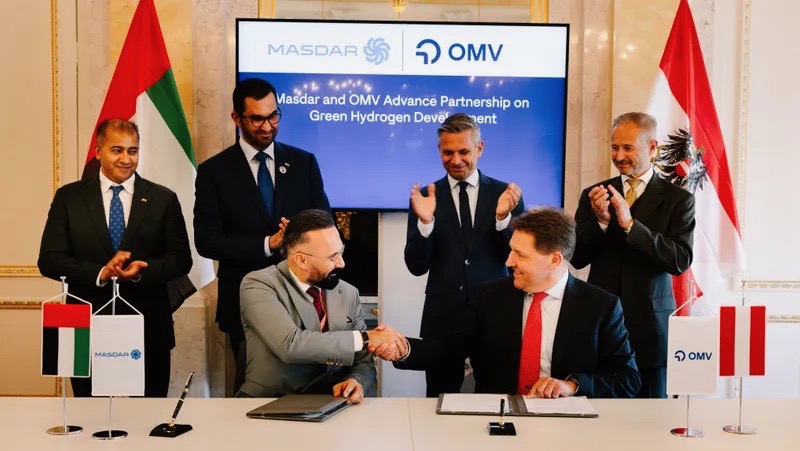
Signing a non-binding letter of intent with unclear content (from left): Abdelqader El Ramahi (Chief Green Hydrogen Officer, Masdar) and Martijn van Koten (OMV Executive Board member and Executive Vice President Fuels & Feedstock and Chemicals). Standing behind them (from left): Hamad-Ali Mohammed Subaih Alkaabi (Ambassador of the United Arab Emirates to Austria), Sultan Ahmed Al Jaber (Minister of Industry and Advanced Technology of the UAE and Chairman of the Board of Masdar), Wolfgang Hattmannsdorfer (Austria's Federal Minister for Economic Affairs, Energy and Tourism), and Alfred Stern (CEO of OMV) © OMV Aktiengesellschaft
Founded in 2006 as a joint venture between TAQA, ADNOC, and Mubadala, Masdar has developed projects in more than 40 countries with a total power generation capacity of more than 20 gigawatts (GW). Globally, the company says it has invested or committed to investments in projects with a total value of more than $30 billion. Masdar aims to achieve an installed capacity of 2030 GW by 100 and become a leading producer of green hydrogen—also by 2030.
"At OMV, we see the energy future as greener, smarter, and more collaborative," says Martijn van Koten. "Exploring new opportunities together with Masdar in the areas of green hydrogen and sustainable synthetic fuels" is about unlocking concrete business opportunities and setting new standards for sustainable solutions, both in Austria and the UAE. Details were not disclosed.
Group closes all hydrogen filling stations
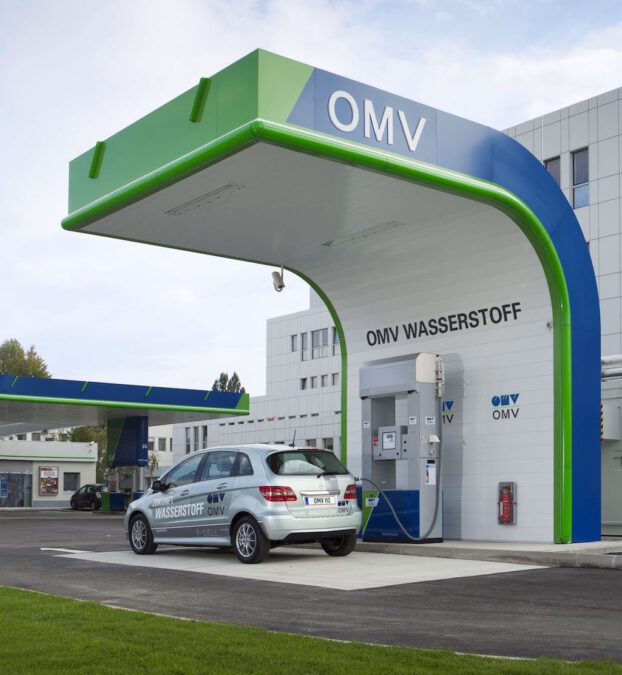
"Hydrogen is OMV's first choice for future fuel technologies," stated a press release from the company in August 2014. Ten years later, this proves to be just lip service: The company is closing its public H2 filling stations in Austria. The first opened in Vienna in 2012. © OMV Aktiengesellschaft
Despite all its pronouncements on the importance of green hydrogen as a "central pillar of the transformation," OMV plans to close all of its public hydrogen filling stations in Austria in the coming months, including the only one in Lower Austria, located in Vienna. This has been reported by several media outlets. Demand is too low, and costs for operators and end customers are too high, according to a report by the broadcaster ORF . The energy company has confirmed reports in the "Kronen Zeitung" and "Die Presse" about the closures.
At the end of March, according to Statistics Austria, 62 hydrogen-powered cars were registered throughout Austria, only five of which were privately owned. There are 14 such vehicles in Lower Austria. The cost of purchasing a hydrogen car in Austria is between €45.000 and €80.000, and refueling is more expensive than for a car with a combustion engine or electric engine. Furthermore, there is no nationwide network of filling stations. OMV was the only operator of public facilities in Austria.
At the end of 2024, Europe had 294 hydrogen refueling stations, 113 of which were in Germany. France ranked second with 65 stations, followed by the Netherlands with 25 and Switzerland with 19. The first hydrogen refueling stations in Bulgaria and Slovakia were opened in their respective capital cities, according to the annual analysis by Ludwig-Bölkow-Systemtechnik GmbH (LBST).
Photo above
OMV launches Austria's largest green hydrogen production plant. © OMV Aktiengesellschaft



